Fiction
The Evolution of Tank Design: From WWI to Modern Day
The Evolution of Tank Design: From WWI to Modern Day The tank, a symbol of mechanized warfare and military innovation, has undergone a remarkable transformation since its inception during World War I. Originally developed as a solution to the brutal stalemates of trench warfare, the tank has evolved through continuous technological advancements and battlefield experiences to become a highly sophisticated weapon system integral to modern armed forces. This evolution reflects not only improvements in engineering and firepower but also changing tactical doctrines and the shifting nature of warfare itself.
By Ali Asad Ullahabout a year ago in History
The Evolution of Military Technology Between WWI and WWII
The Evolution of Military Technology Between WWI and WWII The period between World War I and World War II was one of profound transformation in military technology, strategy, and global power dynamics. While World War I had introduced the world to mechanized warfare on an unprecedented scale, the interwar years saw nations around the globe rushing to analyze lessons learned, innovate, and prepare for the conflicts they feared would erupt again. This era was marked by rapid technological advancements that fundamentally reshaped the way wars were fought, laying the groundwork for the devastating battles of World War II.
By Ali Asad Ullahabout a year ago in History
Is World War III Really Coming in 2025? Analyzing Global Tensions
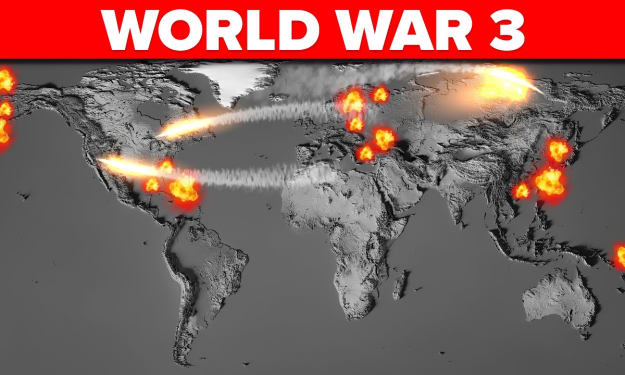
Is World War III Really Coming in 2025? Analyzing Global Tensions In the ever-shifting landscape of international relations, the specter of a third world war looms as a persistent, albeit nebulous, possibility. The year 2025 has surfaced in geopolitical discourse as a critical juncture, fueled by escalating tensions among global powers, intensifying proxy conflicts, and rapid technological advancements in warfare. Yet, amid the cacophony of speculation and alarmism, it is imperative to dissect the underpinnings of these tensions with rigor and nuance, moving beyond sensationalism to understand whether a full-scale global conflagration is indeed imminent or merely an extrapolation of contemporary anxieties.
By Ali Asad Ullahabout a year ago in History
The Beauty of New York: A City of Timeless Wonders and Endless Change
The Beauty of New York: A City of Timeless Wonders and Endless Change By Ali Asad Ullah I still remember the first time I stepped onto the streets of New York City. The air buzzed with a strange energy — a mix of hope, chaos, and possibility that you could feel pulsing beneath every footstep. Coming from a quieter place, it was overwhelming at first. The towering skyscrapers seemed to touch the clouds, the cacophony of voices, horns, and footsteps merged into a strange kind of music, and every corner seemed to whisper a story.
By Ali Asad Ullahabout a year ago in History
The Veil and the Voice
In the rugged valleys and sun-baked mountains of the tribal belt of Pakistan and Afghanistan, the story of Pashtun women is not one of silence—it is one of resilience. Often veiled in layers of tradition and misunderstood by the outside world, Pashtun women live at the intersection of history, honour, and quiet strength.
By Habibullahabout a year ago in History
The True Story Behind the Trojan Horse
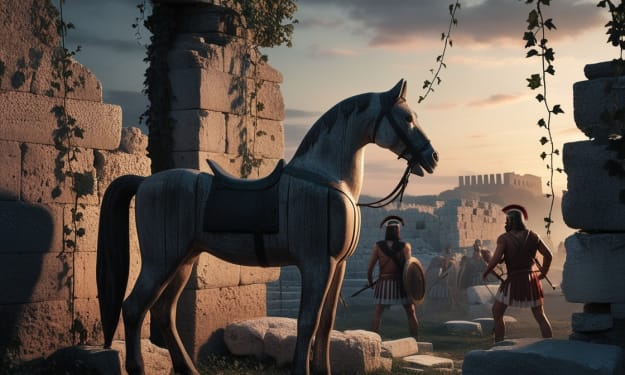
The story of the Trojan Horse is one of the most famous tales from ancient mythology, often associated with cunning, deception, and the ultimate downfall of the city of Troy. This tale, which has been passed down through centuries, combines history, legend, and myth to reveal a story that has captivated imaginations and inspired countless works of literature and art. But what is the true story behind the Trojan Horse? Was it a real historical event, or simply a metaphorical tale woven by ancient storytellers?
By Muhammad Asimabout a year ago in History
The Man Who Found His Own Skeleton
I was hiking the Blue Ridge trail alone when I saw it. At first, I thought it was just another pile of animal bones. Hikers often joke about raccoons dying dramatically in the woods. But this was different. The bones were too big. Too human. And then I saw the left forearm — bent exactly like mine, fractured and healed from an old football injury. I froze. Because the skull lying in the dirt had a tiny gold tooth on the right incisor. Just like me. --- I stared at it for five full minutes. It didn’t make sense. It couldn’t be me. I was alive. I was breathing. But the body wasn’t decayed. It wasn’t ancient. It was fresh. And somehow, bone-white. Not a speck of flesh on it. I called the police. They thought I was high. They came anyway. And when they reached the spot, the bones were gone. Nothing there. Just dry leaves. --- I thought maybe I’d imagined it. Until I got home. And found the same skeleton sitting in my chair. No movement. No sound. Just facing the window. Cross-legged. Relaxed. Like it lived here. --- I ran. Drove to a friend’s place. Slept on their couch. Didn’t mention the skeleton. Too insane. But that night, my friend shook me awake. "Dude… why’s there someone sitting at the kitchen table?" I looked. Same skeleton. Same position. Same gold tooth. Still me. Still smiling. --- I burned the house down the next morning. I didn’t care. But guess what? It didn’t die. Three days later, it was on my bus. Riding two seats ahead of me. No one else saw it. But I did. And it waved. --- I went to a therapist. I told her everything. She nodded. Smiled. Then said: > "That’s interesting. He visited me too." She opened her desk drawer. Pulled out a photograph. There we were. Me and her. And my skeleton. All smiling. --- I checked myself into a psych facility. Seven days. No contact with the outside world. No mirrors. No photos. No phones. Day three, I woke up to a scratching sound. From under the bed. I leaned down. And saw it again. This time, it wasn’t smiling. This time, it whispered: > "We switch tomorrow." --- I screamed. They sedated me. When I woke up, everything felt wrong. Lighter. Hollow. My voice echoed too loudly in my own skull. They brought me a mirror. I had no eyes. No flesh. Just bone. But somehow, I was still breathing. --- I don’t know what I am anymore. Not alive. Not dead. Just… something in between. And now he wears my face. Lives my life. Sleeps in my bed. And every time I look in a reflection or screen... I see a face I once knew. > Yours. --- That was months ago. I’ve stopped counting days. I’ve moved from place to place, hitching rides, sleeping in abandoned cabins, whispering names into the dark. Not mine. His. Hoping he’ll stay away. But he doesn’t. He follows. Everywhere. Sometimes, I’ll see someone on a train or in a diner — someone whose reflection moves slower than they do. That’s how I know: he’s recruiting. He doesn’t want just me. He wants all of us. --- Last week, I found a note in my pocket. Written in handwriting that looked like mine — but wasn’t. > “You’re not the first. You won’t be the last. We are Legion.” Then, below that: > “Your replacement is learning fast. Better than you ever did.” I dropped the note. Ran for miles. Slept under a tree. When I woke up, there were footprints around me. Skeleton footprints. --- I broke into a museum two nights ago. Anthropology wing. Found a skull display. Stared at one of them for half an hour. It blinked. Just once. But that was enough. He’s older than history. Whatever this thing is… it’s been doing this since before we had words for fear. --- And now I’m leaving this journal behind. Because I don’t trust my hands anymore. Sometimes they move when I don’t want them to. Sometimes I find them writing on their own. If you find this, burn it. Burn it before it writes you. Because once he sees you… He never forgets. And if he remembers you — You’re next. --- 🌀 Welcome to James World Where identity fractures, bones whisper, and being alive is no longer enough. 👉 Subscribe now — if you're brave enough to face what's behind your own eyes.
By James World about a year ago in History
The Middle East: A Tinderbox of Empires, Wars, and Unending Conflict. AI-Generated.
The Middle East: A Tinderbox of Empires, Wars, and Unending Conflict The Middle East has always been more than just a geographical region—it’s a crucible of civilizations, a battleground of empires, and a vortex of geopolitical rivalries that have shaped world history. From the ancient wars of Mesopotamia to the modern-day clashes between Israel and Iran, this land has rarely known lasting peace. Today, as tensions escalate once again, the Middle East stands at the brink of another catastrophic conflict, threatening not just regional stability but global security.
By Muhammad Salman Akbarabout a year ago in History
The Giants of Peru: Conquistadors' Eyewitness Accounts and the Mystery of Ancient Skeletons
The Giants of Peru When the Spanish conquistadors arrived in South America in the 16th century, they anticipated discovering gold, spices, and strange civilizations. However, they did not expect to encounter legends of giants, and even more surprisingly, reports of actual giant skeletons unearthed by the native people that they claimed to have seen with their own eyes.
By The Secret History Of The Worldabout a year ago in History
“From Allies to Adversaries:
his y Introduction Once allies in a complex and unstable Middle East, Iran and Israel’s relationship has shifted dramatically over the past several decades. From covert military cooperation and oil deals during the reign of Iran’s Shah to today's deadly standoffs, cyberattacks, and proxy wars — their history is one of trust shattered, secrets unearthed, and a silent war that has shaped the very structure of the region.
By Qaisar iqbal about a year ago in History
🗻 Trapped in the Snow – How a Rugby Team Survived 72 Days in the Andes
✦ The Flight and the Crash ✦ On October 13, 1972, Uruguayan Air Force Flight 571 carried 45 people—mostly a rugby team and their friends—over the Andes mountains to Santiago, Chile. Soon after takeoff, bad weather and navigational errors led the plane into heavy snow and clouds. The aircraft hit a mountain slope and broke apart. Many died on impact. The survivors found themselves high in the Andes, amid snow and ice, with no easy way out. ✦ Alone on a Frozen Peak ✦ About 16 people survived the crash and reached a makeshift shelter among the wreckage. Temperatures dropped far below freezing. With no shelter except parts of the plane scattered on the slope, they faced bone-chilling cold each night. Clothing was torn or buried under snow. They huddled together for warmth but knew that without better protection, hypothermia could kill them quickly. They had almost no food. A few snacks and sweets from the plane’s supplies were gone within days. Water came only from melting snow using body heat or small fires, but fuel was limited. Each hour felt like a test: the cold stung, and hunger grew.
By Echoes by Imadabout a year ago in History