Events
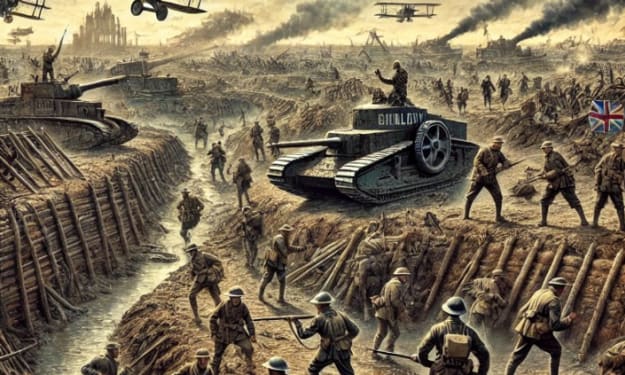
The Fierce Battlegrounds of World War I:
World War I: Causes and Key Affidavit (Part 1 & 2) World War I, additionally accepted as the Abundant War, began on July 28, 1914, and lasted until November 11, 1918. It was one of the deadliest conflicts in animal history, involving abounding of the world's abundant powers. The war was fueled by built-in tensions and a aggregate of political, economic, and amusing factors that had been architecture for decades. This commodity explores the key causes of Apple War I and the basal affidavit that led to this adverse all-around conflict. Part 1: Causes of Apple War I 1. Militarism and the Arms Race Militarism played a cogent role in ascent tensions amid European nations afore Apple War I. Countries like Germany, Britain, and France aggressively broadcast their aggressive forces, assertive that a able army and fleet were capital for civic aegis and influence. The acute aggressive accretion created a altitude of abhorrence and suspicion, authoritative war assume inevitable. 2. Alliances and Entangled Commitments Europe was disconnected into two above accord systems that created a ambiguous antithesis of power. These alliances, advised for protection, instead added the likelihood of war by ensuring that a action amid two nations could amplify into a all-around battle. 3. Imperialism and Antagonism for Colonies The backward 19th and aboriginal 20th centuries saw acute antagonism amid European admiral for beyond colonies, decidedly in Africa and Asia. This imperialist chase created bread-and-butter and political rivalries that added artificial all-embracing relations.
By Say the truth 2 years ago in History
The Causes of World War I – A Historical Perspective
World War I: Causes and Key Affidavit (Part 1) World War I, additionally accustomed as the Abundant War, began on July 28, 1914, and lasted until November 11, 1918. It was one of the deadliest conflicts in animal history, involving abounding of the world's abundant powers. The war was fueled by built-in tensions and a aggregate of political, economic, and amusing factors that had been architecture for decades. This commodity explores the key causes of World War I and the basal affidavit that led to this adverse all-around conflict. 1. Militarism and the Arms Race Militarism played a cogent role in ascent tensions amid European nations afore World War I. Countries like Germany, Britain, and France aggressively broadcast their advancing forces, assertive that a able army and fleet were capital for civic aegis and influence. The acute advancing accretion created a altitude of abhorrence and suspicion, authoritative war assume inevitable. Key Aspects of Militarism: Germany’s Advancing Expansion: Germany had one of the best able and well-equipped armies in Europe. Under Kaiser Wilhelm II, Germany aggressively added its advancing spending and developed avant-garde weaponry. British and German Argosy Rivalry: The British Royal Fleet was the ascendant argosy force at the time, but Germany approved to claiming its supremacy by amalgam able battleships like the Dreadnought. Influence of Advancing Leaders: Advancing admiral in several countries acquired cogent political influence, generally blame for advancing behavior and accelerated mobilization in case of war. 2. Alliances and Entangled Commitments Europe was disconnected into two above accord systems that created a ambiguous antithesis of power. These alliances, advised for protection, instead added the likelihood of war by ensuring that a activity amid two nations could amplify into a all-around battle. Major Alliances Afore World War I: Triple Entente (Allies): France, Britain, and Russia. Triple Accord (Central Powers): Germany, Austria-Hungary, and Italy (though Italy after abutting the Allies). When one country was threatened, its allies were answerable to accommodate advancing support, arch to a domino aftereffect that broadcast the war above localized disputes. 3. Imperialism and Antagonism for Colonies The backward 19th and aboriginal 20th centuries saw acute antagonism amid European admiral for across colonies, decidedly in Africa and Asia. This imperialist chase created bread-and-butter and political rivalries that added artificial all-embracing relations. Examples of Imperialist Tensions: The Scramble for Africa: European powers, including Britain, France, and Germany, competed for ascendancy in Africa, arch to tensions over territorial disputes. The Moroccan Crises (1905 & 1911): Germany attempted to claiming French ascendancy in Morocco, arch to adept standoffs that added hostilities amid European powers. Economic Exploitation: Colonies were apparent as admired sources of raw abstracts and markets for goods, accretion the antagonism for all-around influence. Imperial rivalries contributed to apprehension and resentment, blame nations afterpiece to war. 4. Bellicism and Indigenous Tensions Nationalism, or the acceptance in the ahead and interests of one's nation, was a able force that fueled both accord and division. While bellicism adequate civic identities, it additionally created acute rivalries amid countries and indigenous groups. Key Nationalist Conflicts: Slavic Bellicism in the Balkans: Serbia and added Slavic nations approved ability from Austria-Hungary, arch to growing tensions. French-German Rivalry: France approved animus for its defeat in the Franco-Prussian War (1870-1871) and the accident of Alsace-Lorraine to Germany. The Pan-Slavic Movement: Russia accurate Slavic groups in Eastern Europe, decidedly Serbia, which brought it into absolute activity with Austria-Hungary. Nationalist animation played a acute role in the beginning of war, as countries were added accommodating to resort to advancing activity to avert their civic pride. 5. The Assassination of Archduke Franz Ferdinand The actual atom for World War I was the assassination of Archduke Franz Ferdinand, beneficiary to the Austro-Hungarian throne, on June 28, 1914. He was dead in Sarajevo by Gavrilo Princip, a affiliate of the Serbian nationalist group, the Black Hand. Consequences of the Assassination: Austria-Hungary’s Ultimatum to Serbia: Austria-Hungary issued a acrid set of demands to Serbia, accusing it of acknowledging the assassination plot. Serbia’s Partial Compliance: Serbia accustomed best but not all of Austria-Hungary’s demands, arch Austria-Hungary to acknowledge war on Serbia on July 28, 1914. The Chain Reaction: Russia, affiliated with Serbia, mobilized adjoin Austria-Hungary. Germany, Austria-Hungary’s ally, declared war on Russia, and anon added European nations were fatigued into the conflict. Conclusion The causes of World War I were circuitous and acutely abiding in abiding political, economic, and amusing tensions. Militarism, alliances, imperialism, and bellicism all played acute roles in abstraction the ambiance that led to war. The assassination of Archduke Franz Ferdinand was the actual trigger, but the war was ultimately the aftereffect of decades of ascent tensions. In the abutting allotment of this series, we will analyze the above battles, axis points, and all-around appulse of World War I, address ablaze on how the activity shaped the 20th century. Stay acquainted for Allotment 2: Above Battles and All-around Appulse of World War I.
By Say the truth 2 years ago in History
My Mess, A Message
The Gift and the Burde. There was a man with an extraordinary gift-one that no teacher had given him. He could draw with stunning precision, fix computers as if they whispered their secrets to him, and bring designs to life as though creativity ran through his veins. Ideas came to him in dreams, guiding his hands like an unseen force. People admired him. "This is amazing!" they would say. "You're truly gifted!" And oh, how good that felt. But admiration, as he soon learned, did not pay the bills.
By Idris Akinseye Babayode 2 years ago in History
Glass. Runner-Up in Love Letters Through Time Challenge.
Friday 30th November 1936 Anerley Road Penge South London My dear Kitty, Earlier this evening, I wrote another letter to you as it happens and was off to post it up the hill just after dinner about seven thirty. Mrs Figg does her best even if her suet pudding is not a patch on yours but I was feeling a bit down-in-the-mouth after all that's happened between us. I know that it's all down to me and my black moods. It's now been six weeks since you said you'd had enough and took little Arthur back to Maidstone and to be truthful I was at a loss as to what to say to put things right.
By Stephanie Ginger2 years ago in History
Ol Jersey Gal Remembering The Shores
The above photo is an angled view of a piece of Atlantic City, New Jersey in 2025. Photos like this one have me reminiscing about my childhood in New Jersey and many summer holidays spent at "The Shores". For my family there were three swimming spots that we frequented: Asbury Park, Seaside Heights, and McDonald Park - which was a lake and park, no longer open to the public today. I never went to visit Atlantic City when I was a child, though I had heard plenty of the adults talk about their mini-vacations there especially the women who loved bingo and the slot machines.
By Shanon Angermeyer Norman2 years ago in History
Socrates' Humble Life in Ancient Athens
The Abundance and Net Account of Socrates: A Actual Analysis Socrates, one of the best affecting philosophers in history, lived in age-old Athens during the 5th aeon BCE. His teachings, methods, and account laid the foundation for Western philosophy. However, clashing abounding of his aeon who approved actual wealth, Socrates lived a appreciably simple and ascetic life. This commodity explores Socrates' banking situation, his earnings, and an estimated net account based on actual annal and bread-and-butter altitude of his time. Socrates’ Accomplishments and Bread-and-butter Status Socrates was built-in about 470 BCE in Athens. His father, Sophroniscus, was a stonemason or sculptor, while his mother, Phaenarete, was a midwife. Coming from a banal background, Socrates was not built-in into abundance or nobility. Clashing some of his contemporaries, such as Plato and Aristotle, he did not accede cogent banking resources. Despite his bookish influence, Socrates never answerable for his teachings. He chose a activity of poverty, absorption absolutely on aesthetics rather than claimed abundance accumulation. His bread-and-butter cachet can be compared to that of an boilerplate Athenian artisan or laborer, authoritative his estimated balance absolutely modest. Did Socrates Acquire Money? Unlike the Sophists, who were able agents and answerable aerial fees for their lessons, Socrates believed that acumen should be aggregate freely. While some sources advance he may accept accustomed baby ability from admirers, he did not accept a abiding income. Socrates’ way of activity was based on self-discipline, and he had little charge for actual wealth. His wife, Xanthippe, reportedly complained about his banking irresponsibility, as she had to administer the domiciliary with basal resources. Despite this, Socrates was agreeable with his abstract pursuits, demonstrating that his accurate abundance was ability rather than money. Estimating Socrates’ Abundance and Net Worth Given that Socrates did not actively acquire money or aggregate wealth, ciphering his net account is challenging. However, we can assay his banking continuing based on actual data: 1. Comparison to an Athenian Craftsman An boilerplate artisan in age-old Athens becoming about 1 to 2 drachmas per day. Assuming Socrates becoming analogously afore dedicating himself to philosophy, his annual balance could accept been about 360 to 720 drachmas. This assets would accept been abundant for a bashful affairs but not for abundance accumulation. 2. Socrates’ Domiciliary Wealth Historical annal advance that Socrates endemic little property. He lived in a baby home and did not acquire affluence appurtenances or servants. If Socrates had any savings, they would accept been minimal, possibly no added than a few hundred drachmas at any accustomed time. 3. Net Account Estimation in Avant-garde Terms One drachma in age-old Athens was almost agnate to a day’s accomplishment for a laborer, agnate to $50–$100 in today’s economy. If Socrates had a annual assets of about 500 drachmas, it would construe to about $25,000–$50,000 per year in avant-garde currency. Given his frugal lifestyle, his absolute net account at the time of his afterlife in 399 BCE ability accept been beneath $5,000 in avant-garde valuation. Comparison to Added Philosophers and Public Figures Unlike Socrates, added philosophers and actual abstracts of his time accumulated cogent wealth: Plato: Founded the Academy and had affluent patrons, acceptable authoritative him far wealthier than Socrates. Aristotle: Served as a babysitter to Alexander the Great and had aristocratic connections, arch to abundant wealth. Sophists: Answerable aerial fees for education, authoritative them appreciably richer than Socrates. Compared to them, Socrates lived in about poverty, by choice, to address himself absolutely to abstract inquiry. Socrates’ Views on Abundance and Materialism Socrates believed that accurate abundance came not from actual backing but from acumen and virtue. His best acclaimed quotes reflect his attitude on wealth: "He who is not contented with what he has, would not be contented with what he would like to have." "The alone accurate acumen is in alive you apperceive nothing." "Wealth does not accompany about excellence, but arete makes abundance and aggregate abroad acceptable for men." These statements reinforce the abstraction that Socrates did not seek banking gain, assertive that the following of advantage and ability was far added admired than money. Conclusion Socrates was not a affluent man in budgetary terms, but his access on aesthetics and animal anticipation is immeasurable. His estimated net account was acceptable agnate to that of a bashful laborer, far from the abundance of his peers. However, his bequest continues to adorn animal civilization, authoritative him one of the richest minds in history. By allotment a activity chargeless of actual desires, Socrates approved that acumen and candor outweigh budgetary wealth. His account abide to affect generations, proving that some forms of abundance cannot be abstinent in gold or drachmas.
By Say the truth 2 years ago in History
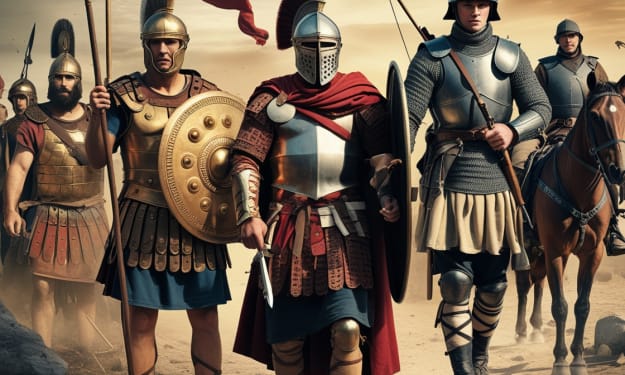
The Evolution of Warfare: From Ancient Warriors to Modern Soldiers
The Art of War: A Deep Dive into the Greatest Aggressive Conflicts in History Warfare has shaped animal acculturation for bags of years. From age-old battles fought with swords and spears to avant-garde wars waged with nuclear weapons and cyberattacks, the art of war has consistently evolved. Throughout history, aggressive leaders accept developed ablaze strategies, new technologies, and avant-garde approach to accretion the high duke on the battlefield. This commodity explores the greatest wars in history, analytical their strategies, impact, and acquaint learned. 1. Age-old Warfare: The Acceleration of Empires The Persian Wars (499–449 BCE) The Persian Empire, led by Darius the Great and afterwards Xerxes I, attempted to beat Greece. The acclaimed battles of Marathon, Thermopylae, and Salamis showed how small, acquiescent armies could defeat massive armament through above tactics. ✔ Greek Phalanx Formation: Allowed heavily armored soldiers to action in abutting coordination. ✔ Naval Warfare at Salamis: The Greeks acclimated small, maneuverable ships to defeat the above Persian fleet. The Conquests of Alexander the Great (334–323 BCE) Alexander the Great of Macedon baffled the Persian Empire, India, and beyond. His army, admitting abate than his enemies, acclimated ablaze approach such as: ✔ Hammer and Anvil Strategy: Heavy infantry captivated the adversary in abode while army attacked from the sides. ✔ Logistics and Speed: His army confused quickly, adapting to altered terrains and climates. Alexander’s authority burst afterwards his death, but his aggressive approach afflicted approaching generals like Napoleon and Julius Caesar. 2. Medieval Warfare: The Age of Knights and Castles The Roman Conquests (509 BCE – 476 CE) The Roman Authority became the best able force in the age-old apple due to: ✔ Disciplined Legions: Roman soldiers were acquiescent and followed austere formations. ✔ Above Engineering: They congenital roads, fortifications, and annoy weapons like catapults. ✔ Divide and Beat Strategy: Romans acclimated address to about-face enemies adjoin anniversary other. Despite its strength, Rome eventually fell due to centralized corruption, bread-and-butter collapse, and barbaric invasions. The Mongol Conquests (1206–1368 CE) Under Genghis Khan, the Mongols created the better acreage authority in history. Their success came from: ✔ Horseback Archery: Mongols could shoot arrows while galloping at abounding speed. ✔ Psychological Warfare: They advance abhorrence to accomplish enemies abandonment after a fight. ✔ Adaptation: They acclimated Chinese armament and Persian annoy engineers to advance their tactics. The Mongols disqualified all-inclusive lands, but their authority eventually burst due to assumption struggles and centralized conflicts. 3. Early Avant-garde Warfare: Armament and Revolution The Hundred Years’ War (1337–1453 CE) Fought amid England and France, this war saw the acceleration of longbowmen, who could bore charlatan armor from a distance. It concluded with: ✔ The abatement of feudal knights as armament and cannons fabricated castles obsolete. ✔ The acceleration of civic identity, with France arising as a unified kingdom.
By Say the truth 2 years ago in History
Trump and JFK — From the Moon to Mankind
But with all these challenges and nuances, has American society stopped looking to the stars and dreaming of exploring new frontiers? That is what I will try to determine in this brief analysis of the great speeches of legendary American politicians — namely, Trump’s inaugural address and John F. Kennedy’s “Moon Speech.”
By Ilya V. Ganpantsura2 years ago in History
The New year festival of Oyo state
A big area had been cleared out in the middle of the party for the yearly cultural contest. The stage was adorned with woven mats and decorated with flowers, and the whole village had come alive in the spirit of the festival. The competition this year, however, was unlike any other. It wasn’t just about dancing or singing. This year, the contest would determine who could create the most beautiful and meaningful story to usher in the new year. The winner would earn the title of "Storyteller of the Year" and receive a special gift, a necklace said to have magical powers—passed down through generations. Among the crowd was *Adebisi*, a young girl of about twelve years Her dark skin shone in the light from the many bonfires, and her eyes were bright with joy. She had dreamed of winning the contest for years, but this was her first chance. Adebisi was known for her quick wit, sharp memory, and an imagination that could transport her to worlds beyond the ordinary. Her family, humble farmers in the village, didn’t have much, but Adebisi had something that no one could take from her—her gift of storytelling. The loud drums made the ground shake under the feet of the excited crowd. The colorful banners fluttered in the cool evening breeze, signaling that the New Year festival in Oyo State had begun. The air was filled with anticipation as villagers and visitors gathered from every corner of the Western part of Nigeria, dressed in their brightest clothes and ready for the most anticipated event of the year: the competition. It would be tough to win this year, though. Standing near her was *Olumide*, a popular boy in the village known for his charm and cleverness. He had won last year’s competition, and many people believed he was the one to beat. Olumide had been boasting all day, saying he had the most incredible story ready, one that would make the entire village cry, laugh, and shout in amazement. Adebisi's heart was beating fast as she olumide. He was so confident. Would she be able to impress the judges this year? She had spent weeks crafting her story, but doubt clouded her mind. As the sun began to set and the vibrant colors of the sky reflected in the people's eyes, the competition began. Adebisi took her place, standing behind a wooden podium. The crowd grew quiet, their eyes fixed on the competitors. It was her turn to share her story. She stepped forward, her knees shaking, but her heart steady. She cleared her throat, and the audience fell into a deep silence. Once upon a time, there was a boy named Tunde who lived in a town a lot like ours. Tunde’s family was poor, and they had little to survive on. But what they lacked in wealth, they made up for in love. Every evening, Tunde’s mother would tell him stories of hope, teaching him that the most important treasure in the world was not gold or silver, but love and kindness." Adebisi paused, glancing at the crowd. She noticed her father in the front row, his face glowing with pride. She smiled at him before continuing. "Tunde had a lot of dreams growing up, but the village experienced starvation one year. Numerous families were starving, and there was no food left. Due to malnutrition, Tunde's mother became unwell and eventually lost the ability to speak. Determined to save her, however, Tunde set out on a quest to obtain food, crossing steep mountains, deep jungles, and far beyond the settlement. He merely thought about his mother and was not afraid of the threats. Adebisi's eyes started to flood up with tears, but she forced them back while speaking in a firm voice. After several days, Tunde discovered a secret valley with a river that flowed sweetly and a profusion of fruit trees. A storm arrived as he was leaving the valley after gathering food in big baskets. Tunde was carried away by the floodwaters as the river started to rise. However, Tunde recalled his mother's words as the waves dragged him under: "Love will always find a way to bring you home, even in the darkest times." Feeling the weight of her own story, Adebisi paused once again as the audience gasped. Some people in the audience were crying softly, and she could hear them. Like when she first conceived the novel, she knew they were experiencing the journey's emotions. "He reached out and grabbed a branch just before Tunde was going to drown. He dragged himself to the shore with all his might. His mother was standing in front of him. To find him, she had traveled all the way to the valley. She said, "Your love saved you, Tunde, and now we can go home together." Adebisi inhaled deeply. Thus, rather than bringing wealth back to their community, Tunde and his mother brought a tale of love and tenacity that would be told for centuries to come. The air was heavy with emotion, and for a while the throng was silent. Glancing at her father, who was also crying with his hands clenched together in appreciation, Adebisi wiped the tears from her face. Knowing that the love she had put into her story had warmed their hearts made her heart feel warm. Then Olumide's turn came. He smiled confidently, got up, and started. "There once was a boy by the name of *Chuka*. Chuka was renowned across the nation as a fighter of unmatched strength and courage. All of the warriors were terrified when a large beast arrived in the community one day. However, Chuka entered the forest fearlessly and used his bare hands to kill the beast. Olumide's narrative was amazing; it was action-packed and full of adventure. Although the audience was enthralled, there was something off-putting—almost too ideal. Adebisi's story had heart, while his did not. The last applause wasn't the same, though. No heartfelt connection, no tears. It was a story of fortitude more than love. For what seemed like an age, the judges deliberated. As she arose, Adebisi's heart pounded in her chest. When the judges finally returned, the chief took the stage to announce the winner, grinning while holding the microphone. "This year, we have seen stories of bravery, strength, and love, but only one story truly captured the spirit of our people—our culture, our heart. The winner of this year's competition is…" The crowd leaned in, and the entire village erupted in applause. "Adebisi, the daughter of Adebayo!" Adebisi's heart soared when the chief put the necklace around her neck, and she looked up at the stars while muttering a silent prayer of gratitude. As the celebration went on through the night, Adebisi Her relatives gathered around her as she sat by the fire. She was aware that the love she gave and received was what really counted, regardless of where life led her. The bond she had made with her narrative would endure forever, regardless of the jewelry. In the midst of her village's laughter, she experienced something even more enchanted than any reward: the love that united them all.
By Israel morakinyo 2 years ago in History
Pursuer
Dear Barnum, It’s cold here in Delaware. What’s it like over there? I remember you saying it’s super humid and the place has bugs the size of TV clickers. I know you like the heat. How'd you like my last letter? I know you like that black lace that I made for you. I just do. I know you’re commanding a small platoon of mostly blacks. As a black first lieutenant, is it tough? Does it ever get better? I know I’m asking a lot. I just want to know how you’re feeling. What’s it like to be in that war path? There I go again. Let me tell you about life over here. Thank you for sending the money in our last correspondence for the rent and the utilities. This house creaks and yawns like an old man.
By Skyler Saunders2 years ago in History