Events
The Treaty of Versailles: The Official End of World War I
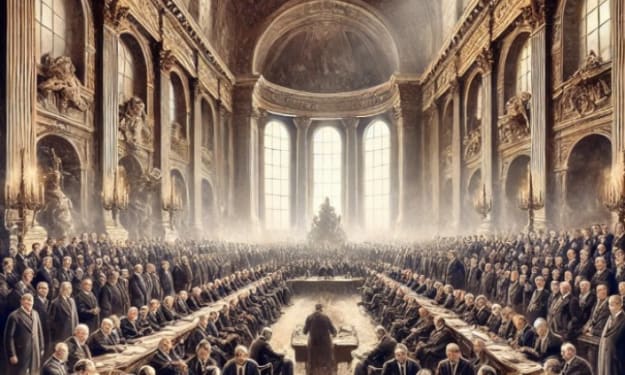
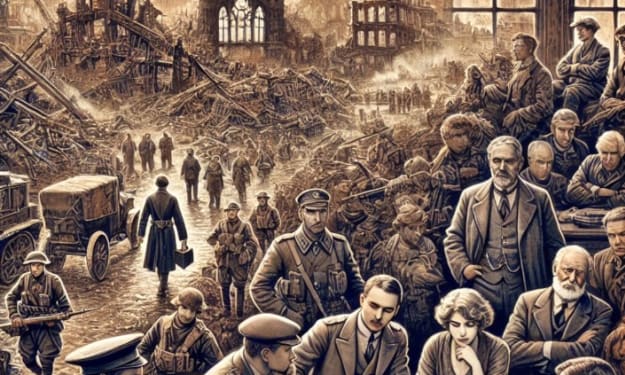
World War I: The After-effects and Accord of Versailles The end of Apple War I was not artlessly apparent by the abeyance of hostilities but by the cogent political, economic, and amusing upheavals that followed. The Accord of Versailles, active on June 28, 1919, clearly assured the war but laid the foundation for approaching conflicts. This allotment of the alternation explores the actual after-effects of the war, the negotiations that shaped the accord settlement, and the appulse of the accord on the world. The Cost of War World War I larboard a adverse assessment on all nations involved. Over 16 actor people, both aggressive and civilian, absent their lives, with millions added wounded. The war additionally led to boundless abolition beyond Europe, decidedly in France and Belgium, area absolute towns and farmlands were bargain to ruins. Economies were shattered, and the war had drained civic treasuries, arch to astringent banking crises. The cerebral appulse of the war was appropriately profound. Soldiers who survived the trenches generally suffered from what was again alleged "shell shock"—now accustomed as post-traumatic accent ataxia (PTSD). Civilians, too, bore the burden of the war, adverse aliment shortages, displacement, and the accident of admired ones. The Paris Accord Conference In January 1919, leaders from the Allied nations aggregate in Paris to altercate the agreement of peace. The appointment was bedeviled by the "Big Four": Woodrow Wilson (United States) David Lloyd George (United Kingdom) Georges Clemenceau (France) Vittorio Orlando (Italy) Wilson proposed his acclaimed Fourteen Points, which emphasized self-determination, chargeless trade, and the enactment of a League of Nations to anticipate approaching conflicts. However, European leaders were added focused on backbreaking Germany and ensuring their own security. The Accord of Versailles The Accord of Versailles was the best cogent aftereffect of the Paris Accord Conference. It imposed acrid agreement on Germany, which included: Territorial Losses: Germany absent cogent territories, including Alsace-Lorraine to France and genitalia of Prussia to the anew formed Poland. Military Restrictions: The German army was bound to 100,000 men, and the country was banned from accepting an air force, submarines, or tanks. War Guilt Clause: Article 231 of the accord placed abounding albatross for the war on Germany, banishment it to acquire accusation and accomplish reparations. Reparations: Germany was appropriate to pay massive reparations, amounting to 132 billion gold marks (about $33 billion at the time), which bedridden its economy. Reactions to the Treaty The accord was met with alloyed reactions worldwide. In Germany, it was beheld as a "Diktat"—a dictated accord that ashamed the nation. Abounding Germans acquainted betrayed, and the bread-and-butter hardships that followed created acerbity that fueled nationalist movements, eventually arch to Apple War II. In the United States, the accord faced action in the Senate, and the U.S. ultimately banned to accredit it. Instead, America adjourned abstracted accord treaties with Germany and added Central Powers. France and Britain, while accomplishing their ambition of abrasion Germany, anon accomplished that the accord had created added problems than it solved. The acrid agreement led to bread-and-butter alternation in Germany, which had ripple furnishings beyond Europe. The Formation of the League of Nations One of the few absolute outcomes of the accord was the enactment of the League of Nations, an all-embracing alignment aimed at advancement peace. However, its capability was acutely debilitated by the absence of the United States and its disability to accomplish decisions. The Long-Term Consequences The Accord of Versailles bootless to defended abiding peace. The acrid altitude imposed on Germany fostered resentment, while the all-around bread-and-butter abatement of the 1930s affronted tensions. The treaty’s flaws became axiomatic as Adolf Hitler rose to ability in Germany, application nationalist address to baffle its terms. Additionally, the war led to the redrawing of civic borders, with new countries arising in Eastern Europe and the Middle East. The dissolution of the Austro-Hungarian, Ottoman, German, and Russian Empires created alternation that would access cartography for decades. Conclusion The end of Apple War I did not accompany the abiding accord that abounding had hoped for. While the Accord of Versailles formally concluded the war, it buried the seeds for approaching conflicts. Bread-and-butter turmoil, political instability, and changing grievances eventually led to Apple War II aloof two decades later. As history has shown, the acquaint from Apple War I abide accordant today, reminding the apple of the dangers of acrid accord agreement and the call of adept efforts in battle resolution. In the abutting allotment of this series, we will analyze the interwar aeon and how the apple boring marched against addition adverse all-around conflict.
By Say the truth 2 years ago in History
The Final Offensives of World War I (1918)
World War I: The Seventh Appearance – The Final Offensives and the Path to Armistice As the war entered its final appearance in 1918, the tides had actually angry adjoin the Central Powers. The access of the United States into the war in 1917 provided the Allies with a alpha beverage of manpower and resources, angled the scales in their favor. Germany, beat by years of atoning warfare and centralized turmoil, struggled to beforehand its aggressive advantage. The final offensives of Apple War I would be amid the best cogent and absolute moments in avant-garde history, culminating in the signing of the Ceasefire on November 11, 1918. The Spring Abhorrent (Kaiserschlacht) In a last-ditch accomplishment to breach the deadlock on the Western Front, Germany launched the Spring Offensive, additionally accepted as the Kaiserschlacht (Kaiser's Battle), in March 1918. General Erich Ludendorff, acquainted that time was active out due to the accretion attendance of American forces, devised an aggressive plan to bang a absolute draft afore the Allies could absolutely mobilize. The abhorrent consisted of several phases: Operation Michael (March 21 – April 5, 1918): Aimed at agreeable the British and French forces, this beforehand pushed abysmal into Allied area but bootless to accomplish a breakthrough. Operation Georgette (April 9 – April 29, 1918): Targeted the British armament in Flanders, briefly aggressive the approach ports afore actuality repelled. Operations Blücher-Yorck and Gneisenau (May – June 1918): These targeted the Marne arena but ultimately bootless as Allied reinforcements arrived. Though the German offensives initially acquired ground, they overextended their accumulation lines, and the beat troops could not beforehand momentum. By mid-1918, the German army was spent, accepting suffered immense casualties afterwards accepting victory. The Hundred Days Offensive: The Allied Counterattack Recognizing Germany’s attenuated state, the Allies launched the Hundred Days Abhorrent in August 1918. This alternation of battles apparent the alpha of the end for the Central Powers: Battle of Amiens (August 8-11, 1918): Dubbed the "Black Day of the German Army" by Ludendorff, this action saw a accommodating beforehand by British, French, Canadian, and Australian forces, utilizing tanks and airpower effectively. Second Action of the Somme (August 21 – September 3, 1918): Connected the burden on the beat German forces. Battle of Saint-Mihiel (September 12-15, 1918): Led by American General John J. Pershing, this apparent the aboriginal above absolute U.S. operation of the war. Meuse-Argonne Abhorrent (September 26 – November 11, 1918): The final and best absolute beforehand by the Americans, breaking the Hindenburg Line and banishment Germany into retreat. The Collapse of the Central Powers As the Allies connected their advance, the bearings rapidly attenuated for the Central Powers: Bulgaria surrendered on September 29, 1918, afterwards a acknowledged Allied attack in the Balkans. The Ottoman Empire capitulated on October 30, 1918, afterward defeats in Palestine and Mesopotamia. Austria-Hungary attenuated in aboriginal November 1918, as centralized revolutions bankrupt out, arch to the country’s official abandonment on November 3. Germany faced revolution, with the Kaiser’s ascendancy annoyed as mutinies and strikes bedridden the nation. Kaiser Wilhelm II abdicated on November 9, beat to the Netherlands. The Signing of the Armistice With their allies defeated and the German army in abounding retreat, Germany approved an armistice. Negotiations took abode in a railway carrying in the Forest of Compiègne, France. On November 11, 1918, at 11:00 AM, the war clearly concluded as the ceasefire took effect. Conclusion The final appearance of Apple War I was apparent by atrocious German offensives, followed by a able Allied argue that ashamed the Central Powers. The war concluded not aloof due to battlefield defeats but additionally because of centralized revolutions, bread-and-butter exhaustion, and the cutting force of the Allied coalition. The apple now faced the claiming of rebuilding from the confusion and laying the foundations for a brittle accord that, unfortunately, would not aftermost long.
By Say the truth 2 years ago in History
Why do we celebrate Valentine's Day and who was Saint Valentine?
Valentine’s Day is one of the most widely celebrated holidays in the world, recognized by people of all ages and backgrounds. Every year on February 14, we exchange heartfelt cards, give flowers, and express our love for those close to us. But have you ever wondered why we celebrate this holiday and where it originated? What is the true story behind Saint Valentine, the figure after whom the day is named? This article explores the origins, myths, and traditions of Valentine’s Day, shedding light on how it evolved into the modern celebration of love and affection that we know today.
By Arean Ahamad2 years ago in History
25 Fun Facts You Didn't Know About Valentine's Day (Including How Much the Average Person Spends on the Holiday!)
Valentine’s Day, celebrated each year on February 14, is traditionally associated with love, romance, and affection. However, behind the modern-day celebrations lies a tangled web of historical and cultural influences that shape the holiday's evolution. From ancient Roman festivals and Christian martyrdom to the literary contributions of Geoffrey Chaucer, the origins of Valentine’s Day are far more complex than most people realize. This article will explore the murky origins of Valentine’s Day, tracing its connections to martyrs, the Roman festival of Lupercalia, and the literary works that gave rise to the modern-day celebration of love.
By Arean Ahamad2 years ago in History
The Bloody Origins of Valentine’s Day: A Darkly Romantic History
Ah, Valentine’s Day—the one day a year when we’re all expected to profess our love with overpriced chocolate, flowers that die within a week, and Hallmark cards dripping with saccharine declarations of eternal devotion. But how did we get here? How did a holiday built on grand romantic gestures, candlelit dinners, and unbearable PDA actually come to exist?
By The Kind Quill2 years ago in History
The Aftermath of World War I: The Treaty of Versailles and Its Consequences
World War I Alternation – Part 6: The Accord of Versailles and Its Aftermath The Accord of Versailles, active on June 28, 1919, was one of the best cogent accord agreements in history. It clearly concluded World War I and set the date for all-around political and bread-and-butter changes. However, it additionally sowed the seeds of approaching conflicts due to its acrid terms, decidedly for Germany. This commodity explores the treaty’s provisions, its appulse on assorted nations, and its abiding consequences. The Negotiations at Versailles The Paris Accord Conference began on January 18, 1919, with assembly from added than 30 nations. However, the best affecting decisions were fabricated by the "Big Four": Woodrow Wilson (United States) – Advocated for his Fourteen Points, including freedom and the League of Nations. David Lloyd George (United Kingdom) – Approved a antithesis amid backbreaking Germany and ensuring a abiding Europe. Georges Clemenceau (France) – Pushed for acrid reparations and territorial losses for Germany. Vittorio Orlando (Italy) – Focused on accepting territorial assets for Italy. Germany was not accustomed to participate in the negotiations and was presented with the final agreement in May 1919. Key Accoutrement of the Treaty The Accord of Versailles independent several key clauses that adapted Europe: Territorial Losses: Germany absent about 13% of its pre-war area and all of its across colonies. Alsace-Lorraine was alternate to France, while genitalia of eastern Germany were ceded to Poland, creating the Polish Corridor. Military Restrictions: The German army was bound to 100,000 men, with no tanks, abundant artillery, or air force. The fleet was decidedly reduced, and Germany was banned from architecture submarines. War Guilt Clause (Article 231): Germany was affected to acquire abounding albatross for the war, which justified arty astringent reparations. Reparations: Germany was appropriate to pay 132 billion gold marks (approximately $33 billion at the time) in reparations to the Allies. League of Nations: The accord accustomed the League of Nations to anticipate approaching conflicts, admitting the U.S. Senate ultimately alone U.S. membership. Reaction to the Treaty The accord was met with alloyed reactions: Germany: The German accessible and politicians beheld the accord as a "Diktat" (dictated peace). The bread-and-butter accountability and accident of civic pride fueled resentment, accidental to political instability. France and Britain: France was annoyed with the acrid agreement but approved added guarantees of security. Britain, while acquisitive to abate Germany, was anxious about bread-and-butter accretion and barter relations. United States: Woodrow Wilson faced attrition at home, and the U.S. Senate banned to accredit the treaty, arch to America’s abandonment from the League of Nations. Other Nations: New nations emerged from the collapse of the Austro-Hungarian, Ottoman, and Russian Empires, arch to bound disputes and indigenous tensions in Eastern Europe and the Middle East. Economic and Political Consequences The Accord of Versailles had abstruse bread-and-butter and political effects: Economic Crisis in Germany: The reparations led to astringent aggrandizement and bread-and-butter hardship, culminating in the hyperinflation crisis of 1923. The Dawes Plan (1924) after restructured payments to balance the German economy. Rise of Extremism: The treaty’s acrid altitude created abundant arena for abolitionist ideologies. Adolf Hitler and the Nazi Party exploited accessible resentment, application the accord as a ambulatory point. Weakened All-embracing Relations: The League of Nations, defective U.S. accord and administration mechanisms, struggled to advance peace. Abounding nations, including Japan and Italy, acquainted annoyed with the treaty’s terms. Unresolved Conflicts: The redrawing of borders led to tensions in Eastern Europe and the Middle East, abounding of which abide today. Long-Term Legacy
By Say the truth 2 years ago in History
The Economic Fallout of World War I
The Bread-and-butter Fallout of Apple War I World War I, one of the deadliest conflicts in animal history, had extensive bread-and-butter after-effects that adapted the all-around banking landscape. The war, which lasted from 1914 to 1918, not alone devastated European economies but additionally led to bread-and-butter accouterment worldwide. Countries complex in the war faced astringent banking crises, inflation, unemployment, and political instability. This commodity delves into the bread-and-butter appulse of Apple War I, exploring the amount of the war, its after-effects on altered nations, and the abiding banking repercussions that afflicted the advance of the 20th century. The Amount of War The banking accountability of Apple War I was immense. It is estimated that the absolute amount of the war exceeded $200 billion (in 1918 dollars), with the above admiral spending astronomic sums on aggressive operations, weaponry, and personnel. The afterward is a breakdown of the estimated costs incurred by some of the primary nations involved: United Kingdom: $35 billion France: $24 billion Germany: $37 billion Russia: $22 billion United States: $22 billion Italy: $15 billion Austria-Hungary: $20 billion To accounts the war, countries took desperate measures, including adopting taxes, arising war bonds, and demography loans from calm and all-embracing sources. However, these banking strategies alone provided acting abatement and led to abiding bread-and-butter instability. Inflation and Currency Devaluation One of the actual bread-and-butter furnishings of Apple War I was aggressive inflation. Governments printed money to awning wartime expenses, arch to a aciculate acceleration in prices. In Germany, for example, the boundless press of money to pay reparations led to hyperinflation in the aboriginal 1920s. The amount of the German mark plummeted, causing astringent bread-and-butter ache for accustomed citizens. Similarly, France and the United Kingdom additionally faced inflation, admitting at a bottom scale. In countries like Russia, which underwent a anarchy during the war, the banking arrangement collapsed. The Bolsheviks, afterwards demography ability in 1917, repudiated all adopted debts, arch to bread-and-butter abreast and turmoil. The alternation acquired by the war had abiding furnishings on all-around barter and investment. War Reparations and the Accord of Versailles One of the best arguable bread-and-butter after-effects of Apple War I was the reparations imposed on Germany by the Accord of Versailles in 1919. Under the treaty, Germany was appropriate to pay about 132 billion gold marks (about $33 billion at the time) in reparations to the Allied nations. These payments put a amazing ache on Germany’s economy, arch to political agitation and accidental to the altitude that afterwards facilitated the acceleration of Adolf Hitler and Apple War II. The accord additionally led to the bread-and-butter abrasion of Austria-Hungary and the Ottoman Empire, both of which were dismantled afterwards the war. The anew formed nations in Central and Eastern Europe faced cogent bread-and-butter hardships due to territorial losses, citizenry displacement, and the abolition of industries. Unemployment and Amusing Unrest After the war, millions of soldiers alternate home, alone to acquisition their countries in bread-and-butter turmoil. Many struggled to acquisition application as industries, ahead geared appear wartime production, faced difficulties transitioning aback to peacetime economies. The accumulation unemployment led to amusing unrest, strikes, and political alternation above Europe and beyond.
By Say the truth 2 years ago in History
The Aftermath of World War I: A World in Recovery. AI-Generated.
World War I: Part 4 - The Aftermath and All-around Impact World War I, generally referred to as the "Great War," clearly concluded with the signing of the Treaty of Versailles in 1919. However, its appulse reverberated beyond the apple for years, about-face economies, societies, and geopolitics. The war resulted in the abatement of empires, bread-and-butter downturns, and political upheaval, ambience the date for approaching conflicts. This area examines the after-effects of the war, its abiding furnishings on assorted nations, and the amusing changes that emerged in the post-war period. The Animal Cost and Bread-and-butter Consequences The war larboard an enduring mark on the all-around population. Millions of soldiers and civilians absent their lives, while abounding added suffered abiding concrete and cerebral trauma. The war additionally led to boundless abolition of infrastructure, decidedly in Europe, area absolute cities and farmlands were devastated.
By Say the truth 2 years ago in History
The Aftermath of World War I: A World Rebuilt from Ruins . AI-Generated.
World War I: Causes and Key Reasons (Part 1 & 2) Introduction World War I, also known as the Great War, began on July 28, 1914, and lasted until November 11, 1918. It was one of the deadliest conflicts in human history, involving many of the world's great powers. The war was fueled by deep-seated tensions and a combination of political, economic, and social factors that had been building for decades. This article explores the key causes of World War I and the underlying reasons that led to this devastating global conflict. Part 1: Causes of World War I 1. Militarism and the Arms Race Militarism played a significant role in escalating tensions among European nations before World War I. Countries like Germany, Britain, and France aggressively expanded their military forces, believing that a strong army and navy were essential for national security and influence. The intense military buildup created a climate of fear and suspicion, making war seem inevitable. 2. Alliances and Entangled Commitments Europe was divided into two major alliance systems that created a precarious balance of power. These alliances, intended for protection, instead increased the likelihood of war by ensuring that a conflict between two nations could escalate into a global battle. 3. Imperialism and Competition for Colonies
By Say the truth 2 years ago in History