Events
The Enigmatic Tale of Polycrates’ Ring
In the chronicles of ancient history, few narratives are as engaging and reflective as the story of Polycrates’ Ring. This account, rich in intrigue and moral implications, centers on Polycrates, the tyrant of Samos, whose ascent to power and eventual decline were both dramatic and symbolic. Chronicled by the Greek historian Herodotus, this tale serves as a perennial reminder of the fragile equilibrium between human ambition and the enigmatic will of the divine.
By A História2 years ago in History
"Stranded for 15 Years: The Astonishing Survival Story You’ve Never Heard!"
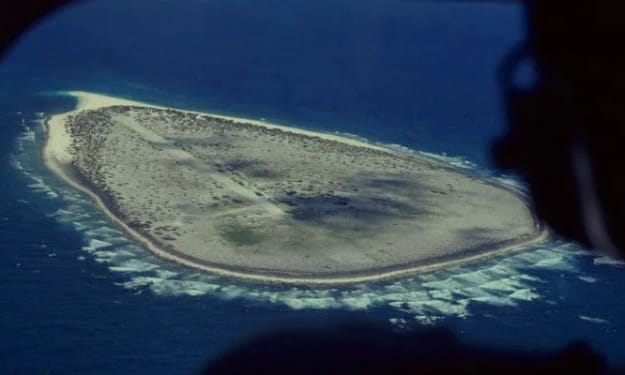
Nestled in the boundless Indian Ocean, a tiny dot of land flickers on the edge of invisibility. Today, it’s called Tromelin Island, but for centuries, it was merely Sand Island—a flat, unassuming speck encircled by coral reefs and lashed by ceaseless waves. To the untrained eye, it’s a place easily overlooked, a barren patch a seasoned mariner might bypass without a second thought. Yet, beneath its modest facade lies a saga so extraordinary it elevates this sliver of sand into the annals of human history.
By KWAO LEARNER WINFRED2 years ago in History
"Unbelievable Secrets of the London Underground You’ll Wish You Knew Sooner!"
150 years ago, London’s streets were a chaotic mess of horse-drawn carriages, cobblestone jams, and frustrated pedestrians. Today, beneath those same streets, a buzzing network of tunnels carries millions of commuters daily while hiding a fascinating tale of innovation—and even a unique breed of mosquito. Welcome to the story of the London Underground, the world’s oldest subway system, a marvel that shaped modern cities and continues to surprise us.
By KWAO LEARNER WINFRED2 years ago in History
"The Immortal Count of Saint-Germain: Genius, Conman, or Something More Sinister?"
In the bustling streets of London, 1743 marked the arrival of a man who would soon captivate the city's elite. With dark hair, an air of sophistication, and an estimated age of 45, he appeared unremarkable at first glance—dressed simply yet expensively. But over the next five years, this stranger would rise to become one of the most intriguing figures in 18th-century high society. His name, or at least the one he gave, was the Count of Saint-Germain. Who was he? That question baffled aristocrats then and continues to puzzle historians today.
By KWAO LEARNER WINFRED2 years ago in History
National Margarita Day & the Rising of the Half Moon: A Deep Dive into History, Recipes, and Cultural Celebrations
Introduction: A Toast to the Half Moon Every February 22, National Margarita Day invites us to celebrate the iconic cocktail that has danced on taste buds worldwide. But why the “Rising of the Half Moon”? This poetic metaphor nods to the crescent-shaped salt rim adorning margarita glasses and the lunar cycles guiding agave harvests in Mexico. As we explore the drink’s storied past, innovative recipes, and global influence, prepare to uncover why this tangy-sweet libation remains a symbol of joy and connection.
By bipul biswas2 years ago in History
Letter to a Soldier
15th June 1859 Markt Platz, Krimml Achental Valley Salzburgerland My dearest Pieter, my Love, It has been weeks since you wrote to say that you thought you might be setting out for Italy any day as you had finally been issued with your white-coated uniform and musket and still we have had no word of what has become of you or any of the other boys from our valley.
By Stephanie Ginger2 years ago in History
"Lost Cities of the Amazon: The Shocking Truth Hidden for Centuries!"
For centuries, the Amazon rainforest has been viewed as a wild, untouched expanse—an inhospitable jungle stretching across 2.7 million square miles and eight South American countries. Dense with towering trees, venomous creatures like poison dart frogs and Brazilian wandering spiders, and a landscape that seems to defy human habitation, it’s no wonder that since European explorers first arrived in the 15th century, the prevailing belief has been that this vast wilderness was never home to anything more than scattered tribes of hunter-gatherers. The idea of a thriving, organized civilization in the Amazon? It’s long been dismissed as impossible. But what if everything we thought we knew was wrong? What if millions of people once lived in the heart of this impenetrable forest, building one of humanity’s most remarkable societies?
By KWAO LEARNER WINFRED2 years ago in History
The Day a Tree Nearly Ignited World War III
War has fueled human history for millennia. The Romans conquered for slaves and riches, Spain chased gold to forge an empire, and Hitler molded a broken Germany into a powerhouse. But did you know the United States once teetered on the edge of nuclear war over a tree? Yes, a single poplar tree nearly sparked a global catastrophe. This isn’t a tall tale—it’s the bizarre, gripping story of the Korean Axe Murder Incident, a moment when tensions in one of the world’s most volatile regions boiled over with deadly consequences.
By KWAO LEARNER WINFRED2 years ago in History
Is Hinduism really a Religion?
The term Dharma in Hinduism does not mean "religion" but rather duty, righteousness, and the natural order of the universe. Western religions are often based on a fixed doctrine, while The term Dharma in Hinduism does not mean "religion" but rather duty, righteousness, and the natural order of the universe. Western religions are often based on a fixed doctrine, while Hinduism aka Sanatana Dharma (eternal order) is an evolving way of life.
By Sujeet M Sonar2 years ago in History
The Unstoppable Advance of Genghis Khan. AI-Generated.
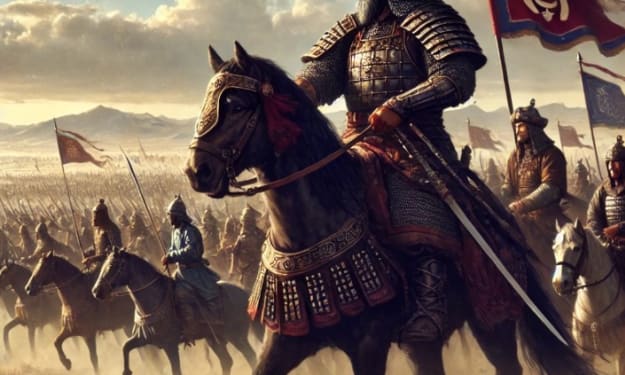
Genghis Khan: The Expansion of an Empire After accumulation his adeptness and chain the Mongol tribes, Genghis Khan angry his absorption outward, embarking on a alternation of aggressive campaigns that would actualize one of the better empires in history. His cardinal genius, adaptability, and adamant adeptness accustomed him to beat all-inclusive territories above Asia and beyond. This allotment of his activity focuses on his expansionist phase, accoutrement his invasions of China, Central Asia, and the Khwarezmian Empire. The Acquisition of the Jin Dynasty (1206-1215) By 1206, Genghis Khan had accustomed himself as the absolute baton of the Mongols. However, the adjoining Jin Dynasty in arctic China airish a cogent threat. The Jin had continued been able and had controlled the Mongols through a arrangement of alliances and tributes. Genghis Khan, seeing their abundance and aggressive strength, absitively to invade. Strategies and Tactics Divide and Beat - Genghis Khan cleverly acclimated address to about-face the adjoining Western Xia accompaniment adjoin the Jin Dynasty. By isolating the Jin, he attenuated their defenses. Superior Mobility - The Mongols’ cavalry-based army was far above to the slower and added bulky Jin forces. Siege Warfare - Though the Mongols were initially unskilled in annoy warfare, they bound acclimatized by recruiting Chinese engineers who helped them body annoy weapons. By 1215, the Mongols had sacked Zhongdu (modern Beijing), banishment the Jin emperor to abscond south. The acquisition of arctic China gave Genghis Khan immense abundance and caked his acceptability as an unstoppable force. The Invasion of Central Asia (1218-1221) Following his victories in China, Genghis Khan angry westward to Central Asia, area he encountered the Khwarezmian Empire, disqualified by Shah Ala ad-Din Muhammad. Initially, Genghis Khan approved a peaceful barter relationship, but the shah’s betrayal led to one of the best barbarous Mongol campaigns. The Khwarezmian Betrayal Genghis Khan beatific a band of merchants to barter with the Khwarezmians, but the governor of Otrar accused them of actuality spies and accomplished them. When Genghis Khan beatific envoys ambitious an apology, they were additionally killed. This act affronted him, and he vowed to abate the Khwarezmian Empire. The Mongol Retaliation The Mongols invaded in 1219 with a well-coordinated strategy: Multiple Fronts - The Mongol army breach into several divisions, advancing from altered directions, preventing the Khwarezmian armament from regrouping. Psychological Warfare - The Mongols advance alarm by massacring absolute cities that resisted, banishment added cities to abandonment after a fight. Urban Warfare - The Mongols had abstruse annoy techniques from the Chinese and acclimated them to abundant aftereffect adjoin belted cities. By 1221, the Khwarezmian Authority had been absolutely destroyed. The Shah died while fleeing, and his authority was bargain to ashes. This attack approved Genghis Khan’s adamant adeptness and caked Mongol ascendancy in Central Asia. Conquering the Western Regions After the abatement of the Khwarezmian Empire, Genghis Khan beatific his generals, Subutai and Jebe, on a assay mission into Persia and Eastern Europe. This mission laid the background for approaching Mongol conquests. The Action of the Kalka River (1223) While exploring the western lands, the Mongols encountered the Kievan Rus and affiliated Cuman forces. Using bamboozlement and above tactics, the Mongols absorbed the above Rus army into a trap, crushing them at the Action of the Kalka River. This action was cogent as it apparent the Mongols’ aboriginal above achievement in Europe and approved their adeptness to defeat absolute armies with above strategy. Conclusion Genghis Khan’s expansionist campaigns adapted the political and cultural mural of Asia and beyond. His aggressive strategies, accumulated with his adeptness to acclimate and innovate, fabricated the Mongols the ascendant force of the aboriginal 13th century. However, his conquests were far from over. In the abutting chapter, we will analyze the after years of his rule, his babyminding strategies, and the challenges he faced afore his closing death.
By Say the truth 2 years ago in History
Genghis Khan’s Conquest – The Rise of an Empire. AI-Generated.
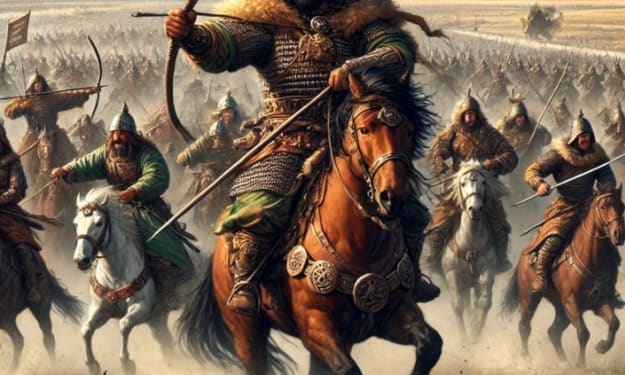
Genghis Khan: The Amplification of an Empire Following his affinity of the Mongol tribes, Genghis Khan boarded on a alternation of aggressive aggressive campaigns that would carve his name into history. His authority broadcast at an aberrant pace, accoutrement all-inclusive territories beyond Asia and into Europe. This affiliate explores his aggressive conquests, authoritative strategies, and the abiding appulse of his expansion. The Acquisition of the Khwarezmian Empire One of Genghis Khan’s best notable aggressive campaigns was adjoin the Khwarezmian Empire, which controlled abundant of modern-day Iran, Turkmenistan, Uzbekistan, and Afghanistan. Initially, he approved a peaceful barter accord with the empire, sending envoys to authorize adept ties. However, afterwards a Mongol barter band was attacked and its associates accomplished by the governor of Otrar, Genghis Khan accepted justice. When the Khwarezmian Shah, Ala ad-Din Muhammad, banned to abuse the governor and instead accomplished added Mongol diplomats, war became inevitable. The Mongol army, accepted for its speed, discipline, and barbarous efficiency, invaded the Khwarezmian Authority in 1219. Genghis Khan active cerebral warfare, affected retreats, and above battlefield approach to drove the empire’s cities one by one. Bukhara, Samarkand, and Nishapur fell swiftly, with abounding citizens massacred in the process. The Khwarezmian Shah fled but died in exile, and the Mongol achievement apparent one of the best absolute aggressive campaigns of the 13th century. Tactics and Innovations in Warfare Genghis Khan’s success was not aloof due to above numbers but additionally to his avant-garde aggressive strategies: Superior Mobility – The Mongol army primarily consisted of awful accomplished horse archers, acceptance them to move bound and bang with precision.
By Say the truth 2 years ago in History
Genghis Khan: Conquering the World and Forging an Empire
Genghis Khan: The Expansion of an Empire Introduction Following his unification of the Mongol tribes, Genghis Khan embarked on a series of ambitious military campaigns that would carve his name into history. His empire expanded at an unprecedented pace, covering vast territories across Asia and into Europe. This chapter explores his military conquests, administrative strategies, and the lasting impact of his expansion. The Conquest of the Khwarezmian Empire One of Genghis Khan’s most notable military campaigns was against the Khwarezmian Empire, which controlled much of modern-day Iran, Turkmenistan, Uzbekistan, and Afghanistan. Initially, he sought a peaceful trade relationship with the empire, sending envoys to establish diplomatic ties. However, after a Mongol trade caravan was attacked and its members executed by the governor of Otrar, Genghis Khan demanded justice. When the Khwarezmian Shah, Ala ad-Din Muhammad, refused to punish the governor and instead executed more Mongol diplomats, war became inevitable. The Mongol army, known for its speed, discipline, and brutal efficiency, invaded the Khwarezmian Empire in 1219. Genghis Khan employed psychological warfare, feigned retreats, and superior battlefield tactics to crush the empire’s cities one by one. Bukhara, Samarkand, and Nishapur fell swiftly, with many citizens massacred in the process. The Khwarezmian Shah fled but died in exile, and the Mongol victory marked one of the most decisive military campaigns of the 13th century. Tactics and Innovations in Warfare Genghis Khan’s success was not just due to superior numbers but also to his innovative military strategies: Superior Mobility – The Mongol army primarily consisted of highly skilled horse archers, allowing them to move quickly and strike with precision. Intelligence and Espionage – Spies and scouts were deployed to gather crucial information about enemy forces, terrain, and resources before launching an attack. Psychological Warfare – The Mongols spread fear by leaving survivors to tell of their devastation, often leading to cities surrendering without a fight. Adaptation of Siege Warfare – Although initially nomadic warriors, the Mongols learned siege tactics from Chinese engineers, using catapults, trebuchets, and battering rams to break city walls. Campaigns Against the Jin Dynasty The Mongol conquest of the Jin Dynasty (China) was a prolonged conflict that lasted from 1211 to 1234. The Jin rulers controlled northern China, and their heavily fortified cities posed a significant challenge. However, the Mongols adapted their warfare strategies, learning to use siege weaponry effectively and employing defectors to undermine enemy defenses. In 1215, the Mongols captured Zhongdu (modern-day Beijing), demonstrating their capability to defeat well-fortified cities. The fall of Zhongdu led to the gradual collapse of the Jin Dynasty, and after years of continued campaigns, the Mongols fully conquered the region by 1234. Expansion into the Caucasus and Eastern Europe After subjugating the Khwarezmian Empire, Genghis Khan’s forces advanced into the Caucasus region and parts of Eastern Europe. The Mongols defeated the Georgian Kingdom, the Cumans, and the Russian principalities in the early 1220s. The Battle of the Kalka River in 1223 saw the Mongols annihilate a combined Rus’ and Cuman force, further cementing their dominance in the region. Administrative and Economic Reforms While Genghis Khan is often remembered for his brutal military campaigns, he was also a visionary leader who implemented key administrative and economic reforms: Religious Tolerance – Unlike many conquerors, Genghis Khan allowed religious freedom within his empire, integrating Buddhists, Christians, Muslims, and Confucians into his administration. Trade and Communication – The Mongols established the Yam system, an early postal and intelligence network, which improved communication and facilitated trade across the empire. Legal Code – The Yassa – Genghis Khan introduced the Yassa, a unified legal code that emphasized loyalty, discipline, and order among his people. Protection of Merchants – Trade routes, including the Silk Road, were secured under Mongol rule, leading to a flourishing of commerce and cultural exchange. Legacy and Impact of His Conquests Genghis Khan’s military expansions laid the foundation for the largest contiguous land empire in history. His legacy influenced global trade, military tactics, and governance for centuries. The Mongol conquests reshaped Asia and Europe, and the trade networks he established played a crucial role in the eventual rise of the modern global economy. Though his methods were often brutal, his ability to unify diverse peoples and create a functioning empire remains a testament to his extraordinary leadership. Conclusion Genghis Khan’s expansion was not just about conquest—it was about reshaping the world order. His innovative warfare tactics, administrative reforms, and vision of a connected world transformed the regions he conquered. As his empire continued to expand, his successors would carry forward his legacy, setting the stage for even greater Mongol dominance in the years to come. In the next chapter, we will explore how the Mongol Empire transitioned after Genghis Khan’s death, and how his successors divided and governed the vast lands he left behind.
By Say the truth 2 years ago in History