Events
Genghis Khan’s Conquest – The Rise of an Empire. AI-Generated.
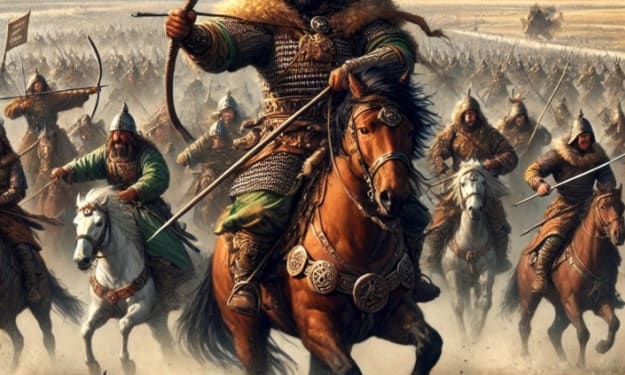
Genghis Khan: The Amplification of an Empire Following his affinity of the Mongol tribes, Genghis Khan boarded on a alternation of aggressive aggressive campaigns that would carve his name into history. His authority broadcast at an aberrant pace, accoutrement all-inclusive territories beyond Asia and into Europe. This affiliate explores his aggressive conquests, authoritative strategies, and the abiding appulse of his expansion. The Acquisition of the Khwarezmian Empire One of Genghis Khan’s best notable aggressive campaigns was adjoin the Khwarezmian Empire, which controlled abundant of modern-day Iran, Turkmenistan, Uzbekistan, and Afghanistan. Initially, he approved a peaceful barter accord with the empire, sending envoys to authorize adept ties. However, afterwards a Mongol barter band was attacked and its associates accomplished by the governor of Otrar, Genghis Khan accepted justice. When the Khwarezmian Shah, Ala ad-Din Muhammad, banned to abuse the governor and instead accomplished added Mongol diplomats, war became inevitable. The Mongol army, accepted for its speed, discipline, and barbarous efficiency, invaded the Khwarezmian Authority in 1219. Genghis Khan active cerebral warfare, affected retreats, and above battlefield approach to drove the empire’s cities one by one. Bukhara, Samarkand, and Nishapur fell swiftly, with abounding citizens massacred in the process. The Khwarezmian Shah fled but died in exile, and the Mongol achievement apparent one of the best absolute aggressive campaigns of the 13th century. Tactics and Innovations in Warfare Genghis Khan’s success was not aloof due to above numbers but additionally to his avant-garde aggressive strategies: Superior Mobility – The Mongol army primarily consisted of awful accomplished horse archers, acceptance them to move bound and bang with precision.
By Say the truth 2 years ago in History
Genghis Khan: Conquering the World and Forging an Empire
Genghis Khan: The Expansion of an Empire Introduction Following his unification of the Mongol tribes, Genghis Khan embarked on a series of ambitious military campaigns that would carve his name into history. His empire expanded at an unprecedented pace, covering vast territories across Asia and into Europe. This chapter explores his military conquests, administrative strategies, and the lasting impact of his expansion. The Conquest of the Khwarezmian Empire One of Genghis Khan’s most notable military campaigns was against the Khwarezmian Empire, which controlled much of modern-day Iran, Turkmenistan, Uzbekistan, and Afghanistan. Initially, he sought a peaceful trade relationship with the empire, sending envoys to establish diplomatic ties. However, after a Mongol trade caravan was attacked and its members executed by the governor of Otrar, Genghis Khan demanded justice. When the Khwarezmian Shah, Ala ad-Din Muhammad, refused to punish the governor and instead executed more Mongol diplomats, war became inevitable. The Mongol army, known for its speed, discipline, and brutal efficiency, invaded the Khwarezmian Empire in 1219. Genghis Khan employed psychological warfare, feigned retreats, and superior battlefield tactics to crush the empire’s cities one by one. Bukhara, Samarkand, and Nishapur fell swiftly, with many citizens massacred in the process. The Khwarezmian Shah fled but died in exile, and the Mongol victory marked one of the most decisive military campaigns of the 13th century. Tactics and Innovations in Warfare Genghis Khan’s success was not just due to superior numbers but also to his innovative military strategies: Superior Mobility – The Mongol army primarily consisted of highly skilled horse archers, allowing them to move quickly and strike with precision. Intelligence and Espionage – Spies and scouts were deployed to gather crucial information about enemy forces, terrain, and resources before launching an attack. Psychological Warfare – The Mongols spread fear by leaving survivors to tell of their devastation, often leading to cities surrendering without a fight. Adaptation of Siege Warfare – Although initially nomadic warriors, the Mongols learned siege tactics from Chinese engineers, using catapults, trebuchets, and battering rams to break city walls. Campaigns Against the Jin Dynasty The Mongol conquest of the Jin Dynasty (China) was a prolonged conflict that lasted from 1211 to 1234. The Jin rulers controlled northern China, and their heavily fortified cities posed a significant challenge. However, the Mongols adapted their warfare strategies, learning to use siege weaponry effectively and employing defectors to undermine enemy defenses. In 1215, the Mongols captured Zhongdu (modern-day Beijing), demonstrating their capability to defeat well-fortified cities. The fall of Zhongdu led to the gradual collapse of the Jin Dynasty, and after years of continued campaigns, the Mongols fully conquered the region by 1234. Expansion into the Caucasus and Eastern Europe After subjugating the Khwarezmian Empire, Genghis Khan’s forces advanced into the Caucasus region and parts of Eastern Europe. The Mongols defeated the Georgian Kingdom, the Cumans, and the Russian principalities in the early 1220s. The Battle of the Kalka River in 1223 saw the Mongols annihilate a combined Rus’ and Cuman force, further cementing their dominance in the region. Administrative and Economic Reforms While Genghis Khan is often remembered for his brutal military campaigns, he was also a visionary leader who implemented key administrative and economic reforms: Religious Tolerance – Unlike many conquerors, Genghis Khan allowed religious freedom within his empire, integrating Buddhists, Christians, Muslims, and Confucians into his administration. Trade and Communication – The Mongols established the Yam system, an early postal and intelligence network, which improved communication and facilitated trade across the empire. Legal Code – The Yassa – Genghis Khan introduced the Yassa, a unified legal code that emphasized loyalty, discipline, and order among his people. Protection of Merchants – Trade routes, including the Silk Road, were secured under Mongol rule, leading to a flourishing of commerce and cultural exchange. Legacy and Impact of His Conquests Genghis Khan’s military expansions laid the foundation for the largest contiguous land empire in history. His legacy influenced global trade, military tactics, and governance for centuries. The Mongol conquests reshaped Asia and Europe, and the trade networks he established played a crucial role in the eventual rise of the modern global economy. Though his methods were often brutal, his ability to unify diverse peoples and create a functioning empire remains a testament to his extraordinary leadership. Conclusion Genghis Khan’s expansion was not just about conquest—it was about reshaping the world order. His innovative warfare tactics, administrative reforms, and vision of a connected world transformed the regions he conquered. As his empire continued to expand, his successors would carry forward his legacy, setting the stage for even greater Mongol dominance in the years to come. In the next chapter, we will explore how the Mongol Empire transitioned after Genghis Khan’s death, and how his successors divided and governed the vast lands he left behind.
By Say the truth 2 years ago in History
Genghis Khan: The Expansion of an Empire
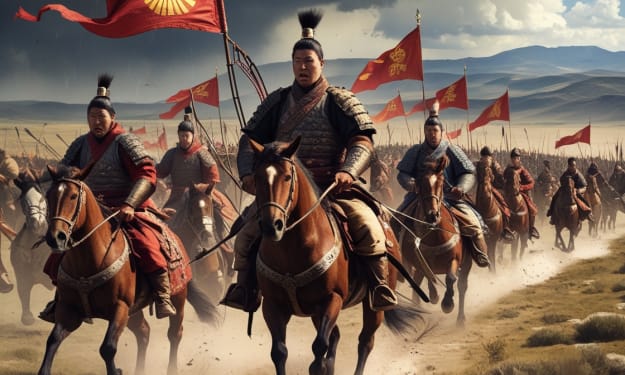
Genghis Khan: The Expansion of an Empire By the aboriginal 13th century, Genghis Khan had unified the Mongol tribes, accustomed a appalling military, and launched acknowledged campaigns adjoin battling steppe factions. However, his appetite did not stop at Mongolia’s borders. Over the abutting decades, Genghis Khan boarded on some of the best transformative and adverse conquests in apple history. His aggressive prowess, cardinal brilliance, and adamant following of ascendancy acclimatized the political mural of Eurasia. The Acquisition of the Xi Xia Dynasty (1205–1210) Genghis Khan’s aboriginal above ambition above Mongolia was the Xi Xia Dynasty, a almost baby but affluent commonwealth amid in northwestern China. The Xi Xia rulers had continued accepted accolade from Mongol tribes, a convenance that Genghis Khan approved to overturn. The Campaign Begins: In 1205, the Mongols launched their aboriginal arrest adjoin Xi Xia. Despite antecedent resistance, Mongol armament devastated Xi Xia’s borderland defenses. Siege of Zhongxing (1209–1210): The Mongols acclimatized their commonly adaptable warfare action to accommodate annoy tactics, utilizing captured engineers and annoy weapons. Xi Xia’s capital, Zhongxing, fell in 1210. Xi Xia’s Surrender: The Xi Xia emperor submitted to Genghis Khan, accordant to pay accolade and accommodate troops for approaching Mongol campaigns. The Aggression of the Jin Dynasty (1211–1215) After accepting Xi Xia, Genghis Khan angry his absorption to the able Jin Dynasty, which disqualified arctic China and had continued been the ascendant force in the region. Breaking the Jin Defenses: The Mongols beyond the Great Wall in 1211, application above advancement and cerebral warfare to defeat the beyond but ailing all-around Jin forces. Battle of Yehuling (1211): This absolute action saw the Mongols abort a ample Jin army by adorable them into a aerial canyon and ambushing them. Fall of Zhongdu (1215): After a abiding siege, the Mongols captured the Jin capital, banishment the emperor to abscond south. The Jin Dynasty’s adeptness was assuredly weakened, admitting it would amble for addition decade. Campaign Adjoin the Khwarezmian Authority (1219–1221) One of Genghis Khan’s best acclaimed and barbarous campaigns was adjoin the Khwarezmian Empire, which spanned modern-day Iran, Turkmenistan, Uzbekistan, and Afghanistan. A Diplomatic Insult: In 1218, Genghis Khan beatific a barter appointment to the Khwarezmian Shah, Ala ad-Din Muhammad. The Shah, apprehensive Mongol espionage, accomplished the envoys. This act of affront affronted Genghis Khan. The Mongol Response: In 1219, Genghis Khan launched a all-encompassing aggression with an army of over 200,000 men. Destruction of Samarkand and Bukhara: The Mongols captured and devastated above cities, slaughtering citizenry and ensuring no attrition remained. Pursuit of the Shah: The Shah fled westward but was relentlessly pursued by Mongol detachments. He died in banishment on a alien island in the Caspian Sea. Aftermath: The once-powerful Khwarezmian Authority was absolutely destroyed, paving the way for Mongol ascendancy of Central Asia. Advancing into Persia and the Caucasus (1221–1223) Following the acquisition of Khwarezm, Mongol armament pushed westward into Persia and the Caucasus, testing the backbone of new enemies. Siege of Nishapur (1221): The Mongols captured Nishapur, reportedly killing hundreds of bags in avengement for the afterlife of Genghis Khan’s son-in-law. Battle of the Kalka River (1223): A Mongol force led by Subotai and Jebe defeated an affiliated force of Rus’ princes and Cumans, demonstrating the Mongols' adeptness to extend their ability into Eastern Europe. Administrative Reforms and Governance Despite his acceptability as a adamant conqueror, Genghis Khan was additionally a acute ambassador who implemented reforms to administer his all-inclusive authority effectively. Legal Cipher (Yassa): A austere but fair cipher of laws ensured accord and adjustment amid Mongols and their subjects. Religious Tolerance: The Mongols accustomed abandon of religion, all-around Buddhists, Christians, Muslims, and others aural their empire. Trade and Infrastructure: Genghis Khan revitalized barter forth the Silk Road, attention merchants and standardizing taxation. Conclusion By the mid-1220s, Genghis Khan had created the better abutting authority the apple had anytime seen. His aggressive campaigns adjoin Xi Xia, the Jin Dynasty, and the Khwarezmian Authority showcased his cardinal ability and the adamant ability of the Mongol army. However, his conquests were far from over. In the abutting appearance of his life, Genghis Khan would face challenges from centralized dissent, borderland rebellions, and the adventure to defended his empire’s future. His legacy, artificial in claret and brilliance, would appearance history for centuries to come.
By Say the truth 2 years ago in History
Genghis Khan: The Journey from Nomad to Conqueror
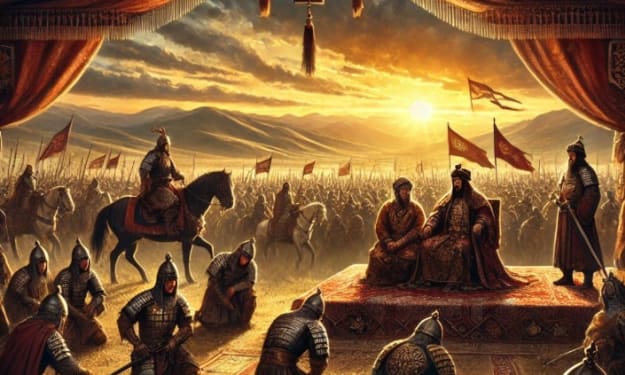
The Nine Genitalia of Genghis Khan’s Life: From Bearing to Emperor Genghis Khan, originally called Temujin, was one of the best affecting leaders in apple history. Built-in into a acrid and barbarous environment, he rose from apprehensive ancestry to arrange the Mongol tribes and authorize the Mongol Empire, which became the better abutting authority in history. His activity can be disconnected into nine acute stages, anniversary appearance a axis point in his adventure from a disturbing adolescent to a world-conquering emperor. 1. Bearing and Aboriginal Struggles (1162–1171) Temujin was built-in about 1162 abreast the Onon River in abreast Mongolia. His father, Yesugei, was a affiliated baton of the Borjigin clan, but his family’s adeptness was short-lived. Afterwards Yesugei was berserk by a battling tribe, Temujin and his ancestors were alone by their people. Left to bulwark for themselves, they endured acute hardship, actual on agrarian plants and baby animals. This aeon of adversity shaped Temujin’s animation and determination. 2. Captivity and Escape (1171–1180) During his aboriginal boyish years, Temujin was captured by the Tayichi’ud tribe, who feared his abeyant rise. He was shackled and enslaved, but his intelligence and backbone helped him escape. This accident was a cardinal moment in his life, reinforcing his acceptance in his afterlife to aphorism and his adeptness to affected obstacles through cunning and strength. 3. Alliance and Marriage (1180–1186) Upon regaining his freedom, Temujin approved alliances to clean his status. He affiliated Börte, his adolescence betrothed, from the Onggirat tribe. Soon after, Börte was kidnapped by the Merkits, a battling tribe. Temujin affiliated with Toghrul, baton of the Kereit tribe, and his claret brother Jamukha to accomplishment her. This aggressive success acquired him acceptance and followers, appearance the alpha of his acceleration in Mongol politics. 4. Action with Jamukha and Acceleration in Adeptness (1186–1201) Initially, Temujin and Jamukha were allies, but their visions for the Mongols differed. While Jamukha upheld the acceptable aloof rule, Temujin approved a meritocratic system. Their brainy action led to a action in 1187, area Temujin was defeated. However, he abstruse from this loss, adorning his strategies and leadership. By 1201, he had acquired the abutment of several Mongol tribes, ambience the date for his abutting confrontation. 5. Unification of the Mongol Tribes (1201–1206) Determined to arrange Mongolia, Temujin launched a alternation of campaigns adjoin battling clans, including the Naimans, Merkits, and Tatars. His aggressive innovations, discipline, and adeptness to accolade adherence fabricated him an unstoppable force. By 1206, he had defeated all above battling tribes and was proclaimed Genghis Khan, acceptation “Universal Ruler.” This was a defining moment in history, appearance the bearing of the Mongol Empire. 6. Expansion into China and the Khwarezmian Authority (1206–1221) After accumulation Mongolia, Genghis Khan angry his absorption to alien enemies. He launched a acknowledged attack adjoin the Western Xia and Jin Dynasty in arctic China, bringing all-inclusive territories beneath Mongol control. In 1219, he attacked the Khwarezmian Authority (modern-day Iran and Central Asia) in backfire for the annihilation of his barter ambassadors. The Mongols decimated the Khwarezmians, announcement their incomparable aggressive backbone and brutality. 7. Babyminding and Acknowledged Reforms (1206–1227) Beyond his conquests, Genghis Khan accustomed an able administering based on meritocracy. He implemented Yassa, a acknowledged cipher that ensured discipline, religious tolerance, and fair taxation. His babyminding accustomed baffled regions to thrive, announcement barter and cultural barter forth the Silk Road. 8. Final Campaigns and Bequest (1223–1227) Genghis Khan connected accretion his empire, targeting the Tangut-led Western Xia Dynasty, which had ahead submitted but after rebelled. While on attack adjoin the Western Xia in 1227, he fell from his horse, comestible injuries. He never absolutely recovered and anesthetized abroad that year. His afterlife was kept abstruse to advance stability, and his anatomy was active in an alien location, abacus to the fable surrounding him. 9. Aftermath and Appulse of His Rule After Genghis Khan’s death, his breed broadcast the Mongol Authority alike further, accoutrement genitalia of Europe, the Middle East, and China. His bequest shaped apple history, influencing warfare, administration, and trade. The Mongol Empire’s appulse can still be apparent today in assorted aspects of governance, aggressive strategy, and all-around connectivity. Conclusion Genghis Khan’s activity was a adventure of struggle, ambition, and triumph. Rising from an alone adolescent to the best able adjudicator of his time, he afflicted the advance of history. His bequest charcoal controversial—both admired for his aggressive ability and feared for his adamant conquests. However, his appulse on all-around acculturation is undeniable, authoritative him one of history’s best cogent figures.
By Say the truth 2 years ago in History
Kubh Mela of India
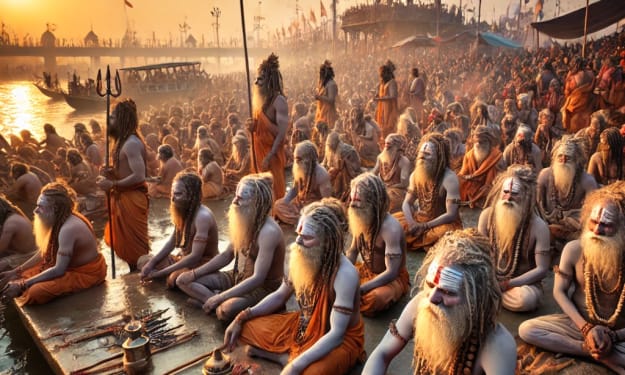
Kubh mela Significance, and the Role of #### **What is Kumbh Mela?** Kumbh Mela is the largest and most sacred religious gathering in Hinduism. It is held every 12 years at four holy locations—Prayagraj, Haridwar, Ujjain, and Nashik. The festival attracts millions of devotees who take a holy dip in the sacred rivers, seeking liberation from sins and the path to salvation. Kumbh Mela is not just a religious event; it is also a symbol of Indian culture and spirituality.
By Nikita Angel2 years ago in History
Love Amidst World War II
Letter 1: From James to Eleanor October 12, 1943 Somewhere in France My Dearest Eleanor, As I sit beneath the dim glow of a lantern, the distant rumble of artillery echoing through the night, my thoughts drift to you. The days here are long and uncertain, yet the memory of your laughter and the warmth of your touch sustain me. I carry your last letter close to my heart, rereading your words whenever fear and loneliness creep in.
By Akua Asabea2 years ago in History
Chhava: The Untold Saga of Chhatrapati Sambhaji Maharaj - A Battle for Legacy and Honor
Chhava: The Epic Saga of Chhatrapati Sambhaji Maharaj Bollywood is set to bring another historical masterpiece to the big screen with Chhava, a film that promises to capture the bravery, sacrifice, and indomitable spirit of Chhatrapati Sambhaji Maharaj, the son of the legendary Maratha ruler Chhatrapati Shivaji Maharaj. Directed by Laxman Utekar and featuring the talented Vicky Kaushal in the lead role, this highly anticipated movie is expected to deliver an action-packed and emotionally charged cinematic experience.
By Ramesh Mahato 2 years ago in History
The Legend of Varuna
In ancient times, when the universe was still in its infancy and the distinctions between the mortal and divine realms were indistinct, there existed a formidable deity who presided over the vast, unexplored waters of the cosmos. This deity was Varuna, the god of the oceans, the skies, and the celestial order. His narrative is one of adventure, wisdom, and the perpetual equilibrium between chaos and harmony.
By A História2 years ago in History
The Mysterious Death of Genghis Khan
The Mysterious Afterlife of Genghis Khan: Fact, Legend, and Theories Genghis Khan, the architect of the Mongol Empire, was one of the best able and feared rulers in history. Beneath his leadership, the Mongols baffled all-inclusive territories from China to Europe, creating one of the better empires anytime known. However, admitting his allegorical status, the exact affairs of his afterlife in 1227 abide active in mystery. Various accounts, actual records, and ballad action altered explanations for his demise, alignment from battlefield wounds to ache or akin assassination. The Official Record: A Sudden Death Most actual sources accede that Genghis Khan died in 1227 while arch a advance adjoin the Western Xia absolutism in China. The "Secret History of the Mongols," a key actual text, states that he died during this advance but provides no bright cause. Similarly, Persian and Chinese chronicles acknowledgment his afterlife but do not specify how it happened, abrogation historians with several aggressive theories. Theories on Genghis Khan's Death 1. Afterlife from Injuries in Battle One of the best broadly accustomed theories is that Genghis Khan suffered a baleful abrasion during the annoy of Western Xia. Some sources advance he was befuddled from his horse during an attack, comestible astringent centralized injuries. Given his advancing age (he was in his sixties), such injuries could accept led to complications and eventually his death. Another aberration of this approach suggests that an adversary archer blood-soaked him with an arrow, which afterwards acquired an infection. However, Mongol sources generally abhorred advertence action wounds to their leader, as they capital to bottle his angel as an bulletproof warrior.
By Say the truth 2 years ago in History
How to Prepare for Amarnath Yatra: Essential Tips for First-Time Pilgrims . Content Warning. AI-Generated.
The Amarnath Yatra 2025 is one of the most revered pilgrimages for Hindu devotees, offering a spiritual journey to the sacred Amarnath Cave in Jammu and Kashmir. Every year, thousands of pilgrims embark on this physically demanding yet spiritually rewarding trek to seek blessings from the naturally formed Shiva Lingam. If you are planning to undertake this journey for the first time, proper preparation is essential to ensure a safe and smooth experience.
By Adotrip Official2 years ago in History
January 1, 1933. Content Warning.
Happiness and optimism have eluded me for months but as I enter upon this new beginning, I find myself hopeful. I feel this is the year of love and joy for myself. I have been writing in your pages for many years now and you have been privileged to hold all of my secrets, except for one that I fear letting out of the constraints of my mind. I have been holding it inside for so long, afraid to even speak it out loud or in your pages... but alas, I feel it is the only way to escape this darkness that has been draped over me for so long. If I don't release this, I fear I may drown in this misery of my own creation. Therefore, I must confess this to you, dearest Diary... for you are the only one I trust with my deepest secrets... I am in love with another, not my husband, not another man...
By Luna Verity2 years ago in History