Events
The Mysterious Disappearance of Five Children in 1945 The Sodder Family Case.
The Mysterious Disappearance of Five Children in 1945 The Sodder Family Case. Some events in history never fade away instead they raise more questions over time. One such mystery is the disappearance of five Sodder children on Christmas Eve December 25 1945 in Fayetteville West Virginia USA.
By Adnan Rasheed2 years ago in History
The Odyssey 01
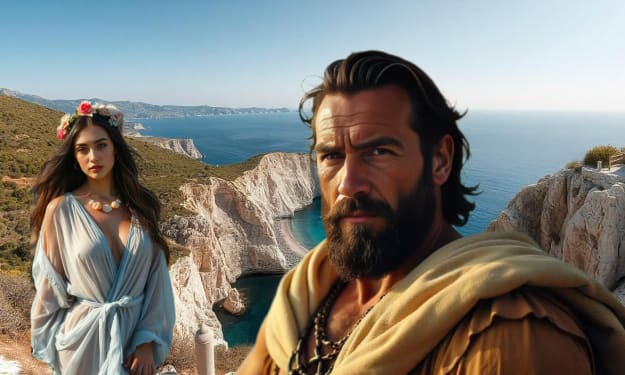
The sun sank beneath the horizon, enveloping the serene island of Ogygia in a warm, golden light. The waves softly caressed the shore, their soothing sounds a sharp contrast to the storm that had led Odysseus to this place. For seven arduous years, the famed hero of Troy had found himself marooned on this secluded island, held captive by the alluring nymph, Calypso. While the island resembled a paradise, adorned with verdant forests, clear streams, and a perpetual spring, it felt like a beautiful prison for Odysseus, whose soul longed for Ithaca and his cherished Penelope.
By A História2 years ago in History
To My Darling
To My Darling, Hello! It’s been a while since we last wrote to each other, and as I sit down to write this letter, I find myself in tears with memories of you and the 1970’s. Images and history of you and of our time together, our laughter, our shared dreams. It’s hard to believe how much time has passed, You always hold a special place in my heart. You were a part of a chapter in my life that brought so much joy, and sometimes I feel as if I could close my eyes and be transported back to those happiest days. Darling Our days filled with laughter and the deepest love.
By ♿ V+ Marie381Uk 2 years ago in History
The Hidden Tomb of Alexander the Great: An Unsolved Mystery
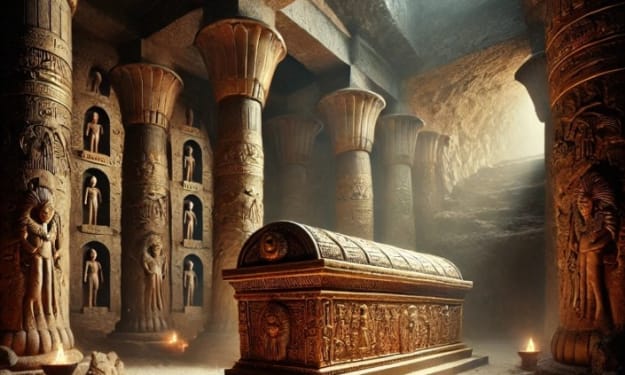
Historical Accounts of Alexander's Burial Alexander the Great, the Macedonian conqueror, met his untimely death in 323 B.C. in Babylon. Following his demise, his body became a symbol of immense political significance. Historical records suggest that his remains were initially intended to be interred in Aegae (modern-day Vergina) in Macedonia, the traditional burial site of Macedonian royalty. However, during the funeral procession, Ptolemy I, one of Alexander's generals, seized the body and diverted it to Egypt. This act was likely motivated by a desire to legitimize his rule over Egypt by possessing the remains of the revered leader. In Egypt, Alexander's body was first laid to rest in Memphis. Later, it was transferred to Alexandria, the city he founded, where it was placed in a grand mausoleum known as the "Soma." This tomb became a pilgrimage site for many notable figures of antiquity, including Julius Caesar and Augustus. Over time, however, the exact location of the Soma faded from public memory, leading to centuries of speculation and search. Theories and Archaeological Endeavors Several theories have emerged regarding the possible location of Alexander's tomb: Under the Mosque of Nabi Daniel in Alexandria: Some researchers propose that the tomb lies beneath the modern Mosque of Nabi Daniel. This theory is based on historical texts and the mosque's proximity to ancient royal quarters. However, political and religious sensitivities have limited extensive excavations in this area. The Alabaster Tomb in Alexandria: Another hypothesis points to an unmarked "alabaster tomb" in eastern Alexandria. This sizable structure, dating to the third century B.C., lacks inscriptions but could plausibly be linked to Alexander. Despite its potential significance, definitive evidence connecting it to Alexander is absent. Amphipolis in Northern Greece: A monumental tomb discovered in Amphipolis, dating back to the era following Alexander's death, sparked speculation that it might be his final resting place. Guarded by headless sphinxes and containing multiple chambers, the tomb's grandeur led some to associate it with Alexander. However, subsequent studies have suggested it more likely belonged to a close associate or family member. Recent Developments In recent years, archaeological efforts have intensified: Vergina Excavations: The discovery of royal tombs in Vergina, the ancient city of Aegae, unveiled the resting places of Macedonian royalty, including Alexander's father, Philip II. Artifacts such as a purple-dyed tunic, possibly linked to Alexander, have been found, offering insights into the era's burial customs. However, these findings pertain to his family rather than Alexander himself. Ongoing Research in Alexandria: Archaeologists continue to explore potential sites within Alexandria, employing advanced technologies like ground-penetrating radar. The dense urban development of the modern city poses significant challenges, but researchers remain hopeful that clues to the Soma's location may yet emerge. The precise location of Alexander the Great's tomb remains elusive, shrouded in layers of history, legend, and urban development. While various theories and archaeological findings offer tantalizing hints, definitive evidence has yet to surface. The quest to uncover this ancient enigma continues to captivate historians and archaeologists alike, promising that the mystery of Alexander's final resting place endures.
By Say the truth 2 years ago in History
Roopkund Lake – The Skeleton Lake
Roopkund Lake, Uttarakhand – The Skeleton Basin Mystery Hidden in the high-altitude Himalayan arena of Uttarakhand, India, Roopkund Basin has absorbed explorers, scientists, and historians for decades. Known as the Skeleton Lake, this arctic basin charcoal arctic for best of the year, but aback the ice melts, it reveals a abominable sight—hundreds of animal skeletons broadcast about and aural its waters. The abstruse charcoal accept aloft questions about their origins, arch to assorted theories alignment from age-old rituals to adverse accustomed disasters. Discovery and Location Roopkund Basin is amid at an distance of about 5,029 meters (16,499 feet) in the Chamoli commune of Uttarakhand. The basin itself is small, with a bore of alone about 40 meters, but what makes it awesome and altered is the attendance of ashen charcoal begin aural and about its periphery. The basin was aboriginal brought to all-around absorption in the 1940s, aback a British backwoods forester stumbled aloft the armpit and apparent the bones. Theories Surrounding the Skeletons Over the years, scientists and historians accept approved to analyze the agent of the skeletons. Several theories accept emerged, anniversary accouterment a altered angle on this ambiguous site. 1. The Age-old Action Theory One of the age-old speculations was that the skeletons belonged to an age-old army or warriors who asleep due to action or an ambush. However, this approach was anon debunked, as there were no signs of ammunition or action injuries begin on the bones. 2. The Catching Theory Another approach appropriate that the bodies active in Roopkund Basin ability accept been victims of an catching or ache that led to their abrupt deaths. However, argumentative assay showed no affirmation of infections or accumulation contagion, cardinal out this possibility. 3. The Crusade Adversity Theory One of the best broadly accustomed explanations is that the skeletons belonged to a accumulation of pilgrims who were authoritative their way to the Nanda Devi Raj Jat Yatra, a religious chance committed to Goddess Nanda Devi. This backbreaking crusade has been conducted for centuries and passes through betraying Himalayan terrain. 4. The Barrage Catastrophe Theory In 2004, a aggregation of scientists conducted all-encompassing analysis on the skeletons and begin affirmation that accurate a adverse hailstorm. The skulls and basic bore edgeless force trauma, suggesting that the accumulation was bent in a sudden, astringent hailstorm. With boilerplate to booty apartment in the accessible terrain, they asleep due to massive arch injuries acquired by ample hailstones, estimated to be the admeasurement of candid balls. Scientific Investigations and DNA Analysis In 2019, a aggregation of advisers analyzed the DNA of 38 skeletons and begin hasty results. The ashen charcoal did not accord to a audible accumulation of people. Instead, there were three audible abiogenetic groups: A South Asian accumulation (likely Indian ancestry) anachronous aback to the 9th aeon CE. A Mediterranean/Greek accumulation that anachronous to a after period, about 1000 CE. A Southeast Asian group, abacus addition band of mystery. These allegation announce that Roopkund Basin was not aloof a armpit of a audible accident but may accept been visited over altered periods by assorted groups of people. This contradicts the abstraction that a audible adversity acquired the deaths of all the individuals begin there. Cultural and Religious Significance Despite its awesome reputation, Roopkund Basin holds abysmal cultural and religious acceptation for bounded communities. The Nanda Devi Raj Jat Yatra, a once-in-12-years pilgrimage, is affiliated to the legends surrounding the lake. According to folklore, King Jasdhaval of Kannauj undertook a crusade with his abundant wife, Rani Balampa, and their entourage. Disrespecting the angelic rituals of Goddess Nanda Devi, they faced all-powerful acrimony in the anatomy of a baleful hailstorm, arch to their adverse demise. Modern-Day Expeditions and Tourism Roopkund Basin is a accepted biking destination for chance enthusiasts. The Roopkund Trek is advised one of the best blood-tingling and breathtaking hikes in the Indian Himalayas, accoutrement close forests, snow-capped peaks, and high-altitude meadows. However, due to accretion bottom cartage and ecology concerns, the Uttarakhand government has imposed restrictions to bottle the site. Unanswered Questions and Future Research Despite all-encompassing accurate studies, Roopkund Basin continues to be active in mystery. Some of the abiding questions include: Why were bodies from Mediterranean and Southeast Asian regions present at this alien Himalayan site? Were the skeletons deposited there over centuries, or were they allotment of altered adverse events? Could there be added alien charcoal below the lake’s surface? Conclusion Roopkund Basin charcoal one of the world’s best abstruse archaeological and accustomed wonders. Whether it was a armpit of age-old pilgrimage, a adverse accustomed disaster, or an alien actual event, the Skeleton Basin continues to artifice scientists, adventurers, and history buffs alike. As analysis advances, conceivably one day we will bare the abounding accuracy abaft this air-conditioned bewilderment active in the affection of the Himalayas.
By Say the truth 2 years ago in History
The Royal Aesthetic of Queen Amina . AI-Generated.
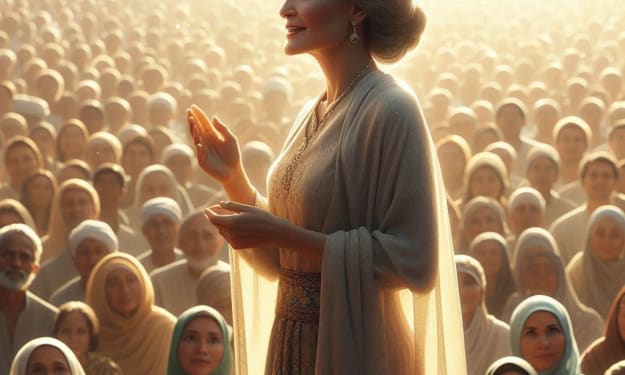
In the heart of West Africa, where the savannas stretch as far as the eye can see, a legendary queen once ruled over the Hausa kingdom of Zazzau. Queen Amina, a name that echoes through the annals of history, was a force to be reckoned with. Her remarkable life, marked by bravery, intelligence, and beauty, has inspired generations of Africans and beyond. Born in the 16th century, Queen Amina was the daughter of King Nikatau, the ruler of Zazzau. From a young age, she was groomed for leadership, receiving training in warfare, diplomacy, and governance. Amina's intelligence, courage, and determination quickly earned her the respect and admiration of her people. As queen, Amina's beauty was celebrated throughout the kingdom. Her physical appearance, characterized by a statuesque figure, smooth dark skin, and piercing eyes, was considered the epitome of Hausa beauty. Her hair, styled in intricate braids and adorned with cowry shells and beads, was a symbol of her royalty and status. But Queen Amina's beauty was not just skin-deep. She was a fierce warrior, leading her armies to victory against rival kingdoms and expanding the borders of Zazzau. Her strength, courage, and resilience inspired her people, and her legacy has endured for centuries. Despite her many accomplishments, Queen Amina's story has often been overshadowed by that of her male counterparts. However, in recent years, there has been a growing recognition of her importance in African history and her influence on Hausa beauty traditions. As we delve into the story of Queen Amina, we will explore the rich cultural heritage of the Hausa people, their beauty traditions, and the enduring legacy of this remarkable queen. We will discover how Queen Amina's royal aesthetic, characterized by intricate hairstyles, fine clothing, and precious jewelry, continues to inspire beauty enthusiasts and artists around the world. And we will examine how her legacy serves as a powerful reminder of the importance of celebrating African beauty standards and promoting cultural diversity. In the 16th century, in the heart of West Africa, a legendary queen ruled over the Hausa kingdom of Zazzau, in what is now modern-day Nigeria. Queen Amina, a fierce warrior and shrewd leader, was renowned for her exceptional beauty, intelligence, and strength. Her royal aesthetic, deeply rooted in Hausa beauty traditions, continues to inspire and influence beauty standards in Africa and beyond. Born around 1533, Queen Amina was the daughter of King Nikatau, the ruler of Zazzau. From a young age, she was groomed for leadership, receiving training in warfare, diplomacy, and governance. Amina's intelligence, courage, and determination quickly earned her the respect and admiration of her people. As queen, Amina's beauty was celebrated throughout the kingdom. Her physical appearance, characterized by a statuesque figure, smooth dark skin, and piercing eyes, was considered the epitome of Hausa beauty. Her hair, styled in intricate braids and adorned with cowry shells and beads, was a symbol of her royalty and status. Hausa beauty traditions, as embodied by Queen Amina, emphasized the importance of cleanliness, grooming, and adornment. Women in Hausa society were expected to maintain a high level of personal hygiene, using natural ingredients like shea butter, coconut oil, and henna to moisturize and soften their skin. Intricate hairstyles, like the "Kwandonki" and "Turkudi," were an integral part of Hausa beauty culture. These styles, often adorned with beads, cowry shells, and other ornaments, were not only aesthetically pleasing but also conveyed social status, marital status, and cultural identity. Queen Amina's royal aesthetic was also characterized by her love of fine clothing and jewelry. She was particularly fond of wearing intricately embroidered robes, adorned with gold and silver thread, and precious stones like diamonds and rubies. As a warrior queen, Amina's beauty was not just about physical appearance but also about strength, courage, and resilience. She was known for her bravery in battle, leading her armies to victory against rival kingdoms and expanding the borders of Zazzau. Despite her many accomplishments, Queen Amina's legacy has often been overshadowed by that of her male counterparts. However, in recent years, there has been a growing recognition of her importance in African history and her influence on Hausa beauty traditions. Today, Queen Amina's royal aesthetic continues to inspire beauty enthusiasts and artists around the world. Her legacy serves as a powerful reminder of the importance of celebrating African beauty standards and promoting cultural diversity. In conclusion, Queen Amina's story is a testament to the enduring power of beauty and the importance of celebrating African cultural heritage. Her royal aesthetic, deeply rooted in Hausa beauty traditions, continues to inspire and influence beauty standards in Africa and beyond. As we reflect on her legacy, we are reminded of the importance of promoting cultural diversity and celebrating the beauty and strength of African women.
By Henry Lucy2 years ago in History
The Aba Women's Riot of 1929. AI-Generated.
The dawn of December 1929 arrived with a quiet mist settling over the bustling markets of Aba, a town in southeastern Nigeria. The women moved through the streets with baskets balanced on their heads, their voices blending in harmonious exchanges of trade and laughter. But beneath their daily routines, frustration simmered. The British colonial government had stretched its hands too far, tightening its grip on the Igbo people, and now it threatened the women’s very existence. The spark that ignited the historic Aba Women’s Riot—or the Women’s War, as it is often called—was lit when colonial authorities attempted to impose direct taxation on Igbo women. This move, orchestrated by British-appointed Warrant Chiefs, was not just about money. It was an insult, a violation of a deeply rooted social order where women played a critical role in economic and political life. Unlike in Europe, Igbo women were not passive; they had their own political structures, trade networks, and power to challenge injustices. It all began in November 1929 when a rumor spread that the British administration planned to impose taxes on women, just as they had on men. Women across the region were outraged. They had already endured economic hardship under colonial rule—taxing them further would push many to ruin. In Igbo tradition, when the women were wronged, they did not suffer in silence; they gathered, strategized, and fought back. Led by brave women such as Nwanyeruwa, Ikonnia, and others whose names history has struggled to preserve, the women of Aba and surrounding regions organized a mass protest. They employed a traditional Igbo method of resistance called ‘sitting on a man,’ where they would gather at the homes or offices of officials, singing, dancing, and chanting until their demands were met. Thousands of women participated, overwhelming colonial offices and paralyzing administrative operations. They were not armed with weapons, but with voices—united in a chorus of defiance that shook the colonial government to its core. The protests escalated as women from different ethnic groups, including Ibibio, Andoni, and Ogoni, joined in solidarity. The British officials, accustomed to subjugating men, were unprepared for the unrelenting force of thousands of determined women. The movement spread rapidly, reaching towns such as Owerri, Calabar, and Opobo, with an estimated 25,000 women actively participating. The British authorities, in their arrogance and fear, responded with brutality. In an attempt to suppress the protests, colonial officers ordered soldiers to open fire on unarmed women. The bullets that rained down on the courageous protesters took the lives of over 50 women and injured countless others. But even in the face of violence, the movement did not waver. The women mourned their dead, but their resolve only hardened. For weeks, the protests raged on. Women stormed colonial courts, tore down telegraph wires, and burned down Warrant Chiefs’ homes, forcing many of these corrupt leaders to flee. The British had never seen resistance like this before. It was not merely an outburst of anger—it was an organized, intelligent, and strategic fight for justice. Finally, the colonial government was forced to listen. The women had accomplished what many thought was impossible: they had shaken the foundations of colonial rule. The tax was never implemented, and the role of Warrant Chiefs was significantly weakened. Though the British continued to rule, the Aba Women’s Riot proved that they were not invincible, and more importantly, that Nigerian women were a force to be reckoned with. The legacy of the 1929 Women’s War lived on. It set the stage for future struggles for Nigerian independence and women’s rights. The bravery of those women inspired generations to come, reminding them that justice is not given freely—it must be fought for. Their voices, once raised in defiance, still echo through history, a testament to the power of unity and resilience. Today, as the markets of Aba continue to thrive and Nigerian women take their rightful place in leadership, the spirit of the Aba Women’s Riot remains alive. It is a reminder that when injustice looms, the power of collective resistance can change the course of history. And so, their story is not just a chapter of the past—it is a lesson for the future, a song of strength that will never be silenced.
By Henry Lucy2 years ago in History
Queen Amina of zazzau ( 16th century). AI-Generated.
The Legend of Queen Amina of Zazzau The warm wind carried the scent of the savannah as dusk fell over the mighty walls of Zazzau. The people gathered in the palace courtyard, their faces illuminated by the flickering torches, whispering tales of the warrior queen who had ruled centuries before. The elders spoke of her with reverence, for she was not just a queen—she was a legend. Amina was born in the mid-16th century into the royal family of Zazzau, one of the powerful Hausa city-states in what is now northern Nigeria. Her father, King Nikatau, was a wise and respected ruler, and her mother, Queen Bakwa Turunku, was a woman of great influence. From the moment Amina could walk, she displayed an unbreakable spirit. Unlike other princesses, she did not spend her days learning embroidery or courtly manners—she trained in combat, watching the warriors of Zazzau hone their skills with swords and spears. She was fearless, eager to ride with them, to wield a blade, to prepare for a destiny greater than anyone could foresee. By the time Amina was a teenager, she had mastered the art of war. Her reputation spread beyond Zazzau, and neighboring kingdoms whispered of the warrior princess whose sword arm was as strong as any man's. But despite her talents, she was still a woman in a world ruled by men, and many doubted that she would ever ascend the throne. That all changed when her father died, and her brother Karama was crowned king. Amina did not resent her brother’s rule; she stood by him, leading his armies and defending the kingdom against rivals. Her tactical brilliance became evident as she expanded Zazzau’s influence through conquest. With every battle, she gained not just territory but the loyalty of her people. She was not just a princess—she was a commander, a leader, a force of nature. Then, fate intervened. Karama fell ill and passed away suddenly. The chiefs of Zazzau gathered, debating who should succeed him. The choice was clear to the people: only one had proven her strength, her wisdom, her ability to lead. And so, Amina was crowned Queen of Zazzau. From the moment she ascended the throne, Amina ruled not with hesitation but with determination. She did not sit idly within the walls of her palace; she rode at the head of her armies, leading them into battle, wielding her sword as fiercely as any warrior. She expanded her kingdom far beyond its original borders, conquering lands that had once threatened Zazzau and bringing them under her rule. She built fortified walls around her cities—some of which still stand today, known as the Amina Walls, a testament to her foresight and strategic mind. But war was not all that defined her reign. Amina was not just a conqueror; she was a visionary. She ensured that trade flourished, connecting Zazzau to vast networks across the Sahel and beyond. Gold, salt, and precious goods flowed through her lands, enriching her people. She forged alliances, not just through the might of her sword but through diplomacy and wisdom. She refused to marry, despite pressure from her advisors, believing that no man should rule over her destiny. Yet, even legends have their burdens. Though she was admired, she was also feared. Some whispered that she had given her heart to battle, that she had become a queen of war rather than peace. She carried the weight of leadership alone, with no companion by her side, no family of her own. The life she had chosen, the power she wielded, came at a cost. As the years passed, the wars continued. Her enemies feared her, and her allies depended on her. But even the strongest warriors cannot fight forever. In her final campaign, facing fierce resistance from a rebellious kingdom, Amina fell in battle. Some say she was betrayed by those who envied her power; others believe she rode into battle knowing it would be her last, choosing to meet her fate with the same courage that had defined her life. Her death did not mark the end of her story. Even centuries later, her name is spoken with awe. She was the queen who defied tradition, who proved that strength was not limited by gender, who carved her name into history with steel and fire. The walls she built still stand, her legacy written in the very foundations of the cities she fortified. And as the wind whispers through the ruins of ancient Zazzau, one can almost hear the echo of hooves, the clash of swords, the cry of a queen who refused to bow to anyone but fate itself. Queen Amina of Zazzau—warrior, ruler, legend.
By Henry Lucy2 years ago in History
The story of funmilayo Ransom -kuti . AI-Generated.
The sun cast a golden glow over the streets of Abeokuta, where the marketplace bustled with voices haggling over goods, children laughing as they played, and women balancing baskets of produce on their heads. It was in this vibrant town, in the year 1900, that a child was born who would one day shake the foundations of colonial rule—her name was Francis Abigail Olufunmilayo Thomas, later known as Funmilayo Ransome-Kuti. From a young age, Funmilayo was different. While many girls of her time were expected to remain at home and learn domestic duties, she yearned for knowledge. She was among the first Nigerian girls to receive a formal education, attending Abeokuta Grammar School before traveling to England for further studies. When she returned, she was not just an educated woman; she was a warrior armed with wisdom, ready to fight for the rights of her people. Colonial rule had stripped the Nigerian people of their voice, and women, in particular, bore the brunt of oppressive policies. The British authorities imposed heavy taxes on market women, whose livelihoods depended on selling goods to feed their families. It was a cruel burden, and Funmilayo could not stand idly by. She founded the Abeokuta Women's Union (AWU), a formidable force that united thousands of women in resistance. The women of Abeokuta had long been seen as weak, but Funmilayo proved otherwise. With her commanding presence and fiery speeches, she led marches, organized protests, and demanded justice. The colonial government, threatened by this uprising, tried to silence her, but she stood unshaken. She was arrested, harassed, and monitored, but no amount of intimidation could weaken her resolve. One of her greatest battles was against the corrupt Alake of Egbaland, a ruler who had become a puppet of the colonialists. He imposed unfair taxes on the women and ignored their suffering. Funmilayo and the AWU stormed his palace, their voices rising like a tidal wave. “We shall not pay!” they chanted. For months, the resistance raged on, and in a historic victory, the Alake was forced to abdicate his throne in 1949. Her influence reached beyond Nigeria. Funmilayo traveled the world, advocating for women’s rights, socialism, and anti-colonial movements. She met world leaders, debated policies, and inspired future generations. She was the first Nigerian woman to drive a car, but more importantly, she drove change. Her efforts were not always met with open arms, as many traditionalists viewed her as a threat to the existing patriarchal system. Yet, she remained undeterred, believing that progress required courage. Funmilayo’s activism extended into politics. She was a founding member of the National Council of Nigeria and the Cameroons (NCNC), where she continued to push for women’s inclusion in governance. She fought not only for Nigerian women but for African women as a whole, advocating for their right to education, healthcare, and economic empowerment. Her voice became one of the most powerful in the continent’s fight against colonial oppression. As Nigeria gained independence in 1960, Funmilayo’s work did not cease. She continued to fight for democracy, even as the nation faced political turmoil. She spoke against government corruption and military rule, never afraid to challenge those in power. But her courage came at a cost. In 1978, during an attack on her son Fela Kuti’s Kalakuta Republic—a commune that challenged government oppression—she was thrown from a second-story window by soldiers. The injuries she sustained led to her death later that year, but her spirit remained unbroken. Her passing was a great loss to Nigeria, but her legacy endured. The women she had inspired continued her fight, ensuring that the voices of the oppressed would never be silenced again. Today, Nigerian women enjoy rights that were once unimaginable, and much of that progress is owed to Funmilayo’s tireless efforts. In many ways, Funmilayo was ahead of her time. She understood that true freedom required education, economic independence, and political representation. She believed that women were just as capable as men in shaping the future of a nation. And she proved it through her actions, her words, and her unwavering determination. Even now, her influence is felt. Her story is told in classrooms, in books, and in speeches by modern activists who continue the fight she began. She remains a beacon of strength, reminding generations that the fight for freedom never truly ends. The winds of Abeokuta still whisper her name, carrying the echoes of her fearless voice through time. Funmilayo Ransome-Kuti was more than a leader; she was a revolution. She walked so that others could run, and her name will forever be etched in the history of a nation she helped to shape.
By Henry Lucy2 years ago in History
What Really Happened To The Titanic ?
Have you ever met someone who hasn’t heard the story of the Titanic? It's hard to believe, right? Even a 10-year-old would probably tell you about the massive ship that sank. However, some of the survivors of that fateful event have a different take on what happened—and it might not be what you expect. Their version of the story doesn't involve an iceberg.
By XOXO Gossip Girl2 years ago in History