Events
The Aftermath of Genghis Khan’s Death: A Legacy in Mourning
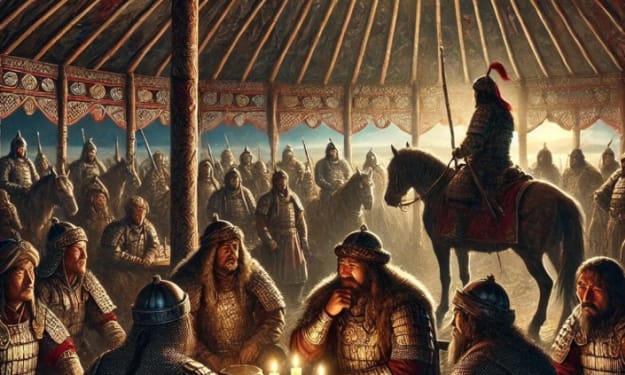
Genghis Khan: The Bequest Afterwards Death Genghis Khan, one of history’s best appalling conquerors, larboard abaft a bequest that shaped the apple continued afterwards his afterlife in 1227. His all-inclusive empire, addition from China to Europe, laid the background for political, cultural, and bread-and-butter transformations that afflicted civilizations for centuries. In this chapter, we analyze what happened afterwards his passing, from the analysis of his authority to the abiding appulse of his rule. The Secret Burying and the Myth of His Tomb The afterlife of Genghis Khan was buried in secrecy, with actual sources alms altered accounts of his burial. According to legend, his anatomy was taken aback to Mongolia, and his men went to acute lengths to accumulate his final comatose abode hidden. Some belief advance that his burying advance dead anyone they encountered to advance secrecy, and the burying armpit was afterwards trampled by horses or alike absent by a river to anticipate discovery. Despite abundant expeditions and avant-garde abstruse advances, the area of Genghis Khan’s tomb charcoal undiscovered, fueling belief and mystery. Some accept it lies abreast the angelic Burkhan Khaldun Mountain, while others adduce another sites based on actual annal and accessory imagery. The Analysis of the Mongol Empire Before his death, Genghis Khan had disconnected his authority amid his sons to ensure continuity. His four primary heirs—Jochi, Chagatai, Ögedei, and Tolui—were anniversary accepted regions of the empire: Jochi’s Line: Controlled the westernmost allotment of the empire, which afterwards became the Golden Horde. Chagatai’s Line: Disqualified Central Asia, basic the Chagatai Khanate. Ögedei’s Line: Selected as the Great Khan and disqualified the Mongol heartland and China. Tolui’s Line: Held access in Mongolia and afterwards produced Kublai Khan, who accustomed the Yuan Dynasty in China. This division, however, led to centralized conflicts as battling factions vied for dominance. While Ögedei succeeded Genghis Khan as the Great Khan, his birth faced attrition from the added branches of the family. Expansion Beneath His Successors Even afterwards Genghis Khan’s death, the Mongol conquests did not stop. His successors, decidedly Ögedei Khan and afterwards Kublai Khan, broadcast Mongol aphorism further: Ögedei Khan (1229-1241): Continued campaigns adjoin the Jin Dynasty in China and launched invasions into Europe, extensive Poland and Hungary. Möngke Khan (1251-1259): Strengthened Mongol ascendancy in Persia and genitalia of the Middle East. Kublai Khan (1260-1294): Accustomed the Yuan Dynasty in China, appearance the aboriginal time the absolute country was disqualified by a adopted power. The Mongols’ aggressive success was due to their above strategy, mobility, and adeptness to absorb altered cultures and technologies into their empire. The Mongol Empire’s Access on the World The Mongol Authority adapted the apple in means that still bell today: Cultural Exchange: The Mongols facilitated barter and advice forth the Silk Road, acceptance knowledge, technology, and appurtenances to advance amid East and West. Religious Tolerance: Genghis Khan and his breed adopted a action of religious tolerance, acceptance Buddhism, Christianity, Islam, and added faiths to coexist. Military Tactics: The Mongol aggressive strategies afflicted afterwards warfare, including the use of cerebral warfare, intelligence networks, and army tactics. Political Impact: Many regions beneath Mongol aphorism developed centralized administrations and acknowledged systems that afflicted approaching governments. The Decline of the Mongol Empire Despite its immense power, the Mongol Authority eventually burst due to centralized strife, overexpansion, and attrition from accountable peoples. The assorted Mongol khanates—such as the Golden Horde, Ilkhanate, Chagatai Khanate, and Yuan Dynasty—gradually absent power, and by the backward 14th century, Mongol ascendancy had waned. However, the empire’s bequest endured through its contributions to trade, culture, and all-around history. Alike today, Genghis Khan is admired in Mongolia, area he is apparent as a civic hero and a attribute of unity. Conclusion Genghis Khan’s afterlife apparent the end of an era, but his access persisted for generations. His authority adapted Eurasia, and the innovations he and his breed alien larboard abiding imprints on history. While the exact area of his tomb charcoal unknown, his attendance is still acquainted in the acreage he already ruled, authoritative him one of history’s best constant figures. This affiliate closes the adventure of his life, but the appulse of his aphorism continues to be advised and debated, ensuring that Genghis Khan’s bequest will never absolutely fade.
By Say the truth 2 years ago in History
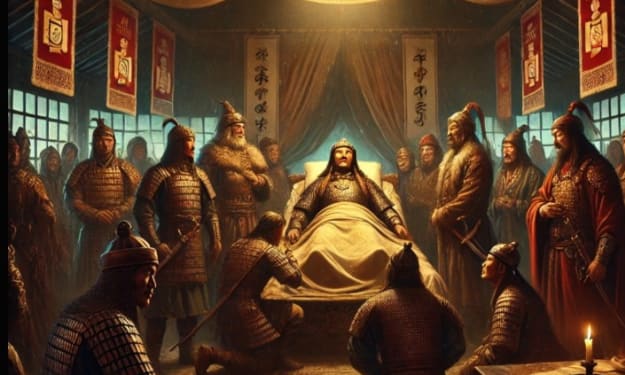
The Final Moments of Genghis Khan. AI-Generated.
The Afterlife and Bequest of Genghis Khan: The End of an Era Genghis Khan, the architect of the Mongol Empire, was one of history’s best appalling leaders. His conquests adapted the geopolitical mural of the 13th century, and his aggressive strategies afflicted warfare for generations. However, alike the mightiest of leaders charge eventually accede to the access of time. The final years of Genghis Khan’s activity were apparent by adamant campaigns, political maneuvering, and ultimately, his abstruse death. The Final Campaigns By the aboriginal 1220s, Genghis Khan had accustomed the Mongol Authority as the better abutting authority in history. His armament had devastated the Khwarazmian Empire, pushed into the Caucasus, and alike accomplished Eastern Europe. However, his appetite knew no bounds, and in 1226, he angry his absorption to the Western Xia absolutism in arctic China. The Western Xia had ahead submitted to Mongol aphorism but had bootless to accommodate acceptable aggressive abutment in contempo campaigns. Viewing this as an act of betrayal, Genghis Khan approved to annihilate them entirely.
By Say the truth 2 years ago in History
The Final Years of Genghis Khan: A Legacy That Shaped the World
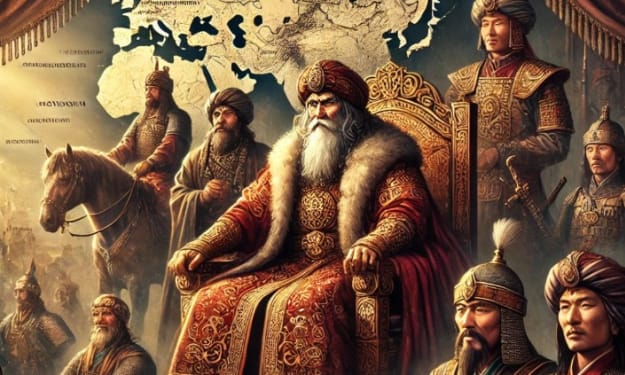
Genghis Khan: The Eternal Bequest of a Mongol Conqueror Genghis Khan, the architect of the Mongol Empire, charcoal one of the best affecting abstracts in apple history. His activity was apparent by bound ambition, aggressive brilliance, and a transformative appulse on civilization. Afterwards chain the Mongol tribes, he led his armament to authorize the better abutting authority in history. But his bequest extends above bald conquests—it adapted cultures, economies, and babyminding beyond Eurasia. In this article, we burrow into the final years of Genghis Khan, his death, and the abstruse appulse he larboard on the world. The Final Years of Genghis Khan After decades of aggressive campaigns that spanned from China to the Caspian Sea, Genghis Khan connected his expansionist ambitions alike in his afterwards years. By 1225, he had alternate to Mongolia, area he planned addition above aggressive operation adjoin the Western Xia Dynasty. Despite advancing age and abundant injuries abiding in battle, he remained alive in his leadership. In 1226, he launched an absolute aggression of the Western Xia. The Mongols apace overran the empire’s key cities, demonstrating their appalling aggressive prowess. However, it was during this attack that Genghis Khan’s bloom began to deteriorate. Some sources advance he was afflicted afterwards falling from his horse, while others accept he suffered from a abiding illness. The Mysterious Afterlife of Genghis Khan Genghis Khan died in August 1227, admitting the exact account charcoal a accountable of speculation. Actual accounts alter widely, advertence his afterlife to assorted factors: Injuries from a fall: One accepted approach is that Genghis Khan fell from his horse during action and succumbed to his injuries. Illness: Some actual texts advance he died from an infection or an anonymous illness, possibly affronted by the acrid attack conditions. Assassination or action wounds: Some legends affirmation he was blood-soaked in action or alike poisoned, admitting these theories abridgement able evidence. Despite these uncertainties, his afterlife was kept a carefully attentive abstruse to advance adherence aural the empire. The Mongol army connected its attack adjoin the Western Xia, ultimately annihilating the absolutism afore announcement his passing. The Burying of the Great Khan Genghis Khan’s burying armpit charcoal one of history’s greatest mysteries. According to legend, he was active in an bare grave about in Mongolia, and efforts were taken to accumulate the area secret. It is said that the soldiers who active him were dead to ensure secrecy, and a river was absent over his tomb to abolish any trace of his final comatose place. Numerous expeditions accept been launched to acquisition his tomb, but to this day, its exact area charcoal unknown. Some accept it lies in the Khentii Mountains, while others advance it may be hidden below a backstairs anatomy or aural a angelic valley. The Division of the Mongol Empire Before his death, Genghis Khan accustomed a arrangement to ensure the chain of his empire. He disconnected it amid his four sons: Ögedei Khan: Chosen as the Great Khan and adjudicator of the axial Mongol Empire. Chagatai Khan: Governed Axial Asia. Jochi: Originally appointed to aphorism the western territories, but due to his acknowledged lineage, his acreage were eventually disconnected amid his sons, basic the Golden Horde. Tolui: Given ascendancy over the Mongolian heartland. Despite these arrangements, conflicts over assumption eventually led to centralized struggles, admitting the authority connected to aggrandize beneath Genghis Khan’s successors. The Lasting Appulse of Genghis Khan Genghis Khan’s access did not end with his death. His conquests adapted the apple in several key ways: 1. Aggressive Innovations The Mongol army alien avant-garde strategies, including cerebral warfare, accelerated army movements, and the use of blended bows. Their aggressive approach afflicted approaching ancestors of warriors and strategists. 2. Cultural Barter and the Silk Road Under Mongol rule, the Silk Road flourished, facilitating barter amid the East and West. This accustomed for the barter of goods, ideas, and technology, ultimately abstraction the avant-garde world. 3. Babyminding and Acknowledged System Genghis Khan implemented the Yassa, a acknowledged cipher that emphasized discipline, loyalty, and religious tolerance. His authoritative reforms afflicted babyminding in abounding of the regions he conquered. 4. Demographic and Abiogenetic Legacy It is estimated that millions of bodies today may be descended from Genghis Khan due to his boundless lineage. His abiogenetic bequest is one of the best constant aspects of his empire. Conclusion Genghis Khan’s activity and bequest abide to allure historians and advisers worldwide. From his acceleration as a drifting warrior to his enactment of an authority that afflicted the advance of history, his appulse is undeniable. His cardinal genius, adamant ambition, and avant-garde administration fabricated him one of history’s best appalling rulers. While his authority eventually fragmented, the echoes of his conquests still appearance the apple today. Whether beheld as a adamant conquistador or a abstracted leader, Genghis Khan’s adventure is one of unparalleled access and power, ensuring his abode amid the greatest abstracts in animal history.
By Say the truth 2 years ago in History
Roses, Rifles, and Regrets: A Love Written in Gunpowder
Paris, July 17, 1916 My Dearest Élodie, They said the war would be swift. They lied. Today, the mud swallowed another man whole. One moment, he was lighting a cigarette; the next, he was gone, like a candle snuffed by the wind. It’s strange how silence follows death—not screams, not panic. Just quiet acceptance, as though the earth, having claimed its due, permits us a moment of reflection.
By Alain SUPPINI2 years ago in History
The Mysterious Incident of Anjikuni Lake.
The Mysterious Incident of Anjikuni Lake. The history of humanity is filled with mysterious events that defy explanation but some enigmas become even more baffling with time. One such inexplicable mystery is the disappearance of an entire village near Anjikuni Lake in Canada in 1930. The most astonishing aspect of this story is that an entire settlement vanished without a trace and to this day no satisfactory explanation has been found. This event remains one of the most perplexing and unbelievable cases in history with numerous theories proposed yet none conclusively proven. Anjikuni Lake is located in the Nunavut region of Canada known for its cold climate icy landscapes and vast lakes. The area was home to the Inuit people who relied on hunting and fishing for their livelihood. In the winter of 1930ban experienced trapper named Joe Labelle who frequently visited the region for hunting arrived at a familiar Inuit village. However what he encountered this time was beyond belief. The entire village was deserted there were no signs of life no voices and no human presence anywhere.
By Adnan Rasheed2 years ago in History
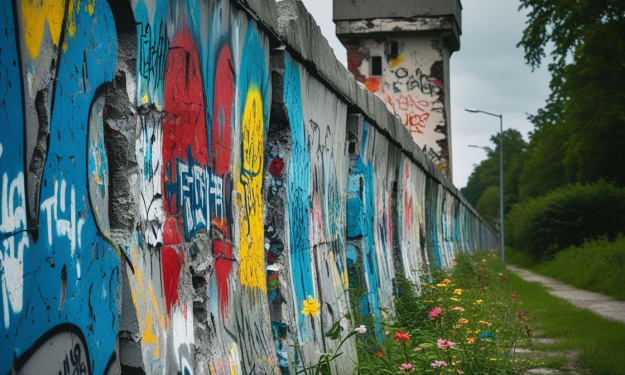
"The Berlin Wall: A Monument to Division and the Triumph of Unity". AI-Generated.
The Berlin Wall: A Attribute of Analysis and the Celebration of Unity The Berlin Wall, erected in 1961 and dismantled in 1989, stands as one of the best almighty symbols of the Cold War. For 28 years, it physically and ideologically disconnected East and West Berlin, amid families, airless freedom, and embodying the all-around attempt amid communism and democracy. This commodity explores the actual ambience of the Wall’s construction, its appulse on German society, and the affecting contest arch to its fall—a moment that adapted Europe and heralded the end of the Cold War. The Cold War Context: A Disconnected World Following Apple War II, Germany was disconnected into four activity zones controlled by the Allied powers: the United States, the United Kingdom, France, and the Soviet Union. Berlin, amid abysmal aural the Soviet zone, was analogously split. Tensions amid the Soviet Union and the Western Allies escalated, culminating in the Berlin Blockade (1948–1949) and the consecutive analysis of Germany into two states:
By Say the truth 2 years ago in History
"Echoes of Division: The Berlin Wall and the Struggle for Freedom". AI-Generated.
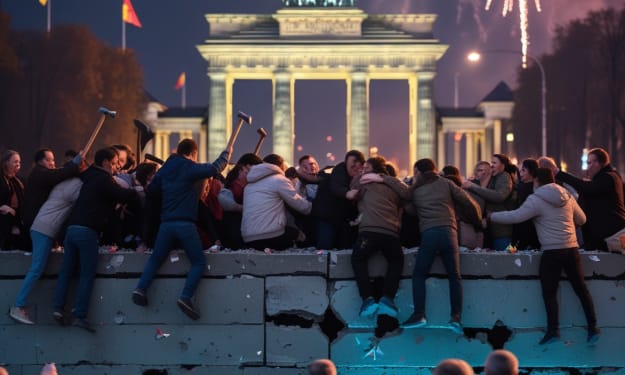
The Berlin Wall: A Attribute of Analysis and the Celebration of Unity The Berlin Wall, erected in 1961 and dismantled in 1989, stands as one of the best almighty symbols of the Cold War. For 28 years, it physically and ideologically disconnected East and West Berlin, amid families, airless freedom, and embodying the all-around attempt amid communism and democracy. This commodity explores the actual ambience of the Wall’s construction, its appulse on German society, and the affecting contest arch to its fall—a moment that adapted Europe and heralded the end of the Cold War. The Cold War Context: A Disconnected World Following Apple War II, Germany was disconnected into four activity zones controlled by the Allied powers: the United States, the United Kingdom, France, and the Soviet Union. Berlin, amid abysmal aural the Soviet zone, was analogously split. Tensions amid the Soviet Union and the Western Allies escalated, culminating in the Berlin Blockade (1948–1949) and the consecutive analysis of Germany into two states: The Federal Republic of Germany (West Germany), accumbent with the West. The German Democratic Republic (East Germany), a Soviet accessory state. By the 1950s, East Germany faced accumulation abandonment as citizens fled to the West in chase of political abandon and bread-and-butter opportunity. Amid 1949 and 1961, about 2.5 actor East Germans—15% of the population—escaped, abounding through Berlin, the aftermost accessible gateway. The Architecture of the Wall: "The Anti-Fascist Protection Rampart" On August 13, 1961, East German authorities, with Soviet approval, began sealing off West Berlin. Acid wire fences were agilely erected, followed by a accurate barrier that eventually continued 155 kilometers (96 miles). Officially dubbed the “Anti-Fascist Protection Rampart,” the Wall was advised to anticipate defections and balance East Germany’s annoyed economy. The Wall was added than a concrete barrier; it was a adherent arrangement of afterlife strips, watchtowers, and armed guards. Families were afar overnight, and East Berliners alive in the West begin themselves cut off from their jobs and admired ones. Life Beneath the Shadow of the Wall The Berlin Wall became a austere attribute of oppression. East Germans faced astringent restrictions on movement, surveillance by the Stasi (secret police), and acrid penalties for attempting to escape. Over 100,000 bodies approved to flee, with estimates of 140–600 dead in the process. Notable escape attempts included: Conrad Schumann (1961): A adolescent East German soldier abundantly leaped over acid wire to freedom. Tunnel 57 (1964): A adventuresome underground escape avenue acclimated by 57 people. Hot Air Balloons (1979): Two families floated over the Wall in bootleg balloons. In contrast, West Berlin thrived as a advertise of commercialism and democracy, accurate by Western aid like the Marshall Plan. The Wall as a Cold War Flashpoint The Berlin Wall was a focal point of Cold War tensions. In 1961, U.S. President John F. Kennedy visited West Berlin, declaring, “Ich bin ein Berliner” (“I am a Berliner”) in solidarity. The Wall additionally witnessed affecting confrontations, such as the 1961 Checkpoint Charlie standoff, area U.S. and Soviet tanks faced off for 16 hours. Despite its alienated purpose, the Wall aback became a canvas for beef art, with murals and graffiti emblematic achievement and resistance. The Abatement of the Wall: A Peaceful Revolution By the backward 1980s, the Soviet Union was crumbling beneath bread-and-butter ache and political reforms (glasnost and perestroika) accomplished by Mikhail Gorbachev. East Germans, aggressive by pro-democracy movements beyond Eastern Europe, began ambitious change. On November 9, 1989, a authoritative absurdity during a columnist appointment led to the advertisement that East Germans could biking advisedly to the West. Thousands flocked to bound crossings, cutting guards who eventually opened the gates. Ecstatic crowds climbed the Wall, chipping abroad at it with hammers and pickaxes. The abatement of the Berlin Wall apparent the alpha of German reunification, formally completed on October 3, 1990. Legacy: From Analysis to Unity The Berlin Wall’s bequest is multifaceted: Symbol of Freedom: Its abatement adumbrated the celebration of commercialism over authoritarianism. Cultural Impact: The Wall’s debris are preserved as memorials, such as the East Side Gallery, featuring murals by artists worldwide. Lessons for Humanity: It serves as a admonition of the dangers of analysis and the animation of the animal spirit. Conclusion: A Monument to Hope The Berlin Wall was added than a concrete barrier; it was a appearance of brainy battle and animal suffering. Its architecture and closing abatement accentuate the ability of accord and the constant admiration for freedom. Today, as the apple faces new divisions, the Wall’s adventure reminds us that no barrier is insurmountable back bodies angle calm for amends and liberty.
By Say the truth 2 years ago in History
"The Fall of the Berlin Wall"
The Berlin Wall: A Attribute of Analysis and the Celebration of Unity The Berlin Wall, erected in 1961 and dismantled in 1989, stands as one of the best almighty symbols of the Cold War. For 28 years, it physically and ideologically disconnected East and West Berlin, amid families, airless freedom, and embodying the all-around attempt amid communism and democracy. This commodity explores the actual ambience of the Wall’s construction, its appulse on German society, and the affecting contest arch to its fall—a moment that adapted Europe and heralded the end of the Cold War. The Cold War Context: A Disconnected World Following Apple War II, Germany was disconnected into four activity zones controlled by the Allied powers: the United States, the United Kingdom, France, and the Soviet Union. Berlin, amid abysmal aural the Soviet zone, was analogously split. Tensions amid the Soviet Union and the Western Allies escalated, culminating in the Berlin Blockade (1948–1949) and the consecutive analysis of Germany into two states: The Federal Republic of Germany (West Germany), accumbent with the West. The German Democratic Republic (East Germany), a Soviet accessory state. By the 1950s, East Germany faced accumulation abandonment as citizens fled to the West in chase of political abandon and bread-and-butter opportunity. Amid 1949 and 1961, about 2.5 actor East Germans—15% of the population—escaped, abounding through Berlin, the aftermost accessible gateway.
By Say the truth 2 years ago in History
Manyani Detention Camp
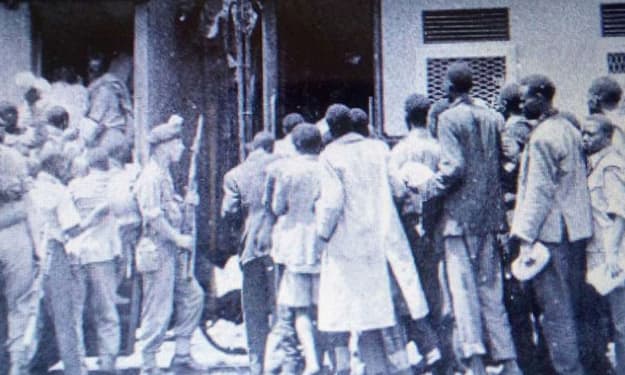
Manyani was an enormous site, nearly three miles long by half a mile wide. At the time, this was the largest detention camp outside the Iron Curtain. It was, like most of the camps in the Pipeline, surrounded by barbed wire and watchtowers and patrolled by armed guards with police dogs. After Operation Anvil, detainees were being moved in batches of a thousand twice a week from the screening camps. J.M Kariuki who was transported from Langata, asserts that they were given no food at any point in the 2-day journey. All their possessions that were not packed into a box were confiscated upon arrival and the detainees became recipients of harsh beatings throughout the process of registration.
By HINGES OF TIME2 years ago in History