Events
Guamanian: Culture, Language & Heritage
The Guamanian Chamorro people have a unique culture deeply rooted in the Mariana Islands. This chain of islands is in the Pacific. Their culture is a mix of old traditions and new influences. It shows a strong community spirit and respect for their heritage.
By The Big Bad 2 years ago in History
The Enigmatic Love of Emily Dickinson and Judge Otis Phillips Lord. AI-Generated.
In the quiet town of Amherst, Massachusetts, in the mid-19th century, a brilliant and reclusive poet named Emily Dickinson lived a life of solitude and creativity. Her poetry, which would later become famous for its unique style and profound insights, was heavily influenced by her personal experiences and relationships. One of the most significant relationships in her life was with Judge Otis Phillips Lord, a prominent local judge and politician who would become the object of her deep affection. Emily Dickinson was born in 1830 to a prominent Amherst family. Her father, Edward Dickinson, was a successful lawyer and politician who served in the U.S. House of Representatives. Emily's mother, Emily Norcross Dickinson, was a homemaker and managed the household. Emily was the middle child, with an older brother, Austin, and a younger sister, Lavinia. As a young woman, Emily attended Mount Holyoke Female Seminary (now Mount Holyoke College) but returned home after just one year, reportedly due to homesickness. She then lived a reclusive life at her family's homestead, rarely leaving the property and preferring the company of her family and her own thoughts. It was during this time that Emily met Judge Otis Phillips Lord, a widower who had recently moved to Amherst. Lord was a respected member of the community, serving as a judge and a politician. He was also a frequent visitor to the Dickinson household, where he would engage in lively discussions with Emily's father and brothers. Emily was immediately drawn to Lord's intelligence, wit, and passion for life. Despite their significant age difference – Lord was 20 years older than Emily – they quickly formed a deep and abiding connection. Lord, who had been widowed for several years, was equally smitten with Emily, admiring her intelligence, creativity, and independence. As their relationship deepened, Emily began to write poetry that reflected her feelings for Lord. Her poems, which were characterized by their unique style, imagery, and symbolism, expressed her passion, longing, and devotion to Lord. Many of her poems, including "Wild Nights – Wild Nights!" and "If you were coming in the fall," are believed to have been inspired by her love for Lord. Despite their deep affection for each other, Emily and Lord's relationship was not without its challenges. Lord's age and social status made their relationship unconventional, and many in the community disapproved of their association. Additionally, Emily's reclusive nature and Lord's public position made it difficult for them to express their love openly. Tragically, Lord's health began to decline in the late 1870s, and he died in 1884. Emily was devastated by his loss, and her poetry reflects her grief and longing. Despite the challenges and obstacles they faced, Emily and Lord's love remained strong, a testament to the enduring power of true love. *A Legacy of Love and Poetry* The love story of Emily Dickinson and Judge Otis Phillips Lord is a testament to the enduring power of love and creativity. Their relationship, which was marked by passion, devotion, and poetry, continues to inspire and captivate us to this day. Emily's poetry, which was heavily influenced by her love for Lord, remains some of the most celebrated and enduring in American literature. Her unique style, imagery, and symbolism have influenced generations of poets and writers, and her poetry continues to be widely read and studied today. The legacy of Emily and Lord's love is a reminder that true love can conquer all, even in the face of adversity and convention. Their story is a testament to the power of love to inspire creativity, passion, and devotion, and it continues to captivate and inspire us to this day. The love story of Emily Dickinson and Judge Otis Phillips Lord is a testament to the enduring power of love and creativity. Their relationship, which was marked by passion, devotion, and poetry, continues to inspire and captivate us to this day. Emily's poetry, which was heavily influenced by her love for Lord, remains some of the most celebrated and enduring in American literature. Her unique style, imagery, and symbolism have influenced generations of poets and writers, and her poetry continues to be widely read and studied today. The legacy of Emily and Lord's love is a reminder that true love can conquer all, even in the face of adversity and convention. Their story is a testament to the power of love to inspire creativity, passion, and devotion, and it continues to captivate and inspire us to this day. *A Historical Context* The love story of Emily Dickinson and Judge Otis Phillips Lord took place during a time of great social and cultural change in America. The mid-19th century was a time of rapid industrialization, urbanization, and immigration, which was transforming the country and its values. In this context, Emily and Lord's love was seen as unconventional and even scandalous by some. Lord's age and social status made him an unlikely match for Emily, and their relationship was subject to gossip and speculation in the community. Despite these challenges, Emily and Lord's love remained strong, a testament to the power of true love to overcome adversity and convention. Their story is a reminder that love knows no boundaries, and that true love can conquer all, even in the face of overwhelming opposition. *A Lasting Impact on Literature* The love story of Emily Dickinson and Judge Otis Phillips Lord has had a lasting impact on literature, influencing the way we think about love, poetry, and creativity. Emily's poetry, which was heavily influenced by her love for Lord, remains some of the most celebrated and enduring in American literature. Their love story has also been the subject of numerous literary and artistic works, including novels, plays, and films. It continues to captivate and inspire artists and writers to this day, a testament to the enduring power of their love. *A Timeless Tale of Love and Devotion* The love story of Emily Dickinson and Judge Otis Phillips Lord is a timeless tale of love and devotion, a reminder that true love can conquer all, even in the face of adversity and convention. Their story is a testament to the power of love to inspire creativity, passion, and devotion, and it continues to captivate and inspire us to this day. As we reflect on the love story of Emily Dickinson and Judge Otis Phillips Lord, we are reminded of the enduring power of love to transform our lives and inspire our creativity. Their story is a testament to the human spirit's capacity for passion, devotion, and sacrifice, and it continues to inspire and captivate us to this day.
By Henry Lucy2 years ago in History
The Tragic Love Story of Marie Antoinette and Count Fersen. AI-Generated.
In the late 18th century, the Palace of Versailles was the epicenter of French royal life, a world of opulence, extravagance, and intrigue. It was here that Marie Antoinette, the ill-fated Queen of France, found herself at the center of a passionate and forbidden love affair with Count Axel von Fersen, a handsome and charming Swedish nobleman. Marie Antoinette, born in 1755, was the youngest daughter of Emperor Francis I of Austria and Queen Maria Theresa. She was raised in the imperial court of Vienna, where she was groomed to marry well and secure alliances for her family. In 1770, at the age of 15, she was married to Louis XVI, the future King of France, in a lavish ceremony at Versailles. But Marie Antoinette's life at Versailles was not without its challenges. She was a foreigner in a court where etiquette and tradition reigned supreme, and she struggled to navigate the complex web of alliances and rivalries that defined royal life. Her marriage to Louis XVI was also troubled, with the king's lack of interest in her and his inability to consummate their marriage causing tension and stress. It was against this backdrop that Marie Antoinette met Count Axel von Fersen, a dashing and charming Swedish nobleman who had arrived at Versailles in 1774. Fersen was immediately drawn to the queen's beauty, intelligence, and vivacity, and he quickly became a regular visitor to her court. As their friendship deepened, Marie Antoinette and Fersen found themselves falling deeply in love. But their love was forbidden, as Fersen was a commoner and Marie Antoinette was the queen. They were forced to keep their love a secret, exchanging letters and stolen glances whenever they could. Despite the danger and the secrecy, Marie Antoinette and Fersen's love continued to grow. They would often take long walks in the gardens of Versailles, talking and laughing together like any other young couple in love. They also shared a love of music, with Fersen often accompanying Marie Antoinette on the harp. But their love was not without its costs. Marie Antoinette's reputation was already under attack from the French press and the revolutionary factions that were beginning to emerge in Paris. Her love affair with Fersen only added fuel to the fire, with many accusing her of being a promiscuous and traitorous queen. As the years passed, Marie Antoinette and Fersen's love continued to endure, despite the many challenges and obstacles they faced. They remained devoted to each other, even as the French Revolution gathered momentum and the queen's fate became increasingly uncertain. In 1791, as the revolutionaries closed in on Versailles, Marie Antoinette and Fersen made a desperate bid to escape. They fled Paris in disguise, but were recognized and arrested at Varennes. The queen's fate was sealed, and she was eventually executed by guillotine in 1793. Fersen, meanwhile, was forced to flee France and return to Sweden. He never forgot Marie Antoinette, and he spent the rest of his life mourning her loss. He died in 1810, still devoted to the queen and the love they had shared. *A Legacy of Love and Tragedy* The love story of Marie Antoinette and Count Fersen is a testament to the enduring power of love, even in the face of adversity and tragedy. Their love was forbidden, but it was also true and abiding, and it continued to inspire and sustain them even in the darkest of times. Their legacy is a reminder that love knows no boundaries, not even those of royalty and social class. It is a testament to the human spirit's capacity for passion, devotion, and sacrifice, and it continues to captivate and inspire us to this day. *The French Revolution and Its Impact* The French Revolution, which began in 1789, had a profound impact on the lives of Marie Antoinette and Count Fersen. The revolution's emphasis on liberty, equality, and fraternity created a sense of uncertainty and upheaval, as the old order was swept away and a new era of republican government was ushered in. For Marie Antoinette, the revolution was a disaster. She was seen as a symbol of the old regime, and her Austrian heritage made her a target of suspicion and hostility. As the revolution gained momentum, she became increasingly isolated and vulnerable, eventually falling victim to the Reign of Terror. For Count Fersen, the revolution was also a traumatic event. He was forced to flee France and return to Sweden, leaving behind the woman he loved. He spent the rest of his life in exile, mourning the loss of Marie Antoinette and the life they had shared. *A Lasting Impact on History* The love story of Marie Antoinette and Count Fersen has had a lasting impact on history, influencing the way we think about love, royalty, and revolution. Their story has been retold and reinterpreted countless times, inspiring countless works of art, literature, and film. One of the most enduring legacies of their love story is the myth of Marie Antoinette as a callous and extravagant queen. This myth, which was perpetuated by the revolutionaries and their supporters, has been largely discredited by historians, who argue that Marie Antoinette was a complex and multifaceted figure who was unfairly maligned by her enemies. Despite the myths and misconceptions that surround her, Marie Antoinette remains one of the most fascinating and enigmatic figures in history. Her love story with Count Fersen is a testament to the enduring power of love, even in the face of adversity and tragedy. *A Personal Reflection* As we reflect on the love story of Marie Antoinette and Count Fersen, we are reminded of the enduring power of love to transcend time, circumstance, and even death. Their story is a testament to the human spirit's capacity for passion, devotion, and sacrifice, and it continues to captivate and inspire us to this day. In an age where love is often reduced to a fleeting sentiment or a casual encounter, the love story of Marie Antoinette and Count Fersen reminds us of the transformative power of true love. Their story is a reminder that love can conquer all, even in the face of overwhelming adversity. *A Legacy of Love* The love story of Marie Antoinette and Count Fersen is a legacy of love that continues to inspire and captivate us to this day. Their story is a testament to the enduring power of love, even in the face of adversity and tragedy. As we remember their love story, we are reminded of the importance of living life to the fullest, of embracing every moment, and of never giving up on our dreams. We are reminded of the transformative power of love, and of the enduring legacy that true love can leave behind. *Conclusion* The love story of Marie Antoinette and Count Fersen is a timeless tale of forbidden passion and royal intrigue. Their love was a flame that burned brightly, but briefly, in the midst of one of the most tumultuous periods in French history. Despite the tragedy and heartbreak that surrounded their love, Marie Antoinette and Count Fersen remain one of the most fascinating and enigmatic couples in history. Their love story continues to captivate and inspire us to this day, reminding us of the enduring power of love to transcend time, circumstance, and even death.
By Henry Lucy2 years ago in History
The Star-Crossed Lovers of the Middle Ages. AI-Generated.
The Enduring Legacy of Abelard and Heloise: A Timeless Tale of Love and Sacrifice* The story of Abelard and Heloise is one of the most enduring and poignant love stories of all time. Theirs is a tale of passion, sacrifice, and the transformative power of love. Despite the challenges and tragedies they faced, their love remained strong, a testament to the human spirit's capacity for devotion and resilience. At its core, the story of Abelard and Heloise is a classic tale of star-crossed lovers. Abelard, a brilliant and charismatic philosopher, fell deeply in love with his beautiful and intelligent student, Heloise. Their love was forbidden, yet they could not resist each other. They continued to see each other in secret, exchanging passionate letters and poetry that would become some of the most famous and enduring love letters of all time. But their love was not without its costs. Abelard's attack by Fulbert's thugs left him physically and emotionally scarred. Heloise, meanwhile, was forced to abandon her son and devote herself to God. Despite these sacrifices, their love remained strong, a beacon of hope and devotion in a world that seemed determined to tear them apart. The legacy of Abelard and Heloise extends far beyond their own time and place. Their story has inspired countless works of literature, art, and music, including Alexander Pope's poem "Eloisa to Abelard" and Hector Berlioz's opera "La Damnation de Faust." Their love has become a cultural touchstone, symbolizing the transformative power of love to overcome even the most daunting obstacles. Yet the story of Abelard and Heloise is more than just a romantic tale. It is also a powerful exploration of the human condition, delving into themes of love, sacrifice, and redemption. Their story raises profound questions about the nature of love and relationships, challenging us to confront our own assumptions and biases. In the end, the story of Abelard and Heloise is a testament to the enduring power of love. Despite the challenges and tragedies they faced, their love remained strong, a beacon of hope and devotion that continues to inspire and captivate us to this day. Their legacy reminds us that love is a transformative force, capable of overcoming even the most daunting obstacles and inspiring us to greatness. *A Lasting Impact* The impact of Abelard and Heloise's story can be seen in many areas of art and literature. Their love has inspired countless works, from poetry and novels to music and film. Their story has become a cultural touchstone, symbolizing the transformative power of love. In literature, their story has influenced the development of the romantic movement, with writers such as Alexander Pope and Samuel Taylor Coleridge drawing inspiration from their love. In music, their story has inspired works such as Hector Berlioz's opera "La Damnation de Faust" and Richard Strauss's tone poem "Heloise and Abelard." In art, their story has inspired countless works, from paintings and sculptures to tapestries and illuminated manuscripts. Their love has become a popular subject in art, with many artists drawing inspiration from their story. In film, their story has been adapted into numerous movies and television shows, including the 1971 film "Heloise and Abelard" and the 2005 television series "Abelard and Heloise." Their love continues to captivate audiences around the world, inspiring new adaptations and interpretations of their story. THE STORY In the early 12th century, a young philosopher and poet named Peter Abelard fell deeply in love with his brilliant and beautiful student, Heloise. Their passionate and all-consuming romance would become one of the most famous and enduring love stories of the Middle Ages. Abelard, a charismatic and confident scholar, had arrived in Paris in the early 1100s, determined to make a name for himself in the city's vibrant intellectual community. He quickly gained a reputation as a brilliant teacher and philosopher, attracting students from all over Europe. It was during this time that Abelard met Heloise, the niece of Fulbert, a prominent cleric in Paris. Heloise was a brilliant and beautiful young woman, with a quick mind and a sharp wit. Abelard was immediately smitten, and soon began to tutor her in philosophy and literature. As their lessons progressed, Abelard and Heloise's mutual attraction grew stronger. They would often take long walks along the Seine, engaging in passionate debates about philosophy, literature, and life. Their love blossomed, and they began a secret affair, exchanging passionate letters and poetry. But their love was not without its challenges. Heloise's uncle, Fulbert, was a powerful and influential man, and he was determined to protect his niece's reputation. When he discovered the affair, he was furious, and demanded that Abelard end the relationship immediately. Abelard, however, was undeterred. He and Heloise continued to see each other in secret, exchanging letters and poetry that would become some of the most famous and enduring love letters of all time. But their love was not destined to last. In 1118, Abelard and Heloise were discovered by Fulbert, who was outraged by their continued affair. In a desperate attempt to protect Heloise's reputation, Abelard married her in secret, but the marriage was not recognized by the Church. Tragedy struck when Heloise became pregnant. Abelard, fearing for their safety, sent Heloise to live with his sister in Brittany, where she gave birth to a son, Astrolabe. But Fulbert, still seething with anger, hired a group of thugs to attack Abelard, who was castrated in the brutal assault. The attack left Abelard physically and emotionally scarred. He became a monk, and spent the rest of his life in solitude, pouring his heart and soul into his writing. Heloise, meanwhile, became an abbess, and spent her life devoted to God and her son. Despite their physical separation, Abelard and Heloise's love remained strong. They continued to exchange letters, pouring out their hearts and souls to each other. Their letters, which would become known as the "Letters of Abelard and Heloise," are some of the most passionate and romantic letters ever written. In one of his most famous letters, Abelard wrote: "My love, my heart, my everything, I am yours, now and forever." Heloise responded with equal passion, writing: "My love, my lord, my heart beats only for you." Their love story has endured for centuries, inspiring countless works of literature, art, and music. Despite the challenges and tragedies they faced, Abelard and Heloise's love remained strong, a testament to the power of true love to transcend time, circumstance, and even death. *The Legacy of Abelard and Heloise* Abelard and Heloise's love story has had a profound impact on Western literature and culture. Their letters, which were widely circulated during their lifetime, influenced the development of the romantic movement in literature. Their story has also inspired countless works of art, music, and literature, including Alexander Pope's poem "Eloisa to Abelard," and Hector Berlioz's opera "La Damnation de Faust." Today, Abelard and Heloise's love story remains one of the most famous and enduring tales of true love in history. Their passion, their poetry, and their unwavering devotion to each other continue to inspire and captivate people around the world. *The Historical Context* Abelard and Heloise's love story took place during a time of great social and cultural change in Europe. The 12th century was a time of intellectual and artistic flourishing, with the rise of universities, the development of Gothic architecture, and the emergence of courtly love as a literary and cultural phenomenon. It was also a time of great religious and political upheaval, with the Catholic Church struggling to maintain its authority in the face of growing dissent and heresy. Abelard and Heloise's love story reflects the tensions and contradictions of this time, as they navigated the complex web of social, cultural, and religious norms that governed their lives.
By Henry Lucy2 years ago in History
A Mother’s Unconditional Love That Transcends Death
There’s a special kind of magic in handwritten letters. The way the ink curves and loops, the faint scent of paper, the smudges where the writer paused to think—it’s as if a piece of their soul is pressed onto the page. For me, letters became a lifeline to my mother long after she was gone. They were her way of reaching through time, of holding my hand when I needed her most, and of reminding me that love doesn’t end with death.
By Sharepreneur Mom2 years ago in History
The Kremlin Under Ivan III – A Fortress Reimagined
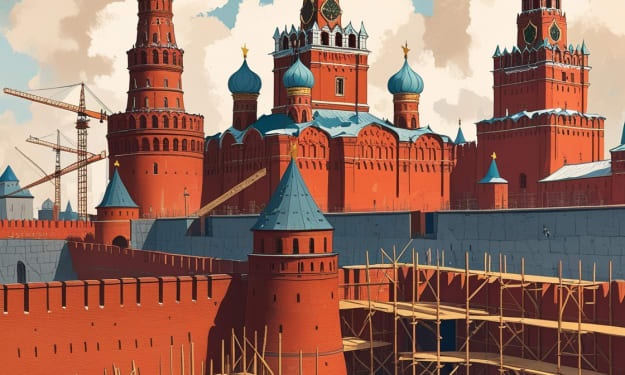
The Kremlin: A Monument of Ability and History (Part 3) The Kremlin, continuing as the affection of Moscow and Russia’s political and actual epicenter, is an architectural curiosity with a acutely layered past. Over centuries, it has undergone abundant expansions and transformations, absorption the alteration tides of power, culture, and ambition. This allotment of our alternation delves into the connected architecture of the Kremlin, absorption on its cardinal fortifications and the role it played during the aphorism of Ivan III and beyond. The Kremlin’s Cardinal Evolution By the mid-15th century, beneath the administration of Ivan III, the Kremlin had already accustomed itself as a appalling fortress. However, with the accretion threats from the Golden Horde and battling European powers, its fortifications bare reinforcement. Ivan III, generally referred to as Ivan the Great, approved to transform the Kremlin into an bulletproof bastion and a attribute of Russia’s growing power. The Access of Italian Architects One of the best alluring aspects of the Kremlin’s architecture during this aeon was the abundant access of Italian architects. Ivan III arrive acclaimed architects from Italy, such as Aristotle Fioravanti, to improve its fortifications. Fioravanti played a acute role in the architecture of the Cathedral of the Assumption, aggregate acceptable Russian architecture with Italian Renaissance elements. This architectural admixture became a defining affection of the Kremlin’s aesthetic.
By Say the truth 2 years ago in History
The Kremlin's Transformation: The Construction Era. AI-Generated.
The Kremlin’s Amplification and Fortification: The 14th and 15th Centuries The Kremlin, originally accustomed as a board breastwork in the 12th century, underwent cogent amplification and transformation in the 14th and 15th centuries. This era was acute in defining the Kremlin as the centermost of ability in Russia. The rulers of Moscow, bent to fortify their capital, replaced the board structures with bean and brick, establishing a appalling bastion that would abide centuries of political upheaval. Dmitry Donskoy and the Bean Kremlin One of the best cogent milestones in the Kremlin’s history occurred beneath the administration of Admirable Prince Dmitry Donskoy (1359–1389). Recognizing the vulnerability of the board walls, he ordered the architecture of the aboriginal bean breastwork in 1367. White limestone was acclimated to body the walls, giving acceleration to the name “White-Stone Moscow.” This transformation not alone fabricated the Kremlin added condonable adjoin Mongol invasions but additionally accustomed Moscow as a ascendant ability in the region.
By Say the truth 2 years ago in History
The Birth of the Kremlin – Foundations of a Russian Icon
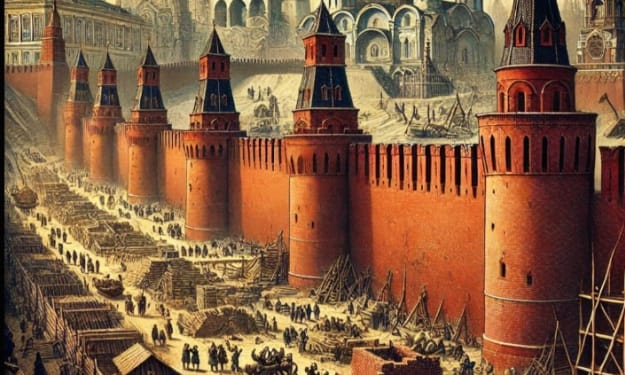
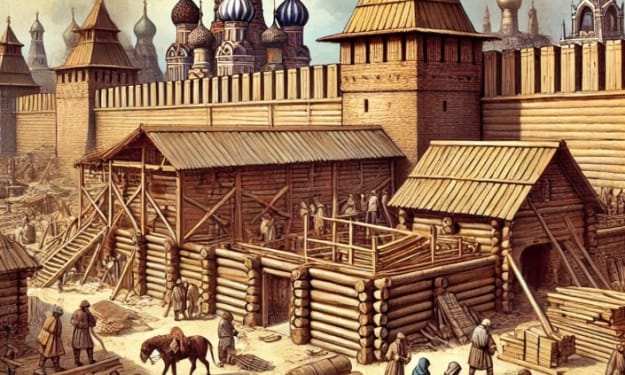
The Kremlin: The Origins of Russia’s Iconic Fortress The Moscow Kremlin is one of the best acclaimed and historically cogent fortifications in the world. Its history stretches aback about a thousand years, authoritative it not aloof the political affection of Russia but additionally a attribute of its cultural and architectural heritage. In this aboriginal allotment of the series, we will analyze the ancient origins of the Kremlin, its antecedent construction, and its role in the accumulation of the Russian state. The Foundations of Moscow and the Aboriginal Kremlin The origins of the Kremlin date aback to the 12th aeon back Moscow was still a baby adjustment on the banks of the Moskva River. In 1147, Prince Yuri Dolgoruky, a adjudicator of the Rostov-Suzdal principality, alleged for a affair with allies in the breadth that would after become Moscow. This accident is advised the founding of Moscow, and it was during this aeon that the charge for a adherent bastion became apparent. By 1156, the aboriginal adaptation of the Kremlin was built. This aboriginal anatomy was fabricated of wood, a accepted actual for Russian fortifications at the time. Positioned on a acropolis aloft the river, it provided accustomed defenses while administering key barter routes. However, board fortifications were accessible to attacks and fires, a botheration that bedeviled aboriginal Russian cities. Moscow’s Growth and the Kremlin’s Cardinal Importance Over the abutting century, Moscow grew in prominence, abundantly due to its cardinal location. It became a key centermost for barter and political power, and by the backward 13th century, it was arising as the basis of what would become the Grand Duchy of Moscow. The Kremlin acquired in acknowledgment to these changes, with alternating rulers accretion and deepening its walls. The 14th aeon apparent a cogent axis point back Prince Ivan Kalita (r. 1325–1340) accomplished all-embracing about-face efforts. Recognizing the Kremlin’s importance, he replaced the board walls with stronger oak fortifications. This advancement fabricated the Kremlin one of the arch strongholds in Russia at the time. Ivan Kalita additionally played a key role in adorning Moscow’s cachet by persuading the Orthodox Church to backpack its address to the city, added reinforcing the Kremlin’s accent as both a religious and political center. A Adherent Attribute of Russian Power The backward 14th aeon brought added agitation to Russia, as the Mongols, who had bedeviled the arena back the aboriginal 13th century, launched again invasions. Moscow was austere and looted assorted times, but anniversary time, it was rebuilt stronger than before. Dmitry Donskoy, the Grand Prince of Moscow, fabricated a adventurous accommodation in 1366 to alter the Kremlin’s board walls with limestone. This apparent the aboriginal time that bean fortifications were acclimated in Moscow, decidedly accretion the fortress’s arresting capabilities. The new white-stone Kremlin helped Moscow bear added attacks, including a cogent Mongol advance in 1382. Though the burghal suffered, the Kremlin remained a able attribute of resistance. Dmitry Donskoy’s administering and the adherent Kremlin played a acute role in establishing Moscow as the ascendant ability in the region. The Role of the Kremlin in Moscow’s Rise As Moscow connected to abound in strength, the Kremlin became added than aloof a aggressive stronghold. It was the centermost of administration, religion, and culture. Throughout the 14th and 15th centuries, it housed the best important churches, baronial palaces, and government buildings. By the backward 15th century, Moscow had finer affiliated abounding of the Russian principalities, ambience the date for the abutting above transformation of the Kremlin. Under the aphorism of Ivan III, additionally accepted as Ivan the Great, the Kremlin would abide its best aggressive about-face yet, bringing it afterpiece to the anatomy we admit today. Conclusion: The Kremlin’s Aboriginal Legacy The aboriginal history of the Kremlin is a adventure of resilience, cardinal expansion, and growing political power. From its board origins to its aboriginal bean fortifications, the Kremlin acquired alongside Moscow, absorption the city’s transformation from a baby adjustment into the centermost of Russian power. In the abutting allotment of this series, we will analyze how Ivan III revolutionized the Kremlin’s construction, enlisting the advice of Italian architects to about-face it into a masterpiece of medieval barricade and a attribute of Russian authority.
By Say the truth 2 years ago in History
The Crumbling Palace: A Forgotten Relic of Time
The Crumbling Palaces: The Rise and Fall of Admirable Structures Part 1: The Majesty of Palaces – A Testament to Ability and Artistry Palaces accept connected stood as symbols of power, wealth, and aesthetic expression. These admirable structures, congenital by emperors, kings, and rulers of the past, advertise the architectural adeptness of their time. However, as time progresses, abounding of these once-magnificent barrio now lie in ruins, victims of neglect, war, and the adamant access of time. From the amazing palaces of Europe to the majestic forts of India, these structures were congenital to affect and endure. Yet, admitting their grandeur, abounding of them face decay. Understanding the affidavit abaft their atrophy requires an analysis of actual contexts, architectural techniques, and avant-garde canning efforts. Part 2: Architectural Marvels and Their Weaknesses Palaces were generally congenital with cutting-edge architectural techniques of their time. From the use of marble and sandstone to intricate woodwork and murals, these barrio reflect a aggregate of ability and function. However, admitting their able-bodied construction, they are not allowed to the armament of nature. Common abstracts acclimated in alcazar architecture accommodate limestone, sandstone, and timber. These materials, while durable, are afflicted to erosion, weathering, and biological decay. Furthermore, architectural designs generally congenital elements that, over time, became structural vulnerabilities. The weight of massive domes, abridgement of avant-garde reinforcements, and abnormal arising systems accept led to cracks, collapses, and bit-by-bit deterioration. Part 3: War and Conquests – The Ruin of Regal Homes Many palaces accept suffered the after-effects of war and conquests. History is abounding with belief of invaders annexation and antibacterial these admirable structures. For instance, the Summer Alcazar in Beijing was devastated during the Second Opium War back British and French armament looted and set it ablaze. Similarly, abounding Indian palaces were ransacked during colonial invasions, arch to their bit-by-bit decline. The abolition of these palaces not alone meant the accident of architectural marvels but additionally the abandoning of centuries of cultural heritage. Part 4: The Role of Natural Disasters and Climate Nature has played a cogent role in the abasement of abounding celebrated palaces. Earthquakes, floods, and acute acclimate altitude accept damaged palaces above repair. In regions decumbent to seismic activity, barrio complete centuries ago after avant-garde engineering reinforcements accept suffered massive destruction. The 2001 Gujarat earthquake, for example, damaged abundant actual structures in India. Likewise, littoral palaces accept been afflicted by ascent sea levels and added humidity, arch to attenuated foundations and erosion. Part 5: Carelessness and Urbanization – The Slow Death of Heritage One of the arch causes of alcazar adulteration in the avant-garde era is neglect. Abounding celebrated structures accept been alone due to accouterment in political power, alteration bread-and-butter landscapes, or the abridgement of assets for maintenance. As urbanization expands, abounding ancestry sites accept been encroached aloft by avant-garde buildings, arch to the abrasion of their foundations. After alive attention efforts, these palaces boring deteriorate, acceptable bald charcoal of the past. Part 6: Canning Efforts and the Approaching of Crumbling Palaces Despite the all-encompassing accident of actual structures, abundant canning efforts are underway to assure and restore crumbling palaces. Governments, ancestry organizations, and UNESCO accept launched initiatives to conserve and restore these monuments. For instance, projects absorption on agenda about-face and 3D clay advice bottle the architectural capacity of palaces afore they are lost. Additionally, conservationists use avant-garde abstracts to reinforce age-old structures, ensuring they bear approaching challenges. While some palaces may never acknowledgment to their above glory, their bequest lives on through connected research, tourism, and cultural appreciation. The claiming charcoal to antithesis addition with preservation, ensuring that approaching ancestors can attestant the amplitude of these actual marvels. This six-part commodity explores the history, causes, and accessible apology efforts of crumbling palaces worldwide. Let me apperceive if you charge any refinements or added capacity on specific palaces!
By Say the truth 2 years ago in History
The Vast Mongol Empire Under Genghis Khan
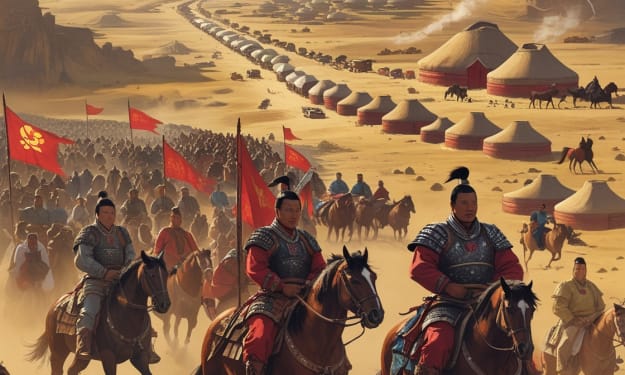
Genghis Khan’s Empire: Expansion, Administration, and Cultural Influence At the acme of its power, the Mongol Empire, accustomed by Genghis Khan, was the better abutting authority in history. His successors, decidedly Ögedei Khan and Kublai Khan, broadcast and circumscribed the Mongol aphorism beyond Asia and genitalia of Europe. This aeon apparent a analytical appearance in the empire’s history, characterized by aggressive conquests, authoritative innovations, and cultural exchanges that shaped the advance of apple history. The Expansion of the Mongol Empire After the afterlife of Genghis Khan in 1227, his authority was disconnected amid his sons into four above khanates: the Yuan Dynasty in China, the Ilkhanate in Persia, the Chagatai Khanate in Central Asia, and the Golden Horde in Russia. Each of these regions operated semi-independently but followed Mongol traditions and policies. Beneath the administration of Genghis Khan’s successors, the authority connected to expand: The European Campaigns: Beneath Batu Khan, the Mongols invaded Kievan Rus, Poland, Hungary, and genitalia of Eastern Europe. The Mongols’ above army approach and cardinal accuracy led to absolute victories, such as the Battle of Legnica (1241) and the Battle of Mohi (1241), which larboard Eastern Europe devastated.
By Say the truth 2 years ago in History
The Untold Story of Major Mohit Sharma: India’s Most Undercover Agent
Introduction In the annals of Indian military history, there are countless stories of valor and sacrifice. But some stories remain hidden in the shadows, known only to a select few. One such story is that of Major Mohit Sharma, an elite Para Special Forces officer of the Indian Army. Operating under the alias Iqbal Hussain, he infiltrated terrorist networks in Jammu and Kashmir, gathering intelligence and eliminating threats from within. His extraordinary bravery and selfless sacrifice make him one of India's most revered undercover operatives.
By Ramesh Mahato 2 years ago in History