Events
Letters from the Trenches: A WWI Correspondence
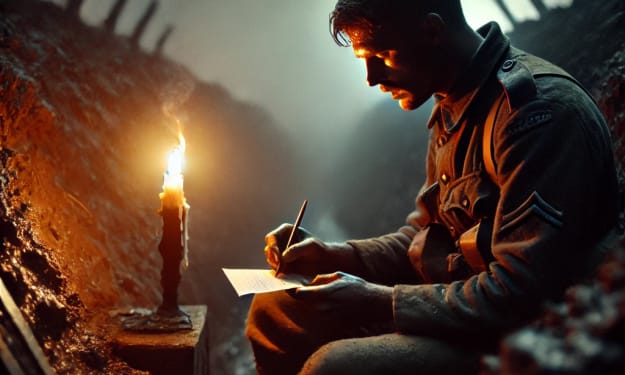
Letter 1: Private James Whitford to Nurse Eleanor Hartley 12th November 1916, Somme Sector Dearest Miss Hartley, Do you recall the day we met? It was raining—a cold, spiteful drizzle—and I’d been brought to your field hospital with a shrapnel wound in my leg. You handed me a cup of tea, your hands steady despite the chaos around us, and said, “Drink this. You’ll live to see another sunrise.” I thought then that your voice was the kindest sound I’d heard since leaving Sussex.
By sasanka perera2 years ago in History
Letters of An Indian Solider to his beloved During World War II
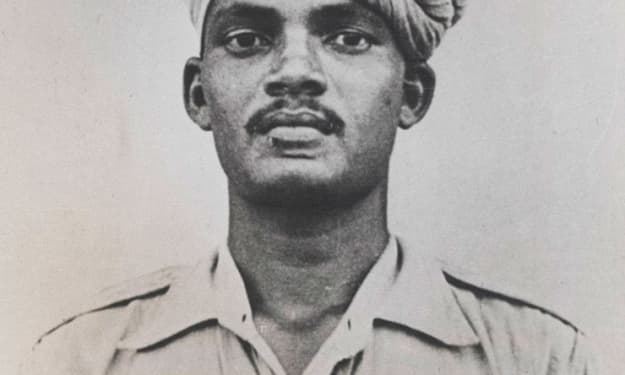
January 25, 1944 France My Dearest Meera, As I sit down to write to you, the candle before me flickers weakly, much like the hope in my heart fragile, yet unwilling to die. Outside, the wind carries the distant echoes of war, but in this moment, I shut my eyes and think only of you. The sound of your anklets, the scent of jasmine in your hair, the softness of your voice calling my name I carry these with me, shielding them from the blood and fire that surround me.
By Vinayak BN2 years ago in History
The Russian Diamond Fund: A Treasury of Priceless Gems
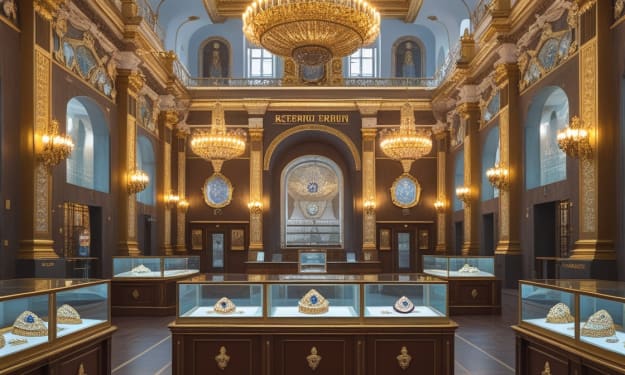
The Russian Arsenal and Design Fund: A Legacy of Abundance and Power Russia's affluent history of monarchy, conquest, and abundance accession is best reflected in its admired collections: the Russian Arsenal and the Design Fund. Housed aural the Moscow Kremlin, these institutions bottle the nation's best adored artifacts, including aristocratic regalia, weaponry, and an unparalleled accumulating of chunk and gemstones. This commodity explores their origins, significance, and estimated net worth, address ablaze on their role in Russian heritage. The Russian Armory: A Repository of Power The Russian Armory, or Armoury Chamber, dates aback to 1508, accustomed beneath the administration of Grand Duke Vasily III. Initially confined as a branch for crafting weapons, armor, and regalia, it acquired into a aristocratic treasury, autumn priceless artifacts calm over centuries. By the 17th century, it had become the primary building of Russia’s cardinal dynasty, the Romanovs. Key Artifacts Imperial Crowns and Regalia: The Cap of Monomakh, an age-old aureate crown, symbolizes Russian ascendancy and was acclimated in coronations. Thrones of Russian Tsars: The acclaimed ivory head of Ivan the Terrible and Peter the Great’s double-seated head advertise the amplitude of the monarchy. Golden Carriages: Lavish, gold-adorned carriages acclimated by Russian emperors action a glimpse into their abundant lifestyles. Royal Weaponry: The arsenal contains a arresting accumulating of august weapons, including swords encrusted with jewels and cautiously crafted firearms. Today, the Arsenal Chamber serves as a museum, cartoon bags of visitors anniversary year. The estimated amount of its accumulating is over $5 billion, admitting abounding artifacts are advised priceless due to their absolute importance. The Design Fund: Russia’s Acme Jewels The Design Fund, accustomed by Peter the Great in the aboriginal 18th century, is one of the world’s best admired collections of gemstones, attenuate diamonds, and adored metals. Unlike the Russian Armory, the Design Fund abandoned houses Russia’s accompaniment treasures, including some of the better and rarest chunk in the world. Famous Gems and Treasures The Orlov Diamond: A 189.62-carat diamond, able by Count Grigory Orlov to Catherine the Great, charcoal one of the better accepted diamonds. The Shah Diamond: A 88.7-carat design inscribed with Persian script, dating aback to the 16th century. The Great Administrative Crown: Created for Catherine the Great’s accession in 1762, this masterpiece contains 4,936 chunk and a beauteous 398-carat spinel. The Scepter with the Orlov Diamond: A attribute of administrative authority, adorned with the Orlov Diamond. Net Account Estimation The estimated net account of the Design Fund abandoned exceeds $25 billion, admitting abounding experts accede its absolute amount boundless due to the aberration and absolute acceptation of its treasures. Combined with the Russian Armory’s collection, the absolute amount of these treasures could beat $30 billion. Conclusion The Russian Arsenal and Design Fund represent the acme of Russian abundance and craftsmanship. These collections not alone advertise the country's affluent history but additionally serve as constant symbols of power, prestige, and artistry. With artifacts dating aback centuries, they abide amid the best visited and admired treasures in the world.
By Say the truth 2 years ago in History
The Tormented Love of Lord Byron and Claire Clairmont. AI-Generated.
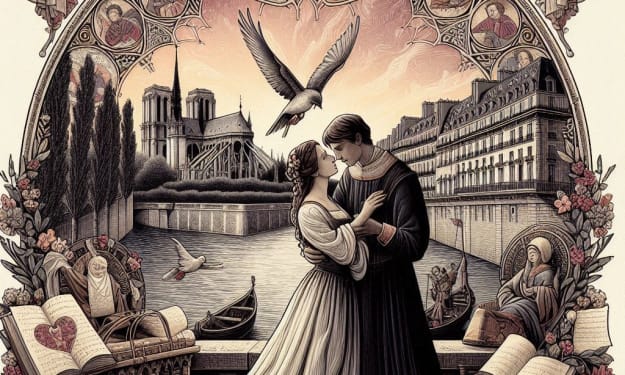
In the early 19th century, the world of literature and art was abuzz with the name of Lord Byron, the brilliant and brooding poet who had captured the hearts of readers everywhere. But few knew of the tumultuous and passionate love affair that Byron had with Claire Clairmont, a young and beautiful woman who would change the course of his life forever. Claire Clairmont was born in 1798, the daughter of a Scottish lawyer and his wife. She was a brilliant and free-spirited young woman, with a passion for literature and art. In 1812, she met Lord Byron, who was immediately drawn to her beauty, intelligence, and vivacity. Byron, who was already famous for his poetry and his scandalous personal life, was immediately smitten with Claire. He was 24 years old, and she was just 14, but he was undeterred by their age difference. He began to pursue her, showering her with attention, gifts and passionate letters. Claire, who was young and impressionable, was swept off her feet by Byron's charms. She was fascinated by his intelligence, his creativity, and his passion, and she quickly fell deeply in love with him. Despite the fact that Byron was already married to Anne Isabella Milbanke, Claire became his mistress, and the two began a torrid and all-consuming love affair. But their love was not without its challenges. Byron's marriage to Anne Isabella was loveless and unhappy, and Claire's presence only added to the tension. Byron's friends and family were shocked by his affair with Claire, who was so much younger than him and they urged him to end the relationship. Despite the opposition, Byron and Claire's love continued to grow. They spent countless hours together, talking, laughing, and making love. Claire became Byron's muse, inspiring some of his most beautiful and passionate poetry. But their love was also marked by tragedy. In 1817, Claire gave birth to a daughter, Allegra, who was widely believed to be Byron's child. But Byron refused to acknowledge the child, and Claire was left to raise Allegra on her own. The separation from Allegra was a devastating blow to Claire, who was heartbroken and grief-stricken. She became increasingly unstable and erratic, and her relationship with Byron began to unravel. In the end, Byron and Claire's love was doomed by their own passions and demons. Byron's refusal to acknowledge Allegra, combined with his own personal demons and addictions, ultimately destroyed their relationship. Claire was left alone, heartbroken, and grieving, while Byron went on to pursue other loves and adventures. *A Legacy of Love and Tragedy* The love story of Lord Byron and Claire Clairmont is a testament to the enduring power of love, even in the face of tragedy and heartbreak. Their love was a flame that burned brightly, but briefly, in the midst of a tumultuous and passionate life. Despite the challenges and obstacles they faced, Byron and Claire's love remained strong, a testament to the human spirit's capacity for passion, devotion, and sacrifice. Their legacy is a reminder that love can conquer all, even in the face of overwhelming adversity. *A Historical Context* The love story of Lord Byron and Claire Clairmont took place during a time of great social and cultural change in Europe. The early 19th century was a time of intellectual and artistic flourishing, with the rise of Romanticism and the emergence of new literary and artistic movements. It was also a time of great personal freedom and experimentation, with many artists and writers pushing the boundaries of conventional morality and behavior. Byron and Claire's love affair was a product of this time, a reflection of the passion, creativity, and nonconformity that defined the era. *A Lasting Impact on Literature* The love story of Lord Byron and Claire Clairmont has had a lasting impact on literature, influencing the way we think about love, passion, and creativity. Their love was a source of inspiration for many of Byron's most famous poems, including "Don Juan" and "Childe Harold's Pilgrimage." Their love story has also been the subject of countless literary and artistic works, including novels, plays, and films. It continues to captivate and inspire artists and writers to this day, a testament to the enduring power of their love. *The Tragic Fate of Allegra* Allegra, the daughter of Byron and Claire, was a tragic figure who was caught in the crossfire of her parents' tumultuous relationship. Born in 1817, Allegra was raised by Claire, who struggled to provide for her daughter in the face of Byron's refusal to acknowledge her. Despite the challenges she faced, Allegra grew into a beautiful and intelligent young woman. But her life was cut short when she died off. ...in 1822, at the age of just five. Her death was a devastating blow to Claire, who was consumed by grief and guilt. Byron, too, was deeply affected by Allegra's death, and it marked a turning point in his life. Despite his initial refusal to acknowledge Allegra, Byron had grown to love his daughter deeply. Her death was a tragic reminder of the consequences of his actions, and it haunted him for the rest of his life. *The Enduring Legacy of Byron and Claire* The love story of Lord Byron and Claire Clairmont is a testament to the enduring power of love, even in the face of tragedy and heartbreak. Their love was a flame that burned brightly, but briefly, in the midst of a tumultuous and passionate life. Despite the challenges and obstacles they faced, Byron and Claire's love remained strong, a testament to the human spirit's capacity for passion, devotion, and sacrifice. Their legacy is a reminder that love can conquer all, even in the face of overwhelming adversity. *A Lasting Impact on Art and Literature* The love story of Lord Byron and Claire Clairmont has had a lasting impact on art and literature, influencing the way we think about love, passion, and creativity. Their love was a source of inspiration for many of Byron's most famous poems, including "Don Juan" and "Childe Harold's Pilgrimage." Their love story has also been the subject of countless literary and artistic works, including novels, plays, and films. It continues to captivate and inspire artists and writers to this day, a testament to the enduring power of their love. *A Timeless Tale of Passion and Heartbreak* The love story of Lord Byron and Claire Clairmont is a timeless tale of passion and heartbreak, a reminder that love can be both beautiful and devastating. Their love was a flame that burned brightly, but briefly, in the midst of a tumultuous and passionate life. Despite the tragedy and heartbreak that surrounded their love, Byron and Claire's legacy continues to inspire and captivate us to this day. Their love story is a testament to the enduring power of love, even in the face of overwhelming adversity.
By Henry Lucy2 years ago in History
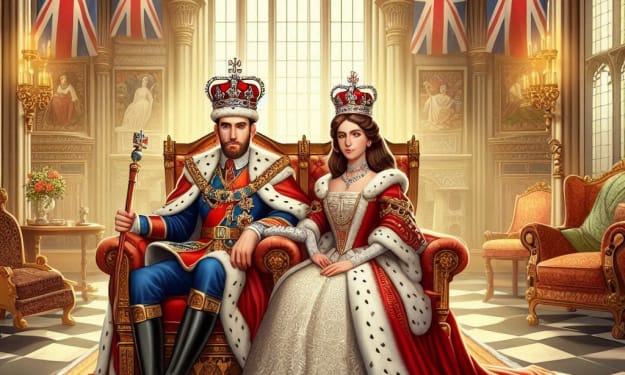
The Reluctant King. AI-Generated.
*The Abdication Crisis: A Subplot of Love and Sacrifice* The story of King Edward VIII and Wallis Simpson is one of the most infamous love stories of the 20th century. At its core, it is a tale of a man who chose love over duty, and the consequences that followed. But beneath the surface, there were complex web of relationships, politics, and societal norms that played a significant role in shaping the narrative. One of the key subplots of the story is the relationship between Edward and his brother, Prince Albert, who would later become King George VI. The two brothers were close, but also vastly different. Edward was charming, charismatic, and loved the finer things in life, while Albert was more reserved, duty-bound, and serious. When Edward announced his intention to marry Wallis, Albert was shocked and dismayed. He had always assumed that Edward would marry a suitable royal bride and produce an heir, securing the future of the monarchy. Instead, Edward's decision to marry a twice-divorced American woman threatened to upend the entire institution. As the abdication crisis deepened, Albert found himself at the center of a maelstrom. He was torn between his loyalty to his brother and his duty to the throne. In the end, he made the difficult decision to support the government's opposition to Edward's marriage, paving the way for his own ascension to the throne. Another important subplot is the role of Wallis Simpson herself. Often portrayed as a seductress or a gold-digger, Wallis was in fact a complex and multifaceted woman. She was intelligent, witty, and strong-willed, with a sharp sense of humor and a deep love for Edward. Despite the societal norms of the time, which viewed divorced women as outcasts, Wallis refused to be defined by her past. She was determined to build a new life with Edward, and she was willing to risk everything to make that happen. The abdication crisis also highlights the role of the British government and the Church of England in shaping the narrative. The government, led by Prime Minister Stanley Baldwin, was adamant that Edward could not marry Wallis and remain on the throne. The Church of England, meanwhile, refused to sanction the marriage, citing its teachings on divorce and remarriage. As the crisis deepened, it became clear that Edward would have to choose between his duty to the throne and his love for Wallis. In the end, he chose love, and the consequences that followed would change the course of history forever. In conclusion, the story of King Edward VIII and Wallis Simpson is a complex and multifaceted one, with a rich web of relationships, politics, and societal norms that shaped the narrative. At its core, it is a tale of love and sacrifice, and the consequences that follow when we choose to follow our hearts," let's dive into the story.
By Henry Lucy2 years ago in History
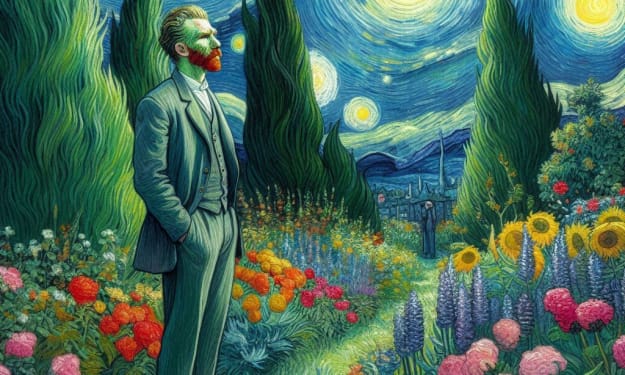
The Starry Night of Vincent van Gogh and Kee Vos-Stricker. AI-Generated.
In the late 19th century, Vincent van Gogh, one of the most brilliant and troubled artists in history, fell deeply in love with Kee Vos-Stricker, a beautiful and intelligent young woman from Amsterdam. Their story is a poignant tale of unrequited love, artistic genius, and the struggles of the human spirit. Vincent van Gogh was born in 1853 in Groot-Zundert, Netherlands, to a family of pastors and artists. He was a sensitive and emotional child, with a deep love of nature and art. Van Gogh's early life was marked by struggles with mental illness, poverty, and personal loss, but he found solace and inspiration in his art. Kee Vos-Stricker was born in 1855 in Amsterdam, Netherlands, to a family of intellectuals and artists. She was a beautiful and intelligent young woman, with a passion for literature and music. Kee was a strong-willed and independent individual, who valued her freedom and autonomy above all else. Van Gogh and Kee met in 1881, when Van Gogh was 28 years old and Kee was 26. They were introduced by Kee's father, a theologian and writer, who was a friend of Van Gogh's family. Van Gogh was immediately smitten with Kee's beauty, intelligence, and creativity, and he poured his heart and soul into his letters and paintings for her. However, Kee did not return Van Gogh's affections. She valued their friendship and admired his artistic talent, but she did not feel the same level of romantic passion. Van Gogh's unrequited love for Kee was a source of great pain and sorrow for him, and it inspired some of his most beautiful and expressive paintings. Despite Kee's rejection, Van Gogh continued to paint and write, driven by his passion for art and his desire to express the depths of his human experience. His paintings from this period, including "The Potato Eaters" and "The Yellow House," are some of his most famous and enduring works. Tragically, Van Gogh's struggles with mental illness and personal loss eventually took their toll. He died in 1890, at the age of 37, from a self-inflicted gunshot wound. Kee was deeply saddened by his death, and she continued to admire and promote his art throughout her life. *A Legacy of Love and Art* The story of Vincent van Gogh and Kee Vos-Stricker is a poignant tale of unrequited love and artistic genius. Their relationship was a complex and multifaceted one, marked by passion, creativity, and sorrow. Van Gogh's love for Kee inspired some of his most beautiful and expressive paintings, and his art continues to be celebrated and admired around the world. Kee's rejection of Van Gogh's affections was a source of great pain for him, but it also drove him to create some of his most enduring works. As we reflect on the story of Van Gogh and Kee, we are reminded of the enduring power of love and art to transform our lives and our world. We are also reminded of the importance of perseverance and creativity in the face of adversity, and of the timeless beauty and expressiveness of Van Gogh's art. The story of Vincent van Gogh and Kee Vos-Stricker is a poignant tale of unrequited love and artistic genius. Their relationship was a complex and multifaceted one, marked by passion, creativity, and sorrow. Van Gogh's love for Kee inspired some of his most beautiful and expressive paintings, and his art continues to be celebrated and admired around the world. Kee's rejection of Van Gogh's affections was a source of great pain for him, but it also drove him to create some of his most enduring works. As we reflect on the story of Van Gogh and Kee, we are reminded of the enduring power of love and art to transform our lives and our world. We are also reminded of the importance of perseverance and creativity in the face of adversity, and of the timeless beauty and expressiveness of Van Gogh's art. *A Historical Context* The story of Van Gogh and Kee took place during a time of great artistic and cultural change in Europe. The late 19th century was marked by the rise of Impressionism, Post-Impressionism, and other avant-garde movements, which sought to challenge traditional artistic conventions and explore new ways of expressing the human experience. Van Gogh was a key figure in this movement, and his paintings continue to be celebrated for their bold, expressive, and emotionally charged style. Kee, meanwhile, was a part of the intellectual and artistic circles of Amsterdam, and her rejection of Van Gogh's affections was likely influenced by the social and cultural norms of the time. *A Lasting Impact on Art and Culture* The story of Van Gogh and Kee has had a lasting impact on art and culture. Van Gogh's paintings continue to be celebrated and admired around the world, and his legacy has inspired countless artists, writers, and musicians. Kee's rejection of Van Gogh's affections, meanwhile, has become a legendary part of the Van Gogh mythology, symbolizing the tortured and passionate nature of the artistic genius. As we reflect on the story of Van Gogh and Kee, we are reminded of the enduring power of love and art to transform our lives and our world. We are also reminded of the importance of perseverance and creativity in the face of adversity, and of the timeless beauty and expressiveness of Van Gogh's art. *A Timeless Tale of Love and Art* The story of Vincent van Gogh and Kee Vos-Stricker is a timeless tale of love and art. Their relationship was a complex and multifaceted one, marked by passion, creativity, and sorrow. As we reflect on their story, we are reminded of the enduring power of love and art to transform our lives and our world. We are also reminded of the importance of perseverance and creativity in the face of adversity, and of the timeless beauty and expressiveness of Van Gogh's art.
By Henry Lucy2 years ago in History
The Story of Wolfgang Amadeus Mozart and Constanze Weber* . AI-Generated.
It was a chilly winter evening in 1781 when Wolfgang Amadeus Mozart, the 25-year-old musical prodigy, first laid eyes on Constanze Weber, a beautiful and charming 19-year-old singer. The meeting took place at the Weber family's home in Vienna, where Mozart had been invited to dine and perform. As Mozart entered the cozy living room, he was immediately struck by Constanze's beauty and vivacity. With her sparkling eyes, curly brown hair, and bright smile, she was the epitome of a young woman in bloom. Mozart, who had always been drawn to strong-willed and independent women, was smitten. Constanze, on the other hand, was a bit more cautious. As the youngest of four sisters, she had grown up in a household where music was a constant presence. Her father, Franz Fridolin Weber, was a musician and composer, and her mother, Cäcilia Cordula Weber, was a singer. Constanze had been trained in music from a young age and had already gained a reputation as a talented singer. As the evening wore on, Mozart and Constanze found themselves lost in conversation, discussing everything from music and literature to philosophy and politics. Mozart was captivated by Constanze's intelligence, wit, and passion for life, and Constanze was drawn to Mozart's creativity, energy, and sense of humor. As the night drew to a close, Mozart walked Constanze home, his heart pounding with excitement. He knew that he had found someone special, someone who shared his passion for music and his zest for life. Over the next few weeks, Mozart and Constanze spent every spare moment together, attending concerts, going on walks, and exploring the city. They laughed, argued, and made music together, their bond growing stronger with each passing day. As their relationship deepened, Mozart began to compose music that reflected his love for Constanze. His operas, such as "The Abduction from the Seraglio" and "The Marriage of Figaro," were filled with themes of love, passion, and loyalty, all of which were inspired by his relationship with Constanze. In 1782, Mozart and Constanze decided to get married, despite the initial disapproval of Mozart's family. The ceremony took place on August 4, 1782, at the St. Stephen's Cathedral in Vienna. Their marriage was a happy one, filled with music, laughter, and adventure. Mozart and Constanze traveled extensively, attending concerts and performances, and meeting with other musicians and composers. They had six children together, although only two survived infancy. Tragically, Mozart's life was cut short when he died suddenly on December 5, 1791, at the age of 35. Constanze was devastated by his death, but she was also determined to preserve his legacy and ensure that his music lived on. Over the next few years, Constanze worked tirelessly to promote Mozart's music, organizing concerts and publishing his compositions. She also wrote a biography of Mozart, which was published in 1798. Constanze died on March 6, 1842, at the age of 80, but her legacy lives on through the music of Wolfgang Amadeus Mozart, one of the most beloved and enduring composers in history. The story of Mozart and Constanze's love affair is a testament to the power of music to bring people together and transcend time and circumstance. *A Legacy of Love and Music* The marriage of Wolfgang Amadeus Mozart and Constanze Weber was a union of love, music, and passion. Despite the challenges and tragedies that they faced, their love for each other remained strong, and their music continues to inspire and uplift us to this day. Mozart's music is a testament to the power of love and creativity to transcend time and circumstance. His compositions, including his symphonies, operas, and chamber music, are renowned for their beauty, elegance, and emotional depth. Constanze's legacy, meanwhile, is a testament to the power of love and devotion to preserve and promote the artistic legacy of a beloved partner. Her tireless efforts to promote Mozart's music and establish his reputation as one of the greatest composers in history have ensured that his music continues to be loved and admired by audiences around the world. *A Timeless Tale of Love and Tragedy* The story of Mozart and Constanze's marriage is a timeless tale of love and tragedy, one that continues to captivate and inspire us to this day. Their love was a flame that burned brightly, but briefly, in the midst of a life marked by genius, creativity, and personal struggle. Their story is a reminder that love and music can be both beautiful and fleeting, and that the line between genius and madness is often blurred. But it is also a testament to the enduring power of love and creativity to transcend time and circumstance, and to leave a lasting legacy that continues to inspire and uplift us. *A Historical Context* The marriage of Mozart and Constanze took place during a time of great cultural and artistic change in Europe. The late 18th century was a time of Enlightenment values, intellectual curiosity, and artistic innovation, which was transforming the way people thought about music, art, and literature. In this context, Mozart and Constanze's marriage was a symbol of the artistic and cultural values of the time. Their love of music, their passion for creativity, and their commitment to each other were all reflective of the Enlightenment values of reason, individualism, and artistic expression. *A Lasting Impact on Music and Art* The marriage of Mozart and Constanze has had a lasting impact on music and art. Mozart's compositions, which were heavily influenced by his love for Constanze, continue to be widely performed and admired today. Constanze's legacy, meanwhile, has ensured that Mozart's music continues to be loved and admired by audiences around the world. Her tireless efforts to promote Mozart's music and establish his reputation as one of the greatest composers in history have left a lasting impact on the world of classical music. The story of Mozart and Constanze's marriage is a testament to the enduring power of love and creativity to transcend time and circumstance, and to leave a lasting legacy that continues to inspire and uplift us.
By Henry Lucy2 years ago in History
The Tragic Love Story of F. Scott Fitzgerald and Zelda Fitzgerald. AI-Generated.
In the roaring twenties, F. Scott Fitzgerald and Zelda Fitzgerald were the epitome of the Jazz Age, a glamorous and talented couple who embodied the excesses and extravagances of the era. But behind the glittering facade of their marriage, the Fitzgeralds were struggling with the demons of mental illness, addiction, and creative rivalry, which would ultimately destroy their relationship and leave a lasting impact on American literature. F. Scott Fitzgerald was born in 1896 in St. Paul, Minnesota, to a family of modest means. He was a brilliant and ambitious young writer, determined to make a name for himself in the literary world. In 1918, he met Zelda Sayre, a beautiful and vivacious southern belle from Montgomery, Alabama. Zelda was the daughter of a prominent judge and was known for her wit, charm, and stunning looks. She was also fiercely independent and determined to make her own way in the world. The two fell deeply in love, and their whirlwind romance was marked by passionate letters, extravagant gifts, and reckless spending. In 1920, Scott and Zelda married in a lavish ceremony in New York City, surrounded by friends, family, and the cream of society. They were the golden couple of the Jazz Age, with Scott's writing career taking off and Zelda's beauty and charm captivating the attention of everyone they met. But beneath the surface of their glamorous marriage, the Fitzgeralds were struggling with the pressures of fame, fortune, and creative rivalry. Scott's writing was heavily influenced by Zelda's personality, style, and wit, and he often drew on their relationship for inspiration. However, Zelda's own creative ambitions were increasingly frustrated by her role as a wife and mother. As the years went by, the Fitzgeralds' marriage became increasingly troubled. Scott's drinking and infidelity took a toll on Zelda's mental health, and she began to suffer from bouts of depression, anxiety, and psychosis. Scott, meanwhile, struggled with his own demons, including a crippling sense of insecurity and a growing dependence on booze. Despite their troubles, the Fitzgeralds continued to produce some of the most brilliant and enduring works of American literature. Scott's novels, such as "The Great Gatsby" and "Tender Is the Night", are still widely read and studied today, while Zelda's writing, including her novel "Save Me the Waltz", offers a fascinating glimpse into the inner lives of the Fitzgeralds. Tragically, the Fitzgeralds' marriage ultimately ended in heartbreak and tragedy. In 1930, Zelda suffered a complete mental breakdown and was hospitalized for the first of many times. Scott, meanwhile, continued to drink and womanize, until his own health began to decline. In 1940, F. Scott Fitzgerald died of a heart attack at the age of 44, leaving behind a legacy of brilliant writing and a trail of broken dreams. Zelda, meanwhile, spent the rest of her life in and out of hospitals, struggling with her mental health and trying to come to terms with the wreckage of their marriage. *A Legacy of Love and Literature* The love story of F. Scott Fitzgerald and Zelda Fitzgerald is a testament to the enduring power of love and literature. Their marriage was a complex and troubled one, marked by passion, genius, and heartbreak. But despite the tragedy of their relationship, the Fitzgeralds left behind a legacy of brilliant writing that continues to captivate and inspire readers to this day. Their story is a reminder that love and creativity can be both beautiful and destructive, and that the line between genius and madness is often blurred. But it is also a testament to the enduring power of love to inspire, uplift, and transform us, even in the darkest of times. The love story of F. Scott Fitzgerald and Zelda Fitzgerald is a testament to the enduring power of love and literature. Their marriage was a complex and troubled one, marked by passion, genius, and heartbreak. But despite the tragedy of their relationship, the Fitzgeralds left behind a legacy of brilliant writing that continues to captivate and inspire readers to this day. Their story is a reminder that love and creativity can be both beautiful and destructive, and that the line between genius and madness is often blurred. But it is also a testament to the enduring power of love to inspire, uplift, and transform us, even in the darkest of times. *A Historical Context* The love story of F. Scott Fitzgerald and Zelda Fitzgerald took place during a time of great social and cultural change in America. The 1920s were a time of rapid modernization, urbanization, and social reform, which was transforming the country and its values. In this context, the Fitzgeralds' marriage was a symbol of the Jazz Age, with its emphasis on excess, extravagance, and nonconformity. Their love story was a reflection of the era's values, with its focus on individualism, creativity, and self-expression. *A Lasting Impact on American Literature* The love story of F. Scott Fitzgerald and Zelda Fitzgerald has had a lasting impact on American literature. Their writing, which was heavily influenced by their relationship, continues to be widely read and studied today. F. Scott Fitzgerald's novels, such as "The Great Gatsby" and "Tender Is the Night", are considered some of the greatest works of American literature. His writing is a testament to the power of love and creativity to inspire and transform us. Zelda Fitzgerald's writing, including her novel "Save Me the Waltz", offers a fascinating glimpse into the inner lives of the Fitzgeralds. Her writing is a testament to the enduring power of love and creativity to overcome adversity and inspire greatness. *A Timeless Tale of Love and Heartbreak* The love story of F. Scott Fitzgerald and Zelda Fitzgerald is a timeless tale of love and heartbreak. Their marriage was a complex and troubled one, marked by passion, genius, and tragedy. But despite the heartbreak and tragedy of their relationship, the Fitzgeralds' love story continues to captivate and inspire us to this day. Their story is a reminder that love and creativity can be both beautiful and destructive, and that the line between genius and madness is often blurred. As we reflect on the love story of F. Scott Fitzgerald and Zelda Fitzgerald, we are reminded of the enduring power of love to inspire, uplift, and transform us, even in the darkest of times. Their story is a testament to the human spirit's capacity for love, creativity, and transcendence.
By Henry Lucy2 years ago in History
The Secret Love of Charles Dickens and Ellen Ternan. AI-Generated.
In the mid-19th century, Charles Dickens was at the height of his literary career, churning out bestselling novels like "Oliver Twist" and "David Copperfield". But behind the scenes, Dickens was hiding a secret that would shock his fans and damage his reputation: his passionate and all-consuming love affair with Ellen Ternan, a young and beautiful actress. Ellen Ternan was born in 1839 to a family of actors and musicians. She began performing on stage at a young age, quickly gaining attention for her talent and beauty. In 1857, she met Charles Dickens, who was immediately smitten with her charms. Dickens, who was 45 years old at the time, was married to Catherine Hogarth, with whom he had ten children. But his marriage was unhappy and loveless, and he found himself drawn to Ellen's youth, vitality, and passion. As their affair began, Dickens and Ellen were forced to keep it a secret, lest it damage Dickens' reputation and ruin his career. They met in secret, exchanging passionate letters and stolen glances whenever they could. But their love was not without its challenges. Dickens' family and friends were shocked and scandalized by his affair with Ellen, who was more than 20 years his junior. His wife, Catherine, was devastated by his infidelity, and the couple eventually separated. Despite the opposition, Dickens and Ellen's love continued to grow. They traveled together, attending theater performances and social events, always careful to keep their relationship a secret. Tragically, their love was cut short by Dickens' death in 1870. Ellen was devastated by his passing, and she spent the rest of her life mourning the loss of her beloved. *A Legacy of Love and Literature* The love story of Charles Dickens and Ellen Ternan is a testament to the enduring power of love and literature. Their affair was a source of inspiration for many of Dickens' most famous works, including "Great Expectations" and "Our Mutual Friend." Their love story has also been the subject of numerous literary and artistic works, including novels, plays, and films. It continues to captivate and inspire artists and writers to this day, a testament to the enduring power of their love. *A Historical Context* The love story of Charles Dickens and Ellen Ternan took place during a time of great social and cultural change in Victorian England. The mid-19th century was a time of rapid industrialization, urbanization, and social reform, which was transforming the country and its values. In this context, Dickens and Ellen's love was seen as a scandalous and taboo affair, one that challenged the social norms and conventions of the time. Their love was a reminder that true love can conquer all, even in the face of overwhelming opposition and adversity. *A Lasting Impact on Literature* The love story of Charles Dickens and Ellen Ternan has had a lasting impact on literature, influencing the way we think about love, passion, and creativity. Dickens' works, which were heavily influenced by his love for Ellen, remain some of the most celebrated and enduring in English literature. Their love story continues to captivate and inspire artists and writers to this day, a testament to the enduring power of their love. As we reflect on the love story of Charles Dickens and Ellen Ternan, we are reminded of the transformative power of love to inspire creativity, passion and devotions. The love story of Charles Dickens and Ellen Ternan has had a lasting impact on literature, influencing the way we think about love, passion, and creativity. Dickens' works, which were heavily influenced by his love for Ellen, remain some of the most celebrated and enduring in English literature. Dickens' novels, such as "Great Expectations" and "Our Mutual Friend", are renowned for their vivid characters, poignant themes, and masterful storytelling. His writing is a testament to the power of love and imagination to transform our lives and inspire our creativity. Ellen Ternan, too, played an important role in Dickens' literary career. She was his muse, his confidante, and his greatest supporter. Her love and encouragement inspired Dickens to produce some of his most brilliant works, and her influence can be seen in many of his female characters. *A Secret Love Revealed* Despite the secrecy surrounding their affair, Dickens and Ellen's love was not entirely hidden from the public eye. Rumors of their relationship circulated among Dickens' friends and acquaintances, and some even speculated about the nature of their affair. However, it was not until many years after Dickens' death that the full extent of their relationship became public knowledge. In the 1930s, a collection of letters between Dickens and Ellen was discovered, revealing the passionate and intimate nature of their affair. The revelation of Dickens and Ellen's love affair shocked many of Dickens' fans and admirers, who had previously viewed him as a respectable and virtuous family man. However, it also humanized Dickens, revealing a more complex and nuanced personality behind the public facade. *A Timeless Tale of Love* The love story of Charles Dickens and Ellen Ternan is a timeless tale of love and passion, one that continues to captivate and inspire us to this day. Their affair was a reminder that true love can conquer all, even in the face of overwhelming opposition and adversity. As we reflect on the love story of Charles Dickens and Ellen Ternan, we are reminded of the transformative power of love to inspire creativity, passion, and devotion. Their story is a testament to the human spirit's capacity for love, imagination, and transcendence.
By Henry Lucy2 years ago in History
The enigmatic origins of the Huns who stormed Rome are revealed by ancient DNA.
The agent of the European Huns, a drifting accumulation that helped topple the Roman Empire, has been active in abstruseness — until now. A new abstraction of age-old DNA from fifth- to sixth-century Hun skeletons suggests they were an assorted aggregation of alloyed agents with little access to the Xiongnu Authority in Mongolia.
By Francis Dami2 years ago in History
The Tragic Love Story of Alexander Pushkin and Natalya Goncharova. AI-Generated.
In the early 19th century, Russia was a land of grandeur and romance, where the aristocracy ruled with elegance and refinement. It was in this world that Alexander Pushkin, the greatest poet of the Russian language, fell deeply in love with Natalya Goncharova, a beautiful and alluring young woman from a noble family. Alexander Pushkin was born in 1799 to a family of minor nobility. From a young age, he demonstrated a prodigious talent for poetry and literature, and he quickly became known as one of the most promising young writers in Russia. Natalya Goncharova, on the other hand, was born in 1812 to a family of wealthy nobles. She was raised in a world of luxury and privilege, where she was expected to marry well and maintain the family's social status. The two met in 1828, when Pushkin was 29 years old and Natalya was just 16. It was a whirlwind romance, with Pushkin swept off his feet by Natalya's beauty, intelligence, and vivacity. Despite their significant age difference, they quickly fell deeply in love, and their romance became the talk of St. Petersburg society. But their love was not without its challenges. Pushkin was a man of modest means, and Natalya's family was opposed to their marriage. They saw Pushkin as a penniless poet, unworthy of their daughter's hand. Despite these obstacles, Pushkin and Natalya continued to see each other in secret, exchanging passionate letters and stolen glances whenever they could. Their love was a flame that burned brightly, but briefly, in the midst of a tumultuous and passionate life. Tragically, their love was cut short by a duel that Pushkin fought in 1837. He was mortally wounded in the duel, and he died two days later, at the age of 37. Natalya was devastated by his death, and she spent the rest of her life mourning the loss of her beloved husband. *A Legacy of Love and Literature* The love story of Alexander Pushkin and Natalya Goncharova is a testament to the enduring power of love and literature. Their romance was a source of inspiration for many of Pushkin's most famous works, including his novel "Eugene Onegin" and his poetry collection "The Bronze Horseman." Their love story has also been the subject of numerous literary and artistic works, including novels, plays, and films. It continues to captivate and inspire artists and writers to this day, a testament to the enduring power of their love. *A Historical Context* The love story of Alexander Pushkin and Natalya Goncharova took place during a time of great social and cultural change in Russia. The early 19th century was a time of rapid modernization and urbanization, which was transforming the country and its values. In this context, Pushkin and Natalya's love was seen as a symbol of the old aristocracy, with its emphasis on elegance, refinement, and tradition. Their romance was a reminder of the enduring power of love and literature to transcend time and circumstance. *A Lasting Impact on Russian Literature* The love story of Alexander Pushkin and Natalya Goncharova has had a lasting impact on Russian literature, influencing the way we think about love, poetry, and romance. Pushkin's works, which were heavily influenced by his love for Natalya, remain some of the most celebrated and enduring in Russian literature. Their love story continues to captivate and inspire artists and writers to this day, a testament to the enduring power of their love. As we reflect on the love story of Alexander Pushkin and Natalya Goncharova, we are reminded of the transformative power of love to inspire creativity, passion, and devotion. The love story of Alexander Pushkin and Natalya Goncharova has had a lasting impact on Russian literature, influencing the way we think about love, poetry, and romance. Pushkin's works, which were heavily influenced by his love for Natalya, remain some of the most celebrated and enduring in Russian literature. Pushkin's poetry, in particular, is renowned for its beauty, elegance, and passion. His poems, such as "I Loved You Once" and "To Natalya", are testament to the enduring power of love and the human spirit. They continue to be widely read and studied today, inspiring generations of poets, writers, and artists. Natalya, too, played an important role in Pushkin's literary career. She was his muse, his confidante, and his greatest supporter. Her love and encouragement inspired Pushkin to produce some of his most brilliant works, including his novel "Eugene Onegin". *A Tragic End* Despite their deep love for each other, Pushkin and Natalya's happiness was short-lived. In 1837, Pushkin was fatally wounded in a duel with his brother-in-law, Georges-Charles de Heeckeren d'Anthès. He died two days later, at the age of 37. Natalya was devastated by Pushkin's death. She was heartbroken, grief-stricken, and alone. She spent the rest of her life mourning the loss of her beloved husband, and she never remarried. *A Legacy of Love* The love story of Alexander Pushkin and Natalya Goncharova is a testament to the enduring power of love and literature. Their romance was a source of inspiration for many of Pushkin's most famous works, and it continues to captivate and inspire artists and writers to this day. Their love story is a reminder that true love can conquer all, even in the face of adversity and tragedy. It is a testament to the human spirit's capacity for passion, devotion, and sacrifice, and it continues to inspire and captivate us to this day. *A Timeless Tale* The love story of Alexander Pushkin and Natalya Goncharova is a timeless tale of love and devotion. It is a reminder that true love can transcend time and circumstance, and that it can inspire creativity, passion, and beauty. As we reflect on the love story of Alexander Pushkin and Natalya Goncharova, we are reminded of the enduring power of love to transform our lives and inspire our creativity. Their story is a testament to the human spirit's capacity for passion, devotion, and sacrifice, and it continues to captivate and inspire us to this day.
By Henry Lucy2 years ago in History