Events
Homeward Bound
The concept of home holds significant importance, encompassing ideas of shelter, security, family, and a sense of belonging. Throughout history, the quest for a place to call home has propelled humanity forward, influencing the development of civilizations and initiating migrations across various continents. The journey of the Bantu peoples exemplifies this experience, as their extensive movements throughout Africa reshaped the continent's cultural and linguistic diversity.
By A Históriaabout a year ago in History
Conquering Everest, Manaslu, Annapurna, and Gokyo valley’s Hidden Gems. AI-Generated.
1. Everest Base Camp Trek: A Legendary Journey Everest Base Camp Trek Everest Base Camp Trek Trek is the most prevalent trekking destination. The base camp trek is a dream for many travelers around the world. A lifetime memorable experience for travelers to witness the breathtaking views of the world’s highest mountain sceneries.
By Bishnu Bhatta about a year ago in History
The Glory of the Pandyan Empire: Wealth, Trade, and Legacy
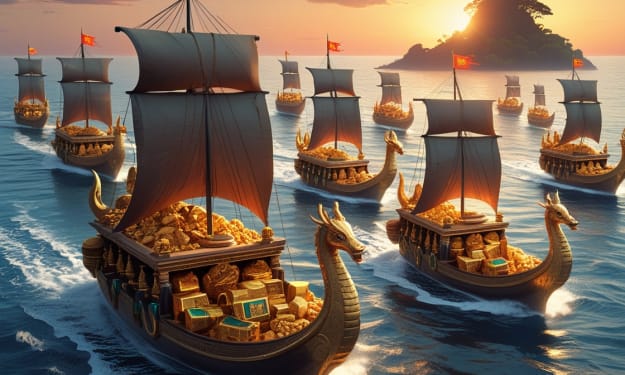
The Legacy of the Pandyan Empire: A Forgotten Wealth of South India Introduction The Pandyan Empire, one of the longest-ruling dynasties in South India, was known for its immense wealth, strategic trade networks, and powerful military. Flourishing for over two millennia, the Pandyas ruled regions of present-day Tamil Nadu and extended their influence across the Indian Ocean, engaging in trade with Rome, China, and Southeast Asia. Despite their grandeur, much of their wealth and influence has faded into history, leaving behind architectural marvels, ancient inscriptions, and legends of lost treasures. The Rise of the Pandyan Empire The Pandyas first emerged as a dominant force in Tamil Nadu around the 4th century BCE. Sangam literature, one of the earliest sources detailing Tamil culture and history, mentions the Pandyan kings as great warriors and patrons of literature. Their capital, Madurai, became a thriving center of Tamil culture, education, and trade. The dynasty was well-known for its efficient administration, with kings ruling alongside ministers and advisors. Trade and Wealth: The Source of Their Power The economic strength of the Pandyan Empire came from its extensive trade connections. The Pandyas controlled pearl fisheries along the Gulf of Mannar, exporting high-quality pearls to Rome, Egypt, and China. Their kingdom was rich in spices, textiles, and gemstones, which were in high demand across the ancient world. Roman and Greek traders frequently visited Pandyan ports, including Korkai and Kayal, making them crucial centers for global commerce. Gold and silver coins from the Roman Empire have been found in Tamil Nadu, indicating a thriving trade relationship. This trade wealth allowed the Pandyas to build grand temples and fortifications, showcasing their dominance. The Pandyan Army and Military Strength The Pandyas maintained a strong military, often engaging in conflicts with neighboring kingdoms like the Cholas and Cheras. They expanded their influence across South India and even launched naval expeditions to Sri Lanka. The Pandyan army included well-trained infantry, cavalry, and war elephants, which played a crucial role in their victories. Their naval forces also protected trade routes and ensured dominance over maritime commerce. Architectural and Cultural Contributions One of the most enduring legacies of the Pandyan Empire is its contribution to temple architecture. The Meenakshi Temple in Madurai stands as a testament to their architectural excellence. Known for its towering gopurams (gateway towers) and intricate sculptures, the temple remains a significant pilgrimage site today. The Pandyas were also great patrons of Tamil literature and arts. The third Tamil Sangam, a literary assembly held in Madurai, flourished under their rule. Poets and scholars were encouraged to compose literary masterpieces, preserving Tamil culture for generations to come. Decline and the Mystery of Lost Wealth Despite their strength, the Pandyan Empire faced internal conflicts and external invasions. The empire suffered a major setback in the 14th century when the Delhi Sultanate, under Malik Kafur, invaded South India. The invasion led to the destruction of many Pandyan temples and cities. With the decline of the Pandyas, much of their wealth vanished, leading to speculation about hidden treasures. Legends suggest that Pandyan riches were concealed in secret vaults beneath temples or buried in remote locations to prevent looting by invaders. Some historians believe that valuable artifacts and gold may still be hidden in the ruins of their ancient cities, waiting to be discovered. The Pandyan Influence in Modern Times Though the Pandyan Empire faded into history, its cultural and economic influence remains visible. The Tamil language, literature, and temple traditions owe much to the Pandyas. Modern Tamil Nadu continues to celebrate their legacy through temple festivals and literary heritage. Archaeological discoveries in sites like Keezhadi have provided new insights into the advanced urban planning and trade networks of the ancient Tamil civilizations. Researchers are still uncovering new evidence that sheds light on the prosperity and achievements of the Pandyas. Conclusion The Pandyan Empire was a powerhouse of wealth, culture, and military strength in ancient South India. Its influence on trade, architecture, and Tamil heritage is undeniable. While much of its material wealth remains lost to history, its legacy continues to inspire historians, archaeologists, and Tamil scholars. The mysteries of the Pandyan treasures may yet be uncovered, offering a deeper understanding of this great empire’s grandeur.
By Say the truth about a year ago in History
The Enigma of the Vijayanagara Vaults: India’s Lost Imperial Treasure . AI-Generated.
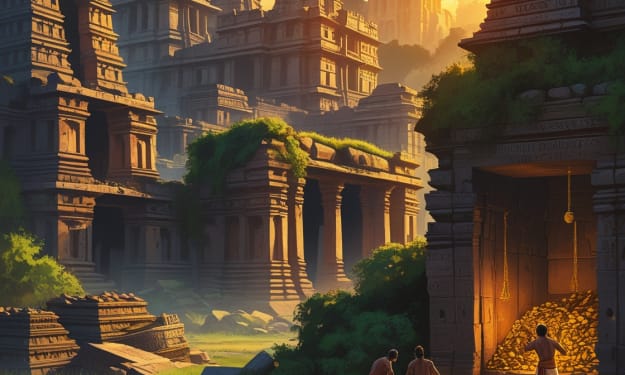
The Riddle of the Vijayanagara Vaults Deciphering the Enigma of South India’s Abandoned Imperial Wealth At the core of South India resides a narrative of grandeur, destruction, and lingering intriguethe account of the Vijayanagara Empire and its concealed vaults. Once regarded as one of the most affluent and influential kingdoms on the Indian subcontinent, the Vijayanagara Empire emerged in the 14th century and thrived until the 16th century. Centered around its splendid capital city of Hampi in contemporary Karnataka, the empire became a symbol of commerce, culture, and architectural excellence. However, its wealth, believed to be immeasurable, disappeared following a singular calamitous eventleaving behind murmurs of concealed vaults, lost fortunes, and enigmas still obscured beneath the remnants. A Metropolis of Unfathomable Affluence The Vijayanagara Empire attained its zenith during the reign of Emperor Krishnadevaraya (ruled 1509–1529), a sagacious and formidable sovereign. Hampi, the capital of the empire, transformed into a lively center of trade, artistry, and spirituality. Foreign visitors, including the Portuguese Domingo Paes and Fernão Nunes, documented vivid accounts of a city brimming with rubies, diamonds, pearls, silk, and spices. Gold was purportedly weighed rather than counted. The monarchs of Vijayanagara controlled trade routes that extended across the Indian Ocean, with vessels exchanging commodities and precious metals with Arabia, Africa, China, and Southeast Asia. Temple complexes within Hampisuch as the Virupaksha and Vittala templesfunctioned not only as sites of worship but also as financial institutions. Devotees presented gold idols, coins, jewelry, and ornaments in reverence to the divinities. These temples evolved into de facto treasuries for the empire. Scholars hypothesize that substantial subterranean vaults, many still undiscovered, were constructed to securely house these riches. The Decline of Vijayanagara The fortunes of the Vijayanagara Empire irrevocably shifted on January 23, 1565, when the empire's forces clashed with a coalition of Deccan Sultanates at the Battle of Talikota. The Vijayanagara army, despite its numbers and valor, suffered a devastating defeat. The victorious sultanates descended upon Hampi, laying waste to the city. What ensued was a cataclysmic eventtemples were plundered, palaces ignited, and sculptures obliterated. The once-flourishing capital was deserted within weeks, left to be engulfed by the passage of time. Nevertheless, not all was seized by the invaders. Folklore and fragmented records allude to treasure vaults concealed deep beneath the city’s temples and fortificationsvaults that were securely sealed amidst the turmoil and never reopened. The Enigmatic Vaults Legends abound regarding numerous undiscovered chambers and clandestine subterranean passages that remain buried beneath the ruins of Hampi. Locals recount tales of temple entrances sealed with ancient codes and concealed access points leading to treasure troves hidden during the siege. While some of these narratives may be embellished, contemporary archaeologists and historians contend that there is an element of truth within them. Archaeological investigations conducted by the Archaeological Survey of India (ASI) have validated the presence of numerous subterranean chambers beneath the temple complexes. Many of these areas are inaccessible due to structural fragility or religious sensitivities. Nevertheless, discoveries of gold coins, exquisite jewelry, and temple artifacts in and around the ruins lend credence to the narratives of concealed treasure. Some individuals contend that the immense wealth was intentionally concealed by the fleeing royal family and temple priests, sealed through religious ceremonies to avert desecration. The architecture of the period corroborates this notion; hidden passageways, camouflaged entrances, and crypt-like storage areas were not unusual. Estimating the Wealth Although precise valuations are conjectural, historians suggest that the Vijayanagara vaults may have contained treasures worth billions in contemporary currency. Inscriptions reference substantial quantities of gold coins (varahas), diamond-encrusted crowns, solid gold idols, and donation records for temples that encompass hundreds of kilograms of precious metals. To illustrate this, a single gold idol unearthed from a temple site in Karnataka, originating from the Vijayanagara era, weighed nearly 30 kg. Extrapolated across hundreds of temples and royal treasuries, the figures imply an empire whose wealth could rival even the treasures of Padmanabhaswamy Temple or ancient Egypt. Myth or Reality? Thus, what became of the treasures of Vijayanagara? Were they appropriated by the sultanates? Interred forever beneath the remnants of the city? Or clandestinely transported and safeguarded by loyalists? These inquiries persistently captivate historians, archaeologists, and adventurers alike.
By Say the truth about a year ago in History
AThe Chola Dynasty’s Maritime Gold: The Lost Wealth of the Ocean Kings
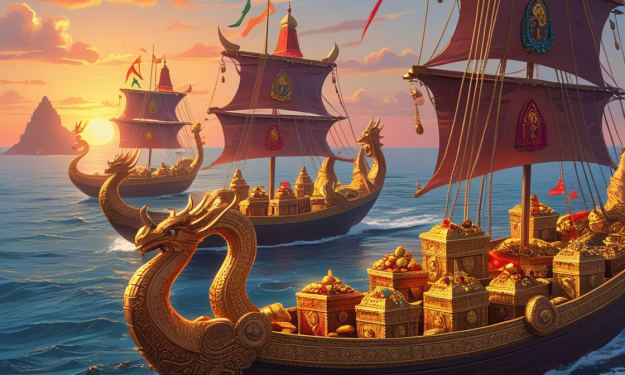
The Chola Dynasty’s Maritime Gold: Concealed Wealth of the Southern Oceans This manuscript investigates the fabled maritime riches of the Chola Dynastyits commerce routes, naval supremacy, gold reserves, and the enigmatic treasures yet to be accounted for. The Chola Dynasty’s Maritime Gold: Concealed Wealth of the Southern Oceans In the chronicles of Indian history, few dynasties have bequeathed a heritage as splendid, extensive, and economically robust as the Cholas. Thriving between the 9th and 13th centuries CE, the Chola Empire was not merely a powerful political entity in southern India but also a naval powerhouse with economic pursuits that extended from the Indian Ocean to Southeast Asia. With formidable fleets, sophisticated trading systems, and a penchant for temple construction and gold accumulation, the Cholas gathered an enormous wealthsome of which is believed to still be submerged beneath the tides or secured within ancient repositories. This manuscript probes deeply into the narrative of the Chola treasure, its origins, safeguarding, and the cryptic disappearance of portions of its vast riches. The Ascendancy of a Maritime Empire The Chola Dynasty ascended to prominence in the Tamil sector of South India, with its capital located at Thanjavur (Tanjore). Sovereigns such as Rajaraja Chola I and Rajendra Chola I transfigured this regional authority into a formidable maritime empire. What distinguished the Cholas was their expertise on the waters. Unlike most Indian empires, they heavily invested in a naval forcenot solely for combat but for commerce. This naval capability enabled them to extend their influence over the Maldives, Sri Lanka, sections of Indonesia, and even the Malay Peninsula. These maritime routes flourished with commerce: spices, pearls, silk, textiles, sandalwood, ivoryand most cruciallygold. Sources of Wealth Trade with the East and West: The Cholas engaged in extensive commercial exchanges with China, the Middle East, and Southeast Asia. Items such as black pepper, cardamom, precious stones, and superior textiles were traded for gold and silver. Tributes and Military Spoils: Rajendra Chola I's renowned expedition to the Srivijaya Empire in Southeast Asia was not merely a demonstration of military prowess but a treasure trove of wealth. Chola inscriptions reference tributes of gold, elephants, and gems returned to South India. Temple Contributions: Temples were not solely religious institutions but also functioned as treasuries. Kings and traders contributed vast quantities of gold and jewels to temples like Brihadeeswara in Thanjavur, which were often safeguarded by temple militias. Taxation and Agricultural Prosperity: The Cholas had a well-organized administrative system that guaranteed the collection of taxes in both currency and produce. This economic framework supported the financing of their military, temples, and overseas endeavors. The Gold That Disappeared Despite this documented affluence, the Chola treasury remains elusive. Although some temple vaults still contain immense wealth, historians and treasure seekers speculate that a significant segment of the Chola fortune has dissipated over timepotentially looted, interred, or lost at sea. Potential Sites of Lost Chola Treasures: Submerged Vessels in the Bay of Bengal: Maritime archaeologists have long contemplated the existence of Chola trading vessels that may have perished during monsoonal storms or naval confrontations. These ships, burdened with gold coins, jewelry, and rare relics, could still remain concealed beneath the ocean’s surface. Unopened Temple Chambers: Certain ancient temples in Tamil Nadu and Keralaerected or supported by Chola monarchsmay still have sealed compartments containing donations in gold and silver that have endured for centuries. Concealed Underground Passages: Folklore from Tamil Nadu narrates tales of clandestine tunnels and chambers created during the Chola period, intended to safeguard treasures from invading armies. These pathways have never been thoroughly investigated. Gold Coins and Inscriptions: The Cholas minted gold coins featuring inscriptions in Tamil and Sanskrit, along with representations of rulers and deities. Some coins have been discovered in Sri Lanka and Southeast Asia, indicating their extensive influence. These coins, now displayed in museums, provide insights into the grandeur of the empire, yet they represent only a small portion of what once existed. Contemporary Search Initiatives: While not as renowned as the treasure of the Padmanabhaswamy Temple or the fabled city of Dwaraka, the Chola treasure has captivated the attention of archaeologists and enthusiasts alike. Underwater archaeological endeavors along the Tamil Nadu coastline have yielded pottery, anchors, and remnants of shipssuggesting that a great deal more may be concealed beneath layers of sediment. Residents in regions such as Karaikal and Nagapattinam occasionally report the discovery of ancient coins and artifacts during construction or agricultural activities. Nevertheless, stringent government regulations and religious sentiments complicate large-scale excavations or explorations. Cultural Significance Beyond Wealth: The legacy of Chola wealth transcends mere lost gold. Their patronage of art, architecture, dance (Bharatanatyam), and literature transformed southern India into a cultural luminary. Temples like the Brihadeeswarar and the Airavatesvara remain today as monumental testaments to their splendor.
By Say the truth about a year ago in History
“India’s Hidden Fortunes: Uncovering the Lost Treasures of Ancient Empires”
The Concealed Riches of India: Revealing the Untold Narratives of Buried Wealth India’s past is characterized not only by empires and triumphs but also by remarkable stories of treasuresome discovered, many still concealed. While contemporary technology has revealed a few valuables interred beneath palaces and temples, an even greater wealth remains inaccessible to treasure seekers, archaeologists, and historians. This article continues our exploration into the enigmatic legacy of India’s uncharted riches by examining lesser-known myths, historical evidence, and royal mysteries that hint at unimaginable fortunes still hidden beneath the earth. The Chola Dynasty’s Nautical Gold The Chola Empire (9th to 13th century) represented one of the foremost maritime powers in Indian history, celebrated for their naval victories across Southeast Asia. With maritime commerce thriving during their reign, gold poured into the empire in substantial amounts. Ancient Tamil inscriptions reference temples receiving offerings of "ships laden with gold. " Some historians argue that to safeguard their wealth during the empire's decline, Chola rulers directed it to be concealed in secluded coastal caverns or buried deep in forests adjacent to the Bay of Bengal. Local folklore from Tamil Nadu and Andhra Pradesh narratives speaks of golden idols, jewelry, and coins secured within rock-hewn vaults, their precise locations lost over the centuries. The Mystery of the Vijayanagara Vaults Following the collapse of the formidable Vijayanagara Empire in the Battle of Talikota in 1565, its capital city, Hampi, was ransacked by the Deccan Sultanates. Nevertheless, travelers and Persian records depict a treasury so immense that it could not have been completely looted in a single raid. Legends suggest that numerous subterranean passages connected the royal palace to concealed chambers in the nearby hills. These vaults are said to have contained golden chariots, jeweled armaments, and temple donations accumulated over generations. Despite intermittent attempts, no official excavations have been permitted in these regions due to religious sensitivities and local beliefs of curses safeguarding the treasure. The Lost Mines of King Salivahana Within the Deccan region, the tale of King Salivahanathought to be the founder of the Shaka eraincludes allusions to gold mines operated during his dominion. These mines were reportedly rich in resources that were stored in fortified chambers beneath forts such as Daulatabad and Devagiri. While Devagiri was subsequently transformed into Daulatabad by Muhammad bin Tughlaq, the fortress’s intricate underground architecture continues to ignite speculation. Some contend that treasure chambers still exist, sealed behind stone edifices with no visible entrances. The Nawabs of Awadh and the Vanishing Gold Lucknow, the cultural epicenter of the Awadh region, was the residence of the Nawabs who were renowned for their lavishness and benevolence. Prior to the British annexation of Awadh in 1856, rumors began to circulate that the Nawabs had concealed vast amounts of gold and jewels in subterranean cellars beneath the Bara Imambara and other estates. When British troops examined the palaces during the uprising of 1857, they uncovered precious artifacts but not the riches depicted in regional narratives. Even now, segments of these ancient havelis remain closed, with murmurs of "zinda qabars" (living tombs) deterring treasure hunters. The Case of the Nizam’s Concealed Fortune The final Nizam of Hyderabad, Mir Osman Ali Khan, was once regarded as the wealthiest individual globally. Although much of his fortune was recorded, tales persist of concealed chambers brimming with diamonds and gold hidden within the Falaknuma and Chowmahalla palaces. Indeed, a steel safe uncovered in 2011 at King Kothi Palace contained vintage currency and uncut diamonds, yet many contend it represents merely a portion of the secret vault. The Nizam was also reputed to bury gold bars within his palace gardens, a measure intended to protect against British interference. Religious Reservoirs of Riches In addition to royal valuables, India’s temples have historically functioned as sanctuaries of the divine. Padmanabhaswamy Temple in Kerala astonished the globe with its estimated $22 billion in treasure. However, vault Bthought to contain the most valuable artifactsremains unopened due to religious restrictions. Temples such as Jagannath in Puri, Meenakshi in Madurai, and even deserted shrines in Odisha’s woodlands are believed to conceal similarly considerable wealth. Temple hoards often evaded plundering due to their isolated locations or were buried before foreign forces arrived. Obstacles to Revelation Despite advanced technology like ground-penetrating radar and satellite imagery, the unearthing of these treasures is obstructed by a combination of religious feelings, local opposition, legal limitations, and apprehension of supernatural curses. Furthermore, numerous legends are transmitted orally, lacking definitive maps or indicators. The intersection of myth and history renders treasure hunting in India a pursuit as intricate as it is intriguing. Conclusion India’s buried wealth transcends mere accumulations of goldit reflects remnants of its historical prosperity, artistry, and spiritual convictions. From the submerged cities of ancient Tamil monarchs to the sealed vaults of medieval dynasties, the endeavor to reveal them continues to enthrall the imagination. The demarcation between myth and fact remains fragile, but with each artifact uncovered, we draw closer to comprehending the grand wealth that once adorned this ancient land.
By Say the truth about a year ago in History
Lost in the Fog of Morning
The early morning fog, thick and persistent, swirled around me as I walked through the silent forest. The air was damp, the earth beneath my feet soft with moisture from the overnight mist. There was no sound except for the occasional rustle of a branch swaying in the light breeze. The fog was so dense that I could barely see a few steps ahead of me, and yet, I continued forward, feeling as though I was being guided by an unseen force. This was my first true experience in the Dao—an experience that would reshape my understanding of the universe, of myself, and of the very nature of reality itself.
By MD SHAMIM RANAabout a year ago in History
The Berbers
Throughout history, humanity has sought prosperity and well-being, but these aspirations are fundamentally rooted in a more valuable principle: freedom. Conflicts have erupted, revolutions have sparked, and ideologies have been developed in pursuit of this intrinsic yearning. Among those who exemplify this struggle are the Berbers, one of Africa's oldest indigenous communities. For thousands of years, they have resisted assimilation, battled empires, and maintained their identity in the face of significant challenges.
By A Históriaabout a year ago in History
Great Big Beautiful Life. AI-Generated.
Emily Henry, the queen of heartfelt storytelling, is back with an exciting new novel that promises to captivate readers once again. Titled “Great Big Beautiful Life”This upcoming release is already making waves with its enchanting premise and highly anticipated cover reveal. Fans of Henry’s signature blend of wit, romance, and emotional depth are in for a treat as she takes them on another unforgettable journey. A Tale of Love, Loss and New Beginnings At the heart of “Great Big Beautiful Life” is a story that resonates with dreamers, wanderers and those searching for meaning in unexpected places. The novel follows a protagonist at a crossroads, grappling with past regrets while embarking on a journey of self-discovery. With Henry’s signature charm, readers can expect a mix of laugh-out-loud moments, poignant reflections and a romance that tugs at the heartstrings. While details about the full plot remain under wraps, early hints suggest a sweeping narrative that explores second chances, the beauty of imperfection and the magic found in life’s unpredictable twists. With Emily Henry at the helm, it’s safe to say that this novel will be a rollercoaster of emotions, offering both comfort and catharsis. Henry has a way of crafting characters that feel strikingly real, flawed and deeply relatable. Readers will undoubtedly see themselves in the protagonist’s struggles and triumphs, making “Great Big Beautiful Life” more than just a love story; it's a deeply personal journey that speaks to the heart of human experience. The themes of self-discovery, healing and growth are universal, ensuring that this novel will resonate with a wide audience. The Stunning Cover Reveal The exclusive cover reveal of “Great Big Beautiful Life” is nothing short of breathtaking. With dreamy hues, whimsical typography and a design that perfectly encapsulates the novel’s essence, it sets the stage for a story that is both visually and emotionally rich. Henry’s covers have always had a magnetic pull and this one is no exception hinting at the warmth, nostalgia and adventure that await inside its pages. The use of color and imagery in the cover art is particularly striking. It evokes a sense of longing and wonder, perfectly complementing the themes of the novel. The typography, carefully chosen to convey a sense of whimsy and sophistication, adds another layer of intrigue. Fans and critics alike are already discussing the artistic choices made for this cover, further fueling excitement for the book’s release. Why Readers Are Already Obsessed Emily Henry has carved a niche in contemporary fiction, delivering books that are not just love stories but deeply personal journeys. Her ability to craft characters that feel real, flawed and incredibly relatable has made her a household name. From “Beach Read” to “Happy Place”, her books have consistently topped bestseller lists, and “Great Big Beautiful Life” is poised to follow suit. Social media is already buzzing with excitement, with readers eagerly speculating about the novel’s themes, characters and of course, the inevitable moments that will leave them in tears (the good kind). Bookstagram and BookTok communities are alive with theories about the storyline, potential love interests and the emotional impact Henry’s latest work will have on its audience. The conversations taking place across platforms highlight just how influential Henry has become in the world of contemporary fiction. What makes Henry’s storytelling so compelling is her ability to balance humor with heartfelt emotion. Her characters are often witty, sharp and wonderfully flawed, creating a reading experience that is as entertaining as it is deeply moving. The anticipation surrounding “Great Big Beautiful Life” is a testament to the trust readers have in Henry’s ability to deliver a novel that will stay with them long after they turn the final page. A Literary Phenomenon in the Making With the novel’s release date fast approaching, bookstores and online retailers are preparing for what is sure to be one of the biggest literary events of the year. Henry’s past novels have achieved massive commercial success and “Great Big Beautiful Life” is expected to follow suit. Pre-orders are already stacking up and early readers who have had the chance to glimpse the manuscript are raving about its depth, humor and emotional resonance. Book clubs are already marking their calendars for discussions about the novel, eager to dissect its characters and themes. Many readers have expressed their excitement about the emotional rollercoaster Henry’s books tend to provide and “Great Big Beautiful Life” appears to be no exception. The combination of romance, self-discovery and expertly woven storytelling is what makes Henry’s novels stand out in the literary landscape. Mark Your Calendars! With anticipation at an all-time high, “Great Big Beautiful Life” is shaping up to be one of the year’s most talked-about releases. Whether you’re a longtime Emily Henry fan or new to her world of heartfelt storytelling, this book is sure to be a must-read. If you haven’t already, now is the time to pre-order your copy and prepare for a literary experience that promises to be both heartwarming and thought-provoking. Henry’s ability to create love stories that feel authentic, rather than formulaic, is a large part of why her books have resonated so strongly with readers. Her characters aren’t just falling in love, they're learning about themselves, making mistakes and growing in ways that mirror real-life experiences. “Great Big Beautiful Life” is expected to follow this tradition, providing readers with a story that feels both familiar and refreshingly new. A Story That Will Resonate for Years to Come As Emily Henry prepares to unveil “Great Big Beautiful Life” to the world, one thing is certain this novel is more than just a fleeting romance or a casual read. It’s a journey of self-discovery, of embracing the beauty in life’s unexpected turns and of finding love in the most unanticipated places. Fans can expect to be swept away in a whirlwind of emotions, laughter and tears, all wrapped in the magic of Henry’s unforgettable prose. This is a story that will linger in hearts long after the final page is turned. Henry’s novels have a way of staying with readers, providing comfort and inspiration long after they’ve been read. “Great Big Beautiful Life” is poised to be another masterpiece in her collection, one that will be revisited time and time again. Whether you’re looking for a heartfelt romance, an exploration of personal growth or simply a beautifully written story, this book is bound to deliver. In a literary world filled with fleeting trends and momentary sensations, Emily Henry continues to craft stories that stand the test of time. With “Great Big Beautiful Life”, she reaffirms her place as one of contemporary fiction’s most beloved authors. So get ready to laugh, cry and fall in love because this is a novel you won’t want to miss.
By Henry Lucyabout a year ago in History