Events
The Emergence of the First Emperor
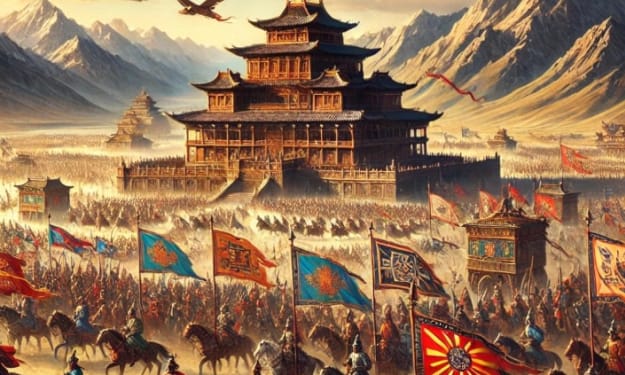
He proclaimed himself "Qin Shi Huang," translating to "First Emperor of Qin," and enacted extensive modifications to centralize authoritystandardizing currencies, weights, measures, laws, and even the written language. He initiated monumental infrastructure initiatives such as the initial iteration of the Great Wall and an extensive national road network. However, his most extravagant undertaking was his tomb, safeguarded by the Terracotta Army, a site that would remain undiscovered for over 2,000 years. Yet, despite all his achievements, Qin Shi Huang was profoundly preoccupied with an aspect he could not master: mortality. The Emperor's Fascination with Immortality Qin Shi Huang’s dread of death was intense. As he advanced in age, he became increasingly engulfed by the notion of eternal existence. He dispatched envoys and alchemists throughout China and beyond in search of the fabled Elixir of Immortality. It is said that he even commanded expeditions to the Eastern Sea in pursuit of Penglai, a mythical isle where immortals resided. Among his trusted sages was an alchemist named Xu Fu, who professed to possess knowledge of life-extending potions. Ironically, some of these mixtures were thought to contain mercurya hazardous substance that may have expedited the emperor’s demise rather than averting it. An Untimely Death Away from Home In 210 BCE, while on a significant inspection expedition of eastern China, Qin Shi Huang abruptly fell ill and passed away in Shaqiu, distant from the capital of Xianyang. He was merely 49 years of age. His death was hidden for several weeks by Prime Minister Li Si and Chief Eunuch Zhao Gao, who feared disorder and possible insurrection. They conveyed his remains back to the capital in a chariot filled with decomposing fish to obscure the odor of decay. His younger son, Huhai, was installed as emperor through forged edicts, while the legitimate heir, Fusu, was compelled to take his own life. This clandestine and tumultuous transition established the foundation for the rapid collapse of the Qin Dynasty. Hypotheses Regarding His Demise Historians persist in deliberating the true cause of Qin Shi Huang’s death. Various hypotheses prevail: Mercury Poisoning: Many contend that he succumbed to unintentional mercury poisoning, originating from the elixirs of immortality prescribed by his court alchemists. Ironically, the very potions intended to confer eternal life may have culminated in his end. Natural Causes or Stroke: Ancient accounts, particularly those from historian Sima Qian, indicate he suffered a severe illness, potentially from overexertion, stress, or a stroke induced by hypertension. Assassination or Internal Conspiracy: In light of the significant power struggle that arose following his demise, some theorize that he may have been poisoned by individuals within his own court, such as Zhao Gao, who subsequently engineered the deaths of numerous royal family members. Mythical Curse: According to folklore, after failing to locate the elixir of life during a distant expedition, Xu Fu may have placed a curse on the emperor. While legendary, this narrative contributed to the lore surrounding his death. Legacy of an Immortal Vision Notwithstanding his early death, Qin Shi Huang bequeathed an extraordinary legacy. His Terracotta Army, unearthed in 1974 adjacent to his vast, yet unopened mausoleum, astonished the world. Thousands of life-sized warriors, each possessing unique characteristics, safeguard his tomb, potentially defending him in the afterworld.
By Say the truth about a year ago in History
The World’s Most Disliked Countries in 2024 – Understanding the Global Perception
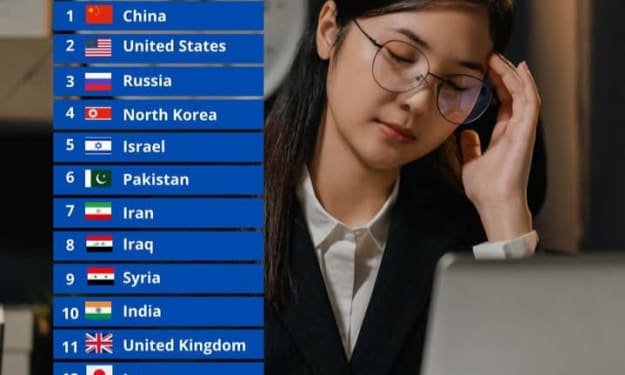
Introduction In a time when the world is more interconnected than ever, global perception carries significant weight. Nations are judged not just by their policies or leaders but by their international behavior, media portrayal, and historical context. A recent global survey conducted by the International Statistics Organization in 2024 has revealed a list of the 15 most disliked countries in the world. While such lists spark heated debate, they also invite deeper reflection. Why are some countries so disliked? Is it due to politics, war, culture, or something more complex? Let’s explore the reasons behind this ranking and the broader implications of such global opinions. The 2024 List: Top 15 Most Disliked Countries 1. China 2. United States 3. Russia 4. North Korea 5. Israel 6. Pakistan 7. Iran 8. Iraq 9. Syria 10. India 11. United Kingdom 12. Japan 13. Saudi Arabia 14. Germany 15. Nigeria This list might raise eyebrows, but it reflects a global sentiment shaped by many interconnected factors. --- Geopolitical Power and Controversy The countries at the top—China, the United States, and Russia—are not just global superpowers but also frequent players in international conflict and political manipulation. Their foreign policies often create division. China's aggressive stance in the South China Sea, surveillance concerns, and treatment of minority populations (like the Uyghurs) has drawn global criticism. The U.S. is frequently disliked for its military interventions, perceived cultural dominance, and polarizing foreign policy. Meanwhile, Russia’s war in Ukraine and its authoritarian internal politics have severely damaged its global image. These countries’ roles in world affairs naturally place them in the spotlight—making their actions highly scrutinized and often controversial. --- Human Rights and Authoritarianism Many nations on this list have been repeatedly criticized for their human rights records. North Korea, known for its closed society, lack of freedoms, and dictatorship, faces near-universal condemnation. Iran and Saudi Arabia, despite their unique cultural and religious heritage, are often accused of oppressing women, silencing dissent, and restricting freedoms. Even democratic nations like India and Israel face accusations—India for increasing religious intolerance and suppression of minority voices, and Israel for its ongoing conflict with Palestinians. Global audiences tend to react strongly to perceived injustices, especially when these issues dominate international headlines. --- Wars, Terrorism, and Instability Countries like Iraq, Syria, and Pakistan have been at the center of regional and global conflicts for decades. Although many of their people are victims of violence and foreign intervention, these nations are often associated with terrorism, war, and instability. Western media, in particular, has played a significant role in reinforcing these perceptions. Nigeria, too, suffers from internal conflicts and extremist groups like Boko Haram, which adds to its unfavorable image internationally. It’s important to note that public opinion doesn’t always distinguish between governments, radical factions, and ordinary citizens—an unfortunate generalization that fuels misunderstanding. --- Colonial Legacy and Cultural Clashes The presence of the UK, Germany, and Japan on this list may seem surprising at first glance. However, the colonial history of the United Kingdom and Germany's 20th-century wars still cast a long shadow. Japan, while technologically advanced and peaceful today, faces criticism from its Asian neighbors for failing to fully reckon with its World War II past. In addition, cultural friction plays a role in how certain populations view others. When traditions, values, or ideologies clash, mutual respect often gives way to mistrust or even resentment. --- The Role of Global Media Perception is powerfully shaped by media narratives. News outlets, social media, and film industries play a massive role in influencing how one country sees another. For example, Hollywood often portrays certain regions (especially the Middle East or Asia) through a lens of conflict, extremism, or backwardness. Likewise, state-run media in various countries may intentionally paint other nations as enemies or threats, reinforcing public fear and animosity. This cycle of media-driven judgment has created deep stereotypes—some of which are far removed from the actual experiences of those living in these nations. --- Perception vs. Reality It’s crucial to understand that public perception doesn’t always reflect the truth. Most people in these countries live normal lives, seek peace, and want progress. The dislike toward a country often stems from the actions of a government, specific policies, or dominant media portrayals—not the culture or people as a whole. Such rankings, while useful for discussion, can also reinforce harmful stereotypes if not handled with care. They remind us how easy it is to judge from afar—and how important it is to approach international opinions with nuance. --- Conclusion The 2024 list of the most disliked countries is not just a popularity chart—it is a mirror reflecting how deeply intertwined our world has become. Political decisions, historical grievances, media influence, and cultural differences all contribute to global opinion. While some criticism is justified, other elements are rooted in misunderstanding or bias. To build a more compassionate and informed world, we must look beyond headlines and recognize the complexity within each country. After all, a nation is more than its politics—it’s its people, its history, and its hope for the future.
By Insect Legendsabout a year ago in History
NASA Curiosity Rover Finds Largest Organic Molecules on Mars Major Breakthrough in Search for Life.
NASA Curiosity Rover Finds Largest Organic Molecules on Mars Major Breakthrough in Search for Life. In a groundbreaking discovery that reignites the question of life beyond Earth NASA's Curiosity rover has detected the largest organic molecules ever found on Mars. These complex carbon based compounds considered essential building blocks of life were discovered in rock samples analyzed by Curiosity’s onboard instruments in the Gale Crater an area long suspected to have once hosted liquid water.
By Adnan Rasheedabout a year ago in History
"The Vanished Wealth of the Soviet Empire". AI-Generated.
The Disappeared Fortune of the Soviet Empire: Discovering the Soviet Union’s Concealed Treasures From gold bullion lost amidst the Russian Revolution to invaluable artworks concealed in bunkers throughout Eurasia, the history of the Soviet Union is filled with narratives of vanished wealth, state treasures, and clandestine caches. This article examines the legends, realities, and persistent enigmas regarding the extensive yet elusive riches of the Soviet Empire. The Disappeared Fortune of the Soviet Empire: Discovering the Soviet Union’s Concealed Treasures The Soviet Union was not only one of the most extensive empires in contemporary history by area and military strength, but also a repository of significant wealthboth acknowledged and speculated. Throughout the 20th century, during conflicts, revolutions, and the eventual disintegration of the USSR in 1991, immense quantities of state treasures, cultural artifacts, and individual fortunes essentially vanished. Currently, treasure seekers, historians, and authorities continue to pursue the forgotten fortunes of the Soviet Empire. The Tsar’s Gold – A Revolutionary Enigma The narrative of lost Soviet treasures commences even prior to the establishment of the USSR, during the downfall of the Russian Empire in 1917. As the Bolsheviks toppled the Tsarist government, the imperial family’s private assetsestimated at over $45 billion in present-day valuedisappeared. Tsar Nicholas II’s gold reserves, diamond-studded regalia, Fabergé eggs, and priceless artworks were either concealed, plundered, or clandestinely transported. One of the most enduring myths is that of the “Lost Gold of Kolchak. ” Admiral Alexander Kolchak, a leader of the White Army, assumed control of the Imperial Gold Reserves during the Russian Civil War. Following the defeat of his forces in Siberia in 1920, more than 500 tons of gold bullion remained unaccounted for. Some accounts suggest it sank into Lake Baikal, while others assert it was buried along the Trans-Siberian Railway. Despite decades of investigation, no definitive treasure has ever been located. Stalin’s Covert Bunkers and Art Collections Under Joseph Stalin, the Soviet Union undertook extensive secret initiatives to collect and conceal cultural treasures, many of which had been confiscated from Nazi Germany following World War II. Referred to as “Trophy Art,” this included over 2. 5 million art piecespaintings, sculptures, and rare manuscriptsthat were stored in hidden bunkers and museums under state confidentiality. Some of this artwork was returned post-war, yet a substantial portion remains unaccounted for or stored in undisclosed sites. Speculation endures that Stalin also possessed bunkers filled with gold reserves, foreign currency, and expropriated treasures from occupied regions and adversaries of the state. The Soviet Gold Reserves and Cold War Dispersals During the peak of the Cold War, the Soviet Union maintained one of the largest gold reserves globally. According to some estimates, it possessed over 2,000 metric tons of gold, safeguarded in vaults beneath the Kremlin and within secret facilities across the USSR. As the empire declined in the late 1980s, there were indications that senior officials started relocating gold and assets out of the nation, either for safeguarding purposes or personal advantage. When the USSR disintegrated in 1991, investigators uncovered significant discrepancies in the country’s gold records. Billions in foreign currency reserves had also disappeared. Some speculate that portions of this wealth ended up in offshore accounts, Swiss vaults, or even concealed caches throughout Eastern Europe and Central Asia. The Curse of the Amber Room: A Treasure Still Missing One of the most renowned artistic treasures linked to Soviet losses is the Amber Rooma chamber constructed entirely of amber panels, gold leaf, and mirrors, initially developed in Prussia and presented to Peter the Great in 1716. The room was plundered by the Nazis during World War II and subsequently vanished. The Soviets spent decades in pursuit of it, convinced it had been concealed in a German bunker or a sunken transport vessel. Despite numerous expeditions and even reconstructions, the original Amber Room has never been located. Its current estimated value surpasses $500 million. The Collapse and the Disappearing Billions When the Soviet Union collapsed in 1991, the situation descended into turmoil. State assets were privatized rapidly, oligarchs emerged, and state-operated industries changed ownership. The Soviet National Bank was reportedly drained of over $60 billion in tangible assets, including gold, platinum, and rare earth metals. Multiple investigations disclosed that high-ranking Soviet officials and KGB members executed a systematic transfer of wealth into private ownership or foreign banks. To this day, international audits and legal actions persist in an effort to trace this lost treasure.
By Say the truth about a year ago in History
Houston Stuns Duke in Final Four Comeback to Reach NCAA Championship
SAN ANTONIO — In a thrilling Final Four showdown, Houston pulled off an incredible comeback to defeat Duke 70-67, overcoming a 14-point deficit in the final eight minutes. With this stunning victory, the Cougars are now set to face Florida in the NCAA Championship game on Monday night.
By Muhammad Hayatabout a year ago in History
Harlow's End: Echoes of the Nameless Stranger
The Nameless Stranger The stranger came into town just after the rain. He didn't say a word as he passed the broken town sign that read "Welcome to Harlow's End." His boots were wet, his coat was covered in road dust, and there was silence. Population: crossed out in black spray paint. He came to a stop at the diner because the neon sign was flickering, as if it was trying to decide if it was still going to glow. Inside, the usual suspects—farmers, wanderers, and a disheveled waitress with too many secrets—shut down. Not because he looked dangerous, but because he looked like he didn’t belong anywhere. Tall. Pale. Eyes the color of river stone. No bags. No ID. No name. He sat at the counter and ordered coffee. Black. When the waitress asked his name for the tab, he just said, “No need.” And smiled like it was the saddest joke in the world. That night, strange things started happening. The dogs howled without a reason. Power flickered. The old church bell rang once—though the rope had snapped years ago. By morning, the mayor’s son was missing. They remembered the stranger, of course. How could they forget him? But when they checked the booth he’d sat in, the seat was bone-dry—untouched. The coffee cup was still full. Still warm.
By Al Amin Islam about a year ago in History
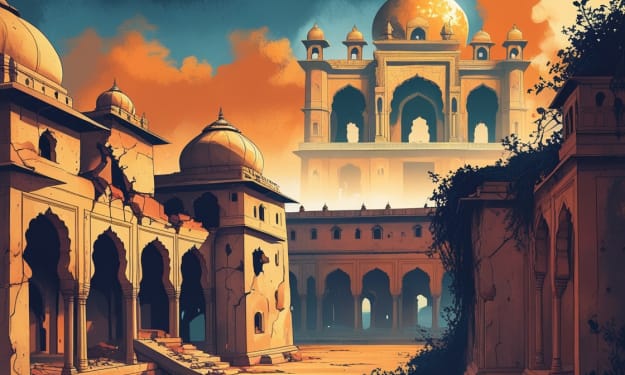
The Forgotten Fortunes: Rajasthan’s Vanishing Palaces and Their Lost Legacy
Whispers in the Sand: The Forgotten Palaces of Rajasthan Rajasthan—literally meaning “Land of Kings”—is often celebrated for its grand forts, regal culture, and tales of valiant warriors. Cities like Jaipur, Udaipur, and Jodhpur boast world-renowned palaces such as the City Palace, Hawa Mahal, and Mehrangarh Fort. However, beyond the popular tourist trail lies another Rajasthan—one composed of forgotten palaces, crumbling mansions, and vanishing architectural wonders. These structures, once the pride of princely estates and merchant kingdoms, now lie in ruins, hidden under layers of dust and silence, their stories fading with each passing year. This article explores the fascinating, overlooked world of Rajasthan’s vanishing palaces, their historical importance, and the urgency of preserving this disappearing legacy. 1. The Legacy of Forgotten Royalty Rajasthan was once divided into numerous princely states, or thikanas, each ruled by powerful feudal lords under the larger umbrella of Rajput dynasties. While the capital cities boasted palaces that remain preserved and visited today, hundreds of lesser-known palaces in remote districts like Karauli, Barmer, Shekhawati, Bundi, and Tonk are in disrepair. These estates were not just royal residences but also centers of political power, art, culture, and wealth. From ornate mirror work and hand-painted murals to secret courtyards and underground chambers, they were a testament to the region’s architectural brilliance. Many of these palaces were even grander than some of today’s iconic buildings. Yet after the end of princely rule in 1947 and the eventual abolition of royal privileges in 1971, many of these thikanas were left without adequate income or recognition. Over time, the families moved out, and the palaces fell into decay. 2. Shekhawati – The Fading Open-Air Museum Nowhere is the decline more visible than in Shekhawati, a region once called the "open-air art gallery of Rajasthan." It was home to some of India’s wealthiest merchant families during the 18th and 19th centuries, who built lavish havelis (mansions) adorned with frescoes, gold leaf work, and intricate carvings. Today, most of these havelis—particularly in towns like Mandawa, Nawalgarh, and Fatehpur—are crumbling. Many have broken roofs, faded murals, and are used as storage barns or have been completely abandoned. Historians estimate that more than 2,000 such structures exist, many of them worthy of World Heritage recognition, but less than 10% are maintained. 3. The Royal Estates of Forgotten Forts Beyond Shekhawati, several other thikanas hold palaces that are fading into obscurity: Bundi Palace: Though renowned for its wall paintings, much of the structure remains unrestored. Entire chambers with priceless murals have been left to rot. Karauli Palace: Home to the Yaduvanshi kings, this palace has intricate stonework and halls once gilded with gold. However, tourism is minimal, and preservation efforts are limited. Kuchaman Fort: Perched atop a steep hill, this fort-palace is mostly unknown outside local circles. While a section has been converted into a heritage hotel, vast areas are abandoned. These forts once housed libraries, treasuries, weapon stores, and artworks—many of which have been stolen, lost, or deteriorated due to lack of care. 4. What Was Lost: Treasure, Culture, and Identity Rajasthan’s forgotten palaces weren’t just about stone and mortar. They held: Historical Manuscripts: Genealogies, treaties, and philosophical texts. Treasure Rooms: Coins, jewelry, gold-plated furniture. Royal Paintings: Many now looted or held in private collections abroad. Local Art Forms: Wall art like Pichhwai, Miniature, and Phad paintings, which are vanishing. The cultural identity of many small towns was tied to their palace. As the buildings collapsed, so did traditional crafts, festivals, and a sense of communal pride. 5. Why the Palaces Vanished Several factors have contributed to this decline: Neglect after Independence: Many royal families were left without adequate funds to maintain their properties. Urban Migration: Heirs moved to bigger cities, abandoning ancestral homes. Lack of Government Support: ASI and state bodies often prioritize well-known sites, leaving smaller palaces undocumented. Looting and Encroachment: Several properties have been vandalized, illegally occupied, or stripped for building materials. 6. The Path Forward: Restoring a Legacy Not all hope is lost. A few passionate individuals and NGOs are working to restore forgotten palaces and promote them through heritage tourism. For example: The Neemrana Group has restored several old palaces into boutique hotels.
By Say the truth about a year ago in History
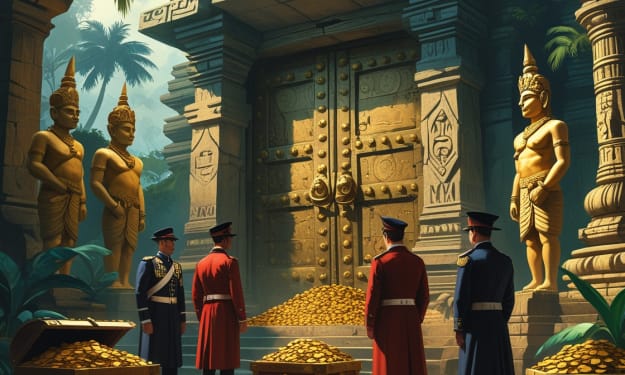
“The Fortune That Escaped the Empire: British Colonialism’s Greatest Missed Treasures”
The Lost Riches: The Biggest Treasure Missed by the British Empire Throughout the era of colonial expansion, the British Empire plundered immense wealth from its colonies across Asia, Africa, and the Americas. From India's diamonds and spices to Africa’s gold and minerals, Britain amassed unprecedented fortunes. However, history also holds fascinating accounts of enormous treasures that evaded British grasp—treasures buried, lost, or hidden in plain sight, never to be seized by the crown. Among these, one of the most legendary missed fortunes lies in India: the hidden treasures of the Maratha Empire and Tipu Sultan’s lost wealth.
By Say the truth about a year ago in History
Trump defends tariffs after markets plunge for second straight day: ‘Economic revolution. Content Warning. AI-Generated.
Trump Defends Tariffs After Markets Plunge for Second Straight Day: ‘Economic Revolution’ Former President Donald Trump has doubled down on his support for tariffs amid a steep market sell-off, insisting that his proposed economic policies, including broad tariffs on foreign imports, are key to what he called an “economic revolution” for the United States.
By Md polash Aliabout a year ago in History