Events
The Familiar by Leigh Bardugo
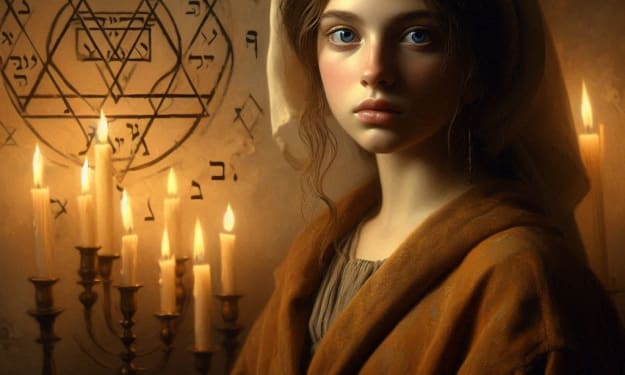
Introduction: A Historical Lens on Fiction Leigh Bardugo The Familiar is not merely a historical fantasy novel, it is a profound, layered tapestry woven with the threads of real-world 16th-century Spain. It captures an era dominated by the Spanish Inquisition, social and religious intolerance, and a society built upon fear, power and secrecy. At the heart of this evocative setting is Luzia, a young Jewish woman navigating a world that demands silence and obedience. Yet, Bardugo transforms her journey into one of reclamation and resistance through mysticism, love and defiance. This article aims to delve deeper than surface-level admiration, breaking down the historical authenticity, religious symbolism and the emotional resonance of the characters that make The Familiar a compelling portrait of love and identity under oppression. The Setting: Spain in the Shadow of the Inquisition The Spanish Inquisition, formally established in 1478, reached terrifying intensity during the time The Familiar is set. Under the reign of King Philip II, Catholic orthodoxy became synonymous with political loyalty. Heresy, witchcraft and deviation from the Church’s doctrines were met with brutal punishments, often culminating in public executions. What makes this period so historically complex is the targeting of conversos Jews who had been forced to convert to Christianity, often still suspected of practicing Judaism in secret. Bardugo’s world doesn’t fictionalize this danger; it makes the audience feel it, as Luzia lives with the constant threat of exposure. Her daily life, from the food she prepares to the prayers she whispers, is shadowed by the risk of denunciation. The novel subtly integrates the " limpieza de sangre” ("purity of blood") ideology, where ancestry determined one's societal value. This pseudo-racial caste system was not only dehumanizing but created generational trauma for those labeled as impure. Through Luzia, Bardugo places the reader inside the suffocating grip of these regulations, showing how laws shaped not just public actions but private thoughts. LUZIA: A Woman of Hidden Power and Resilient Spirit At the story’s core is “Luzia Cotado”, a woman who symbolizes countless silenced voices of history. She begins as a scullery maid, a lowly position that reflects her marginalized status a Jew, a woman, a servant. But Luzia is not powerless. Her connection to “Kabbalah”, the mystical tradition within Judaism, is her source of secret strength. Unlike conventional fantasy heroines, Luzia’s power is not flashy. It is deliberate, rooted in ancient numerology, Hebrew script and spiritual symbolism. Bardugo masterfully uses Jewish mysticism not just for flair but to illustrate how cultural memory and spiritual resilience can become acts of rebellion. Luzia's spells and miracles mirror historical practices that were passed down quietly, often at great risk. Her character development reflects the journey from invisibility to agency. Luzia slowly recognizes that her hidden identity is not a burden, but a source of divine and ancestral power. In a world that seeks to erase her, she learns to etch her existence in magic, memory and defiance. Guillén Santángel: Nobleman, Outsider and Mirror Guillén Santángel, Luzia’s love interest, is more than a romantic figure; he is a foil, a symbol and a paradox. Born into nobility, he should be an embodiment of the system. Yet Guillén exists on the margins of that very world an aristocrat who challenges expectations, whose identity and secrets make him an outsider within his own class. Their romance is intoxicating because it is transgressive. It violates every social norm: Luzia is a servant and converso; Guillén is powerful and privileged. But their love is forged in danger, trust and shared alienation. It is this shared sense of not belonging that binds them, even when society demands they remain apart. Historically, such relationships would be scandalous and possibly fatal. Yet Bardugo doesn’t romanticize their love merely as rebellion; she frames it as “truth” in a world of lies. Theirs is a love that strips away artifice, revealing humanity in its rawest form. “Jewish Mysticism: The Power of the Unseen One of the most striking elements of “The Familiar” is its portrayal of **Kabbalah** and Jewish magical traditions. Unlike the sensationalized versions of magic found in many fantasy stories, Bardugo’s treatment is respectful, researched and reverent. Kabbalah is not spellwork in the traditional sense. It is a spiritual philosophy that seeks to understand the divine through sacred texts, symbols and meditative practices. Luzia’s magic often involves Hebrew letters, amulets, incantations and numerological patterns. These are drawn from real traditions practiced in secret across centuries. This spiritual magic becomes a metaphor for survival. When Luzia performs miracles, it is not for glory but necessity to protect, to endure, to be seen. Her miracles give voice to the generations of Jewish women whose intellect and intuition were overshadowed by the men who authored religious texts. In Bardugo’s hands, the mystical becomes a feminist reclaiming of sacred space. Thematic Depth: Resistance, Reclamation, and Romance Resistance Through Identity Luzia’s story is ultimately about the power of embracing identity. She begins the novel in fear of being discovered, punished, forgotten. But as the narrative unfolds, Luzia reclaims her lineage, her faith and her voice. This transformation is not just character development; it is a “historical resurrection”. She becomes the embodiment of those who endured the erasure of forced conversions, who whispered prayers in secret, who buried family names for safety. Love as Rebellion Romantic love, in “The Familiar”, is an act of rebellion. Luzia and Guillén’s relationship is a declaration that love cannot be legislated. Their passion is not reckless, but conscious they understand the risk and still choose each other. In doing so, they challenge not just social norms, but theological ones. Their love becomes a radical act of choosing one another over dogma, caste and fear. The Power of Storytelling Bardugo herself participates in a long tradition of Jewish storytelling, where fiction becomes preservation. “The Familiar” is both a narrative and an archive, preserving the lost voices of Sephardic Jews and reminding modern readers of histories that were intentionally obscured. Luzia’s magic is powerful, but so is the act of “telling her story”. In this light, every miracle Luzia performs, every decision she makes, becomes part of a larger resistance, a refusal to be forgotten. Symbolism and Subtext Throughout the novel, Bardugo plants symbols that echo real-world Jewish rituals and esoteric knowledge. The use of candles, incantations, and sacred symbols are not fictional inventions, but reinterpretations of centuries-old traditions. Even Luzia’s name which means "light" is symbolic of her role as a beacon in dark times. Guillén’s name, derived from the Germanic "will/desire," suggests internal struggle and longing. His connection to Luzia is not just romantic but spiritual. He is drawn to her light, even as the world seeks to extinguish it. The house Luzia serves in, with its decaying grandeur and oppressive hierarchy, reflects the rot within Spanish society. Its structure mimics the Spanish caste system, with Luzia buried at the bottom, her power hidden beneath the stairs of power. Historical Echoes in Modern Times While the novel is set in the 16th century, its themes echo loudly today. The policing of identity, the use of religion as a weapon and the vilification of the "other" are not relics of the past. Bardugo subtly reminds readers that the systems Luzia fights against still linger in different forms, perhaps, but no less dangerous. By reclaiming a story from the margins and infusing it with heart, romance and dignity, Bardugo does more than entertain. She educates, honors and “illuminates”. Conclusion: Illuminating the Forgotten “The Familiar” is a love story, a spiritual journey and a historical reclamation all at once. Leigh Bardugo has taken a dark chapter of Spanish history and imbued it with beauty, magic and hope. Through Luzia and Guillén, we do not just witness love we witness survival. Their tale reminds us that identity can be hidden, but never destroyed. That truth may sleep, but it can be awakened. And that in the face of silence, the most radical act is to speak or to cast a spell that makes the world listen. In honoring the forgotten, Bardugo ensures that they remain “familiar” to us all.
By Henry Lucyabout a year ago in History
"Cosmic Crisis: Did a Solar Storm Nearly Wipe Out Ancient Humans 41,000 Years Ago?"
Predators, hostile environments, or a lack of food are among the first things that come to mind when we consider the threats that early humans faced. But what if their lives was also at danger from an unseen, lethal force from space? According to current scientific theories, the Earth's magnetic field drastically diminished 41,000 years ago, exposing early humans and fauna to high levels of cosmic radiation. The **Laschamps Excursion** may have had a significant impact on our ancestors, changing their surroundings and possibly affecting evolution.
By Md. Nuruzzaman khanabout a year ago in History
"Draped in Empire: The Legendary Dress of Alexander the Great and Its Priceless Legacy". AI-Generated.
Draped in Power: The History and Worth of Alexander the Great's Regal Dress : This article explores the historical background and significance of Alexander the Great's iconic royal attire. More than just clothing, his dress symbolized divine power, imperial ambition, and the merging of Eastern and Western traditions. Estimated today to be worth hundreds of millions of dollars if it still existed, Alexander’s royal dress remains a powerful symbol of leadership and legacy. : Throughout history, few figures have captured the world’s imagination like Alexander the Great. From his conquests that stretched from Macedonia to the Indus Valley, to his legendary charisma, Alexander’s image has endured for over two millennia. One of the most powerful visual emblems of his rule was his royal dress—not merely a piece of clothing, but a carefully crafted statement of power, unity, and divine right. The Historical Setting Born in 356 BCE to King Philip II of Macedon and Queen Olympias, Alexander was groomed for greatness from a young age. He was taught by none other than Aristotle, and by the age of 20, he inherited a powerful kingdom. His military campaigns would eventually create one of the largest empires in ancient history. But Alexander’s genius extended beyond the battlefield. He understood the value of symbolism and image, especially in foreign lands. As he began adopting Persian customs following the conquest of the Achaemenid Empire, Alexander's dress evolved into a blend of Macedonian, Greek, and Persian elements, reflecting his ambition to unite East and West. It became both a political tool and a spiritual garment, linking him with gods and emperors. Description of the Dress There are no surviving examples of Alexander’s original garments, but ancient texts and artistic depictions give us clues. His iconic dress included several elements: The White Tunic: Made from fine linen or silk, it was a symbol of purity and divinity, often dyed subtly with purples and blues to signify royalty. The Persian Robe (Kandys): A long flowing cloak, richly embroidered with gold threads and precious stones. This marked his adoption of Eastern traditions. The Diadem: A white band worn around the head, symbolizing kingship. After defeating Darius III, Alexander adopted the Persian version of the diadem. Jewelled Accessories: Gold armlets, belts, and brooches embedded with emeralds and rubies. Lion Motif Sandals or Boots: These sometimes bore motifs of strength and power, such as lions or eagles, linking him to Hercules and Zeus. Alexander used clothing as a way to communicate legitimacy to his newly conquered subjects, who were accustomed to grand displays of wealth and divine kingship. Cultural and Political Impact In Macedonia and among his Greek peers, Alexander’s adoption of Persian royal attire was controversial. Many of his generals viewed it as a betrayal of Greek traditions. However, Alexander saw himself as a universal ruler. He wore his elaborate dress to court, ceremonies, and religious rituals, and even encouraged his commanders to do the same. By dressing like a Persian king, he sent a powerful message to his subjects: Alexander was more than just a Greek conqueror—he was a world ruler. He effectively used fashion as a diplomatic tool to bridge cultures, easing tensions and gaining loyalty from the Persian nobility. The Worth of Alexander's Dress If Alexander’s original royal ensemble were somehow preserved and discovered today, its estimated worth would likely exceed $300 million. This valuation comes not only from the potential historical and archaeological value but also the craftsmanship and materials involved: Gold and gemstone embroidery: If his robe was indeed lined with real gold thread and precious gems, even the fabric itself would be worth millions. Historical provenance: Artifacts directly linked to Alexander would command astronomical prices at auctions. Symbolic value: As a symbol of one of the most famous empires in history, the dress would attract institutions, museums, and collectors from around the globe. Such an item would likely never be sold outright—it would be placed in the world’s top museums under tight security and studied extensively. The Legacy Alexander’s dress did more than symbolize power—it influenced generations of leaders. The Roman Emperors adopted similar regalia. Napoleon styled himself in Alexandrian fashion. Even modern ceremonial military attire draws from ancient traditions like those initiated by Alexander. In myth and legend, Alexander is sometimes portrayed as a semi-divine figure, and his attire contributes to this larger-than-life image. His clothing became the visual proof of his ambition: to not just rule the known world, but to shape its culture forever. Conclusion Alexander the Great’s royal dress was not just clothing—it was a masterpiece of political propaganda, cultural fusion, and divine symbolism. Blending the traditions of Greece and Persia, it reflected his unprecedented ambition and his attempt to unite the known world under one rule. Today, it stands as a historical mystery and a powerful symbol of leadership, empire, and vision. If found, its value—both material and symbolic—would be immeasurable. Would you like a Ghibli-style or traditional-style illustration of Alexander wearing this dress?
By Say the truth about a year ago in History
Residential vs. Commercial:
Whether you're planning to build your dream home or a high-functioning commercial space, selecting the right architect is the first and most critical step. Madurai, a city rich in culture and modern growth, offers a variety of architectural services — but how do you find the right one? More importantly, should you choose differently for residential and commercial projects?
By Suresh adsabout a year ago in History
How Trump's Tariff Actions Could Boost China's Global Reputation
The Tariff Landscape: From Protectionism to Global Fallout In 2018, the Trump administration imposed sweeping tariffs on Chinese goods, citing concerns over intellectual property theft, state subsidies, and trade imbalances. The move affected over $350 billion worth of goods and sparked a tit-for-tat trade war that escalated tensions between the world’s two largest economies.
By John Harkerabout a year ago in History
Sunset in the mountains of Durmitor
Sunset in the mountains of Durmitor The afternoon was different. The sun was slowly setting on the mountainside, spreading golden colors in the sky. The sunset could be seen from the campus dormitory, like a perfectly arranged scene—as if painted by Allah with his own hands.
By Arshad Aliabout a year ago in History
The Price of a Moment
In the northern region of Pakistan, nestled within a densely populated village, lived a school teacher who commanded immense respect and admiration. Known for his wisdom, integrity, and kind demeanor, he was the pillar of trust in the community. Every matter requiring judgment or confidentiality was entrusted to him. The teacher had three sons, and his brother had two. Together, their families were regarded as noble and peace-loving by all.
By Zain Ali Khanabout a year ago in History
Thucydides of Athens
Thucydides of Athens (circa 460 – circa 400 BCE) is celebrated as one of history's foremost historians, recognized for his meticulous method of documenting historical events. In contrast to earlier historians who frequently intertwined myth with reality, Thucydides aimed to deliver a precise and analytical narrative grounded in evidence and firsthand accounts. His seminal work, The History of the Peloponnesian War, continues to be a cornerstone in the fields of historiography, political science, and military strategy.
By A Históriaabout a year ago in History