Events
MAUMAU GENERAL'S GRAND RETURN?
47 years after his disappearance, the country rejoiced at the alleged return of the former Maumau General, Stanley Mathenge. He had been invited by the then President Mwai Kibaki who had been sworn into power a few months prior after a journalist had claimed to have found the former guerrilla still in exile in Ethiopia. The new Kibaki regime had signaled a new era of hope and although Mathenge’s return was perceived as yet another good omen, it deteriorated into an embarrassing scandal after the man claiming to be Mathenge turned out to be an Ethiopian farmer.
By HINGES OF TIMEabout a year ago in History
Watching horror through gray glasses. AI-Generated.
Horror movies don’t usually stick with me. They don’t keep me up at night, because 99% of the time, I can just rationalize it: it's a movie. Sure, great white sharks, genetically mutated sharks, or ancient super sharks are scary in the moment, but at the end of the day, they're completely fictional.
By ADIR SEGALabout a year ago in History
Trump sets sights on national African American history museum
In a significant shift from his earlier stance, President Donald Trump has recently targeted the Smithsonian Institution's National Museum of African American History and Culture (NMAAHC), accusing it of promoting "improper ideology" and "divisive narratives." This move has sparked widespread criticism from historians, artists, and civil rights advocates who view it as an attempt to sanitize American history.
By Md Soriful Islamabout a year ago in History
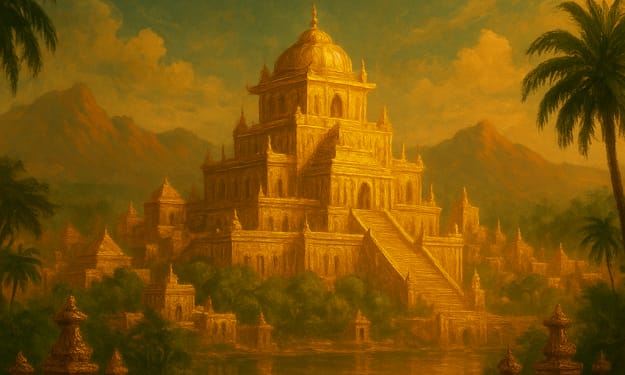
“The Golden Mirage: Unveiling the Legend of El Dorado’s Hidden Palace” . AI-Generated.
The Golden Mirage: Chronicle of the Golden Palace in El Dorado For centuries, the myth of El Dorado, the legendary city of gold concealed deep within South America, has sparked the imagination of explorers, historians, and adventurers. Central to this legend is the Golden Palace, a radiant fortress purportedly decorated entirely with goldits walls, floors, thrones, and even sacred altars. Although no concrete evidence of its existence has ever been discovered, the legacy of the palace continues to cast a golden hue throughout the annals of history. Origins of the El Dorado Legend The narrative of El Dorado stems from the indigenous Muisca populace of contemporary Colombia. “El Dorado,” which translates to “The Gilded One” in Spanish, initially denoted not a metropolis, but a ceremonial rite. According to early Spanish narratives, the Muisca would coat their new leader in gold dust and place him on a raft in Lake Guatavita, where he would present offerings of gold and emeralds to the deities by casting them into the waters. This spectacle of gold captivated the Spanish conquistadors, who perceived the ceremony as an indication of a prosperous kingdom governed by a gilded monarch. As the tale proliferated, the concept of El Dorado evolved from a singular entity into an entire cityor, more ambitiously, a golden empire. The Quest for the Golden Palace Driven by aspirations of wealth and renown, countless expeditions navigated the dense jungles and perilous landscapes of the New World during the 16th and 17th centuries. Conquistadors such as Gonzalo Pizarro, Francisco de Orellana, and Sir Walter Raleigh embarked on treacherous journeys in search of this elusive city. Raleigh was convinced that El Dorado, with its golden palace, was situated near Lake Parime in what is now Venezuela or Brazil. He depicted the city of Manoa, which he asserted gleamed with golden towers and luminous temples. These endeavors, however, were laden with peril. Severe climates, famine, illness, and violent confrontations with indigenous tribes claimed numerous lives. Despite the exorbitant toll, the allure of an extravagant palace, allegedly capable of rivaling any European court, sustained the legend.
By Say the truth about a year ago in History
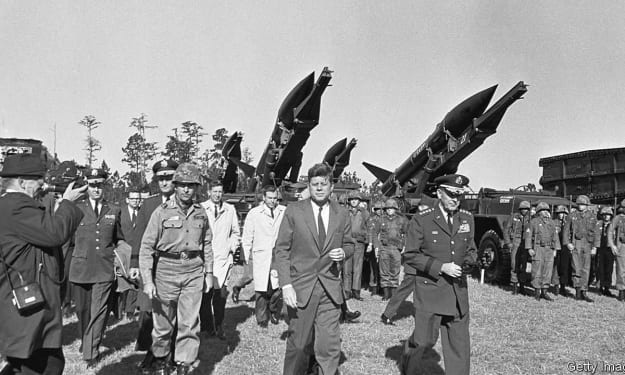
The Day the World Almost Ended, And How We Dodged Disaster
Have you ever lie awake at night wondering how close we’ve come to total annihilation? I’m not talking about asteroids or supervolcanoes—I’m talking about human decisions, split-second choices, and sheer dumb luck that kept us from blowing ourselves to smithereens. Spoiler alert: we're still around. But believe me, the story of how we survived is more bizarre than any Hollywood blockbuster. Let's dive into one of the most horrific times in history—the Cuban Missile Crisis—and see how humanity nearly dodged a nuclear catastrophe.
By ChronoCuratorabout a year ago in History
Beggar thy neighbor, harm thyself: Tariffs like Trump’s come with pitfalls
The phrase "beggar thy neighbor" refers to economic policies that a country adopts to improve its own situation at the expense of others. Tariffs, particularly those aggressively applied in the name of nationalism or economic protection, have long fallen into this category. However, the broader lesson of history is clear: such policies often backfire. The protectionist tariffs implemented during Donald Trump’s presidency, while designed to promote American manufacturing and reduce trade deficits, serve as a modern example of how these measures can ultimately harm not just trading partners, but the very economy they aim to protect.
By Md Soriful Islamabout a year ago in History
"The Billion-Dollar Gorge: Unveiling the History and Net Worth of the Grand Canyon". AI-Generated.
"The Grand Legacy: Investigating the History and Worth of the Grand Canyon" The Grand Canyon, one of the planet's most stunning natural marvels, possesses not only geological significance but also considerable cultural, historical, and economic importance. This article explores the profound history of the canyon, from ancient civilizations to contemporary tourism, and evaluates its extraordinary value in terms of natural resources, tourism income, and ecological significance. The Grand Legacy: Investigating the History and Worth of the Grand Canyon Extending 277 miles in length, up to 18 miles in width, and exceeding a mile in depth, the Grand Canyon is not solely a striking geological formation it is a testament to the might of natural forces and the lasting legacy of time. Sculpted over millions of years by the powerful Colorado River, the Grand Canyon presently stands as one of the most recognizable symbols of natural beauty, adventure, and heritage in the United States and globally. A Journey Through Ancient Time The narrative of the Grand Canyon commenced nearly two billion years ago when ancient rocks, such as Vishnu Schist, were formed deep beneath the planet's crust. The area was once an ocean floor, which underwent numerous uplifts and erosions. Approximately 5 to 6 million years ago, the Colorado River initiated its course, gradually carving its path through layers of rock and sediment. This erosion process produced the intricate landscapes we now admire. Indeed, some rock layers visible in the canyon walls date back as far as 1. 8 billion years, ranking them among the oldest exposed rocks on the planet. This has established the Grand Canyon as a crucial research site for geologists and earth scientists examining the Earth’s history. Indigenous Heritage and Cultural Origins Long before the Grand Canyon transformed into a national park or a tourist hotspot, it served as the home to various Native American tribes. The Ancestral Puebloans (also referred to as Anasazi), who occupied the area over 12,000 years ago, left behind archaeological proof of their culture, including structures and artifacts. Even today, the canyon is regarded as sacred by numerous Native tribes, including the Havasupai, Hualapai, Hopi, and Navajo peoples. Their traditions, narratives, and spiritual ties to the canyon continue to shape its identity and remind visitors that this land possesses a profound and intricate human history. Exploration and Conservation The first documented European to witness the Grand Canyon was Spanish explorer García López de Cárdenas in 1540, but it wasn’t until the 19th century that American explorers and settlers began to systematically map and investigate the region. In 1869, John Wesley Powell led the first successful expedition through the canyon by river, chronicling its grandeur and advocating for its scientific relevance. President Theodore Roosevelt, a fervent proponent of conservation, visited the Grand Canyon in 1903 and subsequently declared parts of it a national monument in 1908. In 1919, it was formally designated as a National Park one of the earliest established within the U. S. National Park Service ensuring its preservation for future generations. The Economic and Ecological Worth The Grand Canyon is not merely a visual spectacle; it is also a substantial economic engine. As reported by the National Park Service, the Grand Canyon National Park attracts over 5 million visitors each year, generating approximately $1. 5 billion annually in tourism-related income, encompassing accommodations, excursions, dining, and retail. When evaluating the canyon's "net worth," one must take into account its: Tourism Revenue: Exceeding $1. 5 billion each year. Ecosystem Services: The canyon's safeguarded ecosystems sustain wildlife, water filtration, and air quality services valued at potentially hundreds of millions. Geological and Scientific Importance: Inestimable, due to its distinctive and ancient rock formations. Cultural and Historical Relevance: Priceless, owing to Native American heritage, historical explorations, and its significance in conservation history.
By Say the truth about a year ago in History
"The Blade of Legends: Unveiling the History of Alexander the Great's Sword"
The Blade of Legends: The History of Alexander the Great’s Sword The sword of Alexander the Great serves as more than merely a weaponit represents authority, heritage, and victory. This article explores the extensive history of his renowned blade, tracing its inception, importance, and its influence in the formation of one of history’s most significant empires. Introduction The sword belonging to Alexander the Great, the Macedonian conqueror responsible for creating one of the largest empires the world has ever witnessed, continues to be a mythical artifact of ancient history. Although the precise location of this sword has been lost through the ages, historical documentation, narratives from ancient authors, and archaeological findings offer a vivid depiction of a weapon that not only assisted in the subjugation of empires but also emerged as a symbol of divine right and invincibility. The Origin of Alexander’s Sword It is believed that Alexander’s sword was a kopis or a xiphos, the conventional swords of Greek warriors. The kopis featured a curved, single-edged blade engineered for powerful slashing strikes, frequently favored by cavalry units, while the xiphos was shorter, double-edged, and straightoptimal for hand-to-hand combat. Historical literature indicates that Alexander had a preference for the xiphos, due to its lightweight, efficiency in compact formations, and better suitability for the close-quarter tactics of Macedonian phalanx warfare. It is also suggested that Alexander's personal sword may have been crafted by a master artisan from Damascus or Persia, potentially adorned with gold or inlaid with precious gemstones, signifying his royal lineage. Symbol of Divine Right The importance of Alexander’s sword transcended mere practicality and held significant symbolic meaning. In the ancient era, rulers were frequently believed to be divinely appointed, a concept that Alexander embraced earnestly. Following his conquest of Egypt, he was proclaimed the son of Amun-Ra, the Egyptian deity. In numerous illustrations and legends, Alexander’s sword was regarded as a celestial weaponimbued with the might and authority of the gods. One of the most iconic narratives involves Alexander’s severing of the Gordian Knot. Faced with the intricate knot that prophecy stated only the future ruler of Asia could undo, Alexander boldly drew his sword and cut through it. This gesture represented his audacity, decisiveness, and destined rulership. The Sword in Campaigns Alexander’s sword accompanied him throughout his significant campaigns: from the Granicus River to Issus, and from Gaugamela to Hydaspes. On each occasion, it served not merely as a weapon of combat, but as a focal point for his forces. Ancient historians like Plutarch and Arrian frequently noted how Alexander would personally lead his charges, sword in hand, positioned at the forefront, which elevated the spirits of his troops and fostered loyalty. It is said that Alexander consistently carried his sword with him, even while sleeping, underscoring the value he placed on personal courage and leadership. Craftsmanship and Legacy Although no verified physical remnant of Alexander’s sword exists today, numerous historical blades are displayed in museumsallegedly claimed by some to be his or designed after his weapon. The most reliable accounts describe an iron blade featuring a gold-inlaid hilt and a pommel shaped like a lion's head, potentially signifying strength and nobility. Myths within Persian and Arabic traditions also reference a "sword of the two horns" (alluding to Alexander’s frequent portrayal as “Dhul-Qarnayn” in Islamic texts). While this may be primarily legendary, it contributes to the cross-cultural heritage of the weapon. In the centuries following Alexander’s passing in 323 BCE, many monarchs endeavored to replicate his achievements. Some asserted they possessed his sword or utilized replicas as emblematic tokens of legitimacy. Even Julius Caesar drew inspiration from Alexander, keeping a statue of him in his quarters, perhaps reflecting the fascination with the sword and its wielder. The Sword in Cultural Recall In contemporary society, Alexander’s sword is a prominent theme in film, literature, and video games. It frequently embodies the capacity to conquer, the weight of leadership, and the intricacies of legacy. The sword has evolved into a metaphornot merely for warfare, but for audacious actions in the face of insurmountable challenges. In Islamic, Persian, and Eastern narratives, Alexander’s portrayal as a sagacious king and formidable conqueror adds spiritual and philosophical layers to his sword, comparing it to Excalibur or other legendary blades. Estimated Value (Theoretical) Should Alexander’s original sword be unearthed today, its net worth would be incalculable. As an invaluable historical relic associated with one of history's greatest military strategists, its worth would undoubtedly exceed $100 million, potentially ascending to hundreds of millions depending on its condition, provenance, and materials. Private collectors, royal institutions, and nations could vie for its possession. Conclusion Although obscured by time, the sword of Alexander the Great continues to be one of the most intriguing artifacts in human history. It transcends mere steel and goldit encompasses destiny, leadership, and the relentless pursuit of greatness. In numerous respects, the sword of Alexander traverses centuries not just as an implement of combat, but as a representation of a lasting legacy that continues to motivate the world today.
By Say the truth about a year ago in History
"The Ottoman Legacy: Uncovering the Greatest Treasure in Muslim History". AI-Generated.
The Concealed Treasures of Islam: Revealing the Most Significant Wealth in Muslim History Throughout Islamic chronology, numerous valuables have been amassed, uncovered, and safeguarded by various Muslim dynasties. Notably, the treasury of the Ottoman Empire is distinguished as the most precious and extensive. Featuring relics associated with the Prophet Muhammad, war spoils, royal jewels, and generous offerings from across the Islamic realm, the Ottoman Imperial Treasury remains one of the most remarkable assemblages of Islamic affluence ever gathered. This article examines its historical context, importance, and appraised worth. The Wealthy Heritage of Muslim Civilization From the illustrious period of the Abbasids to the pinnacle of the Ottoman Empire, Islamic civilization has been a nucleus of wisdom, architecture, cultureand substantial riches. Among the myriad treasures that Islam generated or acquired through epochs of conquest, commerce, and diplomacy, one rises above the rest: The Ottoman Imperial Treasury. Currently located in Istanbul's Topkapi Palace, this assemblage transcends a simple exhibition of gold and gemsit epitomizes centuries of Islamic authority, devotion, and distinction. Origins of the Ottoman Treasure The accumulation of treasure commenced in the 14th century as the Ottoman Turks, evolving from a modest Anatolian principality, began to expand into Byzantine and Balkan domains. As they subjugated territories, they absorbed wealth from local sovereigns and collected offerings from allied states and vassals. By the era of Suleiman the Magnificent in the 16th century, the Ottoman Empire had attained its zenith. Istanbul had transformed into not only the political center but also a spiritual and economic nucleus of the Muslim world. Lavish gifts streamed in from Persia, Egypt, India, and even Europe. The treasures also included the spoils of victorious military campaigns, especially against the Safavids and the Habsburgs. The Prophet’s Relics: A Sacred Treasure What distinguishes the Ottoman treasure from other royal hoards is the presence of revered Islamic relics. The Sultans, as Caliphs of the Muslim realm, were guardians of articles believed to have belonged to the Prophet Muhammad: The Prophet’s Mantle (Hırka-i Saadet) His Sword and Bow The Sacred Seal A Hair from His Beard These relics were kept with profound respect, watched over by dedicated Quran reciters who would continuously chant in their vicinity. For many Muslims, these were not merely treasures but sacred artifacts symbolizing their faith and identity. Jewels, Gold, and Gifts In addition to relics, the treasury included ornate weaponry, jewel-encrusted thrones, ceremonial armor, and gold Qurans. One of the most emblematic items is the Topkapi Dagger, an exquisite creation in emerald and gold, signifying Ottoman opulence and artistic genius. Another notable piece is the Spoonmaker’s Diamond, an 86-carat gemstone encircled by numerous smaller diamonds. This treasury also encompasses thousands of ceremonial garments, china from China, manuscripts, and ceremonial bannersmany of which were invaluable gifts from other Muslim monarchs or sultans. Estimated Net Worth While the precise value is challenging to ascertain due to the historical and religious significance of numerous artifacts, the net worth of the Ottoman Imperial Treasure is approximated to surpass $10 billion USD, with certain experts estimating it to be nearer to $20 billion when factoring in the cultural and historical context. The Spoonmaker’s Diamond alone is valued at more than $100 million. The worth of the sacred relics is, naturally, considered immeasurable in monetary terms by devotees. Preservation and Legacy Following the collapse of the Ottoman Empire after World War I, the Republic of Turkey implemented measures to safeguard this treasure, inaugurating Topkapi Palace as a museum in 1924. The Imperial Treasury remains one of the most frequented sections of the palace, drawing millions of visitors each year. More than mere wealth, this collection signifies a link between spiritual reverence and imperial strength. It stands as a testament to a civilization that once bridged East and West, governed three continents, and left an indelible impact on world history. Conclusion The treasure of the Ottoman Empire transcends the simplistic notions of diamonds, gold, and ceremonial items. It embodies a confluence of faith, history, politics, and identityall encompassed within the magnificence of the Islamic world’s most dominant dynasty. Its preservation today attests to the lasting legacy of Islamic civilization, and it remains arguably the greatest treasure ever possessed in Muslim history.
By Say the truth about a year ago in History
Tutankhamun: The Boy King and the Forgotten Truth of the Sphinx
Tutankhamun: The Boy King and the Forgotten Truth of the Sphinx When Tutankhamun, the boy pharaoh, was discovered in 1922 by Howard Carter, his tomb stunned the world. Sealed for over 3,000 years, it was a time capsule from a forgotten era. Gold, art, and strange symbols filled the chambers. But what the world saw was just the surface.
By The Secret History Of The Worldabout a year ago in History
Free Palestine, Safe Palestine: A Call for Justice, Peace, and Human Dignity . AI-Generated.
Free Palestine, Safe Palestine: A Call for Justice, Peace, and Human Dignity The phrase "Free Palestine, Safe Palestine" conveys a profound and pressing message. They are more than just a political slogan; rather, they are a human demand for freedom, safety, justice, and dignity for millions of people who have been subjected to occupation, violence, and displacement for decades. This message is about more than geography; it is about human rights, equality, and the dream of a peaceful future. Recognizing the Conflict The Israeli-Palestinian conflict is one of the most long-standing and deeply rooted struggles in the modern world. It began in the early 20th century and escalated dramatically with the creation of the state of Israel in 1948. For Palestinians, this event is remembered as the Nakba (Arabic for “catastrophe”), when more than 700,000 people were forced from their homes and became refugees. That wound has never healed. While they wait for permission to return home, many of these refugees and their descendants continue to live in camps in Lebanon, Jordan, Syria, Gaza, and the West Bank. Since 1967, Israel has occupied the West Bank, East Jerusalem, and Gaza. Though Israel withdrew settlers and troops from Gaza in 2005, it has continued to control Gaza’s airspace, coastline, and borders, enforcing a blockade that has crippled the economy and caused immense human suffering. Palestinians face restrictions on movement, home demolitions, military raids, and violent settler attacks in the West Bank, where illegal settlements continue to grow. What Does “Free Palestine” Mean? Freedom from military occupation, oppression, and conditions resembling apartheid is referred to as "Free Palestine." It means Palestinians should be able to: Live without fear of bombings, checkpoints, or demolitions. Travel freely in and out of their cities and homes. Access clean water, education, healthcare, and opportunities. Elect their own leaders and govern their own land. Either return to their ancestral homes or receive a fair settlement. It does not mean the destruction of Israel or harm to innocent civilians. The objective is justice, not retribution. Peace based on truth, equality, and dignity for all is the goal, not conflict. What Does “Safe Palestine” Mean? Safety is a basic human right. However, for many Palestinians, safety is a far-off goal. In Gaza, over 2 million people live under siege. They are subjected to frequent military assaults, do not have access to clean water, only have a few hours of daily electricity, and have severe shortages of medical supplies. In the West Bank, Palestinians must pass through military checkpoints daily. Children are often arrested. Homes are being bulldozed. Farmlands are taken. Families live with the constant threat of violence, not only from Israeli forces but also from extremist settlers. To say “Safe Palestine” is to demand: An end to violence against Palestinian civilians. safeguarding of Palestinian hospitals, schools, and homes. Accountability for war crimes and human rights violations. Psychological safety for children growing up in fear. Respect for international laws that guarantee the rights of people under occupation. The Human Cost The human cost of this conflict is staggering. Thousands of civilians — including women and children — have died in wars, airstrikes, and clashes. Generations have grown up knowing nothing but trauma, poverty, and fear. Families are torn apart. Education is interrupted. Dreams are shattered. However, Palestinians continue to resist through culture, art, storytelling, hope, and protests in addition to activism. Despite the suffering, they continue to love, laugh, raise families, and dream of a better life. A Global Movement The slogan "Free Palestine, Safe Palestine" has spread all over the world. From the streets of London and New York to villages in South Africa and South America, millions have raised their voices in support of Palestinian rights. They are saying clearly: Enough is enough. International organizations like Amnesty International, Human Rights Watch, and the United Nations have documented numerous violations against Palestinians and have called for an end to the occupation and blockade. Many countries and individuals have started to boycott companies and institutions that profit from or support the occupation. Even within Israel, there are voices — including Jewish Israelis — who speak out against the occupation and support Palestinian freedom. They understand that true peace and safety cannot exist when one group dominates another. Equality and justice are the only way forward. Why Justice is the Key to Peace Peace without justice is temporary and fragile. Lasting peace must be based on truth and fairness. That means acknowledging the suffering of Palestinians, recognizing their right to exist, and ensuring they have the same rights and freedoms as anyone else. Justice means: Ending the occupation. Stopping illegal settlements. Giving Palestinians control over their own borders and resources. allowing refugees to return or receive compensation Holding those who commit crimes against civilians accountable. Only through justice can trust be rebuilt. Only through freedom can peace take root.
By Ekramul Hassanabout a year ago in History