Events
How to Choose the Right Construction Partner for Your Dream Home in Bangalore
Building your dream home is one of the most exciting yet significant investments you’ll ever make. Whether it's a contemporary villa, a traditional home, or a modern duplex, choosing the right construction company in Bangalore is crucial to turning your vision into reality. With numerous construction firms in Bangalore offering a wide array of services, the challenge lies in finding one that matches your expectations in terms of quality, reliability, budget, and transparency.
By dreamvaluerealtorsabout a year ago in History
Nelson Mandela: A Legacy of Liberation, Reconciliation, and Hope
Nelson Mandela: A Legacy of Hope, Peace, and Liberation Nelson Rolihlahla Mandela, more commonly referred to as Madiba, is still regarded as an iconic figure from both the 20th and 21st centuries. His life is a source of inspiration for people all over the world who are working toward equality and human dignity. It is marked by unwavering dedication to justice, significant sacrifice, and an extraordinary capacity for forgiveness. Mandela's journey is a testament to the strength of the human spirit in the face of oppression, from anti-apartheid activist to political prisoner to first president of a democratic South Africa. Born on July 18, 1918, in the Eastern Cape of South Africa, Mandela's early life provided little indication of the monumental role he would play in shaping his nation's destiny. He learned about the systemic racial discrimination and injustice that black South Africans faced under the apartheid regime while attending the University of Fort Hare and local missionary schools. When he joined the African National Congress (ANC) in 1944, a liberation movement that was initially committed to non-violent resistance against apartheid laws, his activism took off in earnest. However, following the Sharpeville massacre in 1960, where peaceful protestors were brutally killed by police, Mandela and the ANC leadership concluded that armed struggle was a necessary last resort. He co-founded the ANC's military wing, Umkhonto we Sizwe ("Spear of the Nation"), which carried out sabotage against important government facilities. His arrest in 1962 and the infamous Rivonia Trial in 1964, in which he and other ANC leaders were charged with sabotage and conspiracy, were both as a result of this shift. His powerful speech from the dock, in which he said he was willing to die for the idea of a free and democratic society, was heard all over the world and made him into a symbol of resistance. Mandela was given a life sentence and spent the next 27 years in harsh conditions on Robben Island and other South African prisons. Mandela's influence only increased despite his imprisonment. The global anti-apartheid movement demanded his release and the end of the oppressive apartheid system, making him a global celebrity. Millions of people around the world were inspired by his unwavering resolve and refusal to compromise his values. Domestic and international pressure on the South African government increased toward the end of the 1980s. President F.W. de Klerk started reforms in the face of growing unrest and the realization that apartheid was unsustainable. These reforms led to Mandela's unconditional release on February 11, 1990. Mandela was a key player in the delicate negotiations for a peaceful transition to a multiracial democracy after his release. Together with de Klerk, he worked tirelessly to end apartheid laws, free political prisoners, and create a framework for free and fair elections. In 1993, they were awarded the Nobel Peace Prize for their collective efforts in navigating this difficult period. Nelson Mandela became the nation's first black president after its first democratic elections were held in 1994. His presidency was marked by a dedication to nation-building and reconciliation. He advocated for the Truth and Reconciliation Commission, a ground-breaking initiative that encouraged a process of healing and comprehension by allowing both perpetrators and victims of apartheid-era violence to share their experiences. His government also prioritized addressing the deep-seated inequalities created by apartheid, implementing policies aimed at improving housing, education, healthcare, and economic opportunities for the black majority. Mandela's leadership was marked by pragmatism, inclusivity, and a profound commitment to the well-being of all South Africans, despite the enormous challenges he faced. Mandela voluntarily resigned from office in 1999 after serving one term, establishing a significant precedent for democratic leadership in Africa. However, he continued to be an active global statesman, working through the Nelson Mandela Foundation to promote peace, human rights, and the fight against HIV/AIDS. On December 5, 2013, Nelson Mandela passed away at the age of 95. Global mourning surrounded his passing, but his legacy continues to inspire. In addition to his brave resistance to apartheid, he is remembered for his extraordinary capacity for forgiveness, his dedication to reconciliation, and his unwavering belief in the possibility of a just and equitable world. Mandela's legacy reaches far beyond South Africa's borders. He stands as a symbol of hope for oppressed people everywhere, a testament to the power of perseverance, and an enduring reminder that even the most entrenched systems of injustice can be overcome through courage, determination, and a commitment to human dignity. His life is a powerful example of the significance of dialogue, comprehension, and the pursuit of a shared humanity in constructing a better future for everyone. Canvas
By Tafsirul Talukdar luvdoabout a year ago in History
Louis Leakey's beef with Kenyatta
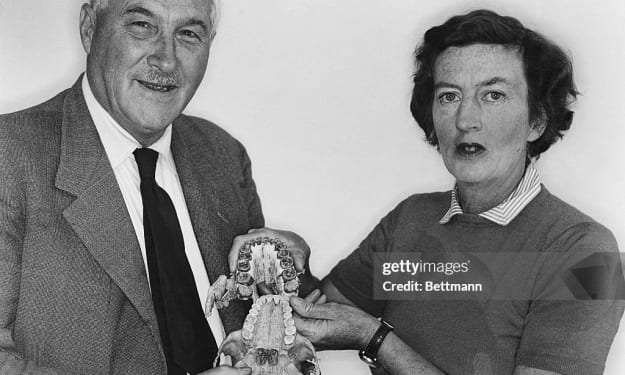
Despite having a meticulous 1400-page work about the Kikuyu people written, Jomo Kenyatta beat Louis Leakey by having the first Kikuyu ethnographic book Facing Mount Kenya, printed in 1938. As a PhD holder, Leakey could not help but hold resentment for Kenyatta who was now a published author (without even having a degree) while his own magnum opus gathered dust in a safe. Leakey was considered by many others but mostly himself as the expert on Kikuyu knowledge. Its as though he owned that knowledge and it was only his to disseminate. In fact, Leakey believed Kenyatta had plagiarized some of his material on circumcision rites without acknowledgement.
By HINGES OF TIMEabout a year ago in History
Biography of Pope Francis the head of the Catholic Church and sovereign of the Vatican City State
Pope Francis (born Jorge Mario Bergoglio ; [ 17 December 1936 – 21 April 2025) was the head of the Catholic Church and sovereign of the Vatican City State from 2013 until his death. He was the first pope from the Society of Jesus (the Jesuit Order), the first of Latin American identity, the first from the Americas, the first from the Southern Hemisphere, and the first born or raised outside of Europe since the 8th-century Syrian pope Gregory III.
By Favour Nyimbiliabout a year ago in History
The Tragic Beauty of Narcissus: A Tale of Reflection and Obsession
In the heart of ancient Greek mythology lies a story that echoes through time—haunting, mesmerizing, and profoundly human. It is the tale of Narcissus, a young man whose beauty was unrivaled, but whose fate was sealed not by war, betrayal, or divine punishment—but by his own reflection. His story is one of self-love turned fatal, of desire without fulfillment, and of the thin line between admiration and obsession.
By The Secret History Of The Worldabout a year ago in History
Musk says he will step back from DOGE, refocus on Tesla after earnings plunge
In the midst of a decline in earnings, Elon Musk withdraws from DOGE and refocuses on Tesla. Elon Musk has announced plans to reduce his involvement with the United States, a significant shift in priorities. Following a sharp decline in Tesla's earnings and stock value, Department of Government Efficiency (DOGE) and devote more time to the company. This action demonstrates how much Musk is being pressured to stabilize Tesla's performance and regain investor confidence. # A Warning Sign from the Earnings Plunge Tesla's first-quarter 2025 earnings report revealed a staggering 71% drop in net income, amounting to $409 million. The most significant drop in sales in the company's most recent quarter was a 20% decline in automotive sales revenue. Analysts attribute this downturn to various factors, including decreased global demand and production line retooling. Costs have also gone up as a result of the ongoing trade war, further straining Tesla's finances. The stock price of the company has also fallen, falling by more than 40% from its peak in 2024. Tesla's market performance is closely linked to Musk's personal wealth, which has diminished as a result of this decline. # Musk's Dual Role: Finding a Balance Between Tesla and DOGE There has been disagreement regarding Musk's involvement in the DOGE of the Trump administration. Leading the Department of Government Efficiency, Musk has been instrumental in implementing significant cuts to federal agencies, including the closure of USAID. He says that these measures are meant to cut down on fraud and waste, but they've sparked a lot of protests and backlash. Tesla's brand image has been tarnished, according to critics, particularly among liberal customers. In response to mounting pressure, Musk has decided to scale back his duties with DOGE. He plans to devote more time to Tesla, starting next month, while continuing to spend one or two days per week on government matters. Musk emphasizes that his political work is "mostly finished" and that he will only remain involved as long as it is deemed usef# Tesla's Strategic Shifts The company is concentrating on a number of important initiatives in order to address the difficulties Tesla faces: 1. Autonomous Vehicles and Robotaxis Tesla is speeding up the development of its technology for autonomous vehicles. The company plans to launch its robotaxi service in Austin in June 2025, with plans for rapid expansion. This move aims to position Tesla at the forefront of the autonomous transportation industry. #2. Affordable Electric Vehicles In the first half of 2025, Tesla is on track to introduce a more affordable electric vehicle model. This initiative seeks to broaden Tesla's market reach amid global economic uncertainty and increasing competition. 3. Focus on AI and Robotics Musk has expressed an increasing interest in robotics and artificial intelligence. The humanoid robot Optimus from Tesla and developments in artificial intelligence are central to the future strategy of the company, which aims to expand its technological portfolio beyond electric vehicles. # Investor Sentiment and Market Reaction Investors have welcomed Musk's decision to refocus on Tesla. In after-hours trading, Tesla's stock price increased by more than 5% following the announcement. Analysts view this as a positive step toward stabilizing the company's performance. However, difficulties persist. The need to successfully carry out its ambitious technological initiatives, geopolitical uncertainty, and the growing competition in the market for electric vehicles all present challenges for Tesla. The company's ability to overcome these obstacles will be crucial to its future course. # In the end The urgent need to address Tesla's financial and reputational issues is reflected in Elon Musk's decision to step back from his position at DOGE. This strategic shift demonstrates Musk's commitment to getting Tesla back on track and restoring investor confidence, even though the road ahead is still full of obstacles. Musk's Strategic Shift: Refocusing on Tesla Despite Earnings Challenges
By Iftikh Ahmedabout a year ago in History
The Melted Stairs of Hathor Temple: An Ancient Mystery Beneath the Surface
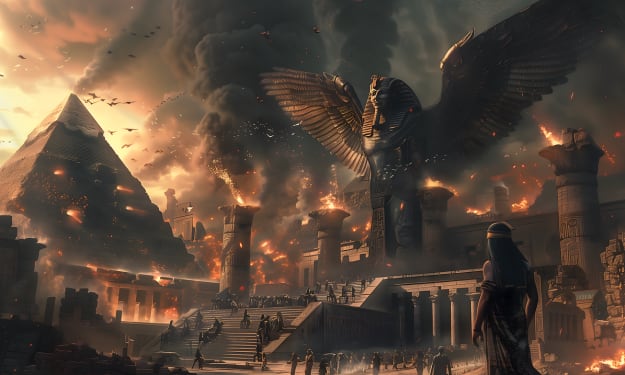
Secrets Etched in Stone Nestled in the heart of Egypt, amidst the temples of Dendera, lies one of the most intriguing mysteries that have baffled archaeologists, researchers, and historians for centuries: the melted stairs at the Hathor Temple. Located in the remote Dendera complex, these stairs, seemingly scorched by an ancient fire or some unknown force, hint at a far deeper story than the one we’ve been taught.
By The Secret History Of The Worldabout a year ago in History
The Conjuring: Last Rites
The Conjuring: Last Rites isn’t just another horror movie — it’s the grand finale to the terrifying, soul-scarring journey of Ed and Lorraine Warren, the paranormal power couple that’s been haunting our dreams since 2013. Directed by Michael Chaves, this upcoming installment is set to be the darkest, most emotional chapter in the Conjuring saga yet. Forget creaky floorboards and shadowy corners — Last Rites is promising a full-on descent into demonic madness.
By James Brockabout a year ago in History
"Kalani Dam: A Reservoir of Legacy, Power, and Prosperity". AI-Generated.
Kalani Dam: A Reservoir of Energy, Heritage, and Abundance Situated amid the rolling landscape of South India, the Kalani Damfrequently misidentified or confused with similarly named structuresserves as a fictional yet emblematic illustration of the numerous historical water management achievements in Tamil Nadu. This article fuses genuine engineering traditions with imaginative fiction to investigate the dam's inception, purpose, and how its projected value in natural resources and infrastructure exemplifies India's ancient and current proficiency in hydraulic engineering. Introduction: A Barrier Between Flood and Fortune Waterlife's most vital componenthas been honored and managed by civilizations for centuries. In the southern Indian province of Tamil Nadu, an area interwoven with rivers and governed by dynasties that revered rain and monsoon, the Kalani Dam stands as a monument to ancient engineering, colonial reconfiguration, and modern India’s quest for sustainability and economic advancement. Although not an actual dam in historical records, the “Kalani Dam” symbolizes a synthesis of Tamil Nadu’s hydraulic legacy, evoking real structures such as the Mettur Dam, Kallanai (Grand Anicut), and Periyar Projectall playing pivotal roles in agriculture and survival. Let us explore the narrative of Kalani Dam and the implications of its symbolic net worth. A Glimpse into History: The Chola Model According to historical accounts, the roots of water management in South India trace back to the Chola dynasty. The authentic Kallanai Dam, constructed by King Karikala Chola around the 2nd century CE, stands as one of the oldest water-diversion structures still operational today. In this narrative, the Kalani Dam derives its heritage from such pioneering endeavors. Ancient engineers erected the dam utilizing granite blocks, lime mortar, and intricate floodgates, drawing upon not only human labor but also a profound understanding of river dynamics and flood patterns. The primary purposes of the Kalani Dam were dualirrigation and flood management, crucial in a region where monsoons could both sustain and devastate. Colonial Enhancement: A New Era of Functionality During British colonial rule, the Kalani Dam, similar to many development initiatives in India, received structural improvements. New sluices were installed, and canals were expanded to facilitate extensive areas for cash crops such as cotton and sugarcane. The British, while exploiting India's resources, did invest in water infrastructure, albeit with economic gain in mind. Engineers from London designated the Kalani River basin as a fertile resource area. They charted its trajectory, evaluated flood damage patterns, and fortified the dam to endure severe seasonal fluctuations. By the 1930s, the Kalani system was acknowledged as one of the most efficient gravity-fed irrigation networks in southern India, nourishing multiple districts and supporting over 150,000 acres of farmland. Post-Independence Modernization and Importance Following India's independence in 1947, the Kalani Dam underwent several modernization initiatives. Under the framework of the Five-Year Plans, the government invested significantly in enhancing hydroelectric potential, improving irrigation coverage, and ensuring equitable water distribution to underprivileged farming communities. By the 1980s, the dam had evolved into not merely a rural lifeline but a regional economic catalyst. Tamil Nadu’s agricultureparticularly rice, sugarcane, and banana cultivationprospered with the resources from Kalani’s reservoir. Numerous cooperative irrigation societies were established to equitably manage the water. The adjacent communities transformed into burgeoning towns owing to consistent access to water and electricity. Educational initiatives informed farmers about optimal water utilization, introducing the region to sustainable irrigation long before it became a worldwide catchphrase. Net Worth and Economic Influence Let us assess the current net worth of the Kalani Dam: Agricultural Production: The dam facilitates irrigation for over 200,000 acres of land. With average agricultural production valued at ₹25,000 per acre per season and three cropping cycles each year, this amounts to: ₹25,000 x 3 x 200,000 = ₹15,000,000,000 annually (~$180 million) Hydropower Generation: Following the incorporation of modern turbines post-2000, Kalani Dam generates an estimated 100 MW each year. Income from hydropower (100 MW x 24 x 365 x ₹4/unit) ≈ ₹3. 5 billion (~$42 million/year) Fisheries and Tourism: Reservoirs support fishing cooperatives and eco-tourism. Annual revenue from tourism and fishing is estimated at: ₹500 million (~$6 million/year) Cultural and Strategic Significance: While not directly monetized, the dam serves as a strategic resource during drought years. In arid seasons, the dam is valued highlyboth literally and metaphoricallygiven the expenses associated with transporting water to deficit areas. Estimated total annual worth: ~$228 million. Incorporating infrastructure valuation, lifetime service value, and cultural significance, the contemporary net worth of the Kalani Dam can conservatively be estimated at over $2 billion. Challenges and Conservation Current concerns include: Silt buildup Encroachments on canals Climate change impacting rainfall consistency However, initiatives under India’s Jal Shakti Abhiyan and local conservation organizations strive to safeguard the dam’s ecosystem. Digital water sensors, drone monitoring for encroachments, and AI-driven flood alerts are being tested. Conclusion: A Dam for All Eras Whether mythical or an amalgamation of numerous real instances, the Kalani Dam epitomizes the convergence of heritage, functionality, and sustainability. From Chola wisdom through British engineering to Indian modernization, its narrative encapsulates the essence of India’s water civilization. The Kalani Dam does not merely retain waterit embodies hope, history, and heritage in every drop.
By Say the truth about a year ago in History
Machu Picchu in Modern Times: Legacy, Wealth, and Global Significance. AI-Generated.
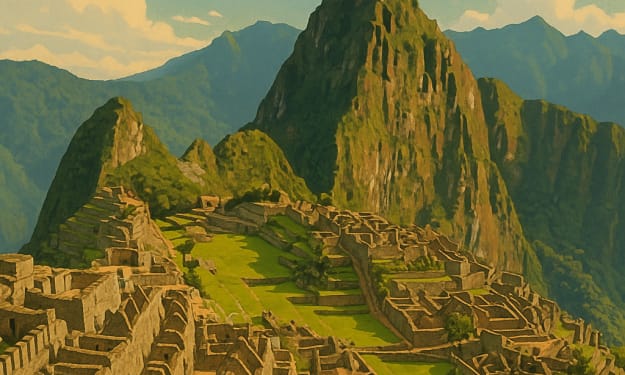
Machu Picchu in the Contemporary Era: Safeguarding the Incan Marvel for Posterity Once a disregarded fortress hidden within the jungle, Machu Picchu has emerged as a universal emblem of ancient innovation and natural splendor. Rediscovered in 1911, it now stands as a significant cultural and economic emblem for Peru. This article examines how Machu Picchu’s contemporary narrative has progressedfrom archaeological unearthing and tourism expansion to its lasting significance and the global initiatives aimed at preserving it for future generations. Introduction: A City Transformed Machu Picchu, frequently labeled as the “Lost City of the Incas,” was not constructed in recent times, yet its genuine acclaim and significance only surfaced during the contemporary era. Concealed high in the Andes Mountains of Peru, this breathtaking stone metropolis remained largely unrecognized by the outside world until its rediscovery in the early 20th century. Since that time, Machu Picchu has experienced an extraordinary evolutionfrom an overlooked relic to one of the most frequented and photographed sites on Earth. Rediscovery and Archaeological Significance In 1911, American adventurer Hiram Bingham was guided to the location by local farmers and Peruvian interpreters. He was astounded by his discoveriesstone edifices, terraces, and shrines enveloped by jungle vegetation yet remarkably preserved. Bingham’s writings and photographs garnered international interest in the Incan civilization and incited decades of archaeological exploration. In subsequent years, contemporary archaeologists have employed technologies such as LiDAR scanning and 3D modeling to map the landscape and comprehend Inca construction methods. These findings not only reveal advanced engineering and astronomy but have transformed our perspective of pre-Columbian societies as more complex than previously assumed. Machu Picchu and the Emergence of Global Tourism As Peru enhanced its transportation infrastructure in the mid-20th century, Machu Picchu became increasingly reachable. The inauguration of railway lines, hiking paths like the Inca Trail, and helicopter excursions transformed the previously secluded site into a vibrant center for global tourism. By the early 2000s, Machu Picchu was welcoming over a million visitors each year. To safeguard the ancient structures from the adverse effects of overtourism, the Peruvian government and UNESCO instituted stringent visitor regulations. Contemporary conservation initiatives now strive to harmonize economic prospects with cultural preservation. Cultural Emblem and National Identity In contemporary Peru, Machu Picchu signifies more than a tourist destinationit represents indigenous heritage and national pride. It features on Peruvian currency, in educational materials, and in international relations as a symbol of the country's pre-colonial magnificence. In 2007, it was designated as one of the New Seven Wonders of the World, further reinforcing its global cultural significance. Artists, filmmakers, authors, and historians frequently cite the site as an emblem of resilience, intrigue, and architectural excellence. Present-Day Challenges and Preservation Ensuring the preservation of Machu Picchu for future generations has become an essential objective in recent years. Concerns have emerged from: Erosion and Landslides: Resulting from pedestrian traffic and natural deterioration. Tourism Impact: Overcrowding and unauthorized tours. Climate Change: Variations in rainfall and temperature threaten the stability of the stone. To tackle these challenges, Peru has collaborated with UNESCO and environmental organizations to establish sustainable tourism frameworks. Satellite surveillance, digital tourism platforms, and staggered entry timelines assist in alleviating stress on the site. Economic and Cultural Value in Contemporary Times Currently, Machu Picchu generates over $1. 5 billion each year for Peru’s economy. Beyond monetary aspects, its cultural significance is incalculable. It attracts scholars, spiritual seekers, artists, and history enthusiasts from around the globe. There are ongoing conversations regarding digital preservationdeveloping intricate 3D models and virtual reality experiences to ensure that future generations can explore Machu Picchu even if physical travel becomes unattainable. Conclusion: Machu Picchu as a Living Heritage Although Machu Picchu is founded on ancient stone, its legacy continues to progress in contemporary times. It serves as a site where history and modernity convergea testament to human creativity, resilience, and the ability of history to motivate future generations. As the world becomes increasingly interconnected and aware of its cultural legacies, Machu Picchu remains prominent, not solely as an Inca artifact but as a vibrant emblem of global harmony and awe.
By Say the truth about a year ago in History