Events
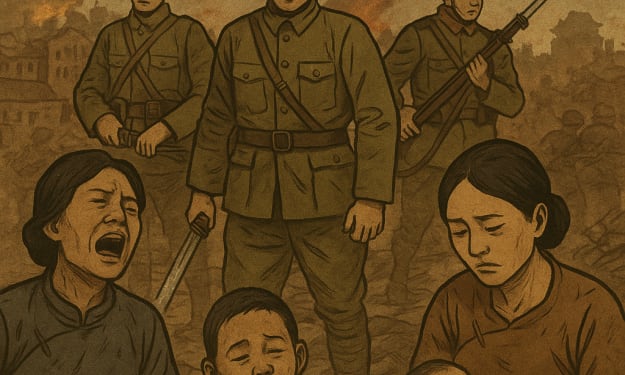
“Resonances of Terror: The Catastrophe of the Nanjing Massacre”. Content Warning. AI-Generated.
apanese forces entered Nanjing on December 13, 1937, it signified the onset of one of history’s bleakest and most savage massacres. Over the course of approximately six weeks, the ancient Chinese city endured incomprehensible violence, leaving a legacy of terror that continues to resonate in the hearts of millions today. The Collapse of the Capital Nanjing, once the capital of the Ming Dynasty and a symbol of Chinese culture, had transformed into the capital of the Republic of China in the early 20th century. As Japan initiated its aggressive campaign against China in 1937, Nanjing evolved into a primary military and symbolic target. The Battle of Shanghai had already exhausted Chinese resources, and by the time Japanese forces advanced toward Nanjing, resistance was fragmented. On December 12, the Chinese military formally retreated. The following day, Japanese troops invaded the citywhat ensued was not a typical occupation, but a methodical massacre. A City in Misery Eyewitness testimonies depict the plunge into despair. Japanese soldiers initiated a terror campaign directed not only at the remaining Chinese troops but at the entire populace of the city. Civilians were rounded up by the thousands, executed en masse, and buried in shallow graves or discarded into the Yangtze River. Many were subjected to brutal torture before their demise. Historical assessments indicate that between 200,000 and 300,000 individuals were killed, although the precise number may never be ascertained due to the obliteration of records and the vast expanse of the atrocity. Atrocities Against Humanity The Rape of Nanjing is not solely denoted for the killings. During the massacre, an estimated 20,000 to 80,000 women were assaultedsome as young as 8 years old, others were elderly. Numerous victims were mutilated, tortured, and subsequently murdered. Pregnant women were also among those targeted. Entire families were executed while being compelled to witness the suffering of one another. Children were not exempt from the brutality. Infants were hurled into the air and impaled on bayonets as a form of amusement. Historical photographs and survivor accounts reveal a reality of unfathomable cruelty. The World Observes Westerners residing in Nanjing at the timemissionaries, businesspersons, and diplomatssought to intervene. A German businessman and member of the Nazi party, John Rabe, played a crucial role in establishing the Nanjing Safety Zone, which offered refuge to thousands of civilians. While these initiatives salvaged numerous lives, the atrocities persisted just beyond the confines of the safety zone. News of the slaughter ultimately reached the globe through reports by correspondents and correspondence dispatched by observers. Despite the accumulating proof, international reaction was tepid due to the escalating global tensions that would shortly ignite into World War II. Justice Delayed Following World War II, the International Military Tribunal for the Far East and the Nanjing War Crimes Tribunal prosecuted and sentenced several Japanese officials for war offenses, including those perpetrated in Nanjing. General Iwane Matsui, who directed the forces during the massacre, was convicted and executed. Nevertheless, numerous offenders were never held accountable. To this day, Japan’s formal recognition of the massacre persists as a subject of political discord. While certain Japanese leaders have rendered apologies, others refute or minimize the event, creating ongoing friction in Sino-Japanese relations. The Legacy of Suffering The Nanjing Massacre is not solely a Chinese catastrophe but a universal one. It stands as a stark reminder of the depths to which humanity can descend when unchecked militarism, racism, and imperial ambition converge. For China, Nanjing evolved into a symbol of resilience, remembrance, and the significance of historical accuracy. Memorials, such as the Nanjing Massacre Memorial Hall, have been established to ensure that the voices of the victims are forever honored. Each year, December 13 is designated as National Memorial Day in China, observed with silence, contemplation, and a call for peace. Conclusion The Nanjing Massacre was not an incidental consequence of warfare, but a calculated campaign of terror. It remains one of the largest and most savage massacres in contemporary history. Its legacy continues to influence international relations, historical consciousness, and the ongoing effort to ensure that such atrocities are never repeated. History must not only be remembered but also addressed. In witnessing tragedies like Nanjing, we are reminded of our collective responsibility to protect humanity from itself.
By Say the truth about a year ago in History
The Enigmatic Saga of the Menai Strait Shipwrecks
Nestled between the rugged coastline of North Wales and the island of Anglesey, the Menai Strait is a narrow ribbon of water that belies its tranquil appearance. Beneath its shimmering surface lies a history steeped in mystery, marked by one of the most extraordinary coincidences in maritime lore. Over nearly two centuries, three ships met their doom in these waters, each on the same fateful date, each leaving a single survivor-astonishingly, all named Hugh Williams. This haunting tale, spanning generations, weaves a narrative so improbable it seems plucked from the pages of a novel, yet it is rooted in historical record.
By KWAO LEARNER WINFREDabout a year ago in History
Alexander Pushkin: The Soul of Russian Literature
In the heart of Russia, one name resonates above all others in the world of letters: Alexander Pushkin. Known as the Shakespeare of Russia, this enigmatic poet and novelist reshaped the nation’s literary landscape with a voice that was clear, vibrant, and deeply human. His life was a whirlwind of passion, rebellion, and tragedy, and his masterpiece, Eugene Onegin, captures the restless spirit of a people caught between tradition and change. Let’s dive into Pushkin’s world, explore the essence of his most celebrated work, and uncover why his words continue to echo through generations.
By KWAO LEARNER WINFREDabout a year ago in History
The Life and Works of Theopompus
Theopompus of Chios stands as a significant historian from ancient Greece, yet his legacy is frequently eclipsed by renowned figures such as Herodotus and Thucydides. Born in the 4th century BCE, he was more than a mere recorder of historical events; he was a keen critic of the political landscape, ethical standards, and notable individuals of his era. Although much of his work has been lost to time, it was once acclaimed for its vivid storytelling, sharp humor, and careful attention to detail. This essay delves into Theopompus’ life, his principal writings, his historical methodologies, and his enduring influence on the field of historiography.
By A Históriaabout a year ago in History
The Dark Origins of Modern Gynecology: J. Marion Sims and the Forgotten Victims
A Surgeon’s Legacy Cast in Shadows The name J. Marion Sims holds a prominent place in the annals of medical history. Often revered as the “Father of Modern Gynecology,” Sims is credited with groundbreaking surgical innovations that laid the foundation for women’s reproductive healthcare. His work, especially in treating vesicovaginal fistulas, a devastating childbirth injury, has saved countless lives and changed the course of medicine. But beneath this celebrated legacy lies a haunting truth: many of Sims’ most important advancements were made through painful and unethical experiments conducted on enslaved Black women.
By The Secret History Of The Worldabout a year ago in History
The Fall of Constantinople (1453)
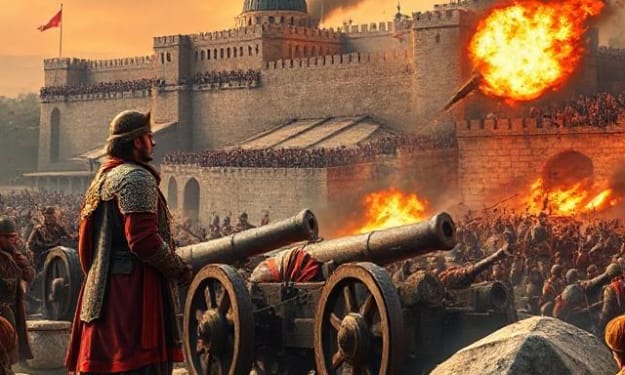
The year is 1453, and the mighty Byzantine Empire, once a powerful force in the Mediterranean, stands on the verge of collapse. The city of Constantinople, its capital, has weathered countless invasions and sieges over the centuries, earning its reputation as one of the most formidable fortresses in the world. For over a thousand years, it has stood as a beacon of Christian power, the last remnant of the great Roman Empire, and a symbol of unyielding strength. Yet, by the mid-15th century, the empire is in decline. Its once vast territories are now a shadow of their former selves, and its economy is in shambles. Most of its lands are now occupied by foreign powers, leaving Constantinople isolated and vulnerable.
By Sadiq Muhammadabout a year ago in History
Perfect brownies baked at high altitude are possible thanks to Colorado’s home economics pioneer Inga Allison
Many bakers working at high altitudes have carefully followed a standard recipe only to reach into the oven to find a sunken cake, flat cookies or dry muffins.
By Abjol Hussain Laskarabout a year ago in History
The North-to-South Shift: Understanding the Impact of Northern Indian Migration to South India and How to Manage It . AI-Generated.
The North-to-South Transition: Comprehending the Effects of Northern Indian Migration to Southern India and Methods of Management India has perpetually been a nation of migrationinternally varied and continually evolving. In recent years, however, a significant surge of migration from Northern India to the Southern states has ignited fervent discussions. While economic integration and national cohesion remain fundamental principles, the cultural, linguistic, and infrastructural pressures this migration entailsparticularly in Tamil Nadu, Karnataka, Kerala, and Andhra Pradeshhave prompted substantial apprehensions. This article analyzes the complex ramifications of this migration and investigates practical approaches to manage it for the advantage of both indigenous South Indian communities and migrant populations. The Migration Phenomenon: Reasons Behind It During the past 20-30 years, South India has observed an influx of migrants from Uttar Pradesh, Bihar, Rajasthan, Madhya Pradesh, and other northern territories. Multiple factors contribute to this movement: Economic prospects: The South, notably cities such as Bengaluru, Chennai, and Hyderabad, presents improved job opportunities in IT, manufacturing, hospitality, and construction. Social advancement: Elevated literacy rates, enhanced infrastructure, and more stable governance attract individuals seeking enhancements in their quality of life. Labor requirements: Numerous South Indian states are experiencing declining birth rates and aging demographics, necessitating a workforce to bridge the gaps, particularly in unskilled and semi-skilled sectors. Cultural and Linguistic Challenges One of the most prominent challenges arising from this migration is the diminishing local culture and language. South India takes pride in its Dravidian legacy, classical languages such as Tamil, Kannada, Telugu, and Malayalam, and deeply ingrained cultural practices. However, the escalating presence of Hindi-speaking individuals in urban and even rural areas is generating noticeable friction. Language prevalence: Hindi, frequently linked with Northern migrants, is being increasingly introduced into public domains, railway stations, banks, and signage. This is perceived by locals as an effort to overshadow their native languages. Cultural discrepancies: Migrants introduce diverse customs, festivals, dietary preferences, and social behaviors that at times conflict with local traditions, resulting in misunderstandings and feelings of exclusion. Economic Consequences: A Double-edged Sword The economic implications of Northern migration to South India are intricate. On one hand, migrants address vital labor shortages in various industries, facilitating ongoing growth. Conversely: Wage suppression: An abundance of migrant laborers is driving down wages for local workersparticularly in construction and domestic services. Employment rivalry: In certain areas, even educated northern migrants are occupying white-collar positions, escalating competition in both government and private sectors. Urban challenges: Cities like Bengaluru and Chennai are facing strain on housing, transportation, water, and waste management systems due to swift population escalation. Political and Social Frictions The rise in migrant populations is also transforming the political dynamics of South India. Local political parties, particularly in Tamil Nadu and Karnataka, have commenced expressing concerns regarding demographic shifts. Some apprehend that if this migration continues unchecked, it may undermine regional identities and influence electoral results. This apprehension is not unfounded. In specific neighborhoods, northern populations constitute a substantial majority, generating isolated linguistic environments that resist assimilation with the local culture. How to Address and Manage the Issue It is essential to recognize that migration is not intrinsically negativeit is a natural phenomenon. The objective should not be to entirely halt it, but to regulate and balance it. Here are some approaches: 1. Enhance Local Employment for Residents Give precedence to residents in government positions and low-wage industries through state quotas or incentives. Encourage skill enhancement programs for youth from South India to diminish reliance on external labor. 2. Mandate Language Acquisition Require learning the local language for long-term migrants (through municipal or workplace initiatives). Urge Hindi-speaking migrants to participate in public Tamil/Kannada/Telugu language classes. 3. Decentralize Development Alleviate pressure on Southern metropolitan areas by fostering industrial and economic advancement in Tier-2 and Tier-3 cities in the North. Invest in infrastructure and employment opportunities in Northern states to avert involuntary migration due to poverty and unemployment. 4. Cultural Integration Initiatives Organize cultural exchange festivals and community programs to promote interaction between migrants and residents. Utilize educational institutions and local governments to encourage mutual respect for traditions and languages. 5. Policy and Data Oversight Central and state authorities should gather real-time data on migration patterns to formulate responsive policies. Standardize migrant worker registration across the nation, as initiated by some states. Conclusion Migration within India presents both a strength and a challenge. While it fosters national cohesion and economic interdependence, it also poses the risk of creating cultural divisions and social tension when left unchecked. The resistance from South India is not aimed at individualsit is directed against the dilution of identity. The solution resides in achieving balance: safeguarding local heritage while facilitating the aspiration for mobility among others. Through policy implementation, education, cultural exchange, and mutual respect, India can ensure that its unity does not come at the expense of its diversity.
By Say the truth about a year ago in History
The Violent and Mysterious Death of Christopher Marlowe
Christopher Marlowe, one of Elizabethan England’s most enigmatic and brilliant playwrights, died young and under circumstances so suspicious that his death has become one of literary history’s most enduring mysteries. Known for his powerful blank verse and provocative themes, Marlowe’s meteoric rise in the late 16th century was matched only by the suddenness and violence of his demise.
By Abjol Hussain Laskarabout a year ago in History
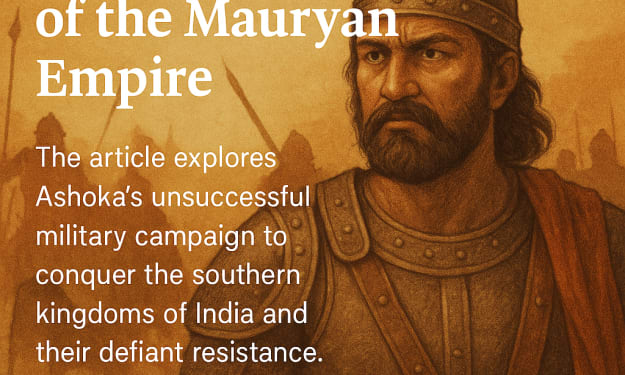
The Defeat of the Mauryan Empire: Ashoka's Southern Failure. AI-Generated.
The Defeat of the Mauryan Empire: Ashoka’s Southern Campaign and the Unyielding South History often glorifies the victors—but in the sun-scorched landscapes of ancient South India, a lesser-known chapter tells the story of resistance, pride, and resilience. It is the tale of how the great Ashoka the Great, the mighty emperor of the Mauryan Empire, met his limits at the southern frontiers—brought low not by war-weariness or internal dissent, but by the fiery defiance of the South Indian kingdoms. Ashoka the Invincible… Almost By the time Ashoka came to power around 268 BCE, the Mauryan Empire stretched from the snow-clad valleys of the Himalayas to the roaring seas of Bengal and westward into present-day Afghanistan. His reign, marked by brutal conquest and later a philosophical transformation following the Kalinga War, is often remembered for the spread of Buddhism and the ethics of Dhamma. Yet, Ashoka was also an ambitious ruler. His dream of unifying the Indian subcontinent under one flag remained incomplete as the southern territories—particularly the ancient Tamil kingdoms of the Cholas, Pandyas, and Cheras—remained out of reach. These lands, ruled by powerful monarchs with rich cultures and vast trading networks, were not easily subdued. The Southern Campaign According to scattered historical accounts and Tamil legends, Ashoka, emboldened by his successes in the north and east, launched a campaign toward the South early in his reign—before his transformation after the Kalinga War. His goal was not only military expansion but to bring the resource-rich and strategically located southern kingdoms into the Mauryan fold. Ashoka’s generals marched through the Deccan plateau, subduing minor satraps and tribes. But as they approached the borders of the Tamilakam, the terrain changed—not only physically, with thick jungles and harsh coastal winds, but also politically. The Chola and Pandya kings had already been alerted to the Mauryan presence, and they did not wait idly. The Clash at Venbai The first major confrontation is believed to have occurred near Venbai, a strategic settlement in present-day Tamil Nadu. The Pandya king, Arivazhagan Nedunchezhiyan, led a united army of Pandyas and Cholas against the advancing Mauryan forces. Though the Mauryans outnumbered the southern alliance, the terrain favored the defenders. Using guerrilla tactics, well-coordinated ambushes, and their knowledge of the land, the South Indian warriors disrupted Mauryan supply chains and divided their battalions. The battle raged for days, with neither side yielding—but eventually, disease, weather, and a surprise night assault by the Chera cavalry broke the Mauryan frontlines. Ashoka’s southern campaign had met its first great failure. A Strategic Retreat The defeat at Venbai shocked the Mauryan court. Ashoka, known for his intellect as much as his ambition, quickly understood the cost of pressing further. Instead of escalating the war, he chose a more diplomatic route—dispatching envoys and Buddhist monks to Tamilakam. This shift coincided with his spiritual transformation after the Kalinga War, during which he began to see conquest through Dhamma, not swords. Interestingly, Ashoka’s inscriptions mention friendly relations with the Cholas and Pandyas, suggesting that while military conquest failed, he succeeded in building cultural and diplomatic ties. Buddhist monks traveled freely in the south, and stupas were erected even in lands that had once resisted his armies. Legacy of Resistance In Tamil literature, particularly the Sangam poems, references to resisting northern invaders appear with pride. While these may be poetic reinterpretations, they underscore the deeply rooted independence of the Tamil kingdoms. For centuries afterward, the South remained autonomous and powerful, often engaging with Southeast Asia rather than the Gangetic plain. The defeat of Ashoka in the South is not just a military event—it’s a symbol. It represents the cultural and political uniqueness of the Tamil lands, the might of decentralized resistance, and the idea that even the greatest of emperors had limits. Conclusion Ashoka’s encounter with the South Indian kingdoms marks a rare but telling moment in Indian history—a time when steel met strategy, and the great emperor was reminded of the strength of unity, identity, and home-ground advantage. Though he may not have conquered the South by force, the episode left an indelible mark on how future emperors approached the peninsula: with respect, caution, and awe. This chapter is a reminder that history is never one-sided—and that sometimes, the most powerful stories are the ones of those who stood their ground and prevailed against the tide of empires. Would you like a title image and summary for this article too? Or should I turn this into a series about "Forgotten Battles of Indian History"?
By Say the truth about a year ago in History
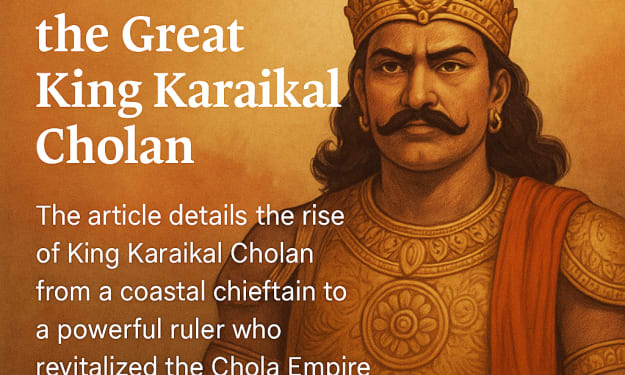
The Rise of the Great King Karaikal Cholan
The Ascent of the Great King Karaikal Cholan: Illuminator of the Chola Empire The chronicles of South Indian history are adorned with the bravery and magnificence of the Chola dynasty. Among its numerous prominent rulers, one name that has recently begun to surface from the shadows of time is King Karaikal Cholana sovereign whose journey from a coastal stronghold to imperial supremacy epitomizes endurance, foresight, and transformative governance. A Foundation by the Shore Karaikal, a port settlement situated along the southeastern shoreline of contemporary Tamil Nadu, was renowned for its thriving maritime commerce long before it ascended to royal prominence. It functioned as a conduit between the Chola heartlands and the expansive Indian Ocean trade network. It was here, amid the cadence of waves and sails, that the young prince Arulmozhilater recognized as Karaikal Cholanwas born. Although not originally in the direct line of succession, Arulmozhi was the offspring of a lesser Chola chieftain who administered Karaikal with allegiance to the larger Chola throne. However, the political environment of the Tamil kingdoms during his formative years was characterized by volatility, court maneuvering, and incursions from rival dynasties such as the Pandyas and the Pallavas. The decline of the central Chola authority during this period allowed ambitious regional leaders to emergeand Arulmozhi was among the most talented of them. Ascendance Through Turmoil At the age of nineteen, Arulmozhi assumed control of Karaikal following his father's premature demise. His early governance was distinguished by reforms that endeared him to his subjects: enhancements to port infrastructure, safeguards for merchant ships, equitable taxation, and a stringent code of justice that curtailed corruption. However, the currents of fate began to alter during a significant confrontation between the waning Pallavas and the revitalized Pandyas. While most minor chieftains opted for neutrality or allied with more formidable neighbors, Arulmozhi charted his own course. He forged alliances with disenchanted warriors, smaller clans, and even mercenaries from Southeast Asia, due to Karaikal's naval capabilities. His strategic insight was first acknowledged when he thwarted a Pandya fleet attempting to blockade the port. The battle of Kaveri Estuary not only secured Karaikal’s waters but also propelled Arulmozhi’s name to prominence throughout the southern peninsula. Establishing the Title “Karaikal Cholan” Following his early military triumphs, Arulmozhi officially adopted the title “Karaikal Cholan,” proclaiming his dominion not solely over his birthplace but as a legitimate resurgence of Chola authority. He was no longer merely a coastal chieftainhe envisioned a Chola revival, one that would unify fragmented lands under a central, culturally rich, and militarily dominant rule. Karaikal Cholan’s reforms established the groundwork for what would soon evolve into a formidable empire. He introduced maritime legal codes, organized a permanent navy, and revitalized the Tamil script along with temple construction traditions. His court became a sanctuary for scholars, poets, and artists, giving rise to what historians refer to as the “Second Renaissance of Tamilakam. ” The Conquest of the Cauvery Delta To genuinely assert his position as sovereign of sovereigns, Karaikal Cholan directed his focus inlandto Thanjavur, the fertile gem of the Cauvery delta. The delta had been controlled by an alliance of local leaders and renegade Pandya commanders. Through a blend of diplomacy, strategic matrimonial alliances, and rapid military actions, Karaikal Cholan acquired dominance over the region in less than three years. His victorious entry into Thanjavur signified a symbolic restoration of the Chola crown to its legitimate territory. To reinforce his authority, he commissioned the erection of the grand temple of Sembian Thalia tribute to both the deities and his own divine entitlement to govern. It became the archetype for subsequent Chola architectural wonders and stood as a monument to his legacy. Legacy and Immortality Karaikal Cholan’s rule is remembered not solely for territorial expansion and architecture but for his steadfast dedication to justice, Tamil identity, and maritime prowess. Under his leadership, the Chola navy extended as far as Sri Lanka and the Straits of Malacca, establishing trade settlements and diplomatic endeavors. He passed away at the age of sixty-two, leaving a unified Tamil kingdom that would be succeeded by his progenylaying the groundwork for the illustrious period of Rajaraja Chola and Rajendra Chola. While much of his life is cloaked in myth, and some even contest the historical veracity of particular deeds, the narrative of Karaikal Cholan is currently being revived in scholarly and cultural spheres as a symbol of regional pride and royal resilience. Conclusion The ascent of King Karaikal Cholan is a narrative of bravery against challenges, of vision amid chaos. From a coastal outpost to the imperial throne, he bore the emblem of the Cholas across territories and seas, reigniting a legacy that would illuminate for centuries. Today, he exists not merely as a forgotten monarch rediscoveredbut as a flame reignited, serving as a reminder to the world of the enduring strength of Tamil civilization.
By Say the truth about a year ago in History