Events
There is No Excuse for not Trying
Jared Collins stood at the bottom of the same hill he had failed to climb for the past three mornings. It wasn’t Everest or anything close to it — just a steep dirt trail cutting up the side of a small mountain on the edge of his town. To others, it was a scenic hike. To Jared, it was a daily battlefield.
By Abid Ur Rahmanabout a year ago in History
The Sunken Ships of the Swahili Coast: Unearthing the Maritime Riches of East Africa. AI-Generated.
A Maritime Civilization Rooted in Trade The Swahili culture emerged around the 8th century CE, born from the interaction of Bantu-speaking coastal Africans and Arab, Persian, and later Indian traders. Over time, a distinct Islamic culture evolved, centered around trade, seafaring, and cosmopolitan urban settlements such as Kilwa, Mombasa, Lamu, and Zanzibar. These ports were gateways for goods traveling between the African interior and the global trading powers of Asia and the Middle East. Gold from Zimbabwe, ivory, spices, tortoiseshells, and enslaved people were shipped out, while Chinese porcelain, Indian textiles, and Islamic manuscripts arrived in return. Dhows and Monsoons: The Lifeblood of Commerce Swahili maritime power was built on the dhow, a traditional sailing vessel perfectly suited to the Indian Ocean's monsoon winds. These seasonal winds enabled round-trip voyages between Africa and Asia with impressive regularity. As a result, the Swahili traders were not merely passive intermediaries—they were skilled navigators, sailors, and businessmen with deep knowledge of the seas. But the Indian Ocean was not always kind. Strong storms, uncharted reefs, and piracy took their toll, resulting in many shipwrecks. Some sank while attempting to harbor during cyclones, others ran aground while transporting valuable cargo. Famous Sunken Ships and Their Contents Although archaeological exploration has been limited due to political and environmental factors, a few notable wrecks have been identified: The Kilwa Shipwreck (Near Tanzania): In the early 2000s, archaeologists found a possible shipwreck site near the ancient city of Kilwa Kisiwani. Though largely buried and unexplored, oral histories describe a vessel laden with Chinese ceramics and gold ingots that sank after a storm in the 15th century. The Lamu Wrecks (Kenya): The islands near Lamu have yielded ship timbers, coins, and ceramics dating to the 12th and 13th centuries. Some speculate these belonged to merchant vessels from Gujarat or Arabia, caught in storms while navigating the tight channels. Portuguese Galleons: After the Portuguese arrival in East Africa in the 16th century, numerous naval battles occurred. Some sunken Portuguese ships, possibly containing cannon, gold coins, and European luxury goods, may rest off the coasts of Mozambique and Zanzibar. Estimated Value of the Lost Treasure While exact figures are speculative, historians estimate that each Swahili trade ship may have carried gold, ivory, and foreign luxury goods worth millions in today's currency. A single dhow transporting 200 kg of gold (a modest load by some historical accounts) would be worth over $12 million at current market prices. Add in imported silks, Chinese porcelain, and rare spices, and the cumulative net worth of sunken cargoes across the Swahili Coast could easily reach into the hundreds of millions—possibly over $1 billion. Modern Discoveries and Challenges Underwater archaeology in this region is still in its infancy. Political instability, lack of funding, and challenging diving conditions make exploration slow. However, researchers from universities in Kenya, Tanzania, and international institutions have begun more comprehensive surveys using side-scan sonar and magnetometers. Local fishermen continue to uncover remnants—Chinese bowls, silver coins, coral-encrusted anchors—offering tantalizing clues about what lies beneath. There is also growing interest in preserving these underwater cultural heritage sites. In Zanzibar and Mozambique, projects are underway to protect potential shipwreck locations from looting and illegal diving. A Treasure of Historical Legacy More than just material wealth, the sunken ships of the Swahili Coast represent the deep global connections of precolonial Africa. They challenge outdated narratives that portray African societies as isolated or underdeveloped, showcasing instead a world where African merchants, sailors, and kings engaged in sophisticated long-distance trade. Their story is not merely one of gold and porcelain, but of resilience, innovation, and identity—an underwater archive waiting to be fully read. Title: The Sunken Ships of the Swahili Coast: Lost Gold and Forgotten Trade Routes Summary: Beneath the waves of East Africa’s Swahili Coast lie the remains of ancient ships that once powered a vibrant maritime civilization. This article explores the history of Swahili seafaring, key shipwrecks, and the immense yet untapped value of their cargo. It paints a vivid picture of Africa's long-standing role in global trade and the mysteries still buried beneath the sea.
By Say the truth about a year ago in History
Great Zimbabwe’s Forgotten Wealth: Unearthing the Lost Gold of Africa. AI-Generated.
Great Zimbabwe’s Neglected Wealth: Revealing the Heritage of Africa’s Stone City Great Zimbabwe, historically the core of a formidable African kingdom, was not merely a city of stone remnantsit functioned as a flourishing hub of commerce, gold, and cultural brilliance. This article investigates the overlooked wealth of this ancient location, examining the extensive economic impact, concealed treasures, and the enduring legacy of a civilization frequently sidelined in mainstream narratives. With the emergence of new findings, Great Zimbabwe's significance in global history is being justly reassessed. Article: Situated in the southeastern hills of present-day Zimbabwe is one of Africa’s most mysterious ancient citiesGreat Zimbabwe. Renowned for its towering stone fortifications and enigmatic origins, Great Zimbabwe was formerly the capital of a mighty kingdom that thrived between the 11th and 15th centuries. However, beyond its stony architecture, what truly distinguished the city was its vast affluencea wealth derived from commerce, craftsmanship, and gold. A Flourishing Economic Powerhouse At its peak, Great Zimbabwe accommodated nearly 20,000 individuals, a remarkable populace for a pre-colonial African metropolis. It served as the focal point of the Kingdom of Zimbabwe, with its rulers overseeing crucial trade routes that extended from the interior of southern Africa to the Indian Ocean. The region was abundant in gold deposits, and this invaluable metal constituted the empire's lifeblood. Archaeological findings indicate that Great Zimbabwe exported gold and ivory to Swahili coastal cities such as Kilwa Kisiwani and Zanzibar, which subsequently engaged in trade with merchants from Arabia, India, and even China. In return, the inhabitants of Great Zimbabwe acquired silks, beads, porcelain, and glassware, some of which have been discovered at excavation sites throughout the city. Architectural Grandeur The most distinctive characteristic of Great Zimbabwe is its stone edifices. The Great Enclosure, an enormous elliptical wall exceeding 30 feet in height and 800 feet in circumference, is the largest ancient stone structure in sub-Saharan Africa. Constructed without mortar, the granite blocks were skillfully fitted together, demonstrating advanced engineering and artistic refinement. These edifices served not only as administrative centers but also as symbols of wealth and authority. They accommodated the royal family and functioned as ceremonial and economic hubs. The very existence of such monumental constructions in a remote locale attests to the city’s affluence and its capacity to mobilize labor and resources on a grand scale. The Enigma of the Missing Treasure Despite its significance, much of Great Zimbabwe’s treasure remains elusive today. Early European explorers and colonizers, including Carl Mauch in the 19th century, were unable to accept that Africans had constructed such remarkable structures. Instead, they erroneously credited the site to foreign civilizations like the Phoenicians or the Queen of Sheba. This prejudiced disbelief not only distorted history but also led to the looting of artifacts, many of which ended up in European museums or private collections. The items that were plundered encompassed gold adornments, intricately carved soapstone avians (thought to be venerated), iron armaments, ritualistic instruments, and decorative beadworks. In the present day, Zimbabwe is fervently pursuing the restitution of numerous artifacts, especially the renowned Zimbabwe Birds, which now serve as significant national emblems. Assessing the Value Although a considerable portion of Great Zimbabwe’s initial riches has been either lost or appropriated, scholars and archaeologists approximate that its economic worth today could amount to billions of dollars. Gold alone was exported in such quantities that the city was regarded as one of the principal origins of African gold reaching the Middle East and Asia. Contemporary historians estimate that between the 12th and 15th centuries, over 20 tons of gold may have been extracted and exchanged within Great Zimbabwe’s economy. At current gold valuation (approximately $65 million per ton), this exceeds $1. 3 billion USD, not accounting for the worth of ivory, livestock, textiles, and other crafts also produced in the area. Cultural and Political Importance The spiritual, political, and economic importance of Great Zimbabwe endures. The nation’s nameZimbabwetranslates to "house of stone", honoring the ancient city. Its national banner features the Zimbabwe Bird, and the ruins themselves have been designated as a UNESCO World Heritage Site. Recent archaeological initiatives aim to rectify the historical narrative and recontextualize Great Zimbabwe as one of the most powerful and affluent civilizations of pre-colonial Africa. Its impact spanned the region and has left an enduring impression on the culture and identity of Southern Africa. Final Thoughts Great Zimbabwe is not simply a remnant of the pastit stands as a testament to African ingenuity, wealth, and resilience. Its overlooked treasures exist not solely in the tangible gold and artifacts dispersed worldwide, but also in its role as a cultural and economic powerhouse of its era. As we continue to unveil more about its history, the narrative of Great Zimbabwe expandsnot as an enigma, but as a rightful segment in the global chronicle of human civilization.
By Say the truth about a year ago in History
“Africa’s Hidden Fortunes: The Lost Treasures of a Forgotten Continent”
"Concealed Gold: The Neglected Treasures of Africa" Africa’s past is characterized by the ascendance and decline of magnificent empires, from the fabled affluence of Mali’s Mansa Musa to the obscured wealth of Great Zimbabwe and Benin. This article delves into the enigmatic narratives of Africa’s forsaken treasuresgilded thrones, sacred gems, and imperial relicsthat were pilfered, entombed, or overlooked through conflict, colonization, and the passage of time. With contemporary focus on cultural heritage and restitution, Africa’s treasures are being reexaminedboth physically and symbolicallyas elements of a rich, appropriated legacy. Concealed Gold: The Neglected Treasures of Africa Africa, frequently regarded as the birthplace of civilization, is not solely abundant in natural assets but also in cultural and historical riches. Over millennia, formidable empires emerged and collapsed across the continent, from the arid expanses of Mali to the verdant woodlands of Benin. Accompanying these empires was astonishing affluencegilded tiaras, ivory sculptures, sacred artifacts, and intricately crafted weaponrythat represented their power. Presently, many of these treasures are absent, plundered, or concealed, their narratives steeped in enigma, colonial expropriation, and folklore. 1. The Golden Era of Mali and Mansa Musa’s Prosperity No discourse on African treasures commences without acknowledging Mansa Musa, the 14th-century sovereign of the Mali Empire. Regarded as the wealthiest individual in recorded history, his fortuneby contemporary estimateswould easily exceed $400 billion. His pilgrimage to Mecca in 1324 featured a caravan of 60,000 individuals and numerous camels bearing hundreds of pounds of gold. Musa was so open-handed with his riches that he reportedly instigated hyperinflation in Cairo and Medina by inundating the markets with gold. Nevertheless, a significant portion of this gold remains untraceable. Some speculate that substantial deposits of gold were left in Timbuktu and other strongholds of Mali. European adventurers and treasure seekers have long pursued the “lost gold of Timbuktu,” believed to be concealed in secret chambers or submerged along trade routes leading to the Mediterranean. 2. Great Zimbabwe’s Overlooked Wealth In southeastern Africa, the remnants of Great Zimbabwe continue to serve as a testament to African architectural and economic achievement. This stone metropolis, which thrived between the 11th and 15th centuries, was once inhabited by powerful monarchs who presided over gold mines and commercial avenues extending to the Indian Ocean. Although looters and colonizers stripped much of its artifacts in the 19th and early 20th centuries, accounts recount temples and royal estates filled with gold, soapstone carvings, and elaborate ceramics. Some treasure seekers believe that the genuine wealth of the Zimbabwean monarchs is still concealed within adjacent hills or collapsed chambers. 3. The Benin Bronzes and Plundered Royal Artifacts The Kingdom of Benin (modern-day Nigeria) was one of Africa’s most advanced precolonial states. It created the renowned Benin Bronzesartfully cast plaques and sculptures made from brass and ivory. In 1897, British troops invaded Benin City, looting thousands of these treasures and dispatching them to museums throughout Europe. Although several of these artifacts are currently being repatriated, a significant number remain unaccounted for. Accounts continue to circulate regarding sacred relics concealed by fleeing priests or hidden within destroyed temples, never to be retrieved. Scholars approximate the worth of the looted Benin artifacts in contemporary terms to be in the hundreds of millions of dollars. 4. The Lost Mines of Southern Africa Myths persist in Southern Africa regarding ancient gold mines worked by enigmatic individuals long before the era of colonization. The Lemba community of Zimbabwe and South Africa possesses oral histories of their forebears extracting gold and copper using sacred knowledge transmitted through generations. These narratives are corroborated by archaeological findings of mining implements and smelting locations that date back more than 1,000 years. Some maintain that these mines once supplied kingdoms like Great Zimbabwe or even ancient Egypt through commerce. Although many have succumbed to time or been overtaken by nature, treasure hunters continue to seek out the region for unexplored shafts and sealed vaults. 5. The Sunken Ships of the Swahili Coast Along Africa’s eastern shoreline, Swahili port cities such as Kilwa and Mombasa functioned as affluent trading centers between Africa, the Middle East, and Asia. Gold, spices, and gemstones passed through these portsand at times sank beneath the sea during storms or pirate assaults. Portuguese shipwrecks from the 16th century are said to have met their demise off the coasts of Mozambique and Tanzania while transporting plundered African wealth. Contemporary marine archaeologists have unearthed evidence of ancient shipwrecks; however, the full scope of what lies beneath remains unclear. The Ongoing Search for Africa’s Lost Riches The quest for Africa’s lost treasures transcends the pursuit of goldit embodies a journey to reclaim stolen heritage and dignity. As international museums encounter rising demands to return looted artifacts, nations throughout Africa are striving to preserve, recover, and showcase their own legacy. Some current assessments suggest that the looted treasures of Africaif retrievedwould possess a cumulative value surpassing $100 billion, considering their historical, cultural, and material significance. Nonetheless, their true worth lies not solely in monetary terms, but in restoring pride and identity to communities whose histories were erased or rewritten by colonialism.
By Say the truth about a year ago in History
Ancient Star Maps: The 40,000-Year-Old Clues to Humanity’s Forgotten Knowledge of the Cosmos
Rediscovering Humanity’s Celestial Past For centuries, historians and archaeologists have believed that advanced knowledge of astronomy only emerged with the rise of classical civilizations, the Babylonians, Greeks, and Egyptians. But new evidence suggests that humanity’s understanding of the stars may reach much further back in time. Thousands of years before written language, stone temples, or recorded history, ancient humans may have already charted the night sky with remarkable accuracy.
By The Secret History Of The Worldabout a year ago in History
The Overlooked Wealth: Revealing the Riches of the Greek Empire. AI-Generated.
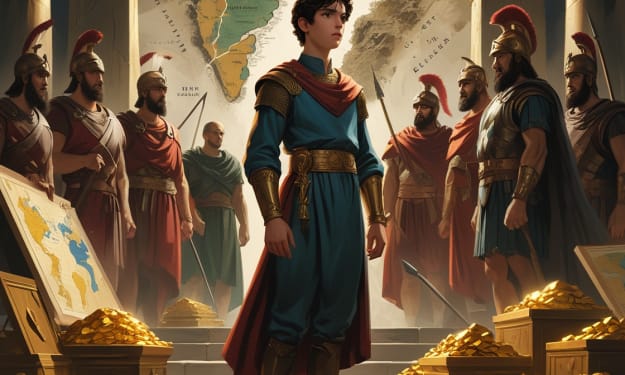
The Overlooked Wealth: Revealing the Riches of the Greek Empire The Greek Empireextending from the sun-drenched islands of the Aegean to the frontiers of India under Alexander the Greatis frequently commemorated for its scholarly accomplishments, mythology, and renowned military feats. Yet concealed beneath this celebrated heritage lies another breathtaking narrative: that of the extensive wealth accumulated by the ancient Greeks. This fortune encompassed not only gold and silver but also sacred artifacts, tributes from allies, war plunder, and invaluable art. At its pinnacle, the empire’s treasury ranked among the most precious in the ancient realm. 1. The Genesis of Affluence The origins of Greek wealth can be traced to city-states such as Athens, Corinth, and Sparta. Among these, Athens distinguished itself as a financial center. During the 5th century BCE, it spearheaded the Delian Leaguea military consortium established to confront the Persian menace. The league’s treasury was initially secured on the island of Delos, situated within a sacred sanctuary. However, Athens subsequently relocated the treasury to the Parthenon, effectively asserting control over the league’s assets. Each league member provided a tributeeither in vessels or fundswhich enriched the Athenian coffers with silver, gold, and exotic goods from throughout the Mediterranean. This revenue supported not only Athens’ navy and military endeavors but also its construction initiatives, including the Parthenon itself. 2. The Laurion Mines Athens’ affluence was not solely reliant on tributes. A significant silver-mining operation in Laurion, located just southeast of Athens, constituted a major economic pillar. Thousands of enslaved workers toiled under harsh conditions to extract silver, which was utilized to mint the renowned Athenian tetradrachma coin widely accepted across the ancient world. It is estimated that Laurion yielded hundreds of tons of silver, much of which financed the Athenian war apparatus and cultural proliferation. 3. Alexander the Great: Conqueror and Custodian No other figure in Greek history may have impacted its wealth as significantly as Alexander the Great. As he advanced eastward during his campaigns (334–323 BCE), he plundered and integrated vast royal treasuries from the Persian Empire, including the fabled city of Persepolis. Historical records indicate that Alexander appropriated over 180,000 talents of silver and goldequivalent to roughly 4,000 metric tons. In present-day value, this would exceed $250 billion. He employed part of this treasure to finance his expeditions, reward his troops, and invigorate economies in subjugated territories by re-minting coins and constructing infrastructure. Alexander's pillaging campaign not only redistributed riches throughout his expansive empire but also facilitated the creation of a novel Hellenistic economic framework, merging Greek and Eastern components. 4. Religious and Cultural Appreciations The Greeks held the belief that wealth ought to be dedicated to the deities, and numerous sanctuariessuch as those located in Delphi, Olympia, and Delosserved as repositories for offerings. These included gilded statues, intricately carved ivory, and exquisitely crafted vessels. For example, Delphi’s Temple of Apollo contained gifts from rulers and military leaders, comprising golden tripods, shields, and bronze bulls. These sacred repositories were occasionally looted during conflicts. The Roman general Sulla, for instance, ransacked the Oracle of Delphi during his expedition in Greece in 86 BCE. Nevertheless, a significant number of treasures endured for centuries, concealed or buried to evade theft. 5. Diminution and Dispersal The decline of the Greek realm commenced with the ascent of Rome. By the 2nd century BCE, the majority of Greek regions had either been annexed or heavily influenced by Roman authority. Consequently, a substantial portion of Greece’s wealthboth monetary and artisticwas transferred to Rome. Emperors such as Nero and Augustus plundered Greek temples and transported statues, manuscripts, and gold back to Italy. Subsequent invasions, ranging from the Visigoths to the Ottomans, perpetuated this pattern of exploitation. However, a considerable number of treasures also vanished from history entirelylost to the passage of time, buried under collapsed temples, sunken ships, or concealed within forgotten tombs. 6. The Treasure Today: Worth and Heritage While precise figures remain conjectural, historians estimate that the total wealth of the Greek Empire during its zenithincluding Athens, Macedon, and Hellenistic kingdomsmight easily exceed $500 billion in contemporary terms. This encompasses: Silver and gold from mines and tributes Loot from Persian treasures Religious donations and temple caches Artistic and cultural creations (many regarded as priceless today) Only a small portion of this wealth persists, safeguarded in institutions like the Acropolis Museum, the British Museum, or lost within archaeological sites awaiting rediscovery. Conclusion: A Wealth Beyond Gold The treasure of the Greek Empire represented more than mere material richesit also encompassed intellectual, cultural, and spiritual value. Although much of its physical wealth has been dispersed or lost, the legacy of this empire continues to enrich humanity. From coins that once financed philosophers to statues that inspired Renaissance artists, the true wealth of ancient Greece resides in its lasting influence.
By Say the truth about a year ago in History
The Pyramids of Peru and the Portals of the Gods: Where Are All Their Architectural and Historical Documents?
High in the forgotten deserts of southern Peru, under skies that flicker with starlight and silence, there are ruins few speak of, and fewer understand. Pyramids, buried beneath centuries of dust, stand in defiance of time, their purpose unclear, their builders unnamed. Nearby, a doorway carved into the rock waits in eternal stillness. They call it the Puerta de Hayu Marca, the Gate of the Gods. Yet, amid such ancient wonder, one question echoes across the sand and stone:
By The Secret History Of The Worldabout a year ago in History