Discoveries
These microscopic organisms significantly contribute to the storage of carbon in the Southern Ocean.
Copepods, krill, and salps are examples of zooplankton that are contributing significantly to the storage of carbon in the Southern Ocean despite their small size.
By Francis Damiabout a year ago in History
The Beautiful Game: A Journey Through Football History
Football, or soccer as it's known in some corners of the world, is more than just a game. It is a global language, a passion shared by billions, and a cultural phenomenon that transcends borders, languages, and ideologies. But how did this simple game with a ball and two goals become the most beloved sport on Earth?
By Abdullah khanabout a year ago in History
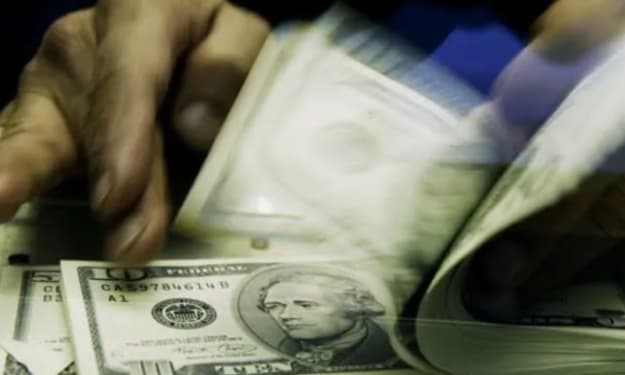
Why the US Dollar Is Falling by Record Levels in 2025
Why the value of the US dollar is falling at an unprecedented rate in 2025 During the first half of 2025, the value of the US dollar experienced one of its most significant declines in modern financial history. The dollar has experienced its worst first-half performance in more than five decades, falling more than 10% since January. Investors, economists, and policymakers around the world are concerned due to the steep decline. Understanding the causes of this unprecedented depreciation requires examining a combination of political, economic, and structural factors reshaping global markets.
By GLOBAL NEWSabout a year ago in History
Switzerland’s Incredible Bunker Network: Neutrality Backed by Total Preparedness
During the early hours of World War II, when Nazi forces stormed into Poland in 1939, Switzerland’s famed neutrality was shaken. In that instant, Swiss leaders understood that merely declaring neutrality would not guarantee safety from future threats. What followed was a strategic, national mission: to fortify the country’s borders and build an extensive—and remarkably discreet—network of bunkers. 🛡️ Why Such Drastic Measures? Switzerland’s geographical position in the center of Europe made it vulnerable despite its neutral stance. The sudden and forceful invasion of its neighbor Poland highlighted how quickly peace could be shattered. Swiss officials reasoned: Neutrality doesn’t grant immunity; vigilant preparation does. The Swiss embarked on a massive, multi-decade effort to turn their nation into a fortress—hidden in plain sight. --- 🔍 Disguised Protection: Sheltering in Plain View One of the most ingenious aspects of the Swiss plan was concealment. Bunkers were camouflaged with masterful creativity. They weren’t just vault-like structures in the middle of nowhere; they were hidden inside ordinary buildings—warehouses, schools, hospitals—or sculpted into natural rock formations deep within the Alps. From the outside, nothing looked out of place. Yet behind these façades, steel-reinforced concrete chambers awaited activation in times of crisis. This subliminal defense strategy meant Switzerland could stay functional and civilized—while retaining the capacity for national survival. --- 🌍 The Role of WWII & the Cold War World War II: The blitz of early-war Europe, with aerial bombings and fast-moving military columns, meant Switzerland had to be ready for surprise attacks. Cold War Era: With tensions between superpowers escalating, the threat of nuclear war loomed large. Swiss planners realized that conventional bunkers alone weren’t enough—air filtration systems, food and water stockpiles, and radiation protection had to be included. --- 📜 Key Legal Foundations 1963 Civil Defense Law: This legislation mandated that every new residential or commercial structure must include a nuclear shelter capable of protecting its inhabitants. Thus, bunkers became a de facto feature of Swiss construction. 1959 Constitutional Amendment: In a public vote, Swiss citizens enshrined civil protection as an inalienable constitutional right. Switzerland became one of the rare nations to guarantee its people’s safety at that scale. --- 📊 Scale of the Bunker System Today, Switzerland’s defensive network is staggering in scope: 360,000 bunkers—each built to withstand conventional bombs and nuclear fallout Capacity: Designed to shelter 8.6 million people Population: Switzerland’s current official population is about 8.6 million—meaning there’s literally a spare space ready for every citizen Most bunkers include: Air filtration systems to ensure breathable and safe indoor air during chemical, biological, or nuclear events Stockpiles of drinking water, non-perishable food, sanitation supplies Basic medical provisions, communication gear, and backup power sources --- 🏷️ A Lesson for the World Switzerland’s bunker program isn’t just national pride—it’s a powerful statement: > “Neutrality alone isn’t protection. Preparedness is.” In a world still threatened by war, terrorism, and potential nuclear escalation, Switzerland stands as a model of proactive resilience. Governments and citizens across the globe can learn from Swiss wisdom: peace is best maintained not by wishful declarations—but by tangible readiness. --- 🏛️ Congress of Preparation: A Timeline 1939: Operation Barbarossa and Warning from the East When Nazi Germany invaded Poland, Swiss authorities realized that neutrality does not prevent war from reaching your doorstep. The rapid collapse of a sovereign neighbor highlighted a chilling vulnerability. 1940s: WWII Fortification Ramps Up Under leadership like General Henri Guisan, Switzerland carved out defensive redoubts in the Alps, placing anti-tank tunnels and storing munitions—preparing for a potentially all-out invasion. 1950s-60s: Nuclear Age & Civil Protection Emerges Cold War paranoia prompted a seismic shift: from military fortifications to civilian shelters. The government created a national stockpile system, mobilized construction firms, and funded public campaigns. 1959: Constitutional Amendment Swiss voters backed the inclusion of civil defense as a constitutional principle. From now on, every citizen was legally entitled to protection. 1963: Shelter in Every Building The law went a step further—new constructions must include bomb- and fallout-resistant rooms. Architects and engineers began embedding shelters in design plans across the country. 1970s–1980s: Cold War Bunker Buildup Switzerland hit its peak bunker construction during these decades. Stockpiles were updated, equipment stored, and guidelines circulated widely—down to school lessons on how to survive inside a bunker. Post-Cold War: Maintenance & Modernization After 1991, the global landscape shifted—but Switzerland kept its system. Regular upkeep, volunteer drills, and incorporation of civil threats (like chemical, biological, or drone warfare) became priorities. --- 🏰 Inside a Typical Swiss Shelter A modern Swiss civil-defense shelter includes: 1. Blast Doors: Thick, rated for high-impact shockwaves and pressure 2. Air Systems: Multi-stage filtration, ensuring minimal pollen, toxin, or radiation entry 3. Food & Water Reserves: At least a couple of weeks' worth, updated quarterly 4. Sanitation Zones: Toilets, basic washing facilities, medical kits 5. Power Backup: Batteries or small generators, often with redundant systems 6. Communication Tools: Radios, intercoms, sometimes hard-line telephones 7. Ventilation & Cooling: To manage heat and humidity in crowded conditions 8. Information Materials: Instructions in Swiss languages—German, French, Italian, Romansh—on safety procedures, emergency exits, and hazards In many Swiss homes, this shelter is a simply reinforced basement room. In offices or public facilities, it might be a whole floor of enclosed space. In mountains, bunkers can span hundreds of meters into the rock, connected by tunnels and escape passages. --- 🌐 Global Inspirations & Takeaways 1. Prepared-neutrality: Nations can strive for peace while staying battle-ready 2. Civil resilience: Safety is a project that lasts generations—built into laws, society, and daily routines 3. Invisible readiness: Just because you can’t see it doesn’t mean it’s not there. Resilience thrives in plain view 4. Public trust in infrastructure: The Swiss system is backed by civic buy-in—from lawmakers to homeowners --- 🔍 Downsides & Maintenance Challenges While legendary in its foresight, the Swiss approach comes with costs: Construction cost: Embedding a shelter adds 1–2% to building budgets Upkeep needed: Systems must be tested regularly—especially ventilation and power supplies Relevance evolving: New threats like cyberattacks, drone terror, or pandemics require constant adaptation Mental bandwidth: Some argue that the focus on resilience may breed a culture of fear over trust --- ✨ Conclusion: A Swiss Legacy of Fortified Peace A nation that chose neutrality in 1939, recognizing soon after that neutrality wasn’t a shield by itself, set out to build an incredible legacy—a hidden, nationwide safety network engineered for worst-case scenarios. With 360,000 bunkers, constitutional rights, and legal enforcement, Switzerland didn’t just talk peace—it prepared for war with vigilance, technology, and silent infrastructure. Their message resonates today: Peace is not passive—it must be engineered, equipped, and embedded. In our world of unprecedented uncertainty, we need more than noble words. We need Swiss-level preparedness.
By Ikram Ullahabout a year ago in History
Bayt al-Hikmah: The Lost Library That Once Lit the World
The House of Wisdom: Baghdad's Library Whose "Books More Precious Than Gold" Were Burned and Thrown into the Tigris This event dates back to the mid-13th century when the Abbasid ruler Al-Musta'sim surrendered after a continuous siege by the Mongol army. Many of you are likely familiar with the history that followed. According to historians, after the Caliph's arrest, the Mongol army, led by Hulagu Khan, wreaked havoc in Baghdad, the capital of the Abbasid Caliphate. Thousands of people were killed, and several buildings were destroyed, including a library called Bait al-Hikma (House of Wisdom). This library is considered one of the greatest monuments of the Islamic Golden Age. Baghdad was so prosperous that scholars and intellectuals from all over the world, regardless of religion or nationality, came there to acquire knowledge. It is said that as a result, the city rapidly became one of the centers of scientific experimentation. However, no trace of this ancient library remains today. After occupying Baghdad in early 1258, the Mongols completely destroyed the library. According to researchers, a large portion of the books stored in the library was burned to ashes, while many books were thrown into the Tigris River. According to folklore, so many burned manuscripts were thrown into the Tigris that the river's water turned black from the ink and soot. Whether this actually happened, however, is a matter of debate. Nevertheless, most researchers agree that this library was one of the largest centers of knowledge in the world at that time. But what did the library look like before its destruction? What kinds of books were available, and how were they collected? This remains a mystery today. Who Founded Bait al-Hikma? The Arabic phrase Bait al-Hikma means 'House of Knowledge and Wisdom.' This famous library is considered one of the most important monuments of the Islamic Golden Age, which flourished during the Abbasid dynasty. According to historians, it was initially a private library of the Abbasid rulers, which was later opened to the public. An article by Adil Abdul Aziz, a professor at the Islamic University of Malaysia, mentions three different views among historians regarding which Abbasid ruler established this library. Professor Abdul Aziz, in his article titled "Impact of Bait al-Hikma on Islamic Libraries," cites many researchers who suggest that the first Bait al-Hikma was established during the reign of the second Abbasid ruler, Abu Ja'far al-Mansur. According to him, Caliph Al-Mansur, out of personal interest, began collecting books on various subjects including medicine, astronomy, mathematics, engineering, religion, philosophy, history, and literature from different places. Professor Aziz quotes Iraqi researcher S. Al-Diyazi as writing: "He encouraged Muslims to study science and develop their abilities." Some researchers also claim that during Caliph Al-Mansur's reign, important books in Greek, Persian, Sanskrit, and other languages were translated into Arabic. And thus, they claim that the foundation of Bait al-Hikma was laid during the reign of the second Abbasid Caliph. However, a second group of historians does not support this theory. According to them, this famous library of Baghdad was built much later, during the time of the famous Caliph Harun al-Rashid. Professor Abdul Aziz says: "During the reign of Caliph Harun al-Rashid, there was great intellectual progress, especially during the translation movement." It is also said about Harun al-Rashid, the fifth Caliph of the Abbasid dynasty, that he had many books translated from other languages into Arabic by many scholars and intellectuals from Arabia, Iran, and Syria. Many researchers have cited a writing by the famous 12th-century historian Yaqut ibn Abdullah. In one of his works, Yaqut ibn Abdullah mentions Abu Isa al-Warraq, a 9th-century scholar, stating that he used to prepare manuscripts of various books for Bait al-Hikma during the time of the Rightly Guided Caliphs and Al-Rashid al-Ma'mun. But despite presenting such evidence, there is a third group that believes that Caliph Harun al-Rashid's son, Al-Ma'mun, actually founded the library in Baghdad using the books collected by his predecessors. British historian De Lacy O'Leary also supports this theory. O'Leary says: "Caliph Al-Ma'mun established a school, which he named 'Bait al-Hikma.' Greek books were translated there." According to Adil Abdul Aziz, a similar opinion is found in the writings of American historian Will Durant and many others. Professor Aziz said: "Thus, it can be said that Bait al-Hikma existed in Baghdad long before Al-Ma'mun. But perhaps during his reign, this library became richer with more books." Various 9th-century documents indicate that Al-Ma'mun ibn Harun, the seventh ruler of the Abbasid Empire, had a deep interest in science. After assuming power, he increased his patronage, and thus the fame of Bait al-Hikma spread. Where Was This Library Located? Bait al-Hikma is mentioned in numerous works by writers and historians of that era, but not much information is available regarding its location. If it is initially considered the private library of the Abbasid Caliphs, then it would originally have been located somewhere inside the palace. Historians believe that this library was also next to the royal palace during the time of Caliph Harun al-Rashid. However, some people hold a different opinion and say that the books were not kept inside but in a large room built around the palace. But later, during the reign of Caliph Al-Ma'mun, when the number of books rapidly increased, researchers suggest the library was moved to the eastern part of Baghdad, on the banks of the Tigris River. Professor Abdul Aziz, citing some local Iraqi researchers, wrote that the library was moved to a place called Al-Rusafa, which was located on the eastern bank of the Tigris River. However, there is disagreement about whether the library was actually moved away from the palace. Some researchers believe that the new building constructed after the increase in the number of books may have been built somewhere near the royal palace. Professor Jim Al-Khalili, a physicist at the University of Surrey in the UK, told BBC Future that "a detailed analysis of where or when Bait al-Hikma was established is not really that important to us." He added that "the important thing is the history of scientific ideas and how they reached where they are today." What Was the Library Like Before Its Destruction? According to researchers, the library had a large open space inside, surrounded by several large two-story rooms. There were four large domes at the four corners of the building. In addition, the central room of the library also had a very large, high dome. On the ground floor of the building, books were placed in rows of cabinets attached to the walls. Separate shelves were made for books on every subject, including religion, philosophy, science, and literature, so that they could be easily found. In addition to study facilities, the library had separate departments for translation, copying, binding, and writing. Skilled individuals were employed for these tasks and were well paid. The Great Library of Baghdad contained many books in Arabic. However, most of the collected books were translated from other languages into Arabic. The 10th-century author and historian Ibn al-Nadim mentions at least 67 translators who worked for Bait al-Hikma in his book "Al-Fihrist." Researchers say that scholars from other religions, as well as Muslims, could work there. Accommodation arrangements for writers, translators, students, and staff were on the upper floors of the building. According to researchers, the environment around the library was also very pleasant due to its proximity to the river. What Kinds of Books Were There? Researchers say that almost all important books of knowledge written at that time were present in Bait al-Hikma. Most of these were books on medicine, science, religion, philosophy, history, and literature. Historians believe that the library contained several hundred thousand books and documents. There is no precise information about the number of books, and the claim of millions of books is also disputed. Many people believe that the library contained more official documents than books. However, according to a BBC Future report, Bait al-Hikma had as many books in the past as the British Library in London or the Bibliothèque Nationale in Paris have today. In this regard, many researchers have cited the name of the Persian Muslim scholar Nasir al-Din al-Tusi, who is said to have succeeded in preserving a few book manuscripts. Approximately 47 individuals worked on translating books from Greek and Syriac languages. Notable translators of that time included Abu Mashar, Hunayn ibn Ishaq, Ibn al-Asam, Thabit ibn Qurra, Hijaz ibn Mutir, Al-Kindi, Al-Balbakki, and many others. Among them, Al-Kindi and Hunayn ibn Ishaq made their names by translating books written in Greek. In the field of science, many books on medical science were translated. One notable book is "Materia Medica" by the Greek physician Pedanius Dioscorides. In addition to medical sciences, books on mathematics, physics, astronomy, chemistry, and engineering were also in the library's collection. There were also books on religion and philosophy. This included the Quran and Hadith, as well as various commentaries and analyses related to Islam. Furthermore, it is known that the theories of other religions were also given a place in the library. Like today, common people could go to this library to read books, and in special cases, they were also lent books. Historians say that in addition to translated books, the library also housed many important original book manuscripts, architectural designs, maps, documents, and so on. How Were So Many Books Collected? Historians emphasize the role of the translation movement in enriching the great library of Baghdad. This intellectual movement actually began in Baghdad in the 8th century, patronized by the Abbasid Caliphs themselves. The purpose of this movement was to introduce Muslims to various branches and theories of science, thereby enhancing their intellectual growth. Researchers stated that as a result of this movement, several important books written in Persian, Greek, Latin, Syriac, Egyptian, Chinese, Sanskrit, and other languages were translated into Arabic. The translation movement, which lasted for about 150 years, began with the translation of a few important books from the Persian language. Along with collecting books written in Arabic, the Abbasid rulers undertook the task of converting Persian books into their native language. After that, books in other languages gradually began to be translated. In this regard, original books in other languages were bought, copied, and even borrowed, and most of them went through the translation phase. Researcher Dr. Hasan Ahmad Mahmud said: "The Abbasid rulers agreed to buy books and paid very high prices for them, especially during the reign of Caliph Al-Ma'mun." Historians also believe that some books may have been collected as a result of conquests. After translation, several copies were also made, so that if one was lost, another would be preserved. In the 9th century, during the reign of Caliph Al-Ma'mun, a new dimension was added to this movement. The number of books translated from Greek in Bait al-Hikma was remarkable. According to researchers, there are also instances of borrowing books by sending letters to those who had Greek books at that time. According to them, one reason for this was that in this era of intellectual development, Arabs were very interested in the philosophy, literature, and medical knowledge of Greek philosophers. Consequently, the Abbasid rulers hired scholars, regardless of religion or nationality, with high remuneration to translate Greek books into Arabic. Historians believe that it was possible to translate the Greek writings of numerous thinkers, including Plato, Aristotle, Hippocrates, Ptolemy, Pythagoras, Archimedes, Galen, and Euclid, within a few decades. "Books Weighing in Gold Coins" It is said that the Abbasid rulers announced a gift of gold equal to the weight of a book if a scientific book from another language was translated into Arabic. According to Professor Adil Abdul Aziz of the Islamic University of Malaysia: "Multiple sources indicate that Caliph Al-Ma'mun offered to pay the famous translator Hunayn ibn Ishaq of that time in gold equal to the weight of the book for the translation of ancient Greek texts." However, Western researchers say that there is no evidence of this. Nevertheless, there is no disagreement that these authors, researchers, and translators were paid very generously for their work. According to American historian Will Durant, during the reign of Caliph Al-Ma'mun, the value of Bait al-Hikma reached approximately two hundred thousand gold and silver coins. Researchers say that in addition to the rulers, wealthy people who were fond of knowledge also contributed money to the library's fund. According to a BBC Future report, because of the 'House of Wisdom' or Bait al-Hikma, scholars, researchers, and scientists from different parts of the world began arriving in Baghdad, and as a result, the library gradually became a center of interest in acquiring knowledge and an unparalleled center for various types of books. At the same time, it became a symbol of freedom of expression. This is because scholars, regardless of religion or nationality, could enter there and obtain permission for study and research. After the 9th century, the library gradually became an academy. Subjects such as humanities, mathematics, medicine, chemistry, geography, philosophy, literature, and art, and even astrology, were studied at Bait al-Hikma. As a result, from an intellectual perspective, the Muslim world reached its most glorious period, known as the 'Islamic Golden Age.' During this period, the famous mathematician Muhammad ibn Musa al-Khwarizmi wrote the book Al-Jabr (Algebra), which is said to have inspired many Western thinkers, including the Italian scholar Fibonacci, to advance mathematics. Al-Khwarizmi is often called the "Father of Algebra" for his outstanding contributions to mathematics. The name of the Muslim philosopher Al-Jahiz is also greatly emphasized, who wrote "Kitab al-Hayawan" (Book of Animals) on the evolution of animals almost a thousand years before the British scientist Charles Darwin. In addition, the names of thinkers like Hunayn ibn Ishaq, Al-Kindi, Al-Malik, Banu Musa, Muhammad Ja'far ibn Musa, Ibn Ali, Al-Jazari, and many others are remembered for their contributions in various branches of knowledge, including medicine, physics, engineering, and astronomy. The role of Bait al-Hikma is behind their contributions to the world of knowledge. However, the extent of this role has been debated and continues to be debated.
By Ikram Ullahabout a year ago in History
Ancient avocados found in a cave could save the world's crop.
There is just one type of avocado that feeds the world's appetite: the creamy Hass. Production has been streamlined into a multibillion-dollar enterprise due to this genetic similarity. However, uniform orchards can suddenly collapse when confronted with a new pest, virus, or heat wave; thus, it also invites calamity.
By Francis Damiabout a year ago in History
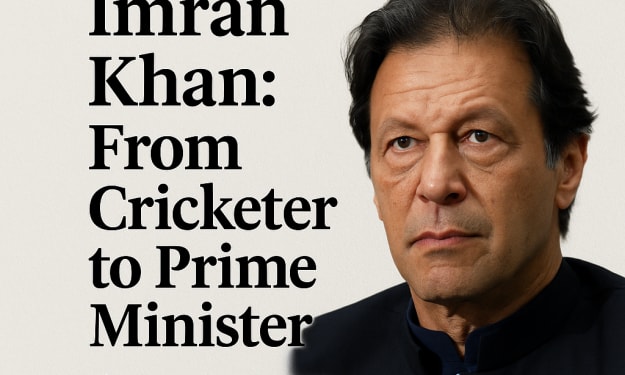
Imran Khan: From Cricketer to Prime Minister
Imran Khan: From Cricketer to Prime Minister Imran Khan, one of Pakistan's most iconic figures, has lived a life marked by transformation, resilience, and leadership. Born on October 5, 1952, in Lahore, Imran Khan began his journey as a cricketer, rose to international fame as a sportsman, and later entered politics to become the 22nd Prime Minister of Pakistan. His story is one of ambition, national pride, and a relentless pursuit of change. Early Life and Cricket Career Imran Khan was educated at Aitchison College in Lahore and later at the Royal Grammar School in England. He went on to study at Keble College, Oxford, where he earned a degree in Philosophy, Politics, and Economics. During his university years, cricket remained a central part of his life. His talent and determination soon led him to debut for the Pakistan national cricket team in 1971. Imran Khan became a cricketing legend, known for his fierce bowling and charismatic leadership. The pinnacle of his cricket career came in 1992, when he captained Pakistan to its first and only ICC Cricket World Cup victory. This achievement made him a national hero and gave him immense popularity among Pakistanis at home and abroad. Philanthropy and Shaukat Khanum Hospital After retiring from cricket, Imran Khan turned his attention to social work. One of his most significant contributions was the establishment of the Shaukat Khanum Memorial Cancer Hospital, named after his mother. It became the first charity-based cancer hospital in Pakistan and a symbol of hope for thousands of patients. He also founded Namal University to provide quality education to underprivileged students. These projects highlighted Imran Khan’s dedication to public service and proved that he was capable of turning dreams into reality—even off the cricket field. Entry into Politics In 1996, Imran Khan founded his political party, Pakistan Tehreek-e-Insaf (PTI), with a vision to bring justice, end corruption, and uplift the poor. His early years in politics were filled with challenges. Many critics labeled him inexperienced, and his party remained on the fringes of national politics for over a decade. However, Imran’s persistence and anti-corruption message gradually began to resonate with the younger generation and urban middle class. By the 2013 general elections, PTI emerged as a major political force, forming a provincial government in Khyber Pakhtunkhwa. Prime Minister of Pakistan In the 2018 general elections, Imran Khan’s PTI won a majority and he became the Prime Minister of Pakistan. His campaign focused on creating a "Naya Pakistan" (New Pakistan), where institutions would be strengthened, corruption eliminated, and the economy stabilized. During his tenure, he faced multiple challenges including a fragile economy, rising inflation, and political opposition. However, he also took steps toward digitization, welfare programs like the Ehsaas Program, and reforms in the health and education sectors. His foreign policy emphasized strengthening ties with neighboring countries and raising the Kashmir issue on international platforms. Legacy and Challenges Imran Khan's political journey has been both inspiring and controversial. From the cricket field to the corridors of power, he has remained a dominant figure in Pakistan’s public life. Despite facing criticism, political pressure, and even legal challenges, his supporters view him as a symbol of integrity and hope. His story is far from over. Whether as a cricketer, philanthropist, or politician, Imran Khan continues to shape the national discourse and remains a key player in Pakistan’s future. --- Conclusion: Imran Khan's transformation from a world-class cricketer to a national leader is unmatched in Pakistan’s history. His life reflects the power of vision, dedication, and resilience. Whether you admire him for his cricket, charity work, or political leadership, there's no denying his impact on Pakistan’s identity and global image.
By Sophia Graceabout a year ago in History
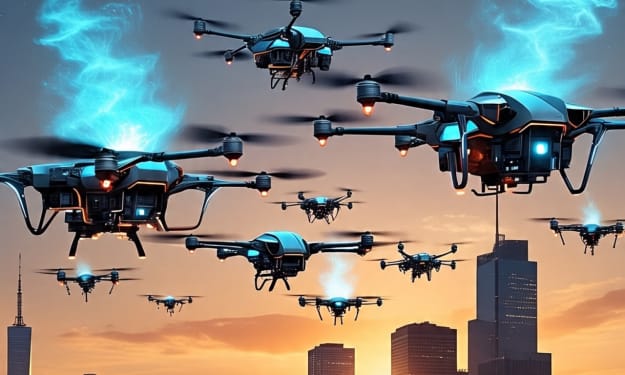
Why Turkey Is Becoming a Drone Superpower: Bayraktar TB2 and the Rise of Turkish UAVs
Turkish-made drones could play a vital role for Ukrainian forces and could be deployed in the ongoing tensions against Russia. In fact, Turkish drones have been important in many other conflicts around the world. Turkey’s importance Turkey is the only Muslim member of the Western military alliance NATO. Turkey has the second largest army in NATO after the United States and shares military technology with its allies. In terms of operational and production capacity, Turkey is in the best position in the region, leaving Israel behind. lTwo major drone manufacturers in Turkey. The following are the two major drone manufacturers in Turkey. Baker Defense produces the Bayraktar TB2 and Bayraktar Akinci drones, which are in high demand worldwide. The company’s chief technical officer, Selcuk Bayraktar, has close family ties to Turkish President Recep Tayyip Erdogan. The second largest drone manufacturer is Turkish Aerospace Industries, which makes TAI Inc. and TAI Aksengör. The Turkish armed forces and security agencies operate more than 150 drones manufactured by them. In addition, they also use a “large number of small surveillance drones.” Turkey’s military relations with Ukraine Turkey has sold dozens of Bayraktar TB2 armed drones to Ukraine since 2019. Ukraine is using these Turkish drones in its war with Russia Turkish President Recep Tayyip Erdogan visited Ukraine in the past to sign an agreement to further expand the drone trade between the two countries. How does Russia view this development? Last October, Russia repeatedly criticized Turkey, saying that its drones were “destabilizing the region.” Turkey has played a mediating role between Russia and Ukraine Turkey’s relations with Russia. Despite strong criticism from NATO and the United States, Turkey’s purchase of the S-400 air defense system from Russia was seen as an example of Erdogan’s improved relations with Russia. Turkey is also a buyer of Russian oil. It is not clear how many Bayraktar TB-2 drones are in Ukraine. The drones are equipped with a state-of-the-art electro-optical camera, data link system and two to four precision-guided munitions. These features of the drones “help identify targets for friendly units as well as hit them with their guided bombs.” Which countries have Turkish-made drones? Turkey’s customers are growing rapidly in terms of drone sales. The country’s export figures do not include any specific reference to the exact number of drones sold in its trade deals. But more than 15 countries are believed to have ordered Turkish-made Bayraktar and TI drones. The fighting between Armenia and Azerbaijan continued for several days, and Azerbaijani forces used Turkish-made drones to target Armenian soldiers, military vehicles, artillery and air defense systems, helping them regain control of some disputed territory. Africa is also a major market for Turkish drones. Turkey is a major competitor, especially in the African market, to rival Achin manufacturers. “Turkey’s low-cost drones come with NATO-standard performance and the quality of its armed drones.” Morocco, Algeria, Rwanda, Nigeria and Ethiopia have expressed interest in Turkish-made drones. Military deals are not publicized, but Turkey signed a defense cooperation agreement with Ethiopia last year and export figures show a rapid growth in the aviation sector. In the past, US officials have expressed reservations about Turkey selling drones to Ethiopia. But Turkey is choosing to seek new markets for its military hardware regardless. The drone sales will enable it to build continued military and industrial ties, which in turn will help Turkey increase its military, diplomatic and economic influence in and around the country from which it receives the drones. And Turkey has its eyes on Africa as a market, as President Erdogan himself has expressed it. Power of turkish drones it helped shift battlefield dynamics, destroying tanks, artillery systems, and air defenses with precision.Perform real-time surveillance and precision strikes The Bayraktar TB2 has been used successfully in multiple conflicts: Ukraine-Russia War Azerbaijan vs Armenia Libya and Syria civil wars Cost The price of BayraktarTB-2 drones is approximately 2milion usdt this price is most cheaper than American drones.Turkish drones are most affordable for smaller and poor countries.
By Real contentabout a year ago in History
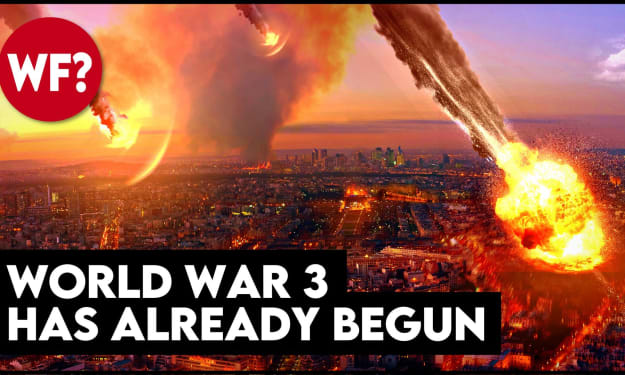
Ukraine Was Just the Beginning—The Secret Build-up to World War 3
Ukraine Was Just the Beginning—The Secret Build-up to World War 3 When Russia invaded Ukraine in 2022, the world held its breath. But what most people didn’t realize was that this was never about Ukraine alone. It was a test—of NATO, of Western unity, of global willpower. And the results weren’t just analyzed in Moscow. Washington, Beijing, Tehran, and Tel Aviv were watching every move, every weakness. What started as a regional war quietly cracked open the gates of a much darker future: the slow and secret rise of World War 3. I was a military analyst for a European intelligence agency, stationed in Brussels, when the first reports came in. Russian troops had crossed the border with heavy artillery, but the real war was not just in trenches. It was online. It was psychological. It was strategic. And behind the scenes, things were moving faster than any of us expected. Within six months, something changed in the tone of briefings. China began conducting aggressive drills around Taiwan. North Korea ramped up missile testing. Iran’s nuclear enrichment suddenly accelerated beyond what the IAEA had been reporting. Even more disturbing? Satellite data showed unexplainable activity in the Arctic—long-ignored territory now crawling with submarines and mobile launch systems. The world was being carved into pieces, like a chessboard you didn’t know you were playing on. By late 2023, an unspoken alliance had begun to form—Russia, China, Iran, and a few hidden players in Africa and South America. We called it the Shadow Bloc. They weren’t announcing treaties. They didn’t hold press conferences. They moved in silence, bound by common interests: control of resources, digital dominance, and the downfall of the Western world order. NATO, meanwhile, was busy managing optics. Publicly, they reinforced eastern borders and kept up the image of unity. Privately, we knew internal disagreements were boiling. France wanted diplomacy. Poland demanded action. The US was stuck between election cycles, economic strain, and a divided Congress. It was like watching a dam crack—slowly, silently—until one day, it breaks. The real turning point came in early 2025. A NATO convoy was ambushed in Moldova by unmarked drones. At first, we blamed local separatists. But analysis of the drone fragments revealed something chilling: Chinese-manufactured circuits, Iranian coding signatures, and a Russian-guided AI attack protocol. Three enemies, working as one. This wasn’t a rogue strike. It was a message. Then came the blackout. On March 9, 2025, the global financial markets were thrown into chaos. SWIFT shut down in half the world. Power grids in Germany, Canada, and Japan blinked off like someone flipped a switch. Hospitals, airports, banks—all down. The cyberattack was traced to thousands of locations, impossible to shut off. By the time power returned, $4.3 trillion had evaporated. Countries turned inward. Borders closed. Militaries were mobilized. It still wasn’t called “World War 3.” Not officially. But everyone knew it. Cities didn’t fall in flames like in the old movies. This war was different. You woke up and couldn’t access your money. Your phone stopped working. Your neighbor vanished. Your government issued strange alerts. Panic wasn’t loud—it was quiet, crawling under your skin like a sickness you couldn’t name. I remember the night London was evacuated. Not from bombs—but from a virus. A digital one. It hijacked hospital systems, rerouted traffic lights, poisoned water signals. Dozens died in chaos. The UK government blamed “foreign interference,” but we knew the truth. Russia’s SORM and China’s Great Firewall tech had been combined, tested on us like we were lab rats. And then the Middle East ignited. Iran struck a US naval base in Bahrain. Israel responded by launching a limited strike, only for Hezbollah to unleash thousands of drones into northern Israel. The fire spread fast—Saudi Arabia, Turkey, Syria, all pulled into a storm of allegiances and betrayal. Oil lines burned. The Suez Canal was blocked. Half the world’s economy went dark in 72 hours. And what of Ukraine? It was no longer a country by then. Just a scar on the map. A reminder that the first shot of World War 3 wasn’t a nuclear missile—it was a tank in Kyiv, a lie on the news, a silence from leaders who should’ve shouted louder. We thought we had time. But war doesn’t knock. It seeps in through screens, whispers in unstable markets, builds behind diplomatic smiles. When I look back, the scariest part isn’t how fast the world collapsed. It’s how normal everything felt—until it wasn’t. I lost contact with my family in Karachi after the Indian Ocean cable was destroyed in what we assume was a deep-sea detonation. Some believe Pakistan became a nuclear flashpoint, others say it was neutralized early to prevent alliance with China. All I know is I never heard my mother’s voice again after April 2025. By May, conscription was active in 23 countries. Social media was banned or filtered. AI-generated propaganda flooded every device still connected. In Berlin, civilians fought off an AI-operated tank swarm using Molotov cocktails. In Seoul, underground bunkers housed families eating printed food and sharing stories like it was the 1940s again. There was no world order anymore—just survival. As I write this from a secure bunker in Norway, where NATO’s remnants operate in shadows, I know I’m one of the few who can still tell the story from the beginning. Because Ukraine was never the end. It was never even the real war. It was the warning. The warm-up. The spark. The real war… is just getting started.
By Ali Asad Ullahabout a year ago in History
Condemned by a Lie: The Ricky Jackson Story and the 43 Years That Justice Forgot
> By Umair Ali Shah Yousafzai Introduction: When Truth Becomes the First Victim What does it mean to lose not just a year or a decade, but an entire lifetime — to a lie? What happens to the human soul when it is buried alive behind concrete and steel, screaming innocence into deaf ears for 43 unrelenting years? The story of Ricky Jackson isn’t a tale told to teach children moral lessons. It is the embodiment of a real-world tragedy, where justice failed so catastrophically that even an apology decades later sounds hollow. It is not only the longest wrongful imprisonment in American history; it is the chilling dissection of a justice system that sentenced an innocent teenager to death based on the coerced testimony of a frightened 12-year-old boy. --- An Ordinary Boy in Cleveland Ricky Jackson was just 18 years old in 1975 — a quiet, thoughtful African-American youth living in Cleveland, Ohio. He had never been arrested, never carried a weapon, never even held a criminal record. He lived in a modest neighborhood, with dreams no different from other boys his age: education, work, and family. But everything changed on a day that should have passed like any other. A local businessman named Harold Franks was shot and killed in broad daylight during an apparent robbery. The incident shocked the community. In the police department’s desperation to find someone to blame, a name was offered by a 12-year-old boy who hadn’t even witnessed the murder. That name was Ricky Jackson. --- A Murder, A Lie, and A Child’s Testimony Eddie Vernon was barely out of childhood when he was approached by police and persuaded — some would say coerced — into identifying Ricky Jackson as the shooter. No physical evidence connected Ricky to the crime. No fingerprints. No murder weapon. No surveillance. Nothing but the fragile words of a frightened boy. Years later, Vernon admitted: > “I didn’t see anything. The police threatened my family, told me they’d put my parents in jail if I didn’t talk.” But in 1975, his word was gold. It was all the prosecution needed. It didn’t matter that other witnesses contradicted him. It didn’t matter that Ricky had an alibi. Vernon’s coerced statement became the scaffold on which Ricky’s fate was hung. --- The Trial: Theater of Injustice The trial was swift. No physical evidence was presented. No cross-examination of Vernon’s statement truly tested its validity. Ricky, along with two friends — Wiley and Ronnie Bridgeman — were sentenced. Ricky Jackson received the death penalty. He was 18. He had not yet attended college. He had never fallen in love. He had no children. And now, the state was going to kill him. But before the execution could be carried out, Ohio overturned the death sentence to life imprisonment. The reprieve wasn’t mercy. It was a new kind of suffering — the long, slow death of a man behind bars. --- From Death Row to Life Sentence: A Prisoner of Time For the next four decades, Ricky Jackson became a ghost within America’s prison system. He was moved from facility to facility. He missed the funerals of his parents. He never saw a computer, never used the internet, never walked into a supermarket again. He watched the world evolve through metal bars and razor wire — watched new presidents rise and fall, watched the Cold War end and 9/11 reshape history, all from within a concrete cage. But while his body was confined, his mind clung to hope. “I knew I was innocent,” he would later say in an interview with The Washington Post. “I couldn’t let go of that, or I’d go crazy.” Yet hope is not armor. It doesn’t keep out the dark. The nights were long. The guiltless solitude maddening. --- The Psychology of a Stolen Life What does 43 years in prison do to a human being? Psychologists describe wrongful imprisonment as a form of chronic trauma, similar to post-war PTSD but complicated by betrayal trauma — the deep psychic injury caused when the very institutions meant to protect you, turn against you. For Ricky Jackson, this betrayal was total. The court system. The police. The media. Even his own neighbors who believed the headlines more than his voice. Everyone walked away from him, except time — and even that, it seems, walked slower in his cell. He spent birthdays alone. Holidays watching TV news flashes from a flickering screen bolted to a prison wall. He wasn’t merely doing time — time was doing him. As he later told CBS News, > "The hardest part wasn’t the food, or the cold, or even the violence. It was waking up every day knowing that no one believed me… and wondering if they ever would.” --- 2011 – The First Crack in the Wall It took 36 years before the first sign of redemption appeared. Eddie Vernon, now in his late 40s, broke down. Years of guilt had gnawed at his conscience. Encouraged by a local pastor, Vernon came forward and admitted his testimony had been a lie — a lie told under police pressure, not malice. “I was just a scared little boy,” he said under oath. This single act of courage — the reversal of a lie — shook the very foundations of Ohio’s justice system. The case was re-opened. And finally, for the first time in 37 years, someone listened to Ricky Jackson. --- 2014 – The Day the Sky Opened On November 21, 2014, Ricky Jackson walked out of prison a free man. There were no parades. No orchestras. Just a quiet Cleveland morning, the wind soft and cold, and the silence of a man tasting sunlight after four decades. He was 61. His hair was gray. His face had aged. He was no longer the young man wronged by the system — he was a living monument to how long justice can take to arrive. When asked if he felt hatred, he simply said: > “No. If I held onto hate, I’d still be in prison. Just a different one.” --- Forgiveness Over Fury Ricky’s refusal to embrace bitterness wasn’t naïve. It was radical. His strength wasn’t forged in fury, but in faith — not religious dogma, but a deeper, spiritual belief that forgiveness is freedom. Many exonerees become bitter, angry, even broken. But Ricky stood tall. He smiled in interviews. He talked about healing. He spent time with his siblings. He walked in parks and marveled at things people take for granted — the softness of carpet, the click of a smartphone, the taste of fresh fruit. He didn’t just get released. He re-learned how to live. --- The Legal Aftermath: Can Justice Be Priced? In 2016, the state of Ohio awarded Ricky Jackson a $1 million settlement under its wrongful imprisonment compensation program. But even the government admitted — no money could truly compensate for what had been stolen. As The New York Times wrote, > “This was not just the loss of years. It was the theft of a life.” That $1 million covered lost wages, emotional trauma, and punitive damages. But how do you put a price tag on never being a husband, never raising children, never hearing your mother’s voice again? For Ricky, the money was a symbolic apology. But no amount could erase the decades of injustice. --- America’s Shame: A Broken Justice System Ricky Jackson’s case is not an isolated tragedy. According to the National Registry of Exonerations, more than 3,400 people in the United States have been exonerated since 1989 — many of them Black men, many convicted based on flawed eyewitness testimony, police misconduct, or prosecutorial overreach. A study by the Innocence Project shows that false eyewitness identification accounts for nearly 70% of wrongful convictions later overturned by DNA evidence. Ricky's case adds a horrifying statistic: He spent more time behind bars than any other wrongfully convicted person in U.S. history. His story has become a textbook case in law schools, a subject of documentaries (The Guardian, BBC, PBS), and a haunting reminder that the legal system is only as just as those who operate it. --- 🕊 The Role of the Media: Silenced Then, Shouted Now In 1975, when Ricky Jackson was first arrested, the media reported it as an open-and-shut case. Local Cleveland headlines ran with phrases like “Teen Accused in Fatal Robbery” and “Quick Arrest After Shooting”. There was no in-depth investigation. No challenge to the lack of physical evidence. No empathy for a young man with no prior record. He was Black, poor, and accused — and that was enough. It took decades for the media to revisit his story. When the truth finally emerged, national outlets like The New York Times, BBC, The Guardian, CNN, and NPR covered the injustice. Documentaries followed. Podcasts interviewed Ricky. Legal journals dissected the case. But the media was late. Too late. For 43 years, it had ignored him — and that silence was complicity. In an interview with NPR, Ricky put it plainly: > “If someone had just listened back then… really listened… maybe all of this could’ve been avoided.” The media's redemption, much like the justice system’s, came long after the damage was done. --- The Innocence Projects: Saving Lives in the Shadows Ricky Jackson owes his freedom not just to Eddie Vernon’s confession, but to the relentless efforts of organizations like the Ohio Innocence Project. These nonprofits, often underfunded and overworked, have dedicated themselves to correcting wrongful convictions through new evidence, DNA testing, and legal appeals. Without their advocacy, Ricky’s case might have remained buried — like hundreds of others still lost in legal purgatory. Their work reminds us of one chilling truth: For every Ricky Jackson who gets justice, there may be ten more who never will. --- Psychological Fallout: Life After a Life Lost (Your chosen core theme — expanded further here) The release from prison did not end Ricky’s sentence. For many exonerees, life outside is a different kind of prison. The world they return to has changed beyond recognition. Technology is baffling. Old friends are gone. Social trust is shattered. The smallest tasks — using a microwave, unlocking a smartphone — feel foreign. Ricky spoke about this in a 2017 The Atlantic feature: > “I didn’t know what a debit card was. I didn’t know how to cross the street without looking over my shoulder. Even in freedom, I felt like a prisoner.” He struggled with anxiety, depression, insomnia. Prison had reprogrammed his instincts. Freedom, once longed for, felt overwhelming. Therapists describe this as institutional PTSD — the brain’s adaptation to long-term survival in a hostile environment. Years of hyper-vigilance, suppressed emotions, and rigid routines leave permanent marks on the psyche. Yet, Ricky did not let it break him. He faced his trauma like a veteran returning from a battlefield — scarred, but not surrendered. --- Faith and the Human Spirit: A Quiet Revolution Ricky never publicly aligned with a religious denomination, but his language revealed something deeper — a spiritual resilience forged in solitude. He once said: > “When you’re in a cell alone, you start talking to yourself. But if you talk long enough, you start hearing answers. Maybe they’re your own voice. Maybe they’re God’s. But they keep you sane.” Faith — whether in God, justice, or one’s own soul — was Ricky’s companion when the world forgot him. He did not turn to hatred or revenge. He turned inward, and what he found was strength. --- When a Nation Apologizes Too Late The government of Ohio issued a formal apology to Ricky Jackson. It came with a settlement check and some public acknowledgment of its mistake. But justice delayed is justice denied. No amount of money, no legal brief, no governor’s signature can return the 15,000 days that Ricky spent confined — days when he could have been a father, a friend, a free man. As The Guardian wrote in its editorial on the case: > “The apology is polite. The injustice was barbaric.” --- Lessons for the World: Truth, Justice, and the Power of a Single Lie This story is not just American. It is universal. It speaks to every nation where power overrides truth. Where the poor are expendable. Where the law serves convenience, not conscience. Ricky Jackson’s tragedy is a mirror — held up to us all. The most terrifying thing about this case is how easy it was to ruin a life: One false witness. One negligent investigation. One rushed trial. And four decades gone. It is a warning to courts, police, media, and society at large — that truth must never be hurried, that justice must never be assumed, and that no lie is ever small when it costs a man his future. --- Final Reflections: Let No Other Ricky Jackson Be Forgotten Ricky Jackson is free now. He smiles in photographs. He speaks at schools. He mentors at-risk youth. He is trying to build a life from ashes. But behind that smile is the echo of stolen time. He is not just a man. He is a symbol. Of injustice survived. Of forgiveness chosen. Of a system that must do better. We owe him more than headlines. We owe him change. Because somewhere, right now, another 18-year-old boy sits in a cell — innocent, unheard, and condemned by a lie. May we find him before it's too late. --- 📚 References & Sources: The New York Times: “Freed After 39 Years, Ricky Jackson Reflects on Injustice” (2014) BBC News: “Wrongfully Jailed Man Free After 39 Years” (2014) The Guardian: “The Longest Wrongful Imprisonment in US History” (2015) NPR: “Ricky Jackson Speaks After 43 Years in Prison” (2016) The Atlantic: “Psychological Toll of Wrongful Convictions” (2017) Ohio Innocence Project: Legal documentation and case archive National Registry of Exonerations: Official record of U.S. wrongful convictions ---
By Umair Ali Shah about a year ago in History
Cyber Wars: The Invisible Frontline of World War 3
1. Reframing Warfare: Digital Battlefields Traditional warfare once hinged on territorial conquest, tanks, and boots on the ground. In stark contrast, cyber warfare engages adversaries across invisible networks—servers, routers, cloud platforms, industrial-control systems—often without any physical presence. These attacks may emerge silently from anywhere in the world, yet their effects—disabling power grids, manipulating elections, disrupting finances—mirror those of conventional war.
By Ali Asad Ullahabout a year ago in History
The Great Mosque of Cordoba: Echoes of Empire, Faith, and Art
Standing beneath the endless arches of the Mezquita-Catedral de Cordoba, you can almost hear the whispers of centuries past: stories of empires rising and falling, faiths colliding and merging, and artists creating something timeless. Today known as the Mezquita-Catedral, this breathtaking monument tells a layered story of Spain’s Islamic golden age, the Reconquesta ad the complicated beauty of cultural exchange.
By Huzaifa Writerabout a year ago in History