Discoveries
The First Step
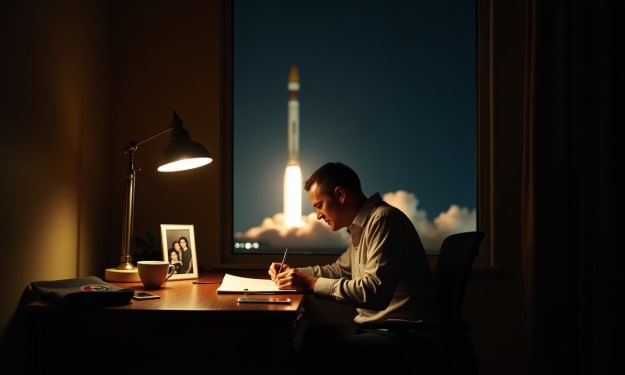
July 15, 1969 — Cape Kennedy, Florida. Neil sat alone in his quarters, the dim light casting long shadows on the plain white walls. Outside the window, the colossal shape of the Saturn V rocket stood against the night sky like a monument to human ambition. Tomorrow, it would carry him farther than any man had ever gone.
By Salah Uddinabout a year ago in History
The Price of the American Dream: What I Learned on July 4th
The Price of the American Dream: What I Learned on July 4th 📖 Story: The Price of the American Dream: What I Learned on July 4th Since I was a child, I had only one wish—to see America on its Independence Day. Not because I wanted money, or to escape, or even for citizenship. It was deeper than that. I grew up in a village where the electricity would often vanish during dinner, where freedom meant not being noticed by the wrong people, and where silence was safer than honesty. But in America… they lit the sky with fireworks to celebrate being free. The First Spark I first saw the fireworks on a cracked YouTube screen in a small internet café. The video was titled: “July 4th Fireworks Over Washington DC – 2020.” The sky exploded with red and gold. People cheered. Kids waved flags. There was music and freedom in the air. That was the moment I made a quiet promise to myself: > “One day, I will see it with my own eyes.” The Journey to a Dream In 2024, I won a U.S. visitor visa through an education program. I had written an essay called “The Meaning of Freedom in My Village.” To my surprise, someone read it—and gave me a chance. On July 2nd, 2024, I stepped off a plane in New York City. My hands shook. And when I saw the American flag waving above JFK airport, I quietly whispered: > “Freedom, I am here.” The Moment I Waited For I stood near the Lincoln Memorial as families gathered, waving flags, smiling. A little girl gave me a mini flag and said, “Happy Fourth!” Then the fireworks began. The sky cracked open. The sound, the colors—it all hit my chest like thunder. My heart swelled with something I had never fully felt before. > Hope. The Shift But then… something changed. A man nearby, in military gear, said into his phone: > “Look at that guy—probably from some terrorist country. Watching us like he’s spying.” He was pointing… at me. People looked at me differently. The girl’s family quietly stepped away. One man gripped his bag tighter. Another whispered something behind me. No one stopped me. But in that moment, I felt completely alone The Realization Back in my room, I sat with the flag the girl gave me and thought deeply. > Freedom is not a show. It’s a struggle. Even in America, people fight—for equality, for justice, for identity. Some welcome you. Some fear you. But everyone is free to choose. That’s what makes it beautiful—and difficult. Thank You, America I stayed two more weeks. I met kind people. Visited libraries and museums. I saw a country that’s not perfect—but still filled with dreamers. > America is not a dream. It is millions of people dreaming differently. Now, when I think of July 4th, I smile—not for the lights, but for what I learned: > Freedom is not given. It is felt. It is fought for. And sometimes feared.
By Ali Asad Ullahabout a year ago in History
“The Fireworks Distraction: What Really Happened on July 4th?”. AI-Generated.
“The Fireworks Distraction: What Really Happened on July 4th?” While the sky lit up in red, white, and blue—something else was happening in the shadows. And no one noticed. ery year on July 4th, Americans look up at the night sky, hearts pounding with patriotism, as fireworks burst across cities and small towns alike. The music swells, children cheer, and families hold their loved ones close. But in 2025, while the nation was distracted by the dazzling lights above… something was happening far below. Something no one was meant to see. It began with a power surge. At exactly 9:04 p.m. Eastern Time, grids in over a dozen U.S. cities flickered—not off, not fully—just enough to register as a blip. Most people blamed the fireworks. The surges were dismissed as routine overloads. But in the hidden layers of the internet, in forums without names and servers without locations, messages began to surface. > “They moved tonight. Behind the show.” No one took it seriously. Until the blackouts started. At 9:27 p.m., three substations in Virginia, Colorado, and California went offline. Then again in Oregon, then Georgia. In total silence. No explosion. No storm. Just gone. The media stayed quiet. Officials blamed “routine maintenance.” But a few journalists, ex-military tech experts, and rogue analysts began connecting the dots. Among them was Emerson Vail, a former cybersecurity operative who once worked for DARPA before vanishing off the map. He had seen these signs before—brief blackouts, timed precisely, used as cover for infrastructure intrusions. And this time, they were happening on Independence Day. A day when no one would be watching the ground. Emerson's encrypted blog post, published under the pseudonym “IronSoul”, began to trend in the dark web: > “This isn’t random. It’s a test. They’re crawling inside the backbone of the country while everyone is too busy looking up.” Most dismissed him as paranoid. But 12 hours later, a freight train carrying classified military hardware derailed in Utah. The cause? A remote signal tampering with the track switches—technology that shouldn’t even exist in the public sphere. And again, no one claimed responsibility. By July 6th, over 32 incidents had been reported across the U.S.—small, targeted attacks on transportation, energy, and communication systems. All subtle. All surgically precise. > The war hadn’t started. It had simply moved into the shadows. Emerson was contacted by Claire Rivas, an independent reporter based out of Detroit, who had been chasing a strange trail of missing security personnel and deactivated government IDs. She had found something even more unsettling—someone was scrubbing digital footprints of key defense contractors. Identities were being deleted. Records vanished. Entire teams were being erased from existence. She met Emerson in a diner lit only by battery-powered lanterns, after yet another mysterious grid failure. He looked older than she expected. Haunted. Like a man who had already lived through the end of the world and never told anyone. “What are they planning?” she asked. He didn't answer. Instead, he slid her a flash drive with one chilling file name: Operation F.L.A.G. Inside the file were redacted plans, but one phrase kept repeating: > “The illusion of celebration masks the rehearsal of collapse.” Emerson believed it wasn’t an enemy country. Not directly. He believed this was the work of a private military syndicate, built on stolen AI and cyber-espionage tools—contracted by powers beyond flags and borders. Their plan? To simulate a domestic collapse, trigger civil panic, and offer “restoration solutions” for a price. But something had gone wrong. The rehearsal had become real. Someone had flipped the switch too early. And America was still watching the fireworks. By July 8th, two nuclear facilities reported unauthorized drone incursions. Communication logs were wiped. Yet no emergency was declared. Claire tried to alert the public, but her live feeds were cut, her accounts suspended. All while patriotic parades replayed on national television. The illusion remained perfect. Until July 9th. That’s when The Silence began. Phones wouldn’t connect. GPS pointed in reverse. Credit cards declined. Major news sites went dark. There was no explosion, no virus—just absence. A carefully coordinated blanking of the digital world. Emerson and Claire disappeared. No one knows where they went. But one final video, recorded and scheduled to upload the moment The Silence started, was found buried on an offshore data node: > “The war has already begun. But it’s not with guns or bombs. It’s with whispers. With shadows. And the Fourth of July was just the curtain call. We celebrated freedom… while it was quietly taken from us.” The video ends with grainy footage of fireworks. Bright, beautiful, and blinding. No one knows who fired the first shot. No one knows who the real enemy is. But one thing is certain: > While the nation looked up… something crawled up from below. --- End
By Ali Asad Ullahabout a year ago in History
The Dragon's Legacy
China, one of the world's oldest civilizations, boasts a history that stretches back over 5,000 years. From the mystical days of emperors and dynasties to its current status as a global superpower, China’s journey is a tale of resilience, innovation, and transformation. The nation’s vast history is marked by the rise and fall of great dynasties, groundbreaking inventions, philosophical revolutions, foreign invasions, and a dramatic modernization that reshaped the global political and economic landscape.
By NIAZ Muhammadabout a year ago in History
The Lion of Samarkand
In the dust-laden plains of 14th-century Central Asia, amidst tribal warfare and the crumbling remnants of the Mongol Empire, a boy was born in the city of Kesh — a town not far from the legendary city of Samarkand. His name was Timur, later known to the world as Tamerlane. Born into the Barlas tribe, Timur would rise from humble beginnings to carve an empire that stretched from Delhi to Damascus and shook the foundations of the known world.
By NIAZ Muhammadabout a year ago in History
Heracleion: Egypt's Sunken Secret: The City the Gods Forgot
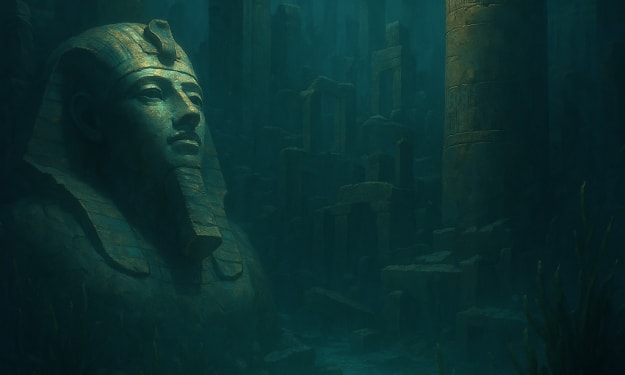
Beneath the Waves, a City Sleeps Located off the coast of modern-day Alexandria, at the meeting point of the Mediterranean's azure waters and the northern edge of Egypt, lies a forgotten city. Sunken beneath the waves for over a thousand years, Heracleion, known as Thonis by the Egyptians, was once a gleaming jewel of ancient power, wealth, and divine mystery.
By The Secret History Of The Worldabout a year ago in History
The Girl Who Burned Time
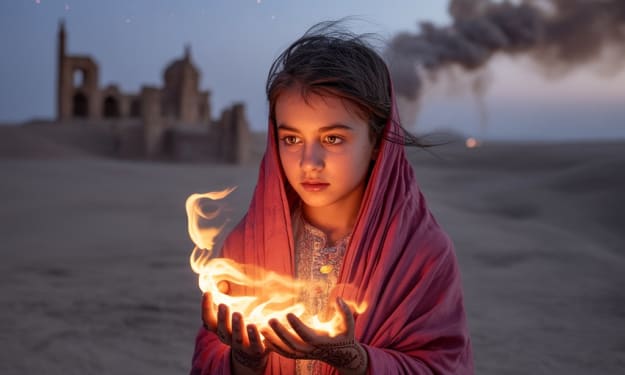
In the saffron-tinted sands of 13th-century Persia, where stories traveled faster than caravans and truths were tucked between silk scrolls and scented oil, there lived a girl named Laleh. She was born on a red moon night, when even the stars seemed to bleed. Her mother died during childbirth, and her father—Ali, the village scribe—wrapped her in old parchment instead of linen. “She came from ink,” the villagers whispered, “not flesh.” But there was more to Laleh than whispers and shadows. By the age of eight, Laleh could recall the tiniest detail of every day she had ever lived. The way the carpet frayed in the corner of her father’s writing room. The taste of fig and ash from the day the well collapsed. The exact words a traveling poet had used to describe her eyes: like dusk remembering dawn. She never forgot. And then, one morning, she touched her father’s old oil lamp—and it burst into flames. Ali had seen many things. Wars. Famines. The arrival of Mongol rumors like black wind across the steppes. But he had never seen fire bloom from memory. They experimented. When Laleh remembered her mother’s lullaby, flames rose blue and soft. When she remembered fear—like the time she almost drowned—sparks danced dangerously around her fingertips. “I think your memories are made of fire,” her father whispered. “But why?” she asked. He didn’t have the answer. But the desert did. They traveled east, toward the ruined Zoroastrian temples beyond the Dasht-e Kavir. There, among forgotten stone and the scent of burning dates, Laleh met a woman who called herself Zahira the Keeper. “I know what you are,” Zahira said. “You are a Vaqt-sor, a Time-Burner. There were once many of your kind—born once in an age, always daughters of memory.” “What do we do?” Laleh asked, her voice barely a whisper. “You don’t do anything,” Zahira said. “You undo.” Zahira taught her the language of fire and time. “Every memory holds heat,” she said. “But some are colder—distant, faded. Others are burning, painful, raw. If you pull the right string of memory with enough focus, you can change its temperature—and change time itself.” Laleh didn’t believe her. Until she tried. She remembered the day the village well collapsed, taking a young boy named Reza with it. His face still haunted her, dirt-streaked and wide-eyed. She pulled the memory close, focused her breathing, and let the heat grow. Flames coiled in her palms. And then, it was gone. Not the memory. The event. When they returned to the village a week later, the well stood tall and full. Reza was alive. No one remembered the tragedy. Except Laleh. With each act of burning time, she grew stronger—but also lonelier. People called her blessed. Then cursed. Then dangerous. Her father aged quickly, shadows gathering in his eyes. “Careful, my daughter,” he would whisper, “History has sharp teeth. If you bite it, it will bite back.” But Laleh burned on. She saved families from fires they never knew they were in. Prevented the death of a young scholar whose ideas would one day shape medicine. Erased a drought from the records by bringing back one stolen cloud. She walked the blade of fate like a dancer in a sandstorm. Then came the war. The Mongols. They poured over the mountains like a plague of thunder, burning cities, silencing scholars, toppling minarets. Laleh knew she had to act. She climbed to the ancient Zoroastrian fire temple—now little more than stone teeth jutting from the sand. There, she prepared to burn her greatest memory: the invasion itself. Zahira appeared, eyes full of warning. “You don’t understand,” she said. “This memory is not yours alone. The more people who remember an event, the more rooted it becomes in time.” “I don’t care,” Laleh said. “If I can save a thousand lives—” “You could tear the fabric of now,” Zahira warned. “You might unravel the present entirely.” Laleh looked at the flame in her palm—bright, trembling, waiting. She closed her eyes. And remembered She remembered the riders. The screaming. The smell of charred parchment and blood. The children hiding beneath their dead mothers. Her father’s lifeless eyes. The fire grew wild. Time twisted. When she opened her eyes, the world had changed. No temples. No Persia. No Mongols. She stood in a strange place—a land of glass and wires, noise and metal. A city unlike any she had imagined, with lights instead of stars and people who moved like they were always late. A man bumped into her. “Hey, watch it,” he said, then glanced at her clothes. “You in cosplay or something?” She stood silent, heart racing. The world had moved on without her. In the heart of this new world, Laleh found a library. Not of scrolls, but of screens and glowing words. She searched for history. No mention of the Mongol invasion. No record of 13th-century Persia. The names, the poems, the temples—they were gone. Not replaced. Forgotten. She had burned too deeply. And in doing so, she had erased the soul of a civilization. Now, she walks the edge of modern life—unseen, unknown. A girl with fire in her hands and centuries in her blood. She doesn’t try to change time anymore. But sometimes, when the wind is right, she lights a candle and whispers the names of people who once were. Reza. Zahira. Ali. They may not be remembered by this new world. But they are not lost. Not while she remembers. Not while she burns. Author’s Note: History is a fire—too much of it, and we’re consumed. Too little, and we freeze in ignorance. But for one girl, fire was both the gift and the price of memory.
By Atta Ullahabout a year ago in History
The Eternal Flame of Persia
Iran, once known as Persia, is a land where the sands of time whisper tales of ancient empires, divine kings, poets, and revolutions. Its history spans over 2,500 years, marking it as one of the oldest continuous civilizations in the world. This is the story of a nation that has risen, fallen, and risen again—an eternal flame burning bright through centuries of glory, invasion, and transformation.
By NIAZ Muhammadabout a year ago in History
The Civilization of the Ottoman Turks: A Legacy of Courtesy, Wisdom, and Deep Spiritual Values
Throughout history, few civilizations have preserved a legacy as refined and spiritually grounded as that of the Ottoman Turks. Emerging from modest beginnings and growing into one of the most powerful empires the world has ever seen, the Ottomans left behind not just tales of conquest, but also rich traditions rooted in manners, respect, and subtle intelligence. Their daily lives, community practices, and hospitality customs paint a portrait of a people who lived with purpose, imbued with values of dignity, humility, and emotional intelligence. Let us journey into the cultural soul of the Ottomans—a civilization where every gesture had meaning, and every action reflected wisdom. --- Hospitality: A Silent Language of the Heart Hospitality in Ottoman culture wasn’t merely about offering food or drink—it was a deeply symbolic interaction, a respectful dialogue between host and guest without words. When a guest arrived at an Ottoman home, they were offered two simple things: a cup of Turkish coffee (qahwa) and a glass of plain water. If the guest reached for the water, the host would immediately understand that the visitor might be hungry, and without asking or embarrassing the guest, they would begin preparing a meal—often their finest, even if they had little themselves. However, if the guest chose coffee, it was understood they were there just for conversation and did not wish to eat, allowing the host to continue the visit in a lighter, more social tone. This silent understanding showcased not only hospitality but also respect for the dignity and unspoken needs of others. --- Floral Symbols: Messages Without Words Ottomans used flowers as a subtle language outside their homes, offering passersby unspoken but powerful messages. A yellow flower placed outside the home signaled that someone in the house was ill. This gentle indicator advised visitors to speak softly, avoid noise, and, if appropriate, come in to inquire about the patient's health. A red flower suggested that there was a young woman of marriageable age in the home. It was a community-based warning to avoid inappropriate or vulgar language near the house. It was also a welcome signal for those who intended to propose marriage—an invitation to knock respectfully. These flower signs reflect the social responsibility and moral boundaries that governed Ottoman neighborhoods. There was no need for confrontation, no boards or notices—civility was coded into aesthetics. --- The Double Door Hammer: Gender Sensitivity Another beautiful and thoughtful tradition was the use of two hammers or knockers on the doors of Ottoman homes: One was larger and heavier, meant to be used by men. The other was smaller and lighter, designated for women. When a man knocked using the large hammer, a male member of the household would come to answer. If the smaller hammer was used, it signaled a female visitor, prompting a woman from the household to attend the door. Such practices weren’t just cultural quirks—they showed a profound respect for modesty, boundaries, and gender ethics in the public and private spheres of life. --- Charity with Dignity: Anonymous Giving Perhaps one of the most awe-inspiring aspects of Ottoman culture was the way they handled charity. Giving was not for show, recognition, or public praise—it was quiet, respectful, and anonymous. Wealthy individuals would go to local vendors—such as vegetable sellers or grocers—and open anonymous tabs (accounts). These tabs were meant to cover the costs of food or supplies for any poor person who came in need. When a poor person arrived to buy something, the shopkeeper would provide the items free of charge, telling them nothing of the benefactor. The giver never met the receiver. The dignity of the poor was preserved, and the reward was left entirely to Allah. Later, the wealthy individual would return quietly and clear the tab, expecting nothing but the satisfaction of helping a fellow human being. This practice is a testament to the Ottoman spirit of silent service—a value deeply embedded in Islamic teachings. --- Adab with the Prophet (PBUH): A Unique Expression of Love The Ottomans were not just polite—they were spiritually refined. One such example is how they treated the age of the Prophet Muhammad ﷺ. The Prophet (peace be upon him) passed away at the age of 63. Among devout Ottoman Turks, if an elderly person had surpassed this age and was asked how old they were, they would not say “I am 65 or 70.” Instead, they would reply: > “Son, I have crossed the limit.” This was not out of superstition but out of deep reverence and spiritual love for the Prophet ﷺ. They felt it inappropriate or audacious to say they had lived longer than the Messenger of Allah. Such subtleties reveal the depth of Ottoman adab (etiquette)—a love that shaped their language, actions, and worldview. --- The Reason Behind Ottoman Decline: A Loss of Values For centuries, the Ottoman Empire stood as a beacon of Islamic civilization, a model of balanced power, religious freedom, intellectual progress, and moral living. So what led to its fall? According to many historians and cultural observers, the empire did not collapse due to lack of might but due to internal betrayal, loss of spiritual values, and Western conspiracies that targeted the Ottoman identity. As their traditions of generosity, modesty, and spiritual discipline eroded, so did the strength of their unity. Greed, political manipulation, and abandonment of their own cultural wisdom opened the doors for the empire’s eventual fragmentation. --- What We Can Learn Today The lessons from Ottoman civilization are not confined to history books. They remain relevant today in a world that is often rushing, indifferent, and transactional. When we offer a guest water or tea, we can remember their method of listening with the heart, not the ears. When we give in charity, let us give with dignity, not display. When we speak of modesty and social respect, we can adopt symbolic, gentle ways rather than aggressive or legalistic ones. When we reflect on our Prophet ﷺ, we can ask whether we love him with such sensitivity and manners as the Ottomans did. --- Conclusion: A Civilization Built on Wisdom The Ottoman Turks left behind a civilizational blueprint where values were lived, not just preached. Their culture reminds us that true greatness lies not only in power or architecture, but in the way a society treats its guests, respects its women, protects its poor, and honors its prophets. In an age where modern life often celebrates speed, fame, and self-promotion, the Ottoman legacy calls us back to simplicity, meaning, and sincerity—a beautiful tale of literature, love, and light that the world should never forget.
By Ikram Ullahabout a year ago in History
Fossils show how the Caribbean reef ecosystems were drastically altered by humans.
We frequently envision dinosaurs when we think of fossils. However, reefs can also have a long history. In these environments, tiny fish bones and shark scales also turn into fossils, subtly telling the tale of past seas.
By Francis Damiabout a year ago in History