Discoveries
The Isdal Woman Mystery
Imagine stumbling upon an unsolved mystery so perplexing, it keeps you up at night, wondering who the person behind it really was. The Isdal Woman’s story is just that—an eerie, mysterious case that has baffled investigators and intrigued true crime enthusiasts for decades. Her death in 1970 in Norway’s Isdalen Valley remains one of the most chilling cold cases in the history of true crime. From cryptic messages to an unidentified body, every piece of the puzzle seems to point to more questions than answers.
By Marveline Merab2 years ago in History
Why Is Thanksgiving Celebrated Today?
The modern celebration of Thanksgiving Day, with its huge feasts and family gatherings, has been shaped by history and tradition. While it may be a national holiday here in the United States today, it's ironic that this holiday often transcends far beyond the creators of this original movement. No longer about turkey or pumpkin pie, it is about the connections we share and can step back, reflect, and give thanks for the blessings in our lives. Today, Thanksgiving has become an excuse for bonding, giving thanks to people, and enjoying each other's company. With time, it changes, but the truth is that the heart of Thanksgiving remains very much rooted in appreciation.
By The Leather Jackets2 years ago in History
Unearthing the Past: Ancient Artifacts Uncovered in Canada's Melting Ice at Mount Edziza
The rugged and remote terrain of Mount Edziza Provincial Park, nestled within Canada’s wilderness, has been known for its stunning volcanic landscapes and profound cultural significance to the Tahltan people. Yet, as climate change accelerates ice melt in this beautiful region, something else has emerged—a collection of extraordinary artifacts that are over 7,000 years old, offering us a rare glimpse into ancient North American civilizations. In the summer of 2019, after two particularly mild winters, researchers took to the ice patches of Mount Edziza with the hope of unearthing remnants of early life preserved in the frozen ground. Their efforts were rewarded when they discovered 56 well-preserved artifacts, casting a light on the resilience and craftsmanship of the people who inhabited these lands millennia ago. Mount Edziza: A Place of Beauty and Cultural Significance Mount Edziza Provincial Park is not only an awe-inspiring destination, with its volcanic ridges, glaciers, and sprawling tundra; it’s also a region deeply woven into the history of the Tahltan, an Indigenous First Nation in British Columbia. For centuries, the Tahltan have lived near the Edziza volcanic field, using the area for seasonal hunting and gathering while forging a close relationship with the land. Even today, the Tahltan people maintain these traditions, honoring their heritage and their connection to this powerful landscape. Historical excavations in Mount Edziza have previously uncovered obsidian quarries and tools made from this glass-like volcanic rock. Obsidian was highly valued by early civilizations for its sharpness and durability, making it ideal for crafting tools and weapons. This valuable resource was traded widely, spreading throughout the region and connecting distant communities. However, while obsidian quarries were well-documented, the nearby ice patches had largely gone unexplored until the summer of 2019, when the conditions finally allowed archaeologists to take a closer look. The Discovery: Artifacts Frozen in Time The artifacts discovered in Mount Edziza’s ice patches provide an unprecedented view of ancient life in a region where few remnants of organic material had survived. Ice, as it turns out, is an exceptional preserver, and as it melted, it revealed organic items that would otherwise have decayed long ago. These 7,000-year-old relics include birch bark containers, projectile shafts, walking staffs, and even a beautifully stitched hide boot. Unlike stone or metal tools, which endure the elements well, these perishable artifacts tell us more about the day-to-day lives, technological advancements, and spiritual practices of early cultures in the region. Among the most intriguing finds were the birch bark containers, which were likely used to store food, water, or medicinal plants. Birch bark has natural antibacterial properties, making it a practical material for long-term storage in a world without refrigeration. The walking staffs and projectile shafts, fashioned from local wood, suggest that mobility and hunting were integral to life in this region, where traversing rugged terrain and tracking game demanded sturdy and reliable tools. Other artifacts, like the hide boot and carved antler tools, offer a closer look at the craftsmanship and resourcefulness of these early peoples. The boot, crafted from animal hide and stitched with precision, underscores the importance of durable clothing in an environment where protection against the elements was essential for survival. Similarly, the carved antler and bone tools highlight how ancient people utilized every available resource, transforming materials from hunted animals into practical implements. The Archaeological Significance: A Window into Ancient Culture The discovery of these artifacts is a remarkable archaeological milestone, revealing not only the survival skills and ingenuity of early North American societies but also their intimate connection to the natural world. The methods of crafting, hunting, and preserving food that are evident from these findings paint a vivid picture of a culture that valued sustainability, using materials from the land in ways that were resourceful, purposeful, and mindful of their environment. In addition to their functional purpose, these items may also offer insight into spiritual practices and communal rituals. Ancient peoples often incorporated symbolism into their belongings, infusing items with meaning that went beyond practical use. Carved bone tools, for example, might have held ceremonial significance, serving as objects for rituals or marking important events within their communities. Moreover, these discoveries affirm the enduring connection between the Tahltan people and Mount Edziza. The artifacts found in the ice highlight a tradition of seasonal hunting and gathering that the Tahltan have upheld for thousands of years. Even today, members of the Tahltan Nation continue to carry out these traditions, bridging the past and present in a place that has witnessed the changing tides of history. For the Tahltan, these artifacts are more than historical objects—they are cultural legacies, emblematic of their ancestors’ resilience and ingenuity. Climate Change and the Melting Ice: Preserving the Past for the Future While these findings provide a rare opportunity to explore the past, they also underscore the realities of climate change. The melting ice that revealed these treasures is part of a larger, troubling trend. As temperatures rise, ancient ice patches, glaciers, and permafrost layers around the world are receding, exposing artifacts that have been hidden for millennia. But with this exposure comes a risk: as artifacts thaw, they begin to deteriorate, making it imperative for archaeologists to act quickly in order to preserve them. The findings from Mount Edziza highlight the need for further research and conservation efforts, not only to study these artifacts but to protect them for future generations. This discovery is a reminder of how climate change is rewriting the archaeological record, pushing scientists to examine and document artifacts that are now at risk of being lost forever. Conclusion: A Legacy of Resilience and Connection The artifacts found in Mount Edziza’s melting ice offer a window into an ancient world, revealing the lives, skills, and cultural practices of early North American societies. Through these items, we can begin to understand the depth of human connection to the land and the resilience that has characterized life in this challenging environment for thousands of years. For the Tahltan, these discoveries affirm an enduring relationship with the Edziza landscape, honoring the memory of their ancestors who walked the same paths and relied on the same natural resources. As we continue to uncover these remnants of our shared past, it’s essential to recognize the fragile nature of such findings. These artifacts are both treasures of history and symbols of ongoing traditions, reminders of a time when people lived in harmony with the land. They encourage us to learn from the past while looking to the future, working to preserve both our environment and the cultural legacies it holds within its depths.
By Deji Akomolafe2 years ago in History
The Forgotten Eighth Continent: Tales of Kumari Kandam
Kumari Kandam: The Absent Abstemious of Legend Kumari Kandam, generally referred to as the “lost abstemious of the Indian Ocean,” has absorbed scholars, mythologists, and cultural enthusiasts for generations. This allegorical landmass is said to accept already existed south of abreast India and was home to a affluent and avant-garde Tamil acculturation afore actuality swallowed by the ocean bags of years ago. While there is no accurate affirmation to abutment its existence, the adventure of Kumari Kandam holds cogent cultural and actual importance, decidedly aural the Tamil community.
By Say the truth 2 years ago in History
An Accidental Journey Back in Time: The Discovery of a 3,400-Year-Old Minoan Tomb in Crete
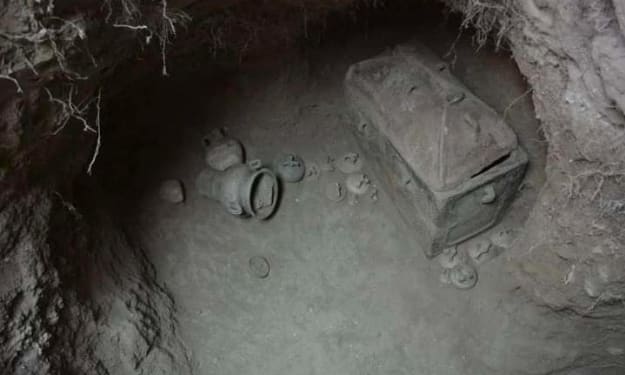
In the summer of 2018, an unexpected discovery in the quiet olive groves of Rousses, Crete, provided a remarkable window into the ancient world of the Minoans. A local farmer, seeking a shaded spot beneath the thick canopy of his olive trees, parked his vehicle as he had done countless times before. But this day was different. As he pulled in, the ground beneath gave way, revealing a gaping 1.2-meter (4-foot) hole. Below, a dark, undisturbed void awaited—a Minoan tomb untouched by human hands for over 3,400 years. This discovery, made by sheer accident, captures the imagination not only because of its historical significance but also due to its incredible preservation. Within the tomb lay insights into the life and customs of a civilization that flourished long before many of the empires of the ancient world. For archaeologists, it was a rare and invaluable find; for the rest of us, a glimpse into the mysteries of a society that still holds endless intrigue. A Glimpse Into the Minoan Civilization The Minoans were one of the earliest advanced civilizations in Europe, thriving on Crete and the surrounding Aegean islands from approximately 3000 BCE to 1450 BCE. Known for their impressive palaces, art, and trade networks, the Minoans played a significant role in shaping the early Mediterranean world. Their achievements in architecture, craftsmanship, and trade were remarkably advanced for their time, marking them as a highly sophisticated society. Minoan civilization is often symbolized by the grand palace at Knossos, intricate frescoes, and an economy that thrived through maritime trade. Yet, much of Minoan culture remains enigmatic. Their language, Linear A, has yet to be deciphered, and much of what we know about them comes from archaeological discoveries. The chance discovery of an intact tomb in Rousses offered a fresh, untouched perspective on the everyday life, customs, and beliefs of this ancient civilization. The Tomb of Rousses: A Portal to the Past Upon further investigation, archaeologists found that the tomb was a small, intact burial chamber measuring around 4 square meters. It was meticulously designed, a testament to the care and reverence the Minoans had for their dead. The tomb contained a few chambers where the remains of two adult males lay, along with their burial artifacts. These artifacts were of particular interest, as they were mostly untouched by grave robbers or the wear of time. They remained as they had been left thousands of years ago, an almost pristine window into Minoan funerary practices. Inside the tomb, archaeologists discovered pottery, jewelry, and bronze artifacts. The pottery found included ornate drinking cups and storage vessels, likely used in rituals or symbolic offerings to accompany the deceased into the afterlife. These items provide a glimpse into Minoan craftsmanship and the ritualistic practices they likely engaged in as part of their burial customs. The jewelry, which included intricately crafted beads and metal items, highlighted the Minoans' attention to detail and their ability to work with a range of materials. An Undisturbed Treasure Trove The Rousses tomb is remarkable not only because of its age but because it remained undisturbed. Over thousands of years, Crete has seen numerous civilizations come and go, from the ancient Greeks and Romans to the Venetians and Ottomans. As a result, tombs and ancient artifacts were often disturbed, plundered, or lost to history. The tomb in Rousses, however, remained sealed and protected beneath the earth. Its pristine condition has allowed archaeologists to study the items within as they were originally placed, offering a rare, authentic view of Minoan life and death. One of the most fascinating aspects of this discovery is the potential to glean insights into Minoan beliefs about the afterlife. The placement of the artifacts, the arrangement of the bodies, and the types of items included in the burial chamber all suggest a belief in an existence beyond death, one in which possessions might play a role. This discovery aligns with other Minoan tombs that have revealed similar artifacts, yet the undisturbed nature of the Rousses tomb makes it a unique case study. The Significance of Accidental Discoveries in Archaeology While many archaeological finds result from planned excavations, some of the most exciting discoveries happen by accident, as with the Rousses tomb. Farmers, construction workers, and even casual hikers have occasionally uncovered hidden treasures buried beneath the landscape. These serendipitous discoveries remind us of the richness of the ancient world lying just below the surface, waiting to be uncovered. Such finds are vital because they bring attention to the significance of preserving archaeological sites. With modern construction and development encroaching on areas rich in historical significance, the preservation of these sites becomes all the more urgent. Accidental discoveries like the Rousses tomb serve as poignant reminders of the past, urging communities and governments to prioritize historical preservation. A Legacy Unearthed The Rousses tomb is now part of Crete’s proud heritage, an echo of a civilization that has continued to fascinate and inspire scholars and the public alike. For the local community, the discovery has added a new chapter to their landscape, connecting them more deeply to Crete’s long and storied past. For historians and archaeologists, the tomb is a valuable link to the Minoan way of life, one that promises to shed further light on the people, customs, and beliefs of ancient Crete. Today, the Minoan tomb in Rousses stands as a testament to the endurance of human history. Sealed beneath the shade of olive trees for millennia, it awaited rediscovery, and now, it offers fresh insights into a lost world. This discovery underlines the mystery and beauty of archaeology, reminding us that even the simplest of actions, like parking a car, can lead to revelations that reshape our understanding of history.
By Deji Akomolafe2 years ago in History
A Hidden Gem: The Accidental Discovery of 14th-Century Heritage in a House in Úbeda, Spain
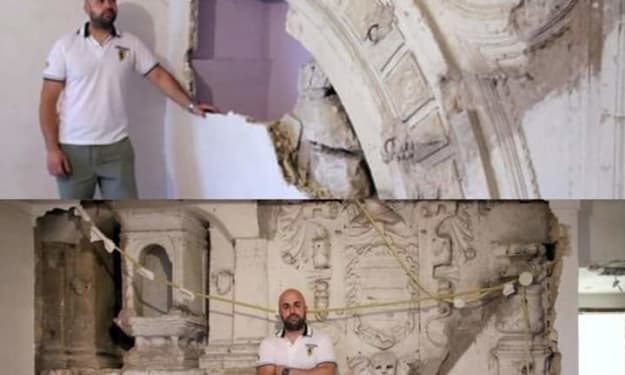
In the historic town of Úbeda, Spain, a remarkable discovery in 2016 captivated historians, architects, and art enthusiasts alike. Juan Francisco, a local resident, embarked on a routine renovation of his home, only to stumble upon a priceless piece of Renaissance heritage hidden for centuries. Behind an unassuming wall in his home lay an exquisitely preserved bas-relief that turned out to be the facade of St. George’s Hospital, a 14th-century structure with profound historical significance. This unexpected find revealed an architectural masterpiece, a long-forgotten work by the famed Spanish architect Andrés de Vandelvira, whose influence on Renaissance architecture is etched into the cityscapes of Úbeda and neighboring Baeza. The facade found in Juan’s home has since earned its rightful place in the UNESCO World Heritage List, reminding us of the rich layers of history concealed within the walls of ancient cities. The Renovation That Unveiled a Renaissance Treasure Juan Francisco’s discovery began innocently enough. His plans to overhaul his property in 2016 were typical for any homeowner looking to modernize an old house. However, shortly into the process, he decided to remove a seemingly ordinary wall. When the wall came down, it revealed something truly extraordinary—a detailed bas-relief of Renaissance origin that hinted at a much larger architectural story beneath the surface. The ornate carvings and intricate craftsmanship were immediately identifiable as something far beyond typical home decor, pointing to an era when art and architecture were expressions of cultural grandeur. The Lost Facade of St. George’s Hospital What Juan had uncovered was none other than the hidden facade of St. George’s Hospital, an establishment dating back to the 14th century. St. George’s Hospital was built in an era when Úbeda was flourishing, a time when the city was an important cultural and architectural center in Andalusia. Constructed as a hospital, the building served both practical and social purposes, embodying the charitable spirit and artistic sophistication of its time. Over the centuries, however, parts of the structure fell into disuse, eventually being built over and lost to memory. The discovery in Juan Francisco’s home resurrected this important piece of history. The facade, with its elaborate designs and Renaissance-inspired motifs, speaks to a time when architecture in Spain was undergoing a significant transformation. Úbeda and nearby Baeza, cities known for their Renaissance heritage, were centers of this architectural evolution. The re-emergence of St. George’s Hospital facade provides a tangible connection to the era’s vision and skill, illuminating how art and utility intertwined in public and private spaces alike. The Master Behind the Facade: Andrés de Vandelvira Upon closer examination, it was confirmed that the facade was the work of Andrés de Vandelvira, a master architect and one of the most influential figures in Spanish Renaissance architecture. Vandelvira’s work has left an indelible mark on the cities of Úbeda and Baeza, transforming them into icons of Renaissance architecture. Known for his innovative designs and refined style, Vandelvira contributed significantly to the region’s architectural identity. His work on religious and civic buildings, often characterized by harmony, balance, and meticulous attention to detail, helped shape the aesthetic of Renaissance Andalusia. Finding Vandelvira’s work hidden within a modern residence was a stunning reminder of the depth and resilience of history. The facade’s design, featuring graceful arches, carved stonework, and detailed motifs, reflects Vandelvira’s mastery and his ability to blend elegance with structural strength. The discovery not only showcases his skill but also provides insight into the architectural priorities of the period—an emphasis on beauty, symmetry, and the use of art as a means to uplift the community. The Significance of the UNESCO World Heritage Designation Following its discovery, the facade in Juan Francisco’s home was quickly recognized for its historical and cultural value and was added to the UNESCO World Heritage List. This inclusion is a testament to the importance of preserving such finds, as it protects not only the physical remnants of history but also the intangible heritage they represent. Being part of the World Heritage List means that the facade is now safeguarded for future generations, a valuable reminder of the cultural exchanges and artistic achievements of Renaissance Spain. UNESCO’s recognition also shines a spotlight on Úbeda’s significance as a center of Renaissance art and architecture. This discovery is part of a larger story, one where the towns of Úbeda and Baeza are celebrated for their contributions to the Renaissance architectural movement outside of Italy. The facade of St. George’s Hospital stands as a symbol of Úbeda’s past glory and its enduring legacy as a cradle of Spanish Renaissance culture. A Community's Rediscovered Heritage Juan Francisco’s discovery has sparked a renewed appreciation for the architectural heritage hidden within Úbeda’s historic neighborhoods. The story serves as a reminder that these ancient cities hold secrets waiting to be uncovered, and even the most ordinary spaces can house extraordinary history. The discovery of the facade has prompted interest among locals and tourists alike, turning Juan’s home into an informal museum of sorts and enriching the cultural fabric of the community. The uncovering of St. George’s Hospital’s facade is not just an architectural revelation but a source of pride for the residents of Úbeda. It highlights the lasting impact of the Renaissance period on Spain’s cultural heritage and underscores the importance of preserving and honoring historical sites. Conclusion The accidental discovery in Juan Francisco’s home is a compelling example of how history can surprise us, hiding in the most unexpected places. The rediscovery of St. George’s Hospital’s facade brings the Renaissance spirit back to life in Úbeda, connecting the present with the past in a tangible, beautiful way. As the 14th-century facade stands proudly once more, it reminds us of the richness of human creativity and the enduring power of architectural heritage. Thanks to Juan’s renovation project, a piece of Úbeda’s soul has been unearthed, offering the world yet another reason to cherish the artistic achievements of the Renaissance era.
By Deji Akomolafe2 years ago in History
No Time for Sorrow
Mara was a medical caretaker — a title she'd worn proudly once. Be that as it may, presently, she felt more like a scrounger. Supplies were waning, and she expected to return food and medication once again to the facility. She lacked the opportunity and energy to contemplate the companions she'd lost, or the patients she wasn't ready to save. There was no time for anguish. Consistently spent grieving was a second squandered, and in circumstances such as these, seconds could mean endurance. She rushed through the vacant roads, her heart beating as she dodged into the back streets, staying away from watches. Each corner brought another risk, each shadow could conceal somebody standing by to snare her. Mara's brain was well-honed, working out each move. She didn't permit herself to choose not to move on, to ponder the countenances she'd once known or the recollections she'd appreciated. They were covered now, locked away in some piece of her brain that she was unable to bear to get to. Not at present. As she approached the center, Mara saw a young man, no more seasoned than twelve, sitting by a heap of rubble. His face was smeared with soil, and his eyes were empty, empty such that somebody who had seen a lot of it could be. Mara felt an ache in her chest, a glimmer of sympathy she hadn't permitted herself to feel in weeks. She realized she ought to continue to move — her provisions were required back at the facility — however, something made her interruption. The kid didn't gaze upward as she drew nearer; he was gazing at his hands, which gripped a little, messy toy — a reminder of a day-to-day existence before the conflict. She hunched next to him, delicately putting a hand on his shoulder. "Are you alone?" she asked delicately. The kid gazed upward, and briefly, Mara saw the profundity of his anguish. His lips shuddered, however, he gestured. She didn't have to inquire as to whether he had family. She knew the response as of now; she had seen that look too often. The inclination to help him was overpowering. In any case, Mara's brain was at battle with her heart. She didn't have the assets to take on someone else, particularly not a youngster who might require security. The center was at that point packed, and every patient was barely surviving. She was unable to allow herself to be answerable for another life. Not when so many others were relying upon her. "I… I don't have any place to go," the kid said, his voice scarcely over a murmur. Mara gulped, the contention seething inside her. The consistent piece of her brain shouted that she was unable to take him with her. Yet, something more profound, something more human, overwhelmed that rationale. "Accompany me," she said at last, realizing that this choice could cost her and others. "I'll take you someplace safe." The kid didn't grin or say thanks to her; he essentially gestured, like he'd lost the capacity to expect much else. Together, they advanced back to the center. Mara kept a tight hang on his hand, her faculties increased. She examined the roads, alert for any indication of risk. The facility was concealed in the cellar of an old emergency clinic building. It was dull, cold, and squeezed, yet it was a shelter. Inside, volunteers moved discreetly, keeping an eye on the injured and the debilitated. The space was loaded up with the aroma of germ-killers and the low mumbles of patients. Mara directed the kid to a corner where an improvised bed lay. She gave him a little slice of bread and a taste of water, the main arrangements she could save. As she went to leave, the kid got her hand. "Will… will you return?" Mara faltered, feeling a peculiar feeling of obligation for him. "I'll be here," she guaranteed, however, she couldn't say whether it was a commitment she could keep. In this world, conviction was an extravagance she was unable to bear. The hours obscured into one another. Mara treated injuries, watched out for fevers, and held the hands of those whose time was getting ceaselessly. She lacked the opportunity and energy to think, process, or lament. The essence of the withering tormented her, however she constrained herself to keep on track. Every life was a sign of why she was unable to permit herself to feel. Sorrow would just dial her back, and she was unable to bear the cost of that. Days passed, and the kid remained close by, helping in little ways — getting water, consoling more youthful youngsters, and figuring out how to change basic dressings. Mara could see the versatility working in him, and in some little way, it gave her expectations. Perhaps, she thought, they could endure this together. In any case, she held her feelings under tight restraints, reluctant to allow herself to become connected. Each bond was a potential injury, another misfortune in the works. One night, as Mara was keeping an eye on a patient, she heard a stunning blast close by. The walls shook, dust tumbling from the roof. The patients and volunteers crouched together, dread obvious in their eyes. Mara's heartbeat, and without precedent for months, she felt genuine fear. She looked around, looking for the kid, yet he was no place to be seen. Alarm flooded inside her. Disregarding her security, she darted into the passage, calling out to him. She went through the hallways, her psyche dashing. She had sworn not to mind, not to give anybody access, but rather she understood, at that time, that she had fizzled. She minded profoundly, and the prospect of losing him tore at her heart. At last, she found him close to the entry, assisting a harmed man with limping to somewhere safe and secure. Alleviation washed over her, and she maneuvered him into her arms, holding him firmly. "Never run off that way," she murmured, her voice stifled with feeling. The kid saw her, shock in his eyes. "I thought… I figured you couldn't have cared less." Mara dealt with a powerless grin. "I lack opportunity and willpower to mind," she expressed, attempting to conceal reality, however, the untruth felt empty. The conflict had stripped her of numerous things, however, it hadn't taken her mankind. Not totally. She understood, with a combination of trouble and acknowledgment, that regardless of how enthusiastically she attempted, she was unable to protect herself from pain or love. It was essential for what her identity was, a section she couldn't just stop. The days became hazier, and the difficulties just increased. Yet, Mara and the kid confronted them together, tracking down comfort in one another's presence. They figured out how to track down little snapshots of satisfaction amid the bedlam, and in those minutes, Mara permitted herself to trust. She realized the street ahead would be hard, yet she additionally knew that, as long as they had one another, they would continue to push ahead. There was no time for melancholy, yet maybe, quite possibly, there was the ideal opportunity for trust.
By Hridoy Hasan2 years ago in History
The Brazen Bull
When we think of historical punishments, we may imagine something brutal, like beheading or whipping. But among the many ways societies have meted out cruelty, the ancient Greek invention known as the brazen bull stands out as one of the most horrifying devices ever imagined. Designed not just to execute but to inflict maximum psychological and physical agony, the brazen bull’s gruesome history has echoed through the ages, leaving us in awe of the cruelty humans are capable of—and of how far society has evolved since.
By Horace Wasmore2 years ago in History
The Sweet Story of Oreos
A Sweet Beginning It’s hard to imagine a world without Oreos. For over a century, they’ve been America’s favorite cookie, an icon of dessert culture, and a treat that spans generations and borders. But few know the intricate and fascinating history of how the Oreo was born, the competition that drove its innovation, and the changes it’s undergone over the years to become what it is today. Join us as we dip into the history of the Oreo and discover how a simple cookie became a global phenomenon.
By Bob Madden2 years ago in History
Ahsan Manzil: The Pink Palace of Dhaka's Glorious Past
Ahsan Manzil, known as the "Pink Palace," is a famous and historic site in Dhaka, Bangladesh. It is situated by the Buriganga River in the city’s older area. This grand building not only showcases impressive architecture but also has a rich history, representing the wealth of the Nawab family who lived there in the 19th and early 20th centuries. Built in 1872 by Nawab Abdul Ghani, a key figure in Bengal’s elite society, Ahsan Manzil was the official home of the Nawabs, who were important leaders during British rule. Its design combines Indo-Saracenic and European styles, highlighting the Nawabs' affluence and the cultural exchanges happening in Bengal at that time.
By Md Mostafizur Rahman2 years ago in History
"Shadows and Reflections: The Myth of the Black Taj Mahal Across the Yamuna"
The Fable of the Atramentous Taj Mahal: Fact or Fiction? The Taj Mahal, an unparalleled attribute of love, stands as a marble curiosity forth the Yamuna River in Agra, India. Commissioned by the Mughal emperor Shah Jahan in anamnesis of his admired wife Mumtaz Mahal, this catacomb is accepted common for its beauty, symmetry, and intricate craftsmanship. Yet abaft its aboriginal white domes lies a arresting abstruseness that has absorbed historians, tourists, and locals for centuries—the fable of the "Black Taj Mahal."
By Say the truth 2 years ago in History