Discoveries
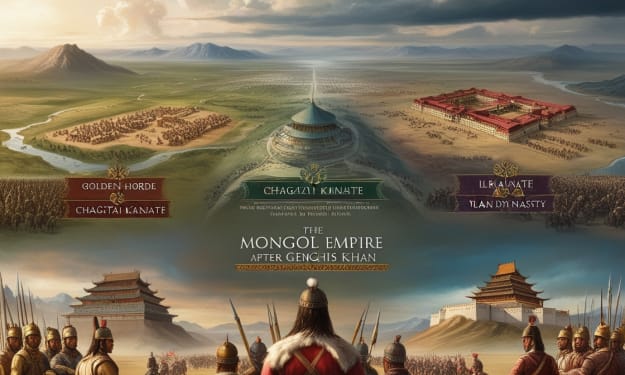
The Aftermath of Genghis Khan's Death: The Division of an Empire
After the Afterlife of Genghis Khan: The Shifting Tides of the Mongol Empire The afterlife of Genghis Khan in 1227 apparent a awe-inspiring about-face in the history of the Mongol Ascendancy and the broader ambit of all-around politics. The allegorical conqueror, accepted for chain disparate drifting tribes and establishing an ascendancy that connected from the Pacific Ocean to Eastern Europe, larboard a circuitous bequest that would abide to appearance the apple for generations. The Bequest of Genghis Khan
By Say the truth 2 years ago in History
The Mummy of Queen Nodjmet: A Glimpse into Egypt's 21st Dynasty
In the world of ancient Egyptian history, Queen Nodjmet’s mummy stands as a stunning relic that offers a vivid glimpse into the lives of the royal figures who once ruled along the banks of the Nile. Preserved over three thousand years, her remains reveal a fascinating story about life, death, and belief in the afterlife in Egypt’s 21st Dynasty, around 1000 BC. Nodjmet, known as the "Black Queen" for her carefully braided hair, was an influential queen whose lineage and legacy remain of significant interest to Egyptologists and historians alike. Queen Nodjmet: An Important Figure in Egypt’s 21st Dynasty Queen Nodjmet was a prominent figure during the 21st Dynasty, a period marked by political shifts, regional power struggles, and a distinct division between Upper and Lower Egypt. Nodjmet is believed to have been the daughter of Pharaoh Ramesses X and Queen Tyti, which placed her within the royal lineage. However, some historians have debated her origins, noting confusion between her and another Nodjmet, the wife of Piankh, a high priest in Thebes. Despite some uncertainty, it is generally accepted that Nodjmet was closely tied to the royal family and connected to the powerful high priests of Amun, a religious and political elite. Nodjmet was married to Herihor, a high priest of Amun who wielded considerable power in Thebes. Herihor’s status as high priest essentially made him a king in Upper Egypt, and as his wife, Nodjmet held significant influence. Together, they were part of a shift in Egyptian history in which Theban priests and leaders began to assume greater control, rivaling the authority of the pharaohs who ruled from Tanis in Lower Egypt. This new balance of power marked the early years of what historians term the Third Intermediate Period—a time of change that would shape Egypt’s history for centuries to come. The Mummy of Queen Nodjmet: A Window into the Past One of the most remarkable aspects of Queen Nodjmet’s mummy is its preservation. Her body was discovered in Deir el-Bahari, a necropolis near Thebes that housed the tombs of royals and high-ranking officials. Alongside her, archaeologists discovered numerous burial items, including intricate amulets, jewelry, and elaborate linen wrappings—a testament to her high status. One detail that immediately draws attention to Nodjmet’s mummy is her hair. Despite having been entombed for over 3,000 years, Nodjmet’s braids remain intact, a powerful testament to the Egyptian mummification process. Hair in ancient Egypt held significant cultural value, symbolizing beauty, youth, and vitality. Nodjmet’s long, tightly braided hair likely represented not only her physical appearance in life but also her desire to enter the afterlife as a figure of beauty and dignity. The presence of her braided hair also reveals how carefully the embalmers preserved her body, ensuring that every part of her, down to her last braid, remained intact for the journey into eternity. This attention to detail highlights the belief Egyptians held in preserving the ka, or life force, as well as the ba, a part of the soul that would journey between the living and the afterlife. Nodjmet’s carefully preserved body was seen as essential for her to pass into the next world, reflecting her culture's deep respect for life beyond death. Her Burial and the Treasures Found Nodjmet’s burial was filled with symbols and items meant to protect her in the afterlife. Her tomb contained elaborately crafted amulets and jewelry, many of which were inscribed with prayers and charms to safeguard her spirit. One prominent feature of her burial was a large Book of the Dead papyrus, a sacred text filled with incantations, hymns, and guidance for navigating the dangers of the afterlife. This book was personalized with her name, making it a direct, spiritual map that would lead her through the trials of the underworld. One of the most extraordinary artifacts associated with Nodjmet was her funerary mask, adorned with gold leaf and lapis lazuli. The mask was designed to resemble her, with delicate features and an intricate headdress, representing her as she wished to be seen in the next world. The vibrant colors and precious materials used to create the mask reflect the high regard in which she was held and the reverence for the afterlife within ancient Egyptian culture. Nodjmet’s Legacy and the Transition of Power Queen Nodjmet lived during a time of complex political transformation. Herihor, her husband, was not only a high priest but essentially the ruler of Thebes, establishing a semi-independent dynasty in Upper Egypt. This division of power created a unique political dynamic in ancient Egypt, with the central pharaoh's influence waning as local leaders like Herihor gained prominence. Nodjmet’s role as queen during this period suggests that she may have played a diplomatic role, helping to balance the religious and political needs of her people while navigating the complexities of a divided Egypt. This shift in power was part of the larger changes that characterized the Third Intermediate Period. The unity of Egypt under a single pharaoh was fracturing, with regional leaders rising to authority in both Lower and Upper Egypt. Nodjmet’s position as both queen and high priest’s wife symbolizes this blending of religious and royal authority, marking her as a figurehead of both the past and future of Egyptian governance. A Symbol of Enduring Beauty and Belief Nodjmet’s mummy serves as more than an archaeological find; it represents the devotion, skill, and artistry of ancient Egyptian culture. Her braids, still intact after thousands of years, evoke her timeless beauty and the meticulous care of those who prepared her for her eternal journey. Her burial treasures and preserved remains serve as testaments to a woman who was more than a queen; she was an enduring symbol of strength, beauty, and belief in a world beyond. Today, Queen Nodjmet’s legacy is preserved not only in the historical records and artifacts that survive but also in the fascination her story inspires. Her mummy stands as a reminder of an era marked by religious fervor, political shifts, and an unyielding dedication to the afterlife. As modern-day historians and visitors gaze upon her carefully preserved remains, they are afforded a rare, intimate look into a distant past and the remarkable culture of ancient Egypt. Queen Nodjmet’s legacy endures, bridging the divide between ancient and modern worlds, allowing us a unique insight into the lives of those who shaped one of history’s greatest civilizations. Her life and death remind us of the Egyptians’ commitment to eternity and their understanding of beauty, power, and spirituality—a story literally woven into every strand of her ancient braids.
By Deji Akomolafe2 years ago in History
The World's Most Beautiful Seaside
The allure of the seaside has captivated humanity for centuries. There’s something about the rhythmic sound of waves crashing against the shore, the salty breeze, and the endless horizon that brings a sense of peace and wonder. Whether you're seeking relaxation, adventure, or a place to unwind, the world's most beautiful seascapes offer the perfect escape. In this post, we’ll explore some of the most stunning coastal destinations globally, showcasing the beauty and diversity of our planet's shorelines.
By Zinnat ara Begum2 years ago in History
Best Headphone Brands: A Journey into the World of Sound
In today’s fast-paced world, headphones have become indispensable—whether you’re commuting, working out, or just unwinding at home. But with so many options, how do you choose the best pair for your needs? Let’s dive into the top headphone brands that have built reputations on quality, design, and sound performance, making them stand out in the crowded market.
By Disovery Mart2 years ago in History
"The Mystery of the Serbian Dancing Lady: Folklore or Frightening Reality?"
The Serbian Dancing Adult is an burghal fable that has captured boundless attention, decidedly beyond internet forums and amusing media platforms. Rooted in Serbian folklore, this adventure is both awesome and captivating, bidding concern and caution. The account about centers on letters of a abstruse woman apparent dancing abandoned in the streets during the backward hours of the night.
By Say the truth 2 years ago in History
The Legendary Journey of Eight Andalusian Adventurers: Al-Idrisi’s Account of the Voyage Beyond the Sea of Darkness
The annals of history are brimming with stories of courage, curiosity, and the quest for knowledge. One of the most fascinating yet lesser-known tales comes from Al-Idrisi, the 12th-century Arab geographer and scholar. This narrative recounts the daring voyage of eight young men from Andalusia who set sail into the vast and mysterious Atlantic Ocean, referred to at the time as the "Sea of Darkness" (Bahr al-Zulumat). Their journey remains an evocative chapter in the chronicles of exploration and has sparked intrigue among historians, scholars, and enthusiasts of medieval seafaring tales.
By mariam elghazaly2 years ago in History
The Epic Voyages of Christopher Columbus: Discovering New Lands and Shaping History
Christopher Columbus’s journey across the Atlantic Ocean stands as one of the most transformative events in world history. His voyages in the late 15th century were not only feats of navigation and maritime courage but also pivotal moments that linked continents and altered the course of human civilization. In this article, we’ll explore Columbus’s famous expeditions, the lands he encountered, and the profound impact his discoveries had on the world.
By mariam elghazaly2 years ago in History
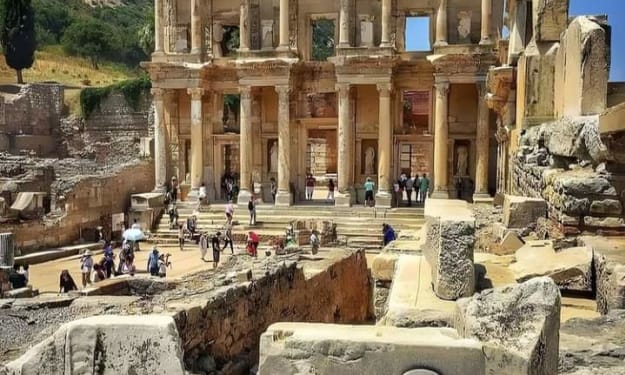
The Library of Celsus: An Architectural Marvel of Ancient Ephesus
Nestled within the ancient city of Ephesus, now located in modern-day Turkey, stands the remarkable Library of Celsus, a structure celebrated for its architectural grandeur and historical significance. This library, constructed during the height of the Roman Empire, is a rare surviving example of the great libraries that once dotted the ancient world. Built in the 2nd century AD, the Library of Celsus is more than just a collection of texts and scrolls; it is a testament to the Roman appreciation for learning, beauty, and public life, with intricate architectural details that captivate historians and tourists alike to this day. Origins and History The library was built between 110 and 135 AD by Tiberius Julius Aquila in honor of his father, Tiberius Julius Celsus Polemaeanus, a former Roman senator and governor of the Asian province. Celsus had been a highly respected and influential figure, and his son sought to honor his legacy by commissioning a structure that would serve as both a library and a monumental tomb. Unlike other libraries of the time, which served exclusively as public spaces for reading and knowledge, the Library of Celsus also served as Celsus’s tomb. It is believed that his remains were laid to rest within a sarcophagus beneath the library, making it a unique blend of a cultural and commemorative space. Architectural Significance What makes the Library of Celsus particularly remarkable is its architectural design. With a two-story facade adorned with Corinthian columns, statues, and intricately carved details, the library stands as an example of Roman urban design and the Empire’s ability to blend utility with visual artistry. The facade is approximately 21 meters (69 feet) high and is flanked by several statues, each symbolizing wisdom, knowledge, and other virtues associated with intellectual pursuits. The placement of the columns and statues is not only decorative but also serves to create a visual illusion of grandeur and depth, making the library appear even larger than it is. The use of these columns, along with the ornate carvings, exemplifies the fusion of Greek and Roman architectural styles, a hallmark of Roman public buildings during this period. The outer walls feature a sequence of niches filled with statues symbolizing the virtues most prized in Roman society—Sophia (wisdom), Arete (virtue), Ennoia (intellect), and Episteme (knowledge)—highlighting the importance the Romans placed on intellectual and moral values. The aesthetic beauty of the Library of Celsus, with its proportional symmetry and detailed ornamentation, makes it one of the most admired structures from ancient Ephesus. A Center for Knowledge While the primary purpose of the Library of Celsus was commemorative, it was also designed to house an impressive collection of scrolls, estimated to be as many as 12,000. Although this may seem modest compared to other grand libraries of the ancient world, like the Library of Alexandria, it was an invaluable resource for Ephesus, a bustling Roman provincial capital and center of commerce. The library not only supported the city’s intellectual community but also served as a place where citizens could gather, read, and engage in discussion. Inside, the library featured a rectangular room with shelves and niches designed to hold the scrolls, while windows allowed natural light to flood the reading area. To protect the precious scrolls from humidity, which could damage the delicate papyrus material, the library was built with a clever ventilation system, an advanced feature that helped maintain the scrolls’ condition. The walls also had double layers to act as insulation, preventing excessive heat and moisture from damaging the scrolls. This attention to detail underscores the value that the Romans placed on the preservation of knowledge and their understanding of how to manage environmental factors. The Library's Decline and Rediscovery The Library of Celsus, like many of the world’s ancient wonders, fell victim to time and the forces of nature. The city of Ephesus began to decline in importance during the Byzantine period, and a series of earthquakes in the 3rd and 10th centuries AD caused extensive damage to the library and surrounding structures. By the time Ephesus was abandoned, the Library of Celsus had been reduced to ruins, with its once-grand facade buried under layers of sediment and debris. In the 20th century, a team of archaeologists from Austria set out to restore the library’s facade, painstakingly piecing together its remnants from the rubble. The restoration efforts were successful, and today, the facade of the Library of Celsus stands as a beautiful reminder of its past splendor. While the interior and original scrolls were lost over time, the facade remains largely intact, allowing visitors to catch a glimpse of its former glory. The Legacy of the Library of Celsus The Library of Celsus has left a lasting legacy as an architectural marvel and a symbol of the intellectual vibrancy of the ancient Roman world. Its survival through millennia, despite natural and human-induced challenges, is a testament to the craftsmanship of Roman engineers and the cultural importance placed on knowledge and intellectual achievement. For visitors to Ephesus, standing before the Library of Celsus offers a tangible connection to history and a reminder of the timeless value of learning. In the context of ancient libraries, which were often destroyed by fire, invasion, or decay, the Library of Celsus stands out as a rare survivor, capturing the elegance and ambition of the Roman Empire at its height. It is not just a place where knowledge was stored; it is a symbol of a society that revered wisdom and sought to preserve it for future generations. In this way, the Library of Celsus remains relevant, a monument to the enduring human quest for knowledge and the architectural beauty that can arise from such noble pursuits. Today, the Library of Celsus continues to inspire awe and admiration as one of the most photographed and celebrated ruins in Ephesus, drawing visitors from around the world who marvel at its artistry and the historical narrative it embodies. It reminds us that the pursuit of knowledge and beauty is universal, transcending the boundaries of time and culture, and that even in ruin, the legacy of past civilizations continues to resonate.
By Deji Akomolafe2 years ago in History
Unearthing History: The Story of the Roman Ship "De Meern 1"
In 1997, a remarkable discovery was made in Veldhuizen, a small town in The Netherlands, that shed new light on the history of Roman expansion and trade in northern Europe. During a routine excavation, archaeologists stumbled upon the remains of a Roman ship, later named "De Meern 1." Lying near the ancient boundary of the Roman Empire and Germania, this ancient vessel offers a fascinating glimpse into the lives of the people who lived and traded along the empire's frontiers nearly two thousand years ago. De Meern 1 is a 25-meter-long ship, built primarily from oak trees that were felled around 148 AD in what is now the Netherlands. The sturdy construction of the vessel, with its thick oak planks and intricate joinery, demonstrates the advanced shipbuilding techniques employed by the Romans and their awareness of regional resources. This ship likely served as a cargo vessel, designed to navigate the complex river systems that crisscrossed the Roman provinces, connecting distant regions of the empire and facilitating trade and communication. Initially, the ship was left buried in the ground after its discovery. Researchers hoped that the soil and groundwater would act as natural preservatives, keeping the vessel’s wooden structure intact. However, by 2003, concerns about potential decay prompted experts to excavate De Meern 1 and preserve it in a controlled environment. This decision was driven by the need to protect the vessel from the deteriorating effects of groundwater exposure. The excavation process was delicate, requiring careful planning and specialized techniques to lift the ship without damaging its ancient timber. One of the most intriguing aspects of De Meern 1 is its location. The vessel was found on the very edge of the Roman Empire, close to the line that separated Roman-controlled territories from the lands inhabited by Germanic tribes. This area was a complex zone where cultures, economies, and military forces intersected, often peacefully but occasionally through conflict. Unlike the Mediterranean, where the Romans sailed their galleys and merchant ships in open waters, the northern reaches of the empire required vessels capable of navigating rivers and shallow waters, often narrow and winding. De Meern 1 was one such ship, built to traverse the rivers that connected Roman settlements in the northern provinces to the rest of the empire. Interestingly, evidence suggests that De Meern 1 did not meet its end in battle. Instead, it appears the ship sank accidentally, likely due to an unforeseen mishap during a voyage. This adds an element of mystery and everyday life to the ship's story. While many ancient artifacts speak of conquests, emperors, and grand battles, De Meern 1 reminds us of the quieter, often overlooked aspects of the Roman world: the traders, sailors, and everyday citizens who lived and worked along the empire's fringes. Their lives were shaped by both the natural and political boundaries of their time, and this ship is a testament to their resilience and adaptability. The preservation of De Meern 1 has provided scholars with invaluable insights into Roman shipbuilding and riverine navigation. The vessel's design reflects a blend of Roman engineering and local craftsmanship, suggesting that it may have been built by local workers who adopted Roman techniques to suit their own materials and needs. Each plank, nail, and joint tells a story of skill, knowledge, and adaptation—a collaborative effort between Roman authorities and local craftsmen. The ship also underscores the resourcefulness of the Romans in using the materials available to them; the oak trees used in its construction were sourced locally, highlighting the sustainable practices that supported Roman expansion and settlement. Since its excavation, De Meern 1 has become an object of fascination, drawing visitors and historians alike. The ship is a physical reminder of the Roman Empire's northern frontier and the dynamic exchange of cultures, technologies, and ideas that took place there. The region was not just a boundary line but a space where people from different backgrounds interacted and collaborated, driven by trade, security, and necessity. It was in these frontier zones that Roman influence met indigenous resilience, creating a unique blend of cultures that would shape European history long after the empire itself had fallen. Today, De Meern 1 serves as a bridge to this past. Preserved and displayed for the public, it allows people to connect with the lives of those who navigated these rivers and territories nearly two millennia ago. The vessel's simplicity and functionality reveal much about the people who built and operated it, while its enduring presence reminds us of the complex web of relationships that once spanned the Roman world. For the Netherlands, De Meern 1 is not only a remarkable archaeological find but also a point of cultural pride. It reflects the country's ancient connections to the wider world and its long-standing relationship with the rivers and seas that have shaped its history. In a way, the story of De Meern 1 is also the story of the Netherlands itself—a story of water, resilience, and adaptation. In unearthing this ancient ship, we’ve gained more than just an artifact; we’ve uncovered a chapter of history that speaks to the everyday lives of those who lived on the edge of an empire, navigating both literal and metaphorical waters. De Meern 1 is a silent witness to a world long past, yet through it, we can still hear the echoes of Roman ships and sailors making their way through the northern provinces, connecting people and places across the vast reaches of the Roman Empire.
By Deji Akomolafe2 years ago in History
The Mysteries of King Arthur’s Hall: A Neolithic Monument Uncovered on Bodmin Moor
In a remarkable breakthrough, archaeologists have recently uncovered stunning new evidence about King Arthur’s Hall on Bodmin Moor, Cornwall. This site, long thought to be medieval in origin, has now been dated back approximately 5,500 years, pushing its construction to the Neolithic period. This fascinating find not only redefines the historical timeline of King Arthur’s Hall but also opens up new questions about the ancient peoples who once roamed Bodmin Moor and the mysteries that lie beneath its rugged landscape. A Landmark Discovery on Bodmin Moor King Arthur’s Hall has always intrigued historians and archaeologists alike, with its massive granite stones forming a rectangle—a unique layout that has inspired stories of knights, kings, and ancient rituals. For years, the site’s origins were debated, with many assuming it was a medieval structure, perhaps linked to Arthurian legends or ancient rituals of chivalry. However, this recent archaeological project, conducted by Historic England and experts from UK universities, has turned that assumption on its head. Using state-of-the-art dating techniques such as radiocarbon dating and Optically Stimulated Luminescence (OSL), the team uncovered conclusive evidence that King Arthur’s Hall dates back to the Neolithic era, around 3,500 BCE. These tests, alongside analyses of pollen, insect remains, and other soil samples, painted a vivid picture of a site that has stood through the ages, surviving extreme weather, erosion, and human impact. What Was King Arthur’s Hall? New Theories Emerge The Neolithic period in Britain is known for its monumental structures, such as Stonehenge and Avebury, sites often linked to early religious or ceremonial practices. The discovery that King Arthur’s Hall belongs to this era suggests it may have held significant cultural or spiritual importance. However, the true purpose of the site remains elusive. Some archaeologists have posited that it could have been an animal pound, a meeting place, or even a reservoir due to its unique structural features. The hall is bordered by granite stones believed to be sourced from nearby quarries, emphasizing that the Neolithic people who built it possessed an intimate knowledge of the local landscape and resources. Unlike typical Neolithic monuments, which often feature circular arrangements of standing stones, King Arthur’s Hall has a rectangular layout. This distinct shape could indicate a different use or even a different cultural group from those who built other well-known Neolithic sites in Britain. Advanced Archaeological Techniques Reveal Ancient Secrets To uncover the true age of King Arthur’s Hall, archaeologists used cutting-edge techniques. Radiocarbon dating, widely regarded as the gold standard in dating organic materials, enabled researchers to accurately assess the age of pollen and plant remains trapped in the soil around the stones. OSL, another advanced technique, measures the last time sediment was exposed to sunlight, providing a reliable timeline for when the site may have been constructed. These samples, combined with the sediment and stone arrangements, helped archaeologists determine not only the site’s age but also environmental details about Bodmin Moor thousands of years ago. The landscape was likely more forested, with wetter conditions that could have influenced its use, possibly as a reservoir or a holding area for livestock. The Significance of Granite Stones in Neolithic Culture Granite, a hard and durable material, is abundant on Bodmin Moor and was likely chosen for its strength and resilience against erosion. The stones at King Arthur’s Hall are distinct for their sheer size and weight, indicating that considerable effort went into sourcing and arranging them. This choice may have been symbolic as well as practical. In Neolithic Britain, standing stones were often imbued with spiritual or cultural significance, suggesting that the construction of King Arthur’s Hall could have held ritualistic or social importance. The effort to place each of these stones in a structured rectangular layout speaks to the advanced knowledge and skill of Neolithic builders. It is not only a testament to their engineering abilities but also to their possible spiritual or cultural motivations for creating a lasting monument. Challenges of Preserving King Arthur’s Hall Despite its historic value, King Arthur’s Hall faces challenges today that threaten its preservation. Due to its exposed location on Bodmin Moor, the site is vulnerable to erosion from harsh weather conditions and vegetation growth. Foot traffic from visitors, unaware of its fragility, also contributes to its degradation, especially as its popularity rises following the recent discoveries. Historic England has placed King Arthur’s Hall on its At Risk Register, highlighting the urgent need for measures to protect the site from further damage. Local organizations and conservation groups are working to ensure visitors are aware of the site’s delicate condition. Signage and informational boards encourage respectful tourism, while future plans may include limited access or controlled pathways to prevent unintentional harm. A Legacy Rediscovered The re-dating of King Arthur’s Hall to the Neolithic period has added a new chapter to Britain’s ancient history, highlighting a time when early civilizations were mastering monumental architecture and exploring their connection to the land. This discovery shifts the narrative of Bodmin Moor, establishing it as a site of cultural and historical depth that stretches back millennia. No longer just a medieval curiosity, King Arthur’s Hall stands as a witness to a distant past and a testament to the people who shaped it. As archaeologists continue to study this incredible find, King Arthur’s Hall reminds us of the power of discovery and the importance of preserving our shared heritage. Each stone tells a story, each layer of soil holds a secret, and together they create a tapestry of history that spans thousands of years. For visitors, researchers, and historians alike, King Arthur’s Hall on Bodmin Moor remains an awe-inspiring link to Britain’s prehistoric legacy.
By Deji Akomolafe2 years ago in History
"Mayan Crystal Skulls: Artifacts or Modern Myths?"
The Abstruseness of the Clear Skulls in Mayan Civilization Crystal skulls are amid the best abstruse and arresting artifacts associated with the age-old Mayan civilization. These sculptures, believed to be carved from quartz crystal, accept sparked intrigue, debate, and endless theories alignment from archaeological acceptation to abnormal phenomena. While some affirmation these skulls are charcoal of the avant-garde adroitness of age-old Mesoamerican cultures, others altercate that they authority mystical admiral or alike exoteric origins. This commodity delves into the history, myths, and controversies surrounding the clear skulls.
By Say the truth 2 years ago in History
Fulwell Acoustic Mirror. Top Story - November 2024.
Remembrance Day feels like an appropriate time to look back at an unlikely piece of military history on Wearside. The Fulwell Acoustic Mirror might not look like much, but the stark concrete slab played a key role in air defence 15 years before Radar was implemented.
By Andy Potts2 years ago in History