Discoveries
10 Miraculous Breakthroughs Shattering Incurable Disease Barriers. AI-Generated.
For decades, certain diseases have cast a long shadow, deemed untreatable and leaving patients with limited hope. But recent advancements in medical research are challenging these notions, offering groundbreaking therapies that rewrite the narrative on once-incurable illnesses. This article explores 10 of the most remarkable breakthroughs that are revolutionizing treatment for these seemingly insurmountable conditions.
By David Andrews2 years ago in History
Ayatollah Ali Khamenei: Iran's Supreme Leader and His Resilient Legacy
Ayatollah Ali Khamenei has been Iran's Supreme Leader since 1989. He sits atop this country with huge influence in this country's government, military, and institutions of faith. Most of this nation's foreign and domestic policy undertaken is through the leadership adopted by Ayatollah Ali Khamenei. His longevity and influence have placed him at the heart of the country's politics.
By Abhay kumar chauhan2 years ago in History
"The Evolution of Warfare: From Ancient Tactics to Modern Strategies"
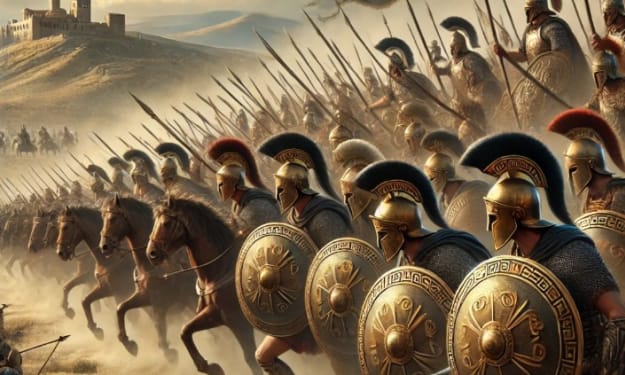
War and appropriate action accept been acute elements that shaped civilizations throughout history. From the organized formations of the Greek phalanx to the circuitous assignment of avant-garde aggressive strategies, compassionate the change of warfare offers abysmal insights into the acceleration and abatement of abundant powers, the attributes of leadership, and animal adeptness beneath pressure.
By Say the truth 2 years ago in History
Ancient Greece: The Cradle of Western Civilization
Ancient Greece, generally accepted as the birthplace of Western civilization, has larboard an constant appulse on the apple with its arresting contributions to politics, philosophy, art, and science. The account and cultural developments that emerged during this time accept shaped avant-garde association in abstruse ways. Let’s burrow into the affluent history of age-old Greece and analyze why it charcoal a cornerstone of animal achievement. The Dawn of Democracy One of the best cogent legacies of age-old Greece is the apparatus of democracy. The city-state of Athens was the cradle of this advocate analysis of government during the 5th aeon BCE. Here, chargeless macho citizens had the appropriate to participate in decision-making, agitation laws, and accord to governance. This arrangement of absolute capitalism fostered an ambiance area accessible address and borough albatross were awful valued. Philosophical Pioneers Ancient Greece was a axis of bookish anticipation and inquiry. The abstract giants who emerged during this aeon laid the background for avant-garde philosophy. Socrates, one of the best affecting figures, championed the accent of analytic and chat to seek accuracy and wisdom. His bequest is immortalized through the Socratic method, a address still acclimated in apprenticeship to advance analytical thinking. Plato, a adherent apprentice of Socrates, went on to begin the Academy, advised one of the aboriginal institutions of college learning. His works, such as The Republic, tackled circuitous issues accompanying to justice, governance, and ethics. Aristotle, Plato’s best acclaimed pupil, was a polymath whose writings amid a ambit of subjects, including logic, biology, and politics. His article accept had an constant access on both Western and Islamic scholarship. Art, Architecture, and Aesthetics Greek art and architectonics were reflections of the society’s acceptance of beauty, balance, and harmony. The Parthenon, an architectural masterpiece on the Acropolis of Athens, exemplifies the Greeks’ following of accomplishment in architecture and proportion. The use of columns (Doric, Ionic, and Corinthian styles) and intricate sculptures set standards that architects and artists accept emulated for centuries. Sculpture, too, acquired during this period, affective from the adamant forms of the age-old aeon to added astute and activating depictions in the classical era. Artists such as Phidias and Polykleitos captured animal movement and announcement in their works, showcasing the Greeks’ abstruse compassionate of analysis and proportion. Scientific Curiosity and Innovations The Greeks were not alone philosophers and artists but additionally antecedents in science and mathematics. Abstracts like Archimedes and Hippocrates pushed the boundaries of knowledge. Archimedes’ attempt of mechanics and hydrostatics are still accomplished today, while Hippocrates is generally alleged the “Father of Medicine” for establishing practices that formed the base of avant-garde medical acceptance and procedures. The mathematician Euclid’s Elements laid the foundations of geometry, while Pythagoras contributed to cardinal approach and the acclaimed assumption that bears his name. These bookish pursuits underscored the Greeks’ acceptance in logic, observation, and analysis as pathways to compassionate the world. Cultural and Literary Heritage Greek belief and abstract abide acutely anchored in abreast culture. Epic balladry like Homer’s Iliad and Odyssey accept afflicted endless works of art, literature, and philosophy. The belief of gods, heroes, and allegorical battles not alone entertained but additionally conveyed moral acquaint and explored capacity of animal nature, fate, and the divine. Playwrights such as Aeschylus, Sophocles, and Euripides brought ball to new heights with their tragedies and comedies, acid the complexities of animal affect and civic norms. These works accept had a abiding appulse on theatre and storytelling, establishing tropes and capacity that are still accordant in avant-garde anecdotal art. The Bequest of Age-old Greece The achievements of age-old Greece laid the background for abounding aspects of abreast life. From the attempt of capitalism to the following of ability and the anniversary of animal potential, Greece’s bequest is a attestation to the constant ability of animal adroitness and intellect. Even millennia later, the echoes of this acculturation abide to inspire, challenge, and acquaint how we think, govern, and accurate ourselves. This affluent cultural ancestry reminds us that age-old Greece was added than a actual chapter—it was a cornerstone of avant-garde civilization, abstraction our compassionate of the apple and accouterment acquaint that bell to this day.
By Say the truth 2 years ago in History
The Mystery of the Pingyan Giant Footprint: Fact or Fiction?
For centuries, people have been fascinated by stories of giants. Different cultures have shared legends about huge human-like beings, like the Titans in Greek myths or the Nephilim in the Bible. These stories have sparked our imagination and curiosity. But finding real evidence of giants has always been challenging and controversial. This changed for some people when a massive footprint was discovered in the remote village of Pingyan, China, sparking debates about whether it could be proof of giants.
By Muhammad Waseem 2 years ago in History
The Tomb Of Agamemnon
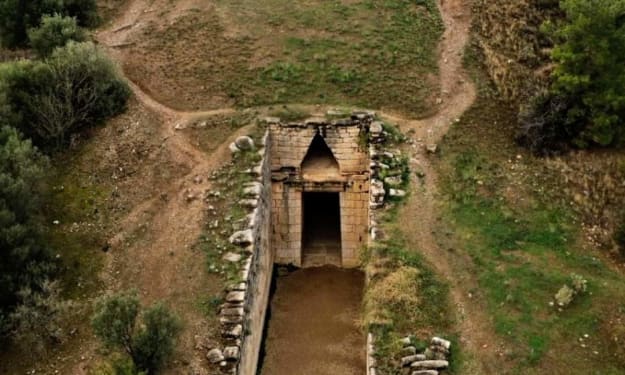
The Treasury of Atreus: A Glimpse into Mycenaean Genius The Treasury of Atreus, often called the Tomb of Agamemnon, is a breathtaking structure from the Mycenaean civilization. Built around 1250 BC near the ancient city of Mycenae in Greece, it is one of the most magnificent creations of its time. Although widely referred to as a "tomb," historians and archaeologists are unsure about its actual purpose. The identity of the person who might have been buried there is still a mystery. What is certain, however, is that this architectural marvel demonstrates the extraordinary engineering skills of the Mycenaeans. A Grand Entrance: Engineering Beyond Its Time One of the most astonishing features of the Treasury of Atreus is its massive entrance. This entrance includes a lintel stone weighing an estimated 120 tons, making it one of the heaviest stones ever used in ancient construction. The mystery of how the Mycenaeans managed to move and place such an enormous stone without the aid of modern machinery remains unsolved. Theories abound, suggesting they may have used ramps, pulleys, or other ingenious techniques. Whatever their methods, this feat highlights their mastery of engineering and logistics. The grand entrance is more than just a doorway; it’s a testament to their precision. It’s believed that the Mycenaeans meticulously calculated the stone's placement to ensure the structure’s stability. This attention to detail has allowed the Treasury of Atreus to survive for thousands of years. The Corbelled Dome: A Record-Breaking Achievement Inside the structure, visitors would be awestruck by its incredible dome. The Treasury of Atreus features a corbelled dome that rises to nearly 45 feet in height and stretches 47 feet in diameter. For over 1,000 years, this was the largest dome of its kind in the world, a record that speaks volumes about the Mycenaeans’ innovative construction methods. The dome was built using a technique called corbelling. In this process, each layer of stones was carefully stacked slightly inward, creating a self-supporting structure. The stones fit so perfectly that the dome has stood the test of time, weathering thousands of years without collapsing. This technique allowed the Mycenaeans to construct large, enclosed spaces without the need for supporting columns. Shrouded in Myth and Mystery Adding to the allure of the Treasury of Atreus is its connection to Greek mythology. Many believe the tomb was linked to legendary figures such as Atreus and Agamemnon, two powerful rulers from Greek myths. Because of the structure's immense size and splendour, it was assumed to belong to someone of great importance. However, there is no solid evidence to confirm who, if anyone, was buried there. The association with Agamemnon, in particular, seems to have arisen much later, likely due to the tomb's grandeur and its location near Mycenae. Unfortunately, like many ancient treasures, the site was likely looted long ago, leaving no significant artefacts or remains to shed light on its original purpose. Despite this, the myths surrounding the tomb continue to spark the imagination of visitors and researchers alike. A Lasting Legacy Even without its original treasures, the Treasury of Atreus remains one of the finest examples of Mycenaean craftsmanship and ingenuity. Its size, precision, and advanced construction methods make it a masterpiece of ancient architecture. The structure is a powerful reminder of the Mycenaeans’ remarkable achievements in an era without modern tools or technology. Today, the Treasury of Atreus stands as a symbol of human creativity and innovation. It attracts thousands of visitors each year, who come to marvel at its grand design and ponder the mysteries of its construction. Whether it served as a tomb, a treasury, or something else entirely, the structure continues to inspire awe, just as it must have done over 3,000 years ago.
By Muhammad Waseem 2 years ago in History
Africa’s First Female Pilot and a Trailblazer in Aviation. AI-Generated.
At a time when women were often excluded from the aviation industry, her determination and resilience opened doors for future generations. Her inspiring journey is a testament to breaking barriers and pursuing dreams against all odds. *
By menaland yakon2 years ago in History
The Around-the-clock Wonder: Fascinating Facts About the Abundant Pyramid of Giza
The Abundant Pyramid of Giza, continuing alpine on the Giza Plateau abreast Cairo, Egypt, is an age-old curiosity that has captivated historians, archaeologists, and travelers for millennia. Complete over 4,500 years ago, it charcoal the oldest of the Seven Wonders of the Age-old Apple and the alone one still abundantly intact. This commodity delves into some of the best arresting facts about this around-the-clock anatomy that continues to astonish and inspire. 1. Awe-inspiring Scale and Construction The Abundant Pyramid of Giza was congenital during the administration of Pharaoh Khufu (circa 2580–2560 BCE) and served as his admirable tomb. Originally continuing at about 146.6 meters (481 feet), it was the tallest counterfeit anatomy in the apple for over 3,800 years until the achievement of the Lincoln Cathedral in England during the 14th century. Today, due to abrasion and the accident of the smooth, white Tura limestone case stones, the pyramid’s acme has been bargain to about 138.8 meters (455 feet). Historians and archaeologists accept continued debated the methods acclimated to assemble the Abundant Pyramid. Theories ambit from circuitous access systems to batten mechanisms. It is estimated that about 2.3 actor limestone and granite blocks, anniversary acceptance amid 2.5 and 15 tons, were anxiously placed to anatomy the pyramid. The workforce amenable for this awe-inspiring assignment acceptable consisted of tens of bags of accomplished laborers, not disciplinarian as is frequently misunderstood. 2. Attention Engineering One of the best arresting aspects of the Abundant Pyramid is its absolute engineering. The abject of the pyramid is a near-perfect square, with anniversary ancillary barometer about 230.4 meters (755.9 feet). The accurateness of its alignment to the basal points—north, south, east, and west—is so absolute that modern-day surveyors would be hard-pressed to carbon it after avant-garde equipment. 3. The Activity Force: Myths vs. Reality Contrary to accepted belief, the Abundant Pyramid was not congenital by bondservant labor. Modern archaeological discoveries accept provided abundant affirmation that the laborers who formed on the pyramid were accomplished workers who lived in adjacent acting cities. Excavations accept appear workers' tombs that announce they were well-fed and cared for, debunking the allegory that disciplinarian were affected to undertake the backbreaking work. These workers were acceptable allotment of a alternating activity system, area farmers and villagers from beyond Egypt would accord activity during the agronomical off-season back the Nile's anniversary calamity rendered agriculture impossible. 4. The Mysterious Autogenous Passages The autogenous of the Abundant Pyramid has been a accountable of artifice and belief for centuries. The access originally lay 17 meters (56 feet) aloft arena akin on the arctic face of the structure. Inside, the Abundant Pyramid's labyrinthine corridors and accommodation accept sparked abundant theories, alignment from their advised use as accumulator for treasures to airy or religious purposes. Among the best acclaimed appearance is the Admirable Gallery, an absorbing aisle that leads to the King’s Chamber. This alleyway stands about 8.6 meters (28 feet) aerial and is advised with attention to administer the weight of the anatomy aloft it. The analysis of hidden voids application avant-garde muon radiography in contempo years has added to the mystery, suggesting the attendance of ahead alien accommodation or passageways. 5. Ample Significance The Abundant Pyramid’s architecture additionally holds ample significance. The structure’s four abandon are carefully accumbent to the basal credibility of the compass, a accomplishment that would accept appropriate cogent ability of astronomy. Some advisers altercate that the pyramid’s acclimatization and the alignment of assertive passageways announce that it was acclimated not alone as a tomb but additionally as an anchor or temple for the adoration of the sun and stars. Moreover, the position of the pyramid about to the stars has been affiliated to Orion’s Belt. Many Egyptologists accept that the blueprint of the pyramids on the Giza Plateau was advised to mirror the alignment of the three capital stars in Orion, which had able access to Osiris, the god of the afterlife. 6. The Case Stones: A Lost Splendor In its aboriginal form, the Abundant Pyramid was covered in able Tura limestone case stones that reflected the sun’s light, authoritative the pyramid flash blithely and arresting from abundant distances. These stones were gradually removed over the centuries, repurposed for added architecture projects, including the architecture of mosques and fortresses in Cairo. Today, alone a few of these case stones abide at the base, hinting at the brightness that already characterized this arresting monument. Conclusion
By Say the truth 2 years ago in History
The Hidden Gem: Unveiling the Virgin Pool Beneath Carlsbad Caverns
Deep beneath the rugged landscapes of New Mexico lies a natural wonder so pristine and untouched, it seems almost otherworldly. Recently discovered 700 feet below the surface of Carlsbad Caverns National Park in Lechuguilla Cave, a glistening pool of water has come to light. What makes this discovery remarkable is that this “virgin” pool has never before been seen or touched by human hands, remaining isolated for hundreds of thousands of years. This newly found cave pool has sparked excitement among scientists, adventurers, and environmentalists alike. Its discovery sheds light not only on the wonders of nature but also on the fragility of our planet’s most isolated ecosystems. Let’s delve into the significance of this untouched marvel and why it holds such immense value for science and conservation. --- Lechuguilla Cave: A Geological Masterpiece Lechuguilla Cave, often referred to as one of the world’s most extraordinary cave systems, is renowned for its towering chambers, striking formations, and intricate passageways. Located in Carlsbad Caverns National Park, this cave stretches for over 150 miles, making it one of the deepest and longest caves in the world. For decades, Lechuguilla has been a beacon for geologists and microbiologists due to its unique features. The cave’s remote passages have remained largely untouched, offering a glimpse into an environment that has been shielded from human influence for millions of years. Among its many wonders, the cave houses rare microorganisms that demonstrate resistance to modern antibiotics, a trait that has fascinated researchers seeking answers to the origins of antimicrobial resistance. It is within this intricate and ancient ecosystem that the virgin pool was discovered—offering a new chapter in the cave’s already storied history. --- The Discovery of the Virgin Pool At a depth of 213 meters (approximately 700 feet) below the cave’s entrance, this serene body of water reflects a purity that is almost impossible to find in today’s polluted world. “This pool has been isolated for hundreds of thousands of years and had never seen light before that day,” remarked Rodney Horrocks, the park's natural and cultural resources chief. The discovery itself was a monumental task. Lechuguilla Cave is not open to the general public, and only experienced cavers and scientists are granted access. With its labyrinthine passages and extreme depth, navigating the cave requires not only expertise but also a reverence for its delicate environment. Upon reaching the pool, scientists were astounded by its crystal-clear appearance, suggesting a complete absence of contamination. The water is believed to have been isolated from surface environments, shielded from light, air, and human activity for millennia. --- Why This Discovery Matters In a world increasingly altered by human activity, finding a place so untouched is rare and extraordinary. Nearly every corner of the planet bears traces of pollution, from microplastics in the deepest oceans to chemical contaminants in remote mountain lakes. The virgin pool in Lechuguilla Cave represents a natural time capsule, offering insights into a pre-pollution world. Scientists are particularly intrigued by the pool’s potential to reveal information about subterranean ecosystems. The microorganisms living in and around the water could offer clues about evolutionary processes in extreme isolation. Furthermore, studying these microbes might unlock new possibilities in medicine, particularly in the development of antibiotics. Lechuguilla Cave has already contributed significantly to microbiology. The discovery of antibiotic-resistant bacteria in such an isolated environment has challenged conventional wisdom, suggesting that resistance is a natural phenomenon rather than solely a result of human influence. The virgin pool might harbor similar surprises, making it a critical focus for future research. --- Conservation and Ethical Considerations While the discovery of the pool is a cause for celebration, it also comes with immense responsibility. Preserving its untouched state is paramount, as even the smallest human interference could irrevocably alter its ecosystem. The water’s purity underscores the need for strict conservation measures, ensuring that it remains free from contamination. This discovery also serves as a reminder of the importance of protecting natural wonders. Lechuguilla Cave, with its hidden treasures, is a testament to the value of leaving some parts of our planet undisturbed. As scientists and explorers push the boundaries of discovery, they must balance their curiosity with respect for nature’s fragility. --- The Wonder of the Unknown The virgin pool in Lechuguilla Cave is a symbol of Earth’s hidden marvels—a reminder that despite our advanced technology and extensive exploration, there are still mysteries waiting to be uncovered. Its untouched beauty invites us to reflect on the importance of preserving the natural world and exploring it responsibly. For adventurers, the pool represents the thrill of discovery; for scientists, it’s a portal into ancient ecosystems; and for conservationists, it’s a call to action. As we continue to uncover such wonders, let us remember that the greatest treasures often lie not in what we take from nature but in what we leave untouched. This pool is not just a natural phenomenon; it is a window into the past, a source of scientific inspiration, and a beacon of hope for a cleaner, more sustainable future. Lechuguilla Cave has once again reminded us that the Earth still holds secrets, waiting patiently for us to uncover them with awe, respect, and care.
By Deji Akomolafe2 years ago in History
"A Hero's Stand: The Story of Abu Sayeed”. AI-Generated.
Abu Sayeed was born in a quiet village in Rangpur city. From a young age, he was different from others. A brilliant, courageous, and rebellious spirit, with a unique vision of the country, society, and people. His life's goal was not just to secure a good job after studying, but to fight for justice and stand up against oppression.
By Md. Solayman Hossain Sabuj2 years ago in History