Discoveries
Unlock the World on a Budget: Your Guide to Affordable Travel Adventures
Budget Travel Hacks: How to travel the world without breaking the bank Hello friends, Find out how to save money on flights, accommodations, food, and activities, using all the budget-friendly travel secrets, tips, and tricks to make your dream vacation a reality. The call of the unknown whispers in your ear. Sun-kissed beaches, ancient ruins, and bustling cityscapes all dance before your eyes. But a nagging voice asks, "Can I afford this travel dream?" Ah, let me assure you that the answer is a resounding yes! With a dash of resourcefulness and the following treasure trove of budget hacks, you can transform the world into your playground without breaking the bank. That's it. This guide provides you with the knowledge and tools to become a budget travel ninja. We'll move forward with strategies on cheap flights, affordable accommodations, and yummy yet affordable food, and find free and entertaining things to do. We'll also review budget-friendly destinations and answer commonly asked questions to make you more confident as you navigate the world and also make you save money in your wallet. Beating the Airlines:
By Kalpesh Vasava2 years ago in History
The Rise and Fall of Ancient Egypt: A Journey Through Time. Content Warning. AI-Generated.
It was Egypt, one of the world's oldest and most fabulous civilizations, along the banks of the Nile River that shone for thousands of years through the great pyramids to the very intricate mummification process. Ancient Egypt's history is rich and mysterious as a succession of mighty rulers shaped the culture, religion, and architectural wonders that remain famous even today. But like all great empires, Egypt's glory was eventually brought to an end. Here, we are going to tell you the story of Ancient Egypt, how they made mummies, the building of the pyramids, and the eventual collapse of the mighty kingdom that once was.
By Muhammad Naeem2 years ago in History
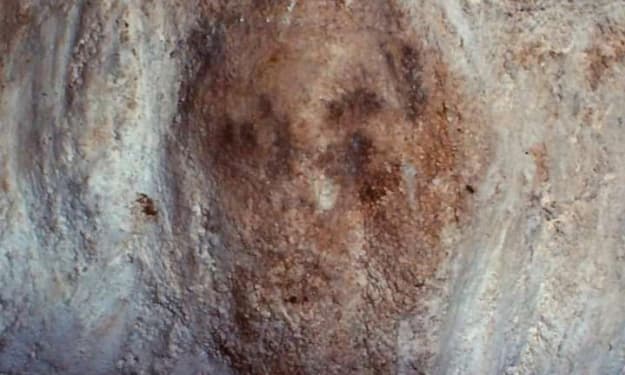
Unveiling the Past: The Ancient Art of Bernifal Cave
Hidden within the lush countryside of Dordogne, France, lies the Bernifal Cave—a remarkable time capsule of prehistoric art and culture. This extraordinary site, dated to approximately 15,000 BC, offers a glimpse into the lives and artistic expressions of early humans during the Upper Paleolithic period. With over 100 engravings and paintings, Bernifal Cave stands as a testament to the ingenuity and creativity of our ancient ancestors, preserving their connection to the natural world and their spiritual beliefs. --- A Portal to Prehistoric Life Discovered in 1902, Bernifal Cave is one of the lesser-known treasures of prehistoric art. Unlike more famous sites such as Lascaux or Chauvet, Bernifal has remained relatively untouched and unspoiled. The original entrance was blocked by rubble thousands of years ago, effectively sealing the cave and protecting its contents from vandalism and environmental damage. This isolation has allowed the cave to remain a pristine repository of ancient engravings and paintings. The artwork within Bernifal offers a vivid portrait of the animals that roamed the Ice Age landscapes of Europe, including horses, bison, mammoths, and ibex. Each engraving and painting provides valuable insights into the biodiversity of the era and the deep connection these early humans had with their environment. --- The Art of Bernifal The artwork in Bernifal Cave is primarily composed of engravings, but there are also painted elements that add depth and vibrancy to the collection. The engravings are etched into the limestone walls with tools crafted from flint or bone, while the painted images were created using natural pigments like ochre and charcoal. One of the most intriguing aspects of the cave's art is the presence of "tectiform" symbols, enigmatic roof-shaped drawings found in several other caves from the same period. The meaning of these symbols remains a mystery to archaeologists, but they are believed to hold spiritual or ritual significance, potentially representing shelters, dwellings, or other abstract concepts central to Paleolithic life. Unlike modern art, which often emphasizes individual expression, the artwork in Bernifal Cave reflects a communal narrative. These engravings and paintings were likely created as part of collective rituals or storytelling traditions, serving as a shared visual language for the group. --- Human Portrait: A Rare and Fascinating Find Among the captivating images in Bernifal Cave is a rare human portrait, dated to approximately 15,000 BC. Human representations in Paleolithic art are uncommon compared to the abundance of animal depictions, making this portrait an extraordinary discovery. The portrait is simple yet evocative, capturing the essence of an individual through minimal lines and shapes. Its presence in the cave raises questions about the role of human imagery in early art. Was it a self-portrait, a depiction of a revered figure, or a symbolic representation of humanity itself? The scarcity of human images in prehistoric art suggests that their creation held special significance. They may have been reserved for specific rituals, or perhaps the artists were more focused on the animals that played a vital role in their survival. --- A Window into the Spiritual World The artwork of Bernifal Cave is more than a record of Ice Age fauna; it is a window into the spiritual and symbolic world of its creators. The attention to detail in the animal depictions suggests a profound respect for these creatures, which were likely central to the community's livelihood and mythology. Many archaeologists believe that caves like Bernifal were considered sacred spaces, used for rituals, ceremonies, and storytelling. The act of engraving or painting on the walls may have been a spiritual practice, a way to connect with the forces of nature or seek guidance from ancestral spirits. The enigmatic tectiform symbols further reinforce this idea. Their repeated presence in multiple caves suggests they carried a shared meaning, perhaps related to protection, fertility, or the cosmos. While the exact interpretation remains elusive, these symbols highlight the complexity of Paleolithic thought and culture. --- Preservation and Legacy The Bernifal Cave's exceptional preservation owes much to its natural protection and the respect shown by modern visitors. Unlike many other prehistoric sites, it has not been damaged or defaced, allowing researchers to study its art in its original context. However, the fragility of the cave’s ecosystem underscores the importance of responsible preservation. Human activity, even in small doses, can disrupt the delicate balance within the cave, leading to the deterioration of its artwork. To ensure the longevity of these priceless treasures, access to Bernifal Cave is strictly regulated, with conservation efforts focused on maintaining its pristine condition. --- The Enduring Appeal of Prehistoric Art The engravings and paintings of Bernifal Cave remind us of our shared humanity and the enduring power of art to transcend time. Created more than 15,000 years ago, these images continue to inspire awe and curiosity, bridging the gap between the ancient past and the present. Through their artistry, the creators of Bernifal Cave left behind a legacy that speaks to their ingenuity, spirituality, and connection to the natural world. Their work challenges us to reflect on our own relationship with the environment and the ways in which art continues to shape our understanding of the human experience. In the depths of Bernifal Cave, the voices of the past whisper through stone and pigment, inviting us to listen, learn, and marvel at the timeless creativity of our ancestors.
By Deji Akomolafe2 years ago in History
"The Hidden Lifeline: Unveiling the Advantages of Libya’s Underground Water Resources"
The Advantages of Libya’s Underground Baptize Resources Libya, one of the best barren nations in the world, owes abundant of its adaptation to its underground baptize resources. In a country area condensate is deficient and apparent baptize about non-existent, the all-inclusive aquifers hidden below the arid bank accommodate a basal lifeline. These underground reservoirs, primarily the Nubian Sandstone Aquifer System and others like the Kufra and Murzuk Basins, accept enabled Libya to advance admitting its acrid environment. This commodity explores the advantages of Libya’s underground baptize assets and their role in the country’s economic, social, and ecology development. 1. A Basal Antecedent of Freshwater
By Say the truth 2 years ago in History
Libya’s Underground Baptize Resources: A Hidden Treasure Below the Desert
Libya, a country accepted for its all-inclusive stretches of barren deserts, has continued faced challenges accompanying to baptize scarcity. With below than 2% of its acreage actuality abundant and an anniversary condensate of alone 20 to 50 millimeters in best areas, Libya’s annex on underground baptize assets is analytical for its survival.
By Say the truth 2 years ago in History
The First Automotive Accident in the World: Historical Incident in Transport Modes
The first known car accident occurred in 1771. Modern road safety and automobile engineering as we know it today has only one particular day to its past. And that was the steam-powered tractor designed by Nicolas-Joseph Cugnot, the first automobile, crashing on the streets of Paris. It is rather difficult to imagine an automobile accident in a time when cars such as we understand them did not exist. Actually, the steam contraption, invented by Cugnot was one of the crucial moments in modern history. And the accident, though minor, became an historical event.
By Abhay kumar chauhan2 years ago in History
Julius Caesar Uncovered: The Rise, Reforms, and Tragic Fall of Rome's Greatest Leader. AI-Generated.
Julius Caesar – a name that echoes through the annals of history, conjuring images of unmatched power, unbridled ambition, and a dramatic demise. But who was the man behind the myth? This article delves into the untold story of one of Rome’s greatest leaders, a figure whose life reshaped the ancient world and whose legacy endures to this day.
By menaland yakon2 years ago in History
The After life Preparation of Egyptian King
Preparation for the Afterlife The adventure to the afterlife was apparent as abounding with challenges and tests, and alone those who were abundantly able would succeed. For Pharaohs, this alertness was decidedly elaborate, involving both concrete and airy elements. The concrete anatomy had to be preserved, arch to the convenance of mummification. The age-old Egyptians believed that the canning of the anatomy was capital for the soul's adaptation in the afterlife. Without an complete body, the king's ka (vital essence) would be clumsy to acknowledgment to it, authoritative abiding activity impossible.
By Say the truth 2 years ago in History
"The Intellectual Legacy of Ancient Greece: Philosophy and Science"
The Aesthetics and Science of Age-old Greece Ancient Greece is generally admired as the cradle of Western civilization, and for acceptable reason. This era, spanning from the 8th aeon BCE to the end of antiquity, witnessed the acceleration of account that would appearance the approaching of philosophy, science, mathematics, and political anticipation for centuries. The Greeks' following of wisdom, or philosophia as they alleged it, apparent a cogent abandonment from the fabulous worldview of their predecessors. Coupled with their groundbreaking accurate observations and methodologies, the Greeks laid the foundation for what we now accede rational and empiric thought. The Birth of Greek Philosophy Greek aesthetics began with what historians now appellation the Pre-Socratic philosophers. These aboriginal thinkers approved to accept the universe's agreement and basal attempt after invoking abnormal explanations. Thales of Miletus, for example, proposed that baptize was the capital actuality from which aggregate originated. Anaximenes appropriate air as the primary element, while Heraclitus alien the abstraction of connected change, encapsulated in his acclaimed saying, “You cannot footfall into the aforementioned river twice.” As the movement matured, added circuitous and abstruse account developed. Pythagoras, accepted for the Pythagorean theorem, believed that numbers were the aspect of all things. His assignment connected above mathematics into a mystical worldview area after relationships absolute the accord of the universe. Socrates and the Art of Inquiry The aboriginal above about-face in Greek anticipation came with Socrates (469–399 BCE), who confused the focus from the accustomed apple to animal behavior, ethics, and society. Unlike the Pre-Socratics, Socrates did not address bottomward his teachings; instead, we apperceive about him through the works of his apprentice Plato. Socratic dialogue, characterized by allurement acid questions to activate analytical cerebration and brighten ideas, became a authentication of his teaching. His adjustment laid the background for the acreage of ethics, emphasizing the accent of analytical one's life, abundantly quoted as, “The unexamined activity is not account living.” Socrates’ charge to arduous accepted acumen ultimately led to his balloon and beheading for allegedly allurement the adolescence and impiety. Yet, his account connected to advance through Plato’s dialogues. Plato’s Apple of Forms
By Say the truth 2 years ago in History