Discoveries
The Most Fascinating Unsolved Mysteries of History
Throughout history, countless events and phenomena have puzzled historians, scientists, and the general public. While many questions have been answered with time and research, some mysteries remain unsolved, offering glimpses into the unknown. These enigmas not only challenge our understanding of the past but also inspire endless theories and speculation. Here, we explore some of the most fascinating unsolved mysteries in history.
By Marius Lungu2 years ago in History
Go Along-Hair Ties
"Go Along Hair Ties" – A Unique Punishment to Mend Relationships In the old days, a fascinating tradition was practised in some Spanish families to resolve fights between siblings, especially sisters. This simple yet creative method helped them learn to get along better. Let us dive into the details of this unique tradition, its purpose, and how it worked.
By Muhammad Waseem 2 years ago in History
The Great Pyramid of Giza: An Constant Attribute of Age-old Ingenuity
The Great Pyramid of Giza stands as a attestation to the absurd adeptness and appetite of age-old Egyptian civilization. Located on the Giza Plateau abreast Cairo, Egypt, it is the oldest and best acclaimed of the Seven Wonders of the Age-old World. Not alone is it the alone one of these wonders still in existence, but it additionally continues to attraction researchers, historians, and tourists akin with its mysteries and the arduous consequence of its construction. Historical Acceptation and Context
By Say the truth 2 years ago in History
The Most Beautiful Architecture in the World
Architecture is more than just the structure and design of buildings; it reflects culture, history, and artistry. The world is home to some of the most beautiful and awe-inspiring architectural wonders that blend creativity, engineering, and aesthetics. From ancient temples to modern skyscrapers, these architectural marvels continue to captivate visitors from around the globe. In this article, we’ll explore some of the most beautiful architecture in the world, each one a testament to human ingenuity and vision.
By Zinnat ara Begum2 years ago in History
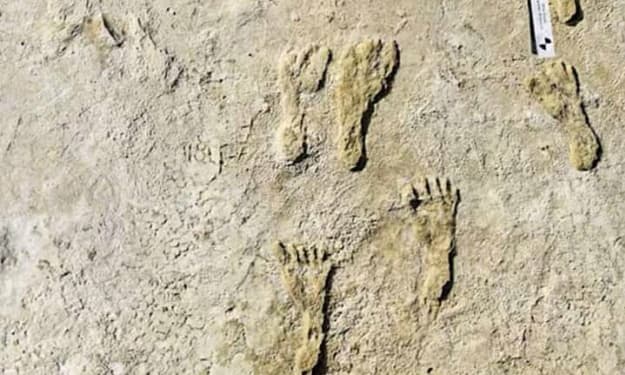
23,000-Year-Old Footsteps Discovered in the US Are Rewriting Human History
In an astonishing discovery that challenges long-standing narratives, archaeologists at White Sands National Park in New Mexico have unearthed the oldest known human footprints in the United States. These prints, estimated to be about 23,000 years old, provide compelling evidence that humans were present in North America approximately 10,000 years earlier than previously believed. This finding has ignited fresh debates among historians, archaeologists, and anthropologists, reshaping our understanding of human migration patterns and prehistoric life. White Sands: An Archaeological Treasure Trove White Sands National Park is already renowned for its breathtaking gypsum dunes and its status as a hub of archaeological significance. The park’s unique environment has preserved fossils and footprints from various species, providing a window into life during the Ice Age. The footprints, first spotted in a dry lakebed, belong to what is now referred to as Lake Otero. During the last Ice Age, this area was a lush oasis teeming with life, including mammoths, giant ground sloths, and now, as we know, early humans. Dating the Discovery Researchers used radiocarbon dating on seeds embedded in the sediment layers of the footprints to estimate their age. The results were groundbreaking: the footprints date back approximately 23,000 years, placing them in the Late Pleistocene era. Previously, it was widely believed that humans arrived in North America around 13,000 years ago, following the retreat of massive glaciers that covered much of the continent. This theory, known as the Clovis-first model, posited that the first Americans were part of the Clovis culture, named after distinctive stone tools found in Clovis, New Mexico. The discovery at White Sands, however, challenges this timeline and suggests humans were present during the height of the Ice Age. A Day in the Life of Ice Age Humans The footprints reveal much more than just a timeline; they provide a vivid glimpse into the lives of these ancient people. Analysis of the tracks suggests that they were made by adolescents and children, with some tracks showing evidence of playful activity. These insights humanize the prehistoric figures and hint at the daily lives of early Americans. Moreover, the tracks are interspersed with footprints of Ice Age megafauna such as mammoths and sloths, indicating that humans coexisted with these now-extinct creatures. This cohabitation would have posed both opportunities and challenges, as these large animals were both a source of food and potential threats. Implications for Human Migration The discovery has profound implications for our understanding of human migration into the Americas. It supports the idea that humans may have arrived via the Bering Land Bridge—a now-submerged landmass that once connected Asia and North America—much earlier than previously thought. However, it also raises new questions: Did these early settlers come via coastal routes, traveling along the Pacific coastline in boats or along icy shorelines? Or did they move inland, navigating through glacial corridors? The evidence from White Sands adds weight to the theory that humans were exploring and adapting to diverse environments much earlier than assumed. Rewriting History The discovery at White Sands is part of a growing body of evidence challenging the Clovis-first model. Other sites in North and South America have yielded artifacts and remains suggesting human presence prior to 13,000 years ago. However, these findings often faced skepticism due to concerns about dating accuracy or interpretation. The footprints at White Sands stand out because they are direct, tangible evidence of human activity, leaving little room for doubt about their significance. The meticulous research and advanced dating methods used to verify their age further strengthen their credibility. What’s Next for Archaeology? As with any groundbreaking discovery, the White Sands footprints have opened up as many questions as they have answered. Researchers are now focused on exploring other areas in and around White Sands to uncover additional evidence of early human activity. Furthermore, the discovery emphasizes the importance of preserving archaeological sites. Environmental factors such as erosion, climate change, and human activity threaten many potential discoveries, underscoring the urgency of safeguarding these precious windows into the past. A New Chapter in Human History The 23,000-year-old footprints at White Sands are more than just ancient impressions in the ground—they are a testament to human resilience and adaptability. They remind us that history is not a fixed narrative but a puzzle that we are continuously piecing together. For decades, the Clovis-first model shaped our understanding of early human migration, but discoveries like this are rewriting the script. Each new finding brings us closer to understanding where we come from, how we adapted to challenging environments, and how our ancestors carved out lives in the wilderness. As researchers delve deeper into the mystery of White Sands, the story of humanity continues to unfold, revealing not only our ancient past but also our enduring curiosity to uncover the truth about who we are and where we’ve been. The footprints may have been left behind thousands of years ago, but their discovery is a step forward in understanding the incredible journey of humanity.
By Deji Akomolafe2 years ago in History
A 700-Year-Old Templar Sword Unearthed: A Glimpse into a Dark Chapter of History
Deep in a small, private forest in England, an extraordinary discovery has shed light on one of history’s most enigmatic and tumultuous periods. Beneath a tree, within the confines of an ancient cave, archaeologists uncovered a 700-year-old sword believed to have belonged to the Knights Templar. This stunning find provides not only a tangible connection to the medieval order but also a glimpse into their desperate struggle for survival during the persecutions of 1312. The sword, remarkably well-preserved for its age, and its context suggest that the cave may have served as a shelter for Templar knights fleeing the wrath of the church and crown. This blog delves into the historical background of the Templars, the persecutions they faced, and the significance of this find. --- The Rise and Fall of the Knights Templar The Knights Templar were founded in 1119 as a monastic military order tasked with protecting Christian pilgrims traveling to the Holy Land. Over the next two centuries, they grew into a powerful organization with vast wealth, influence, and lands spanning Europe and the Middle East. Their role as both warriors and bankers made them indispensable to the church and the nobility. However, their power also made them targets. By the early 14th century, the Crusades had waned, and the Templars’ purpose was increasingly questioned. King Philip IV of France, deeply in debt to the order, conspired with Pope Clement V to bring about their downfall. In 1307, Philip ordered the mass arrest of Templar knights in France. Under torture, many confessed to heresy, blasphemy, and other fabricated charges. This led to the infamous persecutions of 1312, culminating in the dissolution of the order by papal decree. Many Templars were executed, and others fled to seek refuge in distant lands. --- A Cave of Refuge in England The discovery of the Templar sword in a cave raises intriguing questions about how the order’s remnants survived during these dark times. England, though less hostile to the Templars than France, was still a dangerous place for the knights after 1312. Many sought shelter in remote locations, hidden from the prying eyes of church authorities and royal agents. The cave in which the sword was found may have been one such sanctuary. Located in a secluded forest, it would have provided a natural hideout, difficult to locate and defensible if necessary. The sword’s presence suggests that Templars might have used the cave as a base or temporary refuge while on the run. --- The Sword and Its Significance The sword itself is a masterwork of medieval craftsmanship, typical of the weaponry used by Templar knights. Its blade, though tarnished by centuries underground, bears faint traces of inscriptions and symbols associated with the order, including the iconic cross pattée. 1. Symbolism of the Sword: For the Templars, the sword was not merely a weapon; it was a symbol of their sacred mission to defend Christendom. The discovery of this particular sword emphasizes the spiritual and martial duality of their lives. 2. A Templar’s Last Stand?: The sword’s location under a tree, combined with the context of the cave, raises the possibility that its owner may have perished there, leaving behind a poignant reminder of the ordeals faced by the persecuted knights. --- Templars and the Holy Mothers The discovery also hints at the broader methods employed by Templars to protect themselves during this perilous period. Accounts from the time suggest that the order relied heavily on covert networks and loyal allies, including women referred to as "Holy Mothers." These women, often linked to noble families sympathetic to the Templar cause, played a crucial role in offering sanctuary, disguising fugitives, and safeguarding their treasures. The presence of the sword within a silk-lined pouch, as reported by archaeologists, suggests it may have been hidden deliberately, perhaps by such protectors. This artifact serves as a testament to the resourcefulness and resilience of the Templars and their supporters. --- Illuminating a Dark Chapter of History This discovery is more than just an archaeological find; it is a tangible link to a turbulent period when the Templars were hunted, tortured, and eradicated as a formal organization. It highlights the human cost of political and religious persecution, as well as the enduring legacy of the Knights Templar in popular imagination. The cave, sword, and surrounding artifacts paint a vivid picture of survival against the odds. They also remind us of the lengths to which people will go to preserve what they hold sacred. --- The Enduring Legacy of the Templars The Knights Templar continue to captivate the modern world, inspiring legends, conspiracy theories, and historical inquiry. From their meteoric rise to their dramatic fall, the story of the Templars resonates as a tale of devotion, betrayal, and resilience. Finds like the sword discovered in the English forest serve as a sobering reminder that beneath the myths lies a history of real people caught in the tides of power and politics. Their artifacts, like this sword, provide a rare glimpse into their lives and struggles, keeping their story alive for future generations. --- Conclusion The 700-year-old sword unearthed in a cave in England is more than just an artifact; it is a window into the past. It tells a story of courage, faith, and survival during one of history’s darkest episodes. As archaeologists continue to study the site, they may uncover more details about the Templars’ activities and the cave’s role as a sanctuary. For now, this discovery stands as a powerful reminder of the resilience of the human spirit—and the enduring allure of the Knights Templar.
By Deji Akomolafe2 years ago in History
The Roman Rock Crystal Jar: A Jewel of the Galloway Hoard
Unearthed in 2014 in a field in Galloway, Scotland, the Roman rock crystal jar from the Viking age is a remarkable artifact that bridges the gap between antiquity and the early medieval world. This extraordinary find, now part of the Galloway Hoard, measures a mere 5 centimeters (2 inches) in height but carries immense historical and cultural significance. Wrapped in intricate gold thread and preserved in a silk-lined leather pouch, the jar exemplifies the sophistication of early medieval craftsmanship and the cross-cultural interactions of the time. Now housed at the National Museum of Scotland, the jar provides invaluable insight into the luxurious items that were prized during the Viking Age and offers a glimpse into the complex relationships between the Roman, early medieval, and Viking worlds. --- Discovery of the Galloway Hoard The Galloway Hoard was discovered by a metal detectorist in a field in Dumfries and Galloway, Scotland, in 2014. This treasure trove consists of more than 100 items, including silver arm rings, gold ornaments, brooches, textiles, and objects of diverse origins. While the hoard primarily dates to the Viking Age (approximately the late eighth to early ninth centuries), many of its artifacts, like the rock crystal jar, are far older. The jar itself stands out as one of the most exquisite pieces in the collection, demonstrating the high value placed on objects from antiquity during the early medieval period. --- The Roman Rock Crystal Jar The jar, crafted from rock crystal, is a Roman artifact, likely dating back to the first few centuries AD. Rock crystal, a clear and naturally occurring form of quartz, was highly valued in the ancient world for its purity and brilliance. This small jar would have originally been used by the Romans to hold precious substances such as perfumes, oils, or ceremonial liquids. By the time it came into Viking hands centuries later, the jar had been transformed. Skilled artisans from the late eighth or early ninth century encased it in gold thread, creating a dazzling contrast between the crystalline clarity of the jar and the intricate metallic framework. This level of craftsmanship speaks to the importance of the object, as only highly skilled goldsmiths could have created such fine work. --- Purpose and Symbolism The precise purpose of the jar during the Viking Age remains a matter of speculation, but its elaborate presentation suggests it was no ordinary possession. Experts believe it may have been used in royal or religious ceremonies, possibly holding anointing oils, perfumes, or other sacred substances. In Viking society, prestige and power were often displayed through the ownership and exchange of luxury goods. Objects like the rock crystal jar, with its Roman origins and medieval embellishments, would have been highly prized for their rarity, exoticism, and connection to antiquity. The jar's preservation in a silk-lined leather pouch further underscores its significance. Silk, a luxury material imported from the Byzantine Empire or the Islamic Caliphate, was a symbol of wealth and status in early medieval Europe. The combination of silk and leather suggests that the jar was not only a treasured item but also carefully protected to maintain its condition over generations. --- A Testament to Cross-Cultural Exchange The journey of the rock crystal jar—from the Roman Empire to a Viking hoard in Scotland—illustrates the extensive networks of trade, conquest, and cultural exchange that characterized the early medieval world. 1. Roman Craftsmanship: The jar’s Roman origins highlight the advanced artistry and technology of the ancient world. Rock crystal objects required precise carving, a skill that flourished in Roman workshops. 2. Viking Appreciation of Antiquity: The Vikings were not merely raiders; they were also traders and collectors who valued artifacts from other cultures. The presence of this Roman artifact in the Galloway Hoard reflects their appreciation for ancient luxury items and their integration into Viking prestige systems. 3. Goldsmithing of the Early Medieval Period: The goldwork encasing the jar demonstrates the technical and artistic capabilities of early medieval craftsmen. The repurposing of an older object with contemporary embellishments exemplifies how ancient artifacts were reimagined and reintegrated into new cultural contexts. 4. Silk’s Long Journey: The silk-lined pouch housing the jar points to the vast trade networks that brought exotic materials from the East to northern Europe. Such trade routes connected the Vikings to the Byzantine Empire, the Islamic Caliphate, and beyond. --- Restoration and Display Since its discovery, the rock crystal jar has undergone meticulous restoration to uncover the full extent of its beauty. Conservators carefully cleaned the crystal and gold thread, revealing the intricate details of its construction. Today, the jar is displayed at the National Museum of Scotland as part of the Galloway Hoard collection. Its presentation highlights the intersection of Roman, Viking, and early medieval cultures, inviting visitors to reflect on the complex layers of history embodied in a single object. --- What the Jar Teaches Us The Roman rock crystal jar is more than just an artifact—it is a window into the past. It tells a story of human ingenuity, the value of material culture, and the interconnectedness of civilizations across time and space. For the Romans, it was likely a luxurious vessel for precious liquids. For the Vikings, it was a symbol of power, prestige, and a tangible link to the past. For modern audiences, it serves as a reminder of the shared heritage that connects ancient and medieval worlds. --- Conclusion The Roman rock crystal jar from the Galloway Hoard stands as a testament to the craftsmanship, trade, and cultural exchange that defined the Viking Age. Encased in gold and protected in silk, it encapsulates the values and aspirations of the people who owned it, transcending the centuries to become a bridge between civilizations. As we marvel at this tiny yet exquisite object, we are reminded of the enduring human desire to create, preserve, and cherish beauty—and the stories such artifacts can tell about the worlds they once inhabited. The jar, now carefully preserved in the National Museum of Scotland, is a jewel of history, connecting us to the Roman Empire, the Viking Age, and the artisans who left their mark on this remarkable piece.
By Deji Akomolafe2 years ago in History
The 4,800-Year-Old Artificial Eye: A Glimpse into Ancient Ingenuity
Archaeological discoveries often transport us to a world far removed from modernity, revealing insights into ancient civilizations' ingenuity, culture, and way of life. One such discovery made headlines in recent years: the finding of a 4,800-year-old prosthetic eye in the skull of a woman in Iran. This remarkable artifact, crafted from tar and animal fat, has been described as one of the oldest known prosthetic eyes in human history. Beyond its functional significance, it sheds light on ancient craftsmanship, social structures, and the lives of those who lived millennia ago. The Discovery The skull was unearthed in the ancient city of Shahr-e Sukhteh, or the “Burnt City,” a Bronze Age settlement in southeastern Iran. This site, a UNESCO World Heritage Site, was once a bustling hub of trade and innovation, and it has yielded countless artifacts since its discovery in the 1960s. The prosthetic eye was found intact within the skull of a woman believed to have been in her late 20s when she died. Radiocarbon dating places her remains at around 4,800 years old. Researchers believe the eye was crafted specifically for her, likely to improve her appearance and indicate her social status. Made of a mixture of tar and animal fat, the artificial eye measures approximately 2.5 centimeters in diameter. Its surface is intricately engraved with a radial pattern mimicking the iris, with faint traces of gold still visible. It was designed to fit snugly into the eye socket, held in place by delicate threads or some form of adhesive, which allowed the wearer to retain it during everyday life. A Symbol of Wealth and Status While prosthetic eyes are not new to history, this discovery stands out for its exceptional age and craftsmanship. Archaeologists believe the woman’s high social standing played a crucial role in her access to such an advanced device for its time. The Burnt City was a sophisticated society with access to resources and skilled artisans. For this woman, likely a member of the elite or royalty, possessing such a prosthetic wasn’t just a matter of health or vanity—it was also a symbol of wealth and status. Her burial site contained several clay vessels and other valuable items, further supporting the theory that she was a person of significant importance. In societies where physical appearance could reflect power or divine favor, the prosthetic eye might have also carried spiritual or cultural significance. It could have served as a way to preserve her dignity and influence both in life and death. Ancient Medical and Artistic Innovation This discovery underscores the advanced medical and artistic capabilities of ancient civilizations. The use of tar, a sticky and durable substance, combined with animal fat, demonstrates a rudimentary understanding of materials and their properties. The engraved pattern on the surface of the prosthetic is evidence of the attention to detail that ancient artisans employed, ensuring the artificial eye was both functional and aesthetically pleasing. Such ingenuity challenges modern assumptions about the technological limitations of ancient peoples. The creation of this prosthetic required a profound understanding of anatomy, material science, and craftsmanship—fields that were already flourishing in the Burnt City 4,800 years ago. A Look into the Woman’s Life Who was this woman? While the exact details of her life remain a mystery, her skeletal remains provide some clues. At the time of her death, she was likely in her late 20s, which, for her era, was an advanced age. Her prosthetic eye and burial goods indicate she was affluent, possibly a ruler or a high-ranking individual in her community. Her artificial eye may also hint at a medical condition or injury that resulted in the loss of her natural eye. Perhaps she had survived a trauma or illness that affected her sight. The effort and resources dedicated to crafting her prosthetic suggest she was deeply valued within her society. The Legacy of the Burnt City The Burnt City continues to intrigue archaeologists with its wealth of artifacts, from board games to intricate jewelry. This latest discovery adds another layer to the narrative of a civilization that thrived thousands of years ago. Moreover, the prosthetic eye serves as a poignant reminder of humanity’s enduring desire to innovate and adapt. The people of the Burnt City were not unlike us—they sought solutions to physical challenges, cared about appearances, and revered individuals of high status. Modern Implications In a world where medical advancements are commonplace, this 4,800-year-old prosthetic eye is a humbling reminder of how far we’ve come—and how much we owe to our ancestors. Ancient innovations like this paved the way for modern prosthetics and other medical breakthroughs. The story of the Burnt City’s artificial eye inspires us to appreciate the interconnectedness of human ingenuity across millennia. Each discovery reminds us that our ancestors were not just surviving—they were thriving, creating, and problem-solving in ways that continue to resonate with us today. Conclusion The 4,800-year-old artificial eye is more than a fascinating artifact; it is a testament to human creativity, resilience, and the pursuit of progress. From its intricate design to its role in signaling status, this ancient prosthetic eye offers a rare glimpse into the lives of people who lived thousands of years ago. As archaeologists continue to study the Burnt City, it is discoveries like this that keep us connected to our shared history and the enduring spirit of innovation that defines humanity.
By Deji Akomolafe2 years ago in History
Surgical Gastroenterologists in Pune: Comprehensive Care for Digestive Health
Introduction Pune, one of India’s leading cities for medical advancement, is home to an array of highly skilled surgical gastroenterologists who specialize in diagnosing, managing, and treating complex digestive and gastrointestinal (GI) diseases. Surgical gastroenterology is a vital field of medicine that focuses on surgical interventions for GI conditions ranging from benign diseases like gallstones to more complex issues, such as cancer of the digestive tract. This article aims to highlight the role of Surgical Gastroenterologists in Pune, their areas of expertise, common procedures they perform, and why Pune is a hub for such specialized medical care.
By Noble Hospitals2 years ago in History
The Most Beautiful Zoo in the World
Zoos have long been places of fascination, education, and conservation, but some go above and beyond to captivate visitors with breathtaking beauty. The most beautiful zoos in the world do more than house animals—they create immersive environments that reflect natural habitats, promote animal welfare, and offer unforgettable experiences. You're in the right place if you're looking for a zoo that blends stunning landscapes with diverse wildlife!
By Zinnat ara Begum2 years ago in History
The Most Beautiful River in the World
When it comes to natural wonders, rivers have a special place in the hearts of travellers and nature enthusiasts alike. Their mesmerizing beauty, the way they carve through landscapes, and the ecosystems they support make them an essential part of Earth's splendour. But which river holds the title of "The Most Beautiful River in the World"? While beauty is subjective, several rivers around the globe are often hailed for their stunning landscapes, rich biodiversity, and awe-inspiring surroundings.
By Zinnat ara Begum2 years ago in History
Uncovering a Grim Chapter at Jamestown: Evidence of Cannibalism Among the First English Settlers
In the heart of what would become the United States, the story of Jamestown, the first permanent English settlement, has long been etched into history. Founded in 1607, this colony in Virginia faced brutal hardships that nearly wiped out the settlement entirely. One of the darkest and most revealing discoveries came to light in 2012, when archaeologists unearthed the skull and leg bones of a 14-year-old girl among butchered animal bones and discarded food scraps. These bones carried a haunting story of survival, a desperate chapter that brings a new perspective to the winter of 1609-1610, known as the "Starving Time." The Discovery at Jamestown The 2012 discovery in Jamestown, Virginia, was chilling. Archaeologists, led by forensic anthropologist Douglas Owsley from the Smithsonian Institution, uncovered the skull and other bones in a trash deposit. The remains were found alongside remnants of butchered horses, dogs, and other food scraps discarded by Jamestown settlers. The skull and leg bones, meticulously examined by Owsley, belonged to a young girl who was likely around 14 years old at her death. Although details about her origins remain uncertain, she was given the name “Jane” by researchers to honor her as a part of Jamestown’s story. Jane’s remains were not immediately distinguishable from the butchered animal bones around them, yet they contained evidence of a disturbing chapter. Owsley's team found clear indications that the girl’s body had been subjected to cuts and blows from multiple sharp instruments, providing evidence of cannibalism—a desperate act that only the harshest of circumstances could drive people to commit. The "Starving Time" and the Desperation in James Fort The winter of 1609-1610 in Jamestown was brutal and merciless. Known to history as the “Starving Time,” it became a season of near-total isolation for the colony’s 300 settlers, confined to James Fort by both harsh weather and hostilities with surrounding Indigenous tribes. In addition to food shortages and disease, the settlers faced a siege that left them cut off from vital resources and supply lines. As winter settled in, Jamestown’s settlers were faced with grim choices, forced to ration every last scrap of food. The situation rapidly declined into starvation, with settlers consuming their horses, dogs, cats, and even shoe leather to survive. By the end of that winter, only 60 of the 300 settlers remained alive. When relief ships arrived in the spring of 1610, they were met by emaciated survivors who had endured unspeakable hardships. For years, written records hinted at the extreme measures taken during this time, but it wasn’t until Jane’s remains were found that there was tangible, forensic evidence of cannibalism. It was a reality that the colony’s chroniclers had whispered about but one that had gone unproven until now. Forensic Evidence of Cannibalism The analysis of Jane's skull reveals the desperation that must have gripped the settlers during that winter. Douglas Owsley’s forensic study found clear evidence of multiple blows and cuts from at least three different sharp instruments. These markings indicated a methodical attempt to remove soft tissue from the bone, suggesting a deliberate, if reluctant, act of cannibalism. The cuts along the forehead and jaw showed a controlled, careful removal of flesh, while more forceful marks on the skull's base suggested attempts to reach the brain. The tools used were identified as metal instruments, likely knives and cleavers. The various cut marks, depth, and locations suggest that at least one individual, if not more, participated in this process. Owsley’s findings marked the first forensic proof of cannibalism in an early European colony in North America, confirming what had long been suspected. Jane's remains, along with those of the other animals, paint a vivid picture of the daily struggles within James Fort. Her bones, placed alongside butchered horse and dog bones, serve as haunting evidence of the lengths to which people were driven when facing starvation. The Human Cost of Colonization This discovery adds complexity to our understanding of early European colonization. Jamestown's story is often presented as one of resilience and fortitude, but Jane’s remains show the steep price paid by individuals. While her story offers insight into the human experience within the colony, it also sheds light on the difficult reality settlers faced in a foreign and hostile environment. Far from a romanticized tale of adventure, the story of Jamestown reflects the grim reality of survival and the extreme lengths people will go to when deprived of basic necessities. A Legacy Remembered Jane's story, though heartbreaking, underscores the survival of Jamestown and its role in establishing the future United States. The tale of cannibalism is only one part of a larger history of endurance, fortitude, and tragedy that marked the colony’s early years. While the remains of “Jane” reveal a tragic moment, they are also a testament to the resilience of the human spirit, even in the bleakest of circumstances. In revealing this dark chapter, Jane’s story challenges us to rethink our perceptions of early settlers and the immense hardships they endured. As visitors walk through Jamestown today, they do so on land that holds echoes of these early struggles, where individuals like Jane were part of a larger, complex story of survival. The discovery of her remains provides a visceral connection to this past, reminding us that history is often more complex—and more human—than we might imagine.
By Deji Akomolafe2 years ago in History