Discoveries
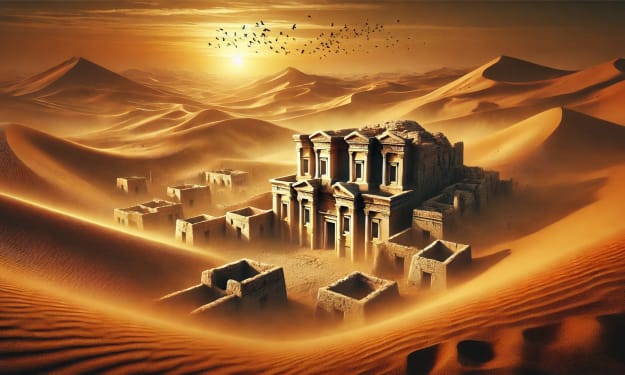
The Lost City of Zerzura
In the heart of the Sahara Desert, hidden beneath centuries of shifting sands, lies a mystery that has baffled historians, explorers, and treasure hunters for generations. The story of Zerzura, a mythical white city rumored to be filled with riches, secret knowledge, and a lost civilization, is one of the most intriguing unsolved enigmas in history. Unlike Atlantis, which exists largely in legend, Zerzura was recorded in ancient texts, mentioned by travelers, and even pursued by archaeologists—yet no one has ever found it. How could an entire city disappear overnight, leaving no trace behind?
By OWOYELE JEREMIAH2 years ago in History
Roman Girls and Marriage in Ancient Rome
Roman Girls and Marriage in Ancient Rome Marriage in ancient Rome was not just a personal union but a crucial social legal and political institution. Roman girls particularly those from elite and middle class families were often married at a very young age. While the legally acceptable age for marriage was twelve the actual age varied based on social status and family decisions. The marriage system in ancient Rome reflected the patriarchal structure of society where marriages were arranged primarily for social alliances rather than personal relationships.
By Adnan Rasheed2 years ago in History
"The Might of Sparta: A Glimpse into the Spartan Army"
The Strength and Wealth of Sparta: Power, People, and Legacy Sparta, a powerful military city-state in ancient Greece, is renowned for its disciplined army, strategic skill, and stoic culture. For centuries, the Spartan civilization made a significant impact on history with its unmatched strength and strict societal hierarchy. This article examines Sparta’s military, its kingdom’s structure, its inhabitants, and the wealth that supported its supremacy. Spartan Army: The Backbone of Sparta’s Power The Spartan army was the most formidable military force in ancient Greece. Unlike other Greek city-states, Sparta placed complete emphasis on military superiority. Every male citizen received training to become a soldier from an early age. Boys entered the agoge, an intense military training program, at the age of seven. They were instructed to endure hardships, survive in the wilderness, and engage in combat with unwavering bravery. The Spartan army was arranged into lochoi (units), commanded by highly skilled leaders. They fought in a phalanx formation—a compact, disciplined square of soldiers equipped with large shields (aspis), spears (dory), and short swords (xiphos). This formation, coupled with their superior training and fearless mindset, rendered them nearly invincible on the battlefield. One of Sparta’s most renowned victories occurred at the Battle of Thermopylae ( 80 BCE), where King Leonidas and 300 Spartans held the immense Persian army at bay. Although they were ultimately defeated, their courage and strategic brilliance became legendary, epitomizing sacrifice and valor. The Spartan Kingdom: A Unique Political Structure Sparta’s political framework was different from other Greek city-states. It operated as an oligarchy with two kings, each from separate royal lineages. These kings commanded the army and performed religious ceremonies. However, they shared authority with the Gerousia (a council of elders), the Ephors (five annually elected officials), and the Apella (an assembly of male citizens). This balanced power system contributed to maintaining order and prevented any single ruler from gaining too much control. Spartan society was categorized into three primary classes: Spartiates: Full citizens who served as soldiers. Perioikoi: Free non-citizens who worked as artisans, traders, and farmers.
By Say the truth 2 years ago in History
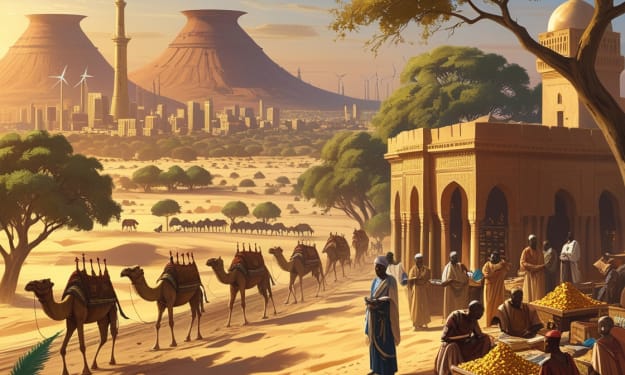
The Golden Majesty of the Mali Empire: Mansa Musa’s Legacy. AI-Generated.
The Rich and Complex History of Africa – Part 3: The Kingdom of Mali and the Wealth of Mansa Musa Africa's past is interwoven with stories of empires that flourished through trade, resources, and culture, with the Kingdom of Mali being particularly famous. At its peak, this medieval West African empire stood as a symbol of prosperity, intellectual achievement, and cultural impact. Central to its narrative is Mansa Musa, frequently regarded as the wealthiest individual in history. The Rise of the Mali Empire The Mali Empire arose in the 13th century, expanding upon the groundwork established by the Ghana Empire. By the mid-1200s, Mali had transformed into a significant trading center, gaining control over gold mines, salt reserves, and trade routes traversing the Sahara Desert. These assets enabled Mali to position itself as a crucial participant in worldwide commerce, attracting traders from Europe, the Middle East, and further. Under King Sundiata Keita's reign, Mali consolidated several smaller kingdoms and broadened its reach. Sundiata implemented foundational advancements in agriculture, trade structures, and military organization, yet it was during Mansa Musa's rule (c. 1312–1337) that the empire attained its peak. The Wealth of Mansa Musa Mansa Musa is predominantly recognized for his fabled wealth, which has frequently been characterized as unmatched in history. His riches were derived from Mali's plentiful natural resources, especially gold and salt. Throughout his reign, Mali accounted for almost half of the world's gold production. In 132 , Mansa Musa set out on a pilgrimage (Hajj) to Mecca, a venture that would solidify his legacy globally. His procession reportedly consisted of 60,000 individuals, 80 camels laden with gold, and many soldiers, attendants, and musicians. During the journey, Mansa Musa distributed gold to those in need, constructed mosques, and generously gifted the rulers he met along the way. His kindness in Cairo triggered a brief economic crisis due to the influx of gold diminishing the local currency's value. This incident not only highlighted Mali's vast wealth but also drew the attention of the broader world. Mansa Musa's Hajj is often referenced as one of the most opulent exhibitions of wealth in history. Intellectual and Cultural Achievements Beyond its material wealth, the Mali Empire also functioned as a center of education and culture. Mansa Musa allocated substantial resources to education, establishing schools, libraries, and mosques. The city of Timbuktu, especially, became a focal point of scholarship, enticing students and academics from various parts of Africa and the Islamic world. The Sankore University in Timbuktu contained thousands of manuscripts covering topics from astronomy and medicine to law and theology. This intellectual flourishing assisted Mali in earning a reputation as a beacon of wisdom and enlightenment. The Decline of the Mali Empire Like numerous great empires, Mali ultimately encountered decline. Internal conflicts, succession issues, and outside pressures undermined its central authority. By the 15th century, the empire had splintered, and its influence diminished. Nevertheless, the heritage of Mali and Mansa Musa persists. The legends of Mansa Musa’s riches, the accomplishments of Timbuktu, and the cultural influence of the Mali Empire still inspire individuals today. The empire's narrative exemplifies Africa’s historical significance as a hub for trade, learning, and culture. Modern Reflections The story of the Mali Empire and Mansa Musa acts as a reminder of Africa’s rich and varied history. It confronts stereotypes about the continent and underscores the contributions of African civilizations to global history. Currently, initiatives are in progress to safeguard and study the manuscripts of Timbuktu and other remnants from Mali’s golden era. These efforts intend to guarantee that future generations can learn from and appreciate this extraordinary period in African history. Conclusion The Mali Empire and the wealth of Mansa Musa represent just a part of Africa's intricate historical fabric. In forthcoming installments of this series, we will examine other significant African civilizations, including the Kingdom of Zimbabwe, the Swahili city-states, and the Songhai Empire, all of which played crucial roles in shaping the continent’s history and legacy. Stay tuned for the next chapter in this exploration of Africa’s past!
By Say the truth 2 years ago in History
"Africa's Wealth: From Ancient Empires to Modern Resources". AI-Generated.
The Rich and Complex History of Africa – Part 3: The Kingdom of Mali and the Wealth of Mansa Musa Africa's past is interwoven with stories of empires that flourished through trade, resources, and culture, with the Kingdom of Mali being particularly famous. At its peak, this medieval West African empire stood as a symbol of prosperity, intellectual achievement, and cultural impact. Central to its narrative is Mansa Musa, frequently regarded as the wealthiest individual in history. The Rise of the Mali Empire The Mali Empire arose in the 13th century, expanding upon the groundwork established by the Ghana Empire. By the mid-1200s, Mali had transformed into a significant trading center, gaining control over gold mines, salt reserves, and trade routes traversing the Sahara Desert. These assets enabled Mali to position itself as a crucial participant in worldwide commerce, attracting traders from Europe, the Middle East, and further. Under King Sundiata Keita's reign, Mali consolidated several smaller kingdoms and broadened its reach. Sundiata implemented foundational advancements in agriculture, trade structures, and military organization, yet it was during Mansa Musa's rule (c. 1312–1337) that the empire attained its peak. The Wealth of Mansa Musa Mansa Musa is predominantly recognized for his fabled wealth, which has frequently been characterized as unmatched in history. His riches were derived from Mali's plentiful natural resources, especially gold and salt. Throughout his reign, Mali accounted for almost half of the world's gold production. In 132 , Mansa Musa set out on a pilgrimage (Hajj) to Mecca, a venture that would solidify his legacy globally. His procession reportedly consisted of 60,000 individuals, 80 camels laden with gold, and many soldiers, attendants, and musicians. During the journey, Mansa Musa distributed gold to those in need, constructed mosques, and generously gifted the rulers he met along the way. His kindness in Cairo triggered a brief economic crisis due to the influx of gold diminishing the local currency's value. This incident not only highlighted Mali's vast wealth but also drew the attention of the broader world. Mansa Musa's Hajj is often referenced as one of the most opulent exhibitions of wealth in history. Intellectual and Cultural Achievements Beyond its material wealth, the Mali Empire also functioned as a center of education and culture. Mansa Musa allocated substantial resources to education, establishing schools, libraries, and mosques. The city of Timbuktu, especially, became a focal point of scholarship, enticing students and academics from various parts of Africa and the Islamic world. The Sankore University in Timbuktu contained thousands of manuscripts covering topics from astronomy and medicine to law and theology. This intellectual flourishing assisted Mali in earning a reputation as a beacon of wisdom and enlightenment. The Decline of the Mali Empire Like numerous great empires, Mali ultimately encountered decline. Internal conflicts, succession issues, and outside pressures undermined its central authority. By the 15th century, the empire had splintered, and its influence diminished. Nevertheless, the heritage of Mali and Mansa Musa persists. The legends of Mansa Musa’s riches, the accomplishments of Timbuktu, and the cultural influence of the Mali Empire still inspire individuals today. The empire's narrative exemplifies Africa’s historical significance as a hub for trade, learning, and culture. Modern Reflections The story of the Mali Empire and Mansa Musa acts as a reminder of Africa’s rich and varied history. It confronts stereotypes about the continent and underscores the contributions of African civilizations to global history. Currently, initiatives are in progress to safeguard and study the manuscripts of Timbuktu and other remnants from Mali’s golden era. These efforts intend to guarantee that future generations can learn from and appreciate this extraordinary period in African history.
By Say the truth 2 years ago in History
The Rich Tapestry of Africa: A Journey Through History, Heritage, and Natural Wealth"
The Golden Age of African Civilizations and Their Lasting Legacy Africa is home to some of the most ancient and advanced civilizations in history. Throughout the centuries, empires, kingdoms, and trading hubs have risen across the continent, driven by abundant natural resources, strategic trade routes, and thriving cultural exchanges. This part of the series delves deeper into some of Africa’s most significant civilizations during their golden age, their wealth, and their enduring impact on history. The Kingdom of Mali: The Wealth of Mansa Musa The Mali Empire, founded in the 13th century, is one of Africa’s most famous and prosperous empires. At the height of its power, it controlled a significant portion of West Africa, including modern-day Mali, Senegal, and Guinea. The empire thrived on trade, especially in gold, salt, and ivory, which made it immensely wealthy. One of the most renowned rulers of Mali was Mansa Musa, who is often described as the richest man in history. His wealth was so vast that during his famous pilgrimage to Mecca in 1324, he distributed gold so lavishly along the way that it caused inflation in cities like Cairo and Medina. Mansa Musa's legacy is visible in the cultural and educational institutions he left behind, including the famous Sankore University in Timbuktu, a center for learning and scholarship. The Kingdom of Great Zimbabwe: Architectural Brilliance and Trade In southern Africa, the Kingdom of Great Zimbabwe emerged as a powerful state between the 11th and 15th centuries. It was renowned for its impressive stone architecture, including the Great Enclosure, a massive stone wall that remains a symbol of African ingenuity and engineering. The kingdom thrived on trade, with goods such as gold, copper, and ceramics exchanged with traders from as far away as China, Persia, and India. The discovery of ancient artifacts from distant lands within Great Zimbabwe’s ruins attests to its role as a hub of international commerce. This flourishing trade network brought immense wealth to the region, allowing Great Zimbabwe to grow into one of Africa’s most prosperous civilizations. The Swahili Coast: Maritime Trade and Cultural Fusion The Swahili Coast, stretching along the eastern shores of Africa, was another key region that flourished during Africa’s golden age. Between the 10th and 15th centuries, city-states such as Kilwa, Mombasa, and Zanzibar became important trading hubs. These cities facilitated trade between Africa and the wider Indian Ocean world, dealing in gold, ivory, spices, and slaves. The Swahili culture that emerged was a unique blend of African, Arab, Persian, and Indian influences. This cultural fusion is reflected in the Swahili language, architecture, and art. The wealth generated by maritime trade allowed the Swahili city-states to construct grand mosques, palaces, and fortresses that still stand today as a testament to their historical significance. The Kingdom of Aksum: A Center of Trade and Christianity Located in present-day Ethiopia and Eritrea, the Kingdom of Aksum was one of Africa’s earliest Christian kingdoms and a major trading power from the 1st to the 7th century CE. Aksum’s strategic location near the Red Sea enabled it to dominate trade routes connecting Africa, the Middle East, and Asia. Aksum was renowned for its monumental architecture, including towering obelisks carved from single blocks of stone. The kingdom’s conversion to Christianity in the 4th century further solidified its influence, and Aksum remains a significant religious and historical site in Ethiopia today. The Wealth of Natural Resources Africa’s wealth was not solely derived from trade and commerce. The continent’s rich natural resources, including gold, diamonds, copper, and fertile land, contributed to the prosperity of its ancient civilizations. For example: Gold: West Africa’s gold mines supplied much of the gold that fueled the medieval European economy. The Mali and Ghana empires were particularly known for their gold wealth. Salt: Often referred to as “white gold,” salt was a highly valued commodity in ancient Africa. It was crucial for preserving food and maintaining health in hot climates. Ivory and Spices: These luxury goods were in high demand across the ancient world and played a key role in Africa’s trade with Asia and the Middle East. The Legacy of Africa’s Golden Age The golden age of African civilizations left a lasting legacy that continues to influence the world today. The cultural, architectural, and intellectual achievements of ancient Africa are a testament to the continent’s rich history and heritage. The trade networks established during this period laid the foundation for future economic and cultural exchanges between Africa and the rest of the world. Moreover, the stories of Africa’s ancient empires and kingdoms challenge stereotypes and misconceptions about the continent’s history. They highlight Africa’s historical role as a center of wealth, power, and innovation. Conclusion The golden age of African civilizations is a chapter of history that deserves greater recognition and appreciation. From the legendary wealth of Mansa Musa to the architectural marvels of Great Zimbabwe and Aksum, ancient Africa’s legacy is one of prosperity, cultural diversity, and resilience. By exploring and celebrating this history, we can gain a deeper understanding of Africa’s contributions to the global story and appreciate the continent’s enduring impact on the world.
By Say the truth 2 years ago in History
The Quiet Legend of Simo Häyhä: Finland’s Unseen Hero
On April 1, 2002, a 96-year-old man slipped away peacefully in a modest care home along Finland’s southern coast. In death, he appeared frail and small, his once-five-foot frame diminished further by the weight of years. Decades earlier, this unassuming figure had lived a solitary life as a farmer, tending his land in quiet isolation. He never married, never had children, and kept mostly to himself. To the handful who knew him well enough to call him a friend, he was simply Simo. But long before that, in a frozen corner of his homeland, he bore a different name-one muttered in hushed tones by jittery soldiers peering through snow-laden trees: the White Death.
By KWAO LEARNER WINFRED2 years ago in History
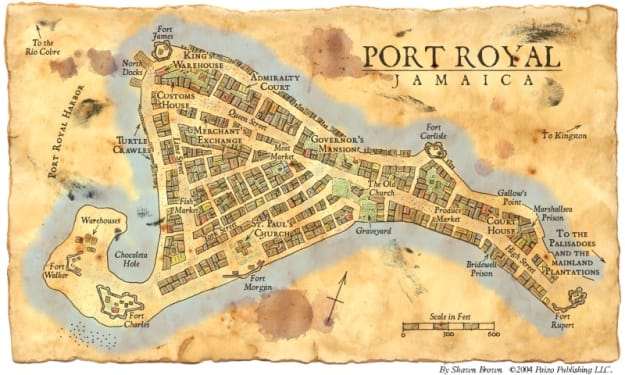
Port Royal: The Caribbean’s Sin City That Met a Biblical End
Imagine a tiny speck of a city, clinging to the edge of a 29-kilometer sandbar in the Caribbean, earning a reputation as the most notorious place on Earth. For a brief, wild stretch in the 17th century, Port Royal, Jamaica, was exactly that—a chaotic haven of pirates, privateers, prostitutes, and unimaginable plunder. It was a place where rum flowed like water, disputes ended in bloodshed, and wealth bought anything or anyone. But as quickly as it rose to infamy, Port Royal crumbled, with many believing its downfall was nothing short of divine justice. So, how did this obscure settlement transform into a legendary den of vice, only to vanish into the sea?
By KWAO LEARNER WINFRED2 years ago in History
The Quiet Legend of Simo Häyhä: Finland’s Unseen Hero
On April 1, 2002, a 96-year-old man slipped away peacefully in a modest care home along Finland’s southern coast. In death, he appeared frail and small, his once-five-foot frame diminished further by the weight of years. Decades earlier, this unassuming figure had lived a solitary life as a farmer, tending his land in quiet isolation. He never married, never had children, and kept mostly to himself. To the handful who knew him well enough to call him a friend, he was simply Simo. But long before that, in a frozen corner of his homeland, he bore a different name-one muttered in hushed tones by jittery soldiers peering through snow-laden trees: the White Death.
By KWAO LEARNER WINFRED2 years ago in History
The Deadly Art of Honor: A Journey Through Dueling Across Centuries
Throughout history, few practices have captured the imagination quite like dueling-a complex ritual of honor that transformed personal disputes into life-or-death confrontations. From medieval battlefields to 19th-century gentlemen's codes, dueling was far more than a mere method of conflict resolution; it was a sophisticated social language that spoke volumes about reputation, courage, and societal expectations.
By KWAO LEARNER WINFRED2 years ago in History
Unveiling the Andronovo Enigma
The expansive and mysterious continent of Asia has historically served as a foundation for numerous civilizations, influenced by its varied landscapes and climates. Among the diverse groups that roamed its territories, the Andronovo culture is notable for its significant impact during the Bronze Age. Originating in the Eurasian steppes around 2000 BCE, this culture profoundly influenced the historical trajectory of the region, contributing to the evolution of both nomadic and settled communities. But who exactly were the Andronovo people? What was their way of life, and what enduring legacy did they create?
By A História2 years ago in History