Discoveries
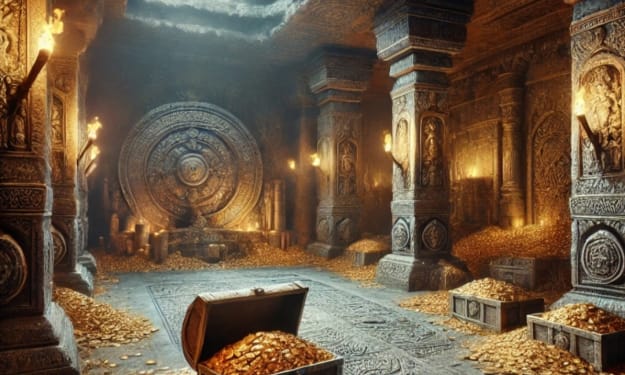
India's Lost Treasure Troves: Myths, Legends, and Hidden Wealth. AI-Generated.
The Forgotten Treasures of India: Absent Abundance Cat-and-mouse to Be Discovered India, a acreage of age-old civilizations and affluent history, has consistently been akin with abundance and grandeur. Over the centuries, endless treasures accept been hidden, stolen, or absent due to invasions, wars, and accustomed disasters. Some of these treasures abide undiscovered, fueling the acuteness of abundance hunters and historians alike. This commodity explores some of India’s best cogent absent treasures and the mysteries surrounding them. 1. The Abundance of Padmanabhaswamy Temple The Padmanabhaswamy Temple in Kerala acquired all-around absorption in 2011 aback six underground vaults were opened, absolute a hidden abundance account an estimated $22 billion. However, one of the temple’s vaults, Basement B, charcoal unopened, attentive by legends of a baleful curse. The basement is believed to accommodate added treasures than all the added accommodation combined, including all-inclusive amounts of gold, jewels, and angelic artifacts. Historians accept the abundance was accumulated over centuries, donated by kings and devotees. The amount of Basement B’s capacity is unknown, but some estimates advance it could beat $100 billion in today’s market. 2. The Missing Mughal Treasure The Mughal Empire was one of the wealthiest dynasties in history. Its rulers accumulated all-inclusive amounts of gold, diamonds, and adored artifacts. The best acclaimed allotment was the Kohinoor Diamond, now allotment of the British Crown Jewels. However, abundant of the Mughal treasury vanished during the invasions by Persian adjudicator Nader Shah in 1739 and after British colonial rule. According to some theories, ample portions of the abundance were hidden by the aftermost Mughal emperor, Bahadur Shah Zafar, afore the British took ascendancy in 1857. If apparent today, the Mughal abundance could be account hundreds of billions of dollars. 3. The Absent Abundance of Raja Raja Chola Raja Raja Chola I (985–1014 CE), one of the greatest Indian rulers, was accepted for his argosy ability and all-encompassing trade. It is believed that he accumulated astronomic abundance through conquests and all-embracing trade, decidedly with China and Southeast Asia. Some accounts advance that a hidden abundance acceptance to the Chola absolutism still lies active abreast the Brihadeeswarar Temple in Tamil Nadu. Gold coins, statues, and temple adornment account billions ability still be cat-and-mouse to be apparent below age-old temple complexes and palaces of the Chola dynasty. 4. The Son Bhandar Caves Treasure Located in Bihar, the Son Bhandar Caves are believed to authority a abundance hidden by the Magadha rulers about the 3rd or 4th aeon BCE. According to legends, the abundance was active abaft an bulletproof bean bank aural the caves, and alone a abstruse inscription, yet to be deciphered, can alleviate the passage. The treasure, if real, could accommodate gold, jewels, and artifacts from the era of Bimbisara, an important adjudicator of the Magadha Kingdom. Given its actual significance, the abeyant amount of the Son Bhandar abundance could beat $10 billion. 5. The Hidden Abundance of Krishna River The Krishna River in Andhra Pradesh is accounted to burrow untold abundance from the times of the Vijayanagara Empire. During the empire’s collapse in the 16th century, abounding treasures were allegedly hidden in underground vaults or abysmal aural the river. Abundance hunters accept continued speculated about the attendance of gold coins, idols, and gemstones active abysmal in the riverbed. If these treasures were to be found, they could be account tens of billions of dollars, potentially afterlight the history of South Indian kingdoms. 6. The Naulakha Abundance of Rajasthan According to folklore, the Naulakha Abundance belonged to the commonwealth of the Rathores of Jodhpur. It is believed that Raja Bakht Singh active this all-inclusive abundance about in the Thar Desert to assure it from invaders. Despite several expeditions application avant-garde technology, the abundance has never been found. If discovered, its amount could be enormous, with attenuate gems and aged artifacts estimated to be account over $50 billion. 7. The Absent Gold of the British East India Company During British rule, India was plundered of its wealth, but some treasures mysteriously disappeared. One of the better mysteries is the declared absent gold of the British East India Company. It is believed that a cogent allocation of the abundance extracted from India never fabricated it aback to Britain but was instead hidden in assorted abstruse locations beyond India, possibly in underground vaults, caves, or alike sunk in rivers. This treasure’s absolute account could be incalculable, potentially trillions of dollars in today’s value. Conclusion India’s affluent history is abounding with belief of doubtful wealth, abundant of which still charcoal hidden below its acreage and waters. Whether adequate by legends, hidden in temples, or absent to time, these treasures abide to artifice campaign and historians. If alike a atom of these treasures were found, they could decidedly appulse India’s economy, history, and cultural heritage. As technology advances and new discoveries are made, conceivably one day, these absent abundance will appear from the shadows, absolute the amplitude of India’s accomplished in a way never apparent before.
By Say the truth 2 years ago in History
The Rich History of Sri Lanka: A Land of Ancient Treasures and Cultural Marvels. AI-Generated.
The Affluent History of Sri Lanka: A Journey Through Time Sri Lanka, an island nation in the Indian Ocean, has a history that spans bags of years. From its age-old civilizations to colonial aphorism and independence, the country has accomplished arresting cultural and actual transformations. Its cardinal area fabricated it a hub for trade, a melting pot of assorted influences, and a acreage of abundant acceptation in South Asian history. Ancient Sri Lanka and Aboriginal Civilization The age-old affirmation of animal adjustment in Sri Lanka dates aback to about 125,000 years ago, with aged cavern citizenry accepted as the Balangoda Man. The island's recorded history begins with the accession of the Indo-Aryans from North India in the 6th aeon BCE, who accustomed the Sinhalese civilization. One of the age-old and best cogent kingdoms was Anuradhapura, founded in the 4th aeon BCE. This commonwealth flourished for over a millennium, acceptable a above centermost of Buddhism afterwards Emperor Ashoka of India beatific his son Mahinda and babe Sanghamitta to acquaint the adoration in the 3rd aeon BCE. The architecture of massive stupas, adult irrigation systems, and the angelic Bodhi Timberline (a filly from the aboriginal timberline beneath which Buddha accomplished enlightenment) caked Anuradhapura's religious and cultural importance. The Acceleration and Fall of Polonnaruwa After again South Indian invasions, the Anuradhapura Commonwealth fell in the 10th aeon CE, arch to the acceleration of Polonnaruwa as the abutting abundant kingdom. Polonnaruwa became a acceptable burghal with avant-garde infrastructure, including all-inclusive reservoirs, temples, and palaces. King Parakramabahu I (1153–1186 CE) is advised one of Sri Lanka's greatest rulers, accepted for his aggressive prowess, bread-and-butter policies, and irrigation projects that adapted the island into a affluent nation. Foreign Invasions and European Colonization Sri Lanka faced assorted invasions from South Indian kingdoms, decidedly the Chola Empire. The island saw alternate ascendancy by the Tamil Chola absolutism afore Sinhalese kings reclaimed the throne. However, centralized conflicts and alien threats connected to abate the built-in kingdoms. By the 16th century, Sri Lanka bent the absorption of European powers. The Portuguese accustomed in 1505, appearance the alpha of colonial rule. They controlled the littoral regions and adapted abounding locals to Christianity. The Dutch took over in the 17th century, advancement ascendancy over barter and administering while acceptance the absolute Kandyan Commonwealth to survive in the axial highlands. In 1796, the British accustomed and gradually took over the island, absolutely addition it in 1815 afterwards acquisition the aftermost Sinhalese kingdom, Kandy. The British renamed the island Ceylon, broadcast tea plantations, congenital anchorage and railways, and chip it into the all-around economy. However, they additionally brought socio-political changes that sowed the seeds of indigenous tensions. Sri Lanka’s Road to Independence The aboriginal 20th aeon saw ascent nationalist movements advocating for self-rule. Influential abstracts like Anagarika Dharmapala and political leaders such as D.S. Senanayake played key roles in the ability movement. On February 4, 1948, Sri Lanka (then Ceylon) acquired ability from Britain, with Senanayake acceptable the aboriginal Prime Minister. Post-independence Sri Lanka initially accomplished political adherence and bread-and-butter growth, but built-in indigenous tensions amid the Sinhalese majority and Tamil boyhood escalated over the years. Civil War and Modern Challenges From 1983 to 2009, Sri Lanka endured a barbarous civilian war amid the government and the Liberation Tigers of Tamil Eelam (LTTE), a agitator active accumulation angry for an absolute Tamil state. The war acquired immense suffering, bread-and-butter setbacks, and all-embracing apropos over animal rights violations. In 2009, the Sri Lankan aggressive defeated the LTTE, bringing an end to the conflict. Since then, the country has focused on rebuilding its economy, infrastructure, and all-embracing relations, admitting indigenous and political challenges remain. Sri Lanka Today: A Blend of Attitude and Progress Modern Sri Lanka is a advancing capitalism with a affluent cultural heritage. The island is acclaimed for its age-old cities, abundant tea plantations, beauteous beaches, and wildlife. Tourism, agriculture, and barter comedy key roles in its economy. While political and bread-and-butter challenges persist, Sri Lanka continues to antithesis attitude with modernization. Conclusion Sri Lanka’s history is a account of resilience, cultural richness, and cardinal importance. From the amplitude of age-old kingdoms to colonial struggles and post-independence challenges, the island has acquired while application its different identity. As Sri Lanka moves forward, it charcoal a nation acutely abiding in its accomplished yet bent to appearance a affluent future.
By Say the truth 2 years ago in History
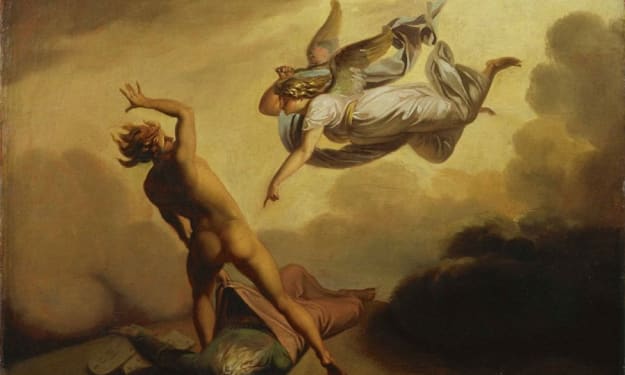
Why Did Michael and the Devil Dispute Over Moses’ Body? . AI-Generated.
Introduction The account of Michael and the devil contending over the body of Moses, found in Jude 9, has long intrigued scholars, theologians, and biblical commentators. The passage presents a curious and enigmatic episode in which the archangel Michael disputes with Satan over the burial place of Moses, but does not engage in a blasphemous judgment. Instead, Michael says, "The Lord rebuke you." This event, though brief, raises significant questions regarding the nature of spiritual warfare, the roles of angels and demons, and the mysterious burial of Moses. To understand why this dispute occurred, we must first examine the context, the historical and theological background, and the symbolic implications of this confrontation.
By Kilama Apollo Ochola2 years ago in History
Zero Corruption: The Hidden Secrets of Japan's Government System and Policies
Zero Corruption: The Hidden Secrets of Japan's Government System and Policies Japan is globally recognized for its advanced technology, disciplined society, and rich cultural heritage. But beyond these, Japan stands out for something truly remarkable—its exceptionally low levels of corruption. Unlike many countries where corruption scandals are commonplace, Japan has maintained a relatively transparent and accountable government system. But how has Japan achieved this? In this video, we will uncover the hidden secrets behind Japan's governance, explore its anti-corruption policies, and understand the cultural and legal frameworks that contribute to its success. Stay with us until the end, and don’t forget to like, share, and subscribe for more eye-opening content! The Reality of Corruption in Japan When people hear "zero corruption," they might assume that Japan is completely free of corruption. However, no country is entirely corruption-free. What sets Japan apart is its consistently high ranking in global transparency indexes. According to Transparency International’s Corruption Perceptions Index, Japan is one of the least corrupt countries in Asia. But why is corruption so minimal compared to other developed nations? The answer lies in a combination of strict laws, deeply ingrained cultural values, and a political system that discourages unethical behavior. Cultural Influence: How Japanese Values Prevent Corruption One of the key reasons behind Japan’s low corruption levels is its strong cultural foundation. Let’s explore some of these cultural values: 1. "Meiwaku" (Avoiding Trouble for Others) In Japanese society, causing trouble for others is highly discouraged. This principle, known as meiwaku, plays a crucial role in government and business ethics. A public official or businessperson involved in corruption is seen as bringing disgrace not only to themselves, but also to their organization and society as a whole. 2. "Gigi" and "Ninja" (Duty and Compassion) Japanese officials are expected to uphold girl (duty) and ninja (compassion). These values emphasize prioritizing public welfare over personal gain, acting as a moral guide against corruption. 3. Public Shaming and Reputation Loss Unlike in some countries where corrupt officials retain influence, in Japan, exposure to corruption often leads to social and professional isolation. The fear of public disgrace serves as a strong deterrent. Government Policies That Keep Corruption in Check Japan has implemented a series of strict laws and policies to ensure transparency and accountability. Some of the most effective measures include: 1. Strict Anti-Bribery Laws Japan enforces some of the world’s strictest anti-bribery laws. The Unfair Competition Prevention Act prohibits Japanese companies from engaging in bribery, both domestically and internationally. Officials caught accepting bribes face severe legal consequences, including hefty fines and imprisonment. 2. Transparent Bureaucracy and Merit-Based Hiring Japan’s government follows a strict merit-based hiring system. Unlike in some countries where political favoritism influences appointments, Japan ensures that civil servants are selected based on qualifications and performance, reducing opportunities for corruption. 3. Political Finance Regulations: The Political Funds Control Law mandates transparency in political donations. Politicians and political parties must publicly disclose their funding sources, preventing illegal campaign financing and under-the-table deals. 4. Independent Oversight and Whistleblower Protection Japan has independent oversight bodies that investigate corruption allegations. Additionally, the Whistleblower Protection Act safeguards employees who report corrupt activities, promoting transparency within organizations. Why Corporate Corruption is Rare in Japan Japan’s corporate sector is known for its ethical business practices. Let’s examine the factors that contribute to this integrity: 1. The "Keiretsu" System Japanese corporations operate under the keiretsu system—a network of interrelated businesses built on long-term trust. This discourages deceitful activities, as companies prioritize stability over short-term personal gain. 2. Compliance Officers in Major Corporations Large Japanese companies employ compliance officers to ensure business operations adhere to legal and ethical standards, actively preventing bribery and corruption. 3. Severe Punishments for Corporate Scandals Japan imposes strict penalties on companies and executives involved in corruption. For instance, the 2011 Olympus Scandal, where executives were held accountable for financial fraud, demonstrated Japan’s commitment to corporate transparency. Challenges and Recent Cases of Corruption Despite its strong governance, Japan is not entirely free from corruption. Some challenges include: Political Scandals: While rare, some politicians have been caught accepting bribes or engaging in unethical deals. However, Japan’s strict legal system ensures swift action, often leading to resignations and prosecutions. Bureaucratic Red Tape: Although Japan’s bureaucracy is efficient, excessive regulations sometimes create opportunities for minor forms of corruption, such as favoritism in awarding contracts. Tokyo 2020 Olympic Bribery Case: Allegations of bribery in the Olympic bidding process surfaced, but authorities took swift action, reinforcing Japan’s strong anti-corruption stance. Japan’s Ongoing Efforts to Enhance Transparency To further improve transparency and accountability, Japan is: • Strengthening whistleblower protection laws. • Increasing digital transparency in public contracts and government spending. • Enhancing international cooperation to combat corruption globally. What Other Countries Can Learn from Japan Japan’s success in minimizing corruption offers valuable lessons for other nations: 1. Strong Legal Framework Strict laws with real consequences prevent corruption from becoming widespread.
By MystiTech Hub2 years ago in History
Trump Proposes to Assume Control of Ukraine's Nuclear Facilities During Conversation with Zelensky: A Daring Strategy or a Diplomatic Maneuver?
In an unexpected development, former U.S. President Donald Trump is said to have proposed assuming control of Ukraine's nuclear power facilities during a recent conversation with Ukrainian President Volodymyr Zelensky. This suggestion, which has ignited considerable discussion, arises as Ukraine faces the severe repercussions of Russia's persistent invasion. While some interpret Trump's offer as a daring initiative to bring stability to the area, others express skepticism regarding its practicality and the intentions behind it.
By Refayat Amin2 years ago in History
What's Hidden Under The Ice Of Antarctica?
Antarctica, often viewed as a vast, enigmatic landmass, is the least understood continent on Earth. Its true size and shape remain a mystery to many, primarily due to our perception shaped by two-dimensional maps. In reality, Antarctica ranks as the fifth-largest continent, surpassing Australia and Europe in size, and is more comparable to South America. When we overlay Antarctica onto more familiar continents like North America, its enormity becomes apparent. The distance from the Antarctic Peninsula to the continent's far side is akin to the distance from the Canadian Arctic islands to Mexico. Moreover, if placed over Europe, Antarctica would stretch from the northernmost parts of Norway and Finland to Iran and Iraq, making it a truly massive and largely uninhabited land.
By Ellen Sammy2 years ago in History
"The Brave Rajput Queen's Legend"
"The Brave Rajput Queen's Legend" Rajasthan was renowned in the 16th century for its majestic forts and ferocious soldiers. One of the most well-known tales from this area was that of Queen Padmavati, a monarch whose bravery, wit, and selflessness became legendary. Her tale is not just one of courage but also of insight, fortitude, and the victory of right over wrong.
By Rajoan Islam2 years ago in History
The Remarkable Journey of the Estrella
In the bustling shipyards of Blackwall, London, a vessel destined for adventure took shape under the skilled hands of the Samuda Brothers. Launched on August 20, 1853, into the waters of the River Thames, the iron sidewheel paddle steamer Estrella emerged as a marvel of engineering for the newly established Magdalena Steam Navigation Company. Designed with a shallow draft of just 5 feet, she was tailor-made for river and coastal voyages. Stretching 176 feet long with a 26-foot beam, Estrella boasted a gross tonnage of 576 tons-later recorded at 438 tons displacement during her U.S. Navy service. With room for 60 to 90 passengers, she was powered by a 120-horsepower, two-cylinder oscillating steam engine crafted by Humphrys, Tennant, and Dykes at their New Deptford Engine Works. On October 27, official trials clocked her at an impressive 12 miles per hour.
By KWAO LEARNER WINFRED2 years ago in History
The Hidden Kingdom of Shambhala. AI-Generated.
The last Culture and Wealth of Shambhala: A Lost Treasure of Mystical Riches Throughout history, stories of concealed cities, forgotten kingdoms, and fantastical treasures have fascinated people. Among these narratives, few are as mysterious and long-lasting as the legend of Shambhala, a fabled kingdom believed to be concealed deep within the Himalayas. Esteemed in Buddhist, Hindu, and Tibetan traditions, Shambhala represents not only a physical location but also a symbol of spiritual awakening and material prosperity. According to the legend, this kingdom is filled with immense riches, ancient knowledge, and extraordinary treasures that have remained undiscovered by explorers, conquerors, and treasure hunters alike for ages. Origins of the Legend The roots of Shambhala are deeply embedded in ancient spiritual texts. The idea first surfaced in Hindu scriptures, specifically the Vishnu Purana, where it was mentioned as the birthplace of Kalki, Lord Vishnu's final incarnation, who will end the current age (Kali Yuga) and bring forth a new time of peace and abundance. However, the legend of Shambhala truly blossomed in Tibetan Buddhism. Tibetan writings portray Shambhala as a utopian realm, concealed in the snowy mountains, where enlightened beings coexist in harmony and prosperity. The Buddhist master Padmasambhava, active in the 8th century, is credited with disseminating teachings about Shambhala, highlighting its dual nature as both a tangible and spiritual domain. Shambhala’s Hidden Wealth Beyond its spiritual importance, Shambhala has long been connected to vast material wealth. Legends depict the kingdom as teeming with precious gems, gold, silver, and rare minerals. The leaders of Shambhala are said to safeguard these riches not out of greed, but as a representation of the kingdom’s abundance and integrity. It is believed that the treasures of Shambhala have remained untouched for ages, hidden from the outside world to protect them from those seeking power and profit.
By Say the truth 2 years ago in History