Discoveries
Why Kings, Priests, and Billionaires Still Worship Gold. AI-Generated.
The Eternal Allure of the Divine Metal Gold has captivated humanity for millennia. From pharaohs burying treasures in pyramids to modern billionaires hoarding bullion, gold remains the ultimate symbol of power, divinity, and wealth. But why? What makes this shiny metal so universally revered—across religions, empires, and economic systems?
By Jacky Kapadiaabout a year ago in History
"Beneath the Sands of Time: The Controversial Discovery of a Subterranean Metropolis Under Egypt’s Pyramids"
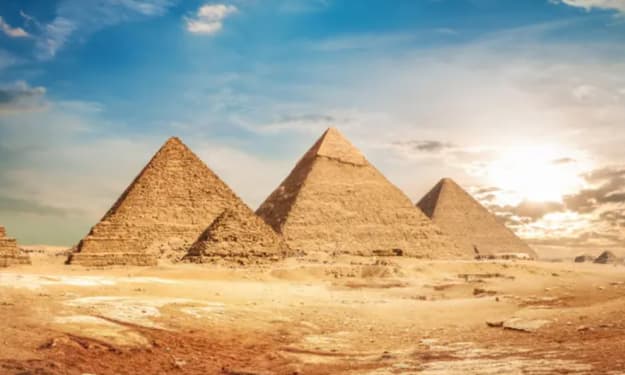
The Eternal Allure of Egypt’s Mysteries The Great Pyramids of Giza, guardians of the desert for over 4,500 years, have long captivated humanity. These colossal structures, aligned with celestial precision, are testaments to the sophistication of ancient Egyptian civilization. Yet, as modern technology peels back layers of sand and stone, a provocative theory has emerged: beneath the pyramids and the Sphinx lies a sprawling subterranean network—a “hidden city” that could redefine Egyptology. This claim, however, has ignited fierce debate among experts, pitting traditional archaeologists against interdisciplinary researchers armed with radar scans and AI-driven simulations.
By Nada solimanabout a year ago in History
The Forgotten Victims: How Animals Suffered Under European Colonialism
The Unspoken Misery: How Fauna Endured the Consequences of European Colonialism European colonialism is frequently linked to human exploitation, the looting of natural assets, and the alteration of cultures. Nevertheless, a frequently neglected facet of this historical period is the catastrophic effect it had on the animal realm. From Africa and Asia to the Americas, animals faced displacement, exploitation, and near-extinction as a result of colonial avarice. The colonial heritage left wounds not only on human communities but also on wildlife that had coexisted harmoniously with indigenous populations for centuries. This article examines the anguish suffered by animals under European colonialism, concentrating on hunting, habitat destruction, and the commercialization of wildlife. The Grand Hunt: Colonial Fascination with Game Species One of the most significant repercussions of European colonialism on animals was the emergence of trophy hunting. European colonizers perceived hunting as a sign of authority, dominance, and masculinity. In Africa, creatures such as lions, elephants, rhinoceroses, and leopards became coveted targets for European hunters. British officials, Dutch settlers, and other colonial elites hunted these magnificent animals not for sustenance but for recreation. Ivory from elephants and horns from rhinoceroses were claimed as trophies, while animal skins were utilized to adorn colonial residences.
By Say the truth about a year ago in History
5 (un)Real Cryptids
You might know a thing or two about cryptids. You know the ones: Bigfoot, Mothman, and the Jersey Devil to name a few. No one knows for sure if they are really real or if people just see things. But that’s where the following former cryptids got their start.
By Micah Jamesabout a year ago in History
The History of Coca-Cola
It’s hard to imagine a world without Coca-Cola. From its signature red cans to its iconic logo, Coca-Cola has become synonymous with refreshment and happiness. But the story of this beloved beverage began more than 130 years ago in a small pharmacy in Atlanta, Georgia.
By Bob Madden2 years ago in History
The History of Fashion. AI-Generated.
History of Fashion What is Fashion? Fashion is a dynamic and ever-evolving form of self-expression that encompasses clothing, accessories, footwear, makeup, and even lifestyle choices. It reflects cultural, social, and economic influences while allowing individuals to showcase their personality, status, and creativity. Fashion is not just about trends; it is an art form, an industry, and a means of communication.
By Md Naim Hasan2 years ago in History
American Cultures by Foreign Influence. AI-Generated.
The land stretched wide and wild beneath a sky that seemed to hold the weight of eternity. From the rolling prairies of the Midwest to the dense forests of the Northeast, America in the early 19th century was a tapestry of untamed beauty and restless ambition. Its people were as varied as the terrain—indigenous tribes who’d walked the earth for millennia, settlers carving out new lives, and enslaved souls stolen from distant shores. Into this crucible came the foreigners, their ships and caravans bearing not just goods, but ideas, traditions, and dreams that would reshape the young nation forever.
By Great pleasure2 years ago in History
Arab Pointers in the Desert. AI-Generated.
The sun blazed over the Endless Sands, a sea of dunes that stretched beyond the horizon, shimmering with heat and secrets. This was the domain of the Banu Ziyad, a nomadic tribe renowned for their mastery of the desert and their prized companions—the Arab Pointers. These dogs were no ordinary hounds; slender and swift, with coats of burnished gold and eyes like polished onyx, they were bred for the hunt, their senses honed to track prey across the merciless expanse. To the Banu Ziyad, they were more than beasts—they were kin, guardians, and the heartbeat of their survival.
By Great pleasure2 years ago in History
"The Golden Legacy: From Ancient Egypt to Modern Gold Mining"
The World’s Total Gold Resources: History, Wealth, and Estimated Net Worth Gold has fascinated humans for thousands of years. Esteemed as a representation of wealth, authority, and status, gold's shine has ignited conflicts, prompted explorations, and influenced economies. This treasured metal, scarce and extremely precious, ranks among the most coveted natural resources globally. This article explores the chronology of gold, its total worldwide resources, and the astonishing estimated net worth of the gold deposits still residing within the Earth’s crust. A Historical Overview of Gold The narrative of gold extends back more than 6,000 years. Ancient societies in Egypt, Mesopotamia, and the Indus Valley valued gold for its allure and scarcity. The Egyptians, around 3,000 BCE, were some of the earliest to extract and purify gold, utilizing it to create jewelry, coins, and sacred artifacts. Gold also represented divinity and was frequently interred with pharaohs in elaborate tombs. In Greece and Rome, gold was the cornerstone of commerce, and Roman emperors oversaw extensive gold mines. By the Middle Ages, gold emerged as an essential element of the economy in Europe, with kings amassing it to demonstrate their dominance. In the Americas, pre-Columbian societies such as the Aztecs and Incas revered gold as "the sweat of the sun," employing it for rituals, adornments, and tributes to deities. Global Gold Production As of now, the foremost gold-producing nations comprise: China – The planet’s top gold producer, extracting over 380 metric tons yearly. Australia – Renowned for its expansive gold deposits in the Super Pit and Kalgoorlie regions. Russia – Possessor of substantial gold reserves in Siberia. The United States – Gold production is focused in Nevada, which generates over 78% of the nation's total. South Africa – Historically, South Africa’s Witwatersrand Basin yielded more gold than any other area. The World’s Estimated Total Gold Resources Experts estimate that about 197,576 metric tons of gold have been extracted throughout human history, with a significant portion still in circulation. Nevertheless, considerable undiscovered gold reserves remain underground. The U.S. Geological Survey (USGS) approximates that approximately 57,000 metric tons of known gold reserves remain to be mined worldwide, and additional undiscovered resources could considerably augment this number. Net Worth of the World’s Gold To determine the overall net worth of the globe's gold, we must factor in the average price per ounce. As of early 2025, the price of gold fluctuates around $1,900 per ounce. With one metric ton equating to 32,150 troy ounces, we can gauge the value: Total mined gold (197,576 metric tons): 197,576 metric tons × 32,150 ounces × $1,900 = $12.07 trillion.
By Say the truth 2 years ago in History