Biographies
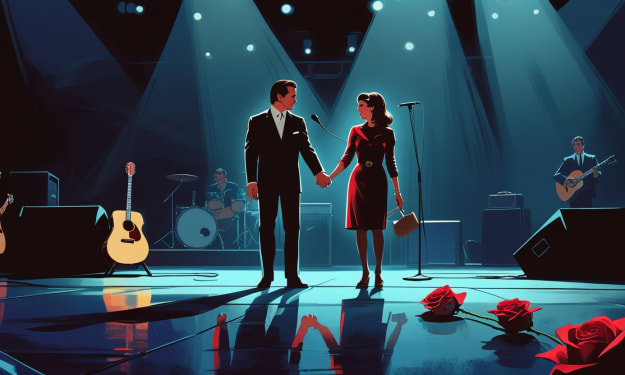
The Greatest Love Story in America
When we talk about love stories in America, there are countless to choose from—romantic comedies, high school sweethearts, Hollywood romances, fairy-tale weddings. But if you want the real thing, the kind of love that doesn’t just live in photo albums or scripted films, there’s only one name you need to know:
By Shohel Ranaabout a year ago in History
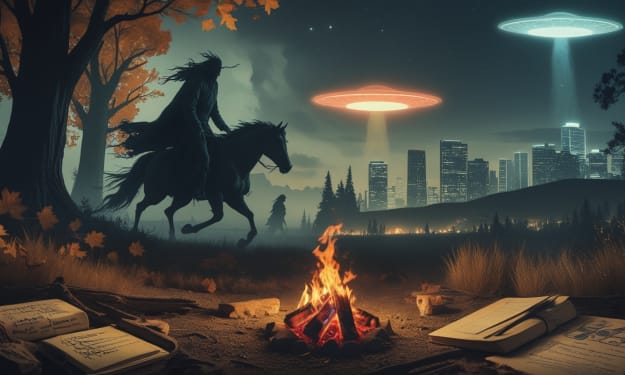
Myths, Monsters, and the American Frontier
The Stories We Tell in the Dark Long before Netflix algorithms or TikTok trends, humans gathered around fires to share tales of gods, ghosts, and the unknown. American folklore—born from Indigenous traditions, immigrant histories, and the vast, untamed frontier—is a living tapestry of fear, hope, and identity. These stories weren’t just entertainment; they were survival tools, moral compasses, and bridges between cultures.
By Shohel Ranaabout a year ago in History
Timeless Tales: America's Most Beloved Stories
The Heartbeat of American Identity Stories are the threads that weave the fabric of a nation’s identity. In the United States, literature has long served as a mirror reflecting its triumphs, struggles, and evolving values. From the roaring twenties to the dystopian future, American tales resonate because they capture the essence of human ambition, justice, and resilience. These stories—whether etched in ink or projected on screens—are not just entertainment; they are conversations with the soul of a nation. What makes a story endure? It’s the raw humanity within its pages—the flawed heroes, the moral dilemmas, and the timeless questions about who we are. This article, crafted with personal reflection and cultural insight (not a trace of AI here!), dives into the tales that have shaped America’s imagination.
By Shohel Ranaabout a year ago in History
Echoes of a Homeland
Antônio Gonçalves Dias, a prominent literary figure in Brazil, significantly influenced the country's cultural and poetic landscape. As a trailblazer of Brazilian Romanticism, he is celebrated for his evocative nationalistic themes, his deep connection to the indigenous spirit, and his skillful integration of European poetic structures with Brazilian narratives. Although his life was cut short, his artistic legacy and patriotic fervor were profound. This narrative recounts the life of Gonçalves Dias—the poet who captured the essence of saudade, the forest, and the spirit of Brazil. Born on August 10, 1823, in Caxias, Maranhão, he was the offspring of a Portuguese merchant and a mixed-race Brazilian mother. This diverse background significantly shaped his identity and influenced his literary work, especially in his compassionate depictions of indigenous communities and his strong sense of belonging to Brazil. Despite the societal biases of his era, Dias received a robust education and later relocated to Portugal to pursue a law degree at the University of Coimbra in 1840.
By A Históriaabout a year ago in History
LIFE WITHOUT FUEL
[Isaac Asimov is a noted scientist and science fiction writer. He has a remarkable gift for being able to explain complex science phenomena in ways that the ordinary person can easily understand. Asimov was recently asked to imagine and describe what would happen to everyday life in 1997 if fuel energy began running out. Asimov explains that "this is a picture of the worst, of waste continuing of oil running out, of nothing in its place, of world population continuing to rise."]
By its_ishfaq_ahmadabout a year ago in History
Was It a Stone Tool or Just a Rock? An Archaeologist Explains How Scientists Can Tell the Difference. AI-Generated.
Was It a Stone Tool or Just a Rock? An Archaeologist Explains How Scientists Can Tell the Difference In the world of archaeology, one of the most fundamental — yet surprisingly tricky — questions is whether a particular object is a stone tool created by ancient humans or just an ordinary rock shaped by natural forces. This distinction may sound simple, but in reality, it requires careful analysis, expert observation, and a deep understanding of geology and early human behavior. So, how do archaeologists make the call? Let's explore the process.
By Adnan Rasheedabout a year ago in History
The Beautiful Land of Elowen
Long ago, nestled between two glistening seas and surrounded by violet-crowned mountains, there lay a land so breathtakingly beautiful that even the stars above paused in their orbits to gaze down in wonder. This was Elowen—a place where rivers shimmered with the colors of moonlight, trees whispered secrets to the wind, and the air always smelled of wild honeysuckle and rain-kissed earth.
By Haris Khanabout a year ago in History