Biographies
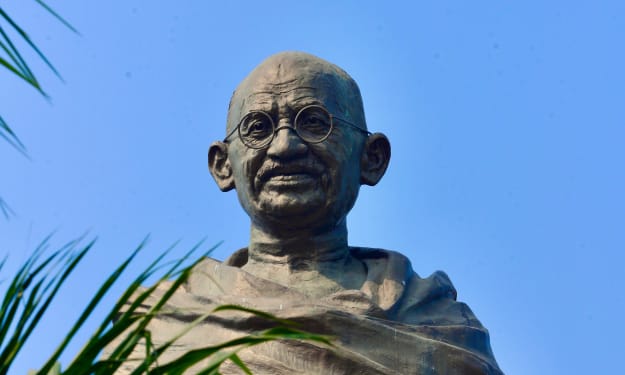
Becoming Gandhi: From Fearful Child to Fearless Father of a Nation
“Who has ever gained freedom without a battle?” asked a poet. Yet India’s path to independence defied that logic—a revolution led without swords, built on the strength of truth, humility, and nonviolence. At its heart stood Mahatma Gandhi—the man who transformed fear into a nation’s courage.
By Kadam's Publishing Companyabout a year ago in History
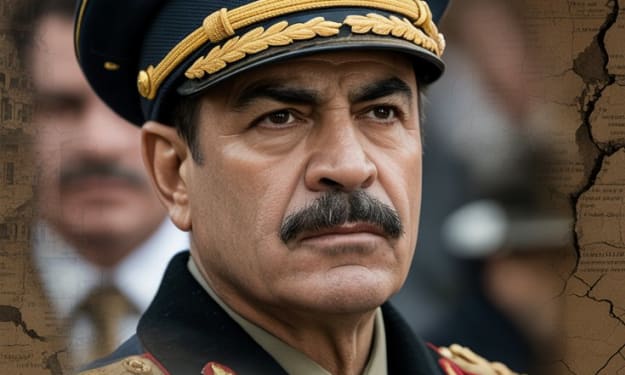
"Saddam Hussein: Rise, Reign, and Ruin of Iraq’s Strongman"
: Saddam Hussein: The Rise and Fall of Iraq’s Iron Ruler. Saddam Hussein, born on April 28, 1937, in the village of Al-Awja near Tikrit, Iraq, rose fromPoverty to become one of the most powerful—and feared—leaders in the Arab world. His reign over Iraq, from 1979 to 2003, was marked by brutal repression, ambitious wars, and an unwavering grip on power. Saddam’s early life was shaped by hardship. He was born into a Sunni Muslim farming family. His father disappeared before he was born, and he was raised by his mother and later by his nationalist uncle, Khairallah Tulfah, who played a key role in shaping his political beliefs. Saddam moved to Baghdad as a teenager, where he became involved in the Arab nationalist Ba'ath Party, which aimed to unite Arab countries under a single socialist government. In 1959, Saddam participated in a failed attempt to assassinate Iraq’s then-prime minister, Abd al-Karim Qasim. He fled the country, spending time in Syria and Egypt. After returning to Iraq in the 1960s, Saddam helped the Ba'ath Party take control of the government in a 1968 coup. Though Ahmed Hassan al-Bakr became president, Saddam quickly emerged as the real power behind the scenes. He controlled Iraq’s intelligence services and used them to eliminate political opponents. In July 1979, Saddam formally took over as president. His rule began with a televised purge, in which he accused members of his own party of disloyalty. Dozens were executed or imprisoned. This dramatic move sent a clear message: Saddam would tolerate no opposition. He created a regime built on fear, with a vast security apparatus, loyal military forces, and ruthless punishment for dissent. Under Saddam, Iraq’s economy initially improved, thanks to oil wealth. He invested in infrastructure, education, and health care, and Iraq became one of the most developed Arab nations. But his ambitions soon led the country into conflict. In 1980, Saddam launched a war against Iran, hoping to take advantage of the chaos following the Iranian Revolution. The Iran-Iraq War lasted eight years and resulted in massive casualties—over a million dead or wounded. Saddam’s forces used chemical weapons against Iranian troops and also against Kurdish civilians in northern Iraq, most infamously during the Halabja massacre in 1988, where thousands of Kurds were killed with poison gas. Though the war ended in a stalemate, Saddam declared victory. However, Iraq was left heavily in debt, particularly to neighboring Kuwait. In 1990, Saddam invaded Kuwait, claiming it as Iraq’s historical territory and accusing it of harming Iraq’s economy by overproducing oil. The invasion sparked international outrage. The Gulf War followed in early 1991, with a U.S.-led coalition driving Iraqi forces out of Kuwait in a matter of weeks. Iraq’s military was devastated, and the war triggered uprisings among Shi’a Muslims in the south and Kurds in the north. Saddam brutally suppressed both, killing tens of thousands. Following the war, the United Nations imposed strict sanctions on Iraq and demanded the dismantling of any weapons of mass destruction (WMD). Saddam’s regime cooperated only partially, leading to years of tension with the international community. Although his power remained intact inside Iraq, the country's economy crumbled under the weight of sanctions. Poverty, disease, and malnutrition spread among ordinary Iraqis, while Saddam and his inner circle lived in luxury. Saddam maintained control through a cult of personality. His portraits were displayed across the country, and schools taught children to worship him as the protector of Iraq. He wrote novels under a pseudonym and used state media to glorify his leadership. Still, his brutality remained clear to many, as he continued to imprison, torture, or execute those suspected of disloyalty. After the September 11, 2001 terrorist attacks in the United States, the U.S. government under President George W. Bush focused its attention on Iraq. Although no direct link between Saddam and the attacks was ever proven, American officials accused him of hiding WMDs and supporting terrorism. In 2003, the U.S. and its allies invaded Iraq without UN approval. The Iraq War began in March 2003. Saddam’s army collapsed quickly, and Baghdad fell within weeks. Saddam disappeared but was captured on December 13, 2003, near Tikrit. He was found hiding in a small underground bunker, unshaven and disoriented. He was handed over to the Iraqi government and tried for crimes against humanity, particularly for the execution of 148 Shi’a villagers in Dujail after an assassination attempt against him in 1982. After a lengthy trial, he was sentenced to death. On December 30, 2006, Saddam Hussein was executed by hanging. Saddam Hussein’s legacy remains deeply divisive. To some, especially among Sunni Iraqis and Arab nationalists, he represented strength and defiance against Western interference. To others, especially the Kurds and Shi’a, he was a ruthless tyrant who destroyed lives and held Iraq in fear for decades. His fall led to years of chaos in Iraq, with the rise of sectarian violence, foreign occupation, and later, the emergence of extremist groups like ISIS. Yet his reign continues to shape Iraq’s history and the wider Middle East. Saddam Hussein ruled with iron and fear—but his end proved that no dictator, no matter how powerful is immune from justice.
By Haris khanabout a year ago in History
Trump Gives In
Former U.S. Taking a surprising turn in one of his most aggressive economic strategies, the U.S.-China tariff war, President Donald Trump—known for his bold and frequently contentious policies—made headlines once more. Once a cornerstone of his “America First” agenda, the high tariffs imposed on Chinese goods are now being significantly rolled back, signaling a dramatic shift in the global trade landscape. In 2018, the Trump administration imposed heavy tariffs on hundreds of billions of dollars worth of Chinese goods, citing unfair trade practices, intellectual property theft, and a massive trade imbalance. In retaliation, China responded with its own tariffs on American agricultural products, technology, and energy exports. Thus began one of the most intense trade wars in modern history. The consequences were immediate and far-reaching. American farmers, manufacturers, and consumers all felt the pinch, while Chinese exporters faced declining demand. Volatility increased in the global economy, which was already weak from various geopolitical tensions. Despite the tough rhetoric, pressure began mounting on both sides. In the U.S., the tariffs led to increased production costs, disrupted supply chains, and rising consumer prices. Small businesses struggled, and large corporations like Apple and Tesla faced billions in additional expenses. Meanwhile, China saw slowed economic growth, declining exports, and increasing pressure from domestic industries affected by the tariffs. International markets became increasingly jittery, with investors wary of long-term instability. **The New Agreement: What Changed? After years of economic and political wrangling, the Trump team agreed to significantly reduce tariffs in May 2025. According to the newly signed agreement: * The U.S. would reduce tariffs on Chinese imports from a peak of 145% to 30%. * China would lower its retaliatory tariffs on American goods from 125% to 10%. * Both countries would observe a 90-day window to negotiate a more permanent trade agreement. This move stunned both supporters and critics of Trump. A president who once claimed “trade wars are good, and easy to win,” had now made a calculated retreat. While the decision received mixed reactions, it undeniably eased economic tensions—at least temporarily. **Market Reaction and Economic Impact** The announcement sparked an immediate rally in global financial markets. The S\&P 500 jumped 3.3% in a single day, reflecting renewed investor confidence. Major tech firms saw their stock prices rise, and businesses dependent on global supply chains breathed a sigh of relief. One of the most significant beneficiaries was Apple Inc. The company, which had previously paid approximately \$900 million in tariffs, welcomed the decision. Reports indicate that Apple CEO Tim Cook spoke directly with Trump following the rollback and expressed interest in expanding U.S.-based manufacturing, with plans to invest up to \$500 billion in domestic facilities. **Political Repercussions and Public Opinion** The rollback drew criticism from some of Trump’s staunchest allies, who viewed it as a betrayal of his original hardline stance. However, others argued that it was a pragmatic move in light of economic realities and growing domestic dissatisfaction. Trump defended the decision, saying, “This is not a surrender—this is smart leadership. We’re protecting American jobs while setting the stage for a better deal.” His administration framed the agreement as a temporary tactical pause rather than a retreat. Democratic leaders and trade analysts, however, called the move overdue, claiming that the tariff war had achieved little except economic strain and diplomatic deterioration. **Challenges Ahead: Can a Lasting Deal Be Reached? ** While the 90-day pause offers a valuable window for diplomacy, experts warn that the core issues remain unresolved. The U.S. still demands structural reforms in China’s state-led economic practices, intellectual property protection, and fair market access for American firms. China, on the other hand, insists that its economic model is non-negotiable and accuses the U.S. of attempting to contain its rise. The mutual distrust lingers, making any long-term solution complex and politically sensitive. In the absence of significant breakthroughs, there’s concern that the conflict could reignite after the temporary truce expires. **Global Implications** This tariff rollback is more than just a bilateral issue; it has global significance. Nations around the world—especially trade partners in Asia, Europe, and Africa—have been closely watching the U.S.-China standoff. The easing of tensions may help restore confidence in global trade systems. Moreover, it could open doors for renewed multilateral negotiations under organizations like the World Trade Organization (WTO), which had been sidelined during the peak of the tariff war. For developing countries, particularly those heavily dependent on Chinese exports or U.S. imports, the deal could bring much-needed stability and predictability. **A Turning Point or a Tactical Pause? ** Only time will tell whether this decision marks a true turning point or just a brief pause in a longer strategic rivalry. Both the U.S. and China have strong nationalistic elements driving their trade policies, and future leadership changes or geopolitical incidents could easily undo the progress. However, for now, the rollback offers a rare moment of relief in an otherwise tense and polarized trade relationship. Customers get a chance to relax, businesses get a chance to regroup, and policymakers get a chance to reset. **Conclusion** Donald Trump’s decision to significantly reduce tariffs on Chinese goods may appear as a backpedal, but it also highlights the complexities of modern geopolitics and economic interdependence. Trade wars may sound simple in campaign speeches, but their real-world consequences are often messy and unpredictable. Although this move may temporarily calm markets and ease tensions, the relationship between the United States and China faces fundamental difficulties. What comes next will depend on the willingness of both nations to compromise, innovate, and prioritize global stability over national pride. In an increasingly interconnected world, peace through trade is not just desirable—it is essentia
By Md Jahid Sarkar about a year ago in History
Ronaldo's Injuries: A Look at Career-Defining Setbacks. AI-Generated.
Cristiano Ronaldo, renowned for his exceptional fitness and longevity, has nonetheless faced several significant injuries throughout his illustrious career. These setbacks have tested his resilience and determination, yet he has consistently returned to top form, underscoring his status as one of football's all-time greats.
By Muhammad Jazibabout a year ago in History
"Israel in the Quran: The Legacy of the Children of Israel"
The Role of Bani Isra'il in Islamic Scripture and Beliefs Bani Isra'il, or the Children of Israel, hold a significant place in Islamic history and theology. The Quran, the holy book of Islam, references the Children of Israel extensively, presenting their story as an important part of the broader narrative of divine guidance and prophetic missions. From the time of Prophet Musa (Moses) to the eventual emergence of Prophet Isa (Jesus), the Children of Israel are depicted as a community chosen by God, tasked with upholding His commandments and serving as a model for righteousness. The Quranic portrayal of Bani Isra'il emphasizes not only their religious and spiritual journey but also the lessons to be learned from their successes and failures. The Quranic Depiction of Bani Isra'il In Islamic belief, Bani Isra'il refers to the descendants of Prophet Ya'qub (Jacob), who was the grandson of Ibrahim (Abraham). Ya'qub’s twelve sons, the forefathers of the twelve tribes of Israel, are central figures in Islamic tradition. The Quran recounts various aspects of their lives, beginning with the trials and blessings that befell Prophet Musa, a member of Bani Isra'il. The Children of Israel are portrayed as recipients of divine favor and guidance, but their story is also marked by periods of rebellion, ingratitude, and failure to follow God’s commandments. One of the most significant themes in the Quran’s account of Bani Isra'il is their liberation from the tyranny of Pharaoh. According to the Quran, God sent Prophet Musa to free the Israelites from Egyptian bondage. The Quran highlights the miraculous events surrounding the liberation, including the parting of the Red Sea, which allowed the Israelites to escape, and the destruction of Pharaoh and his army. This event symbolizes God’s deliverance of the oppressed and the triumph of divine justice over tyranny. In Surah Al-Baqarah, the second chapter of the Quran, Bani Isra'il are mentioned repeatedly, emphasizing their role in the divine plan. The Quran recounts their history in a way that underscores the lessons to be learned from their experiences, both positive and negative. The Israelites were favored by God with prophets, miracles, and a clear code of law, yet they often strayed from the path of righteousness. Their story serves as a reminder of the consequences of turning away from divine guidance. The Lessons of Disobedience and Repentance The Quran does not merely recount the successes of Bani Isra'il; it also emphasizes their failures and the consequences of disobedience. One of the most prominent examples is their repeated rejection of the messengers sent to them. After being saved from Pharaoh, the Children of Israel were guided by Prophet Musa, who received the Torah, the divine law. However, despite these blessings, many among Bani Isra'il disobeyed the commandments of God. A significant example of this disobedience is the episode of the golden calf, which is mentioned in Surah Al-A'raf. After Musa had gone to Mount Sinai to receive divine commandments, some of the Israelites fashioned a golden calf and began worshipping it. This act of idolatry angered God, and the disobedient ones were punished. The Quran underscores that such acts of disobedience led to hardship and divine wrath. However, the story of Bani Isra'il is not one of complete despair. Throughout the Quran, God calls on the Children of Israel to repent and return to righteousness. In Surah Al-Baqarah, God reminds them of the numerous blessings they have received and urges them to adhere to His guidance. The Quran portrays repentance as a key theme in the relationship between God and His people. Even when the Children of Israel faltered, the possibility of redemption through sincere repentance was always available. The Prophets and Their Role Bani Isra'il were recipients of many of the great prophets mentioned in the Quran. From the time of Prophet Musa, the Children of Israel were continually guided by prophets who taught them the commandments of God and urged them to follow the straight path. The Quran recounts the stories of Prophets like Dawud (David), Sulayman (Solomon), and Isa (Jesus), who are also from Bani Isra'il. These prophets not only provided spiritual guidance but also served as leaders, warriors, and teachers of divine wisdom. Prophet Isa (Jesus) is particularly significant in Islamic thought. Although his story is closely associated with Christianity, the Quran presents Isa as a prophet and messenger of God. His role in guiding Bani Isra'il and calling them back to the true worship of God is central to the Quranic narrative. Isa’s teachings emphasized monotheism and righteousness, but his message was often met with opposition. The Quran presents his crucifixion in a different light from Christian tradition, suggesting that he was not crucified but rather raised up by God. In the Islamic view, the prophets sent to Bani Isra'il were all part of a long line of messengers, culminating in the final prophet, Muhammad. Muhammad, although not from the lineage of Bani Isra'il, was seen as the last messenger to humanity, bringing the final revelation, the Quran, which affirmed the messages of the previous prophets, including those sent to the Children of Israel. The Legacy of Bani Isra'il in Islamic Beliefs The legacy of Bani Isra'il in Islam is multifaceted. On the one hand, they represent a community that received divine favor, guidance, and revelation. They were given the Torah, sent numerous prophets, and witnessed miracles that testified to the power and mercy of God. On the other hand, their story serves as a warning to future generations about the dangers of pride, ingratitude, and disobedience. For Muslims, the story of Bani Isra'il is a reminder of the importance of following the guidance of God’s messengers, maintaining humility, and adhering to the commandments in the face of trials and temptations. The Quran emphasizes that all the prophets, including those sent to Bani Isra'il, preached the same core message: the worship of the One true God and the importance of righteous deeds. In conclusion, Bani Isra'il’s role in Islamic scripture is one that offers both lessons and inspiration. Their narrative in the Quran serves as a profound reminder of divine justice, mercy, and the potential for redemption through repentance. Their legacy continues to shape Islamic thought and teachings, influencing the way Muslims understand their relationship with God and the importance of upholding His commandments.
By World politics about a year ago in History
The Rise and Fall of the Baghdad Pact: Why CENTO Failed in the Middle East
Baghdad Pact and the 'Wall of Allies': That Military Alliance Like NATO Which Did Not Help Pakistan When Needed When you hear the name of Baghdad, the capital of Iraq, many thoughts come to mind — from Harun al-Rashid and the capital of the Abbasid Caliphate to Saddam Hussein. However, it may not come to your mind that this name was once, in the 1950s, also a reference to a military alliance of the Western Middle East, whose end marked the beginning of the decline of British influence in the Middle East. The Baghdad Pact or Agreement was made in 1955, which included the United Kingdom, Iraq, Turkey, Pakistan, and Iran. According to the Encyclopedia Britannica, it was a security organization headquartered in the Iraqi capital Baghdad. After the end of the pro-West monarchy in Baghdad, Iraq withdrew from the agreement, and then the organization's headquarters were moved to Ankara, the capital of Turkey. Its name was also changed to the Central Treaty Organization, i.e., CENTO. In 1979, Iran also withdrew after the Islamic Revolution and the fall of the Shah, and in the same year, the organization was dissolved. So what is the story of this agreement? ‘To Counter the Communist Wave’ After World War II, two major global powers emerged: the United States and the Soviet Union. The conflict between them formed the framework of the Cold War, as both powers tried to expand their political and military influence across the world. Both the United States and the United Kingdom considered the Middle East important for their interests. However, after World War II, Britain's influence was in decline. In the early 1950s, the United States government expressed interest in forming a military alliance in the Middle East to counter the threat of Soviet Communist expansion in important oil-producing regions, and Washington tried to create a regional alliance based on anti-Communism. The Baghdad Pact was part of this strategy, aimed at extending a wall of allied states from Turkey to Pakistan. The Baghdad Pact was formed at the same time as NATO and the Southeast Asia Treaty Organization. The idea for all three alliances emerged after U.S. Secretary of State John Foster Dulles returned from a tour of the Middle East in May 1953, during which he proposed the formation of a defensive arrangement of countries across Eurasia against Communism. The importance of the Middle East lay in several different factors: First, the presence of oil in many countries of the Middle East meant that the economies of Western Europe, and to some extent the U.S. economy, depended on this region as a source of energy, and Britain obtained about 90 percent of its oil supply from the Gulf. Second, the Middle East is located within several transit routes to the Far East, and the water and air routes passing through Egypt, Iraq, and Jordan made Britain highly reliant on good relations with the countries of the region for communication and trade with the Far East. Third, this region holds strategic importance. On one side, it is adjacent to NATO’s southern flank, and on the other, it can provide bases from which the Soviet Union could be attacked from the south. Britain had bases in Iraq and on the island of Cyprus. In the 1950s, ongoing tensions in the Middle East — such as the Arab-Israel conflict and rising anti-colonial sentiment led by Egypt — made it difficult to form an alliance that included Arab and Islamic states along with Israel and Western powers. Instead, the United States shifted its focus to the northern belt. The idea was to establish an alliance linking NATO’s southernmost member, Turkey, with Pakistan, the western member of the Southeast Asian alliance, CENTO. Turkey and Pakistan signed an agreement in 1954 to enhance security and stability in the region. At the urging of Britain and the U.S., the formation of the Baghdad Pact began on February 24, 1955, when Iraq and Turkey signed a 'Mutual Cooperation Agreement' in Baghdad to resist external aggression, paving the way for other countries in the region to join. In April, the United Kingdom joined, followed by Pakistan on September 1, and then Iran, under the leadership of Shah Mohammad Reza Pahlavi, in November 1955. In this way, the 'Baghdad Pact' was established, comprising the UK, Iraq, Turkey, Pakistan, and Iran. This occurred during the reign of Iraq’s last king, Faisal II, and Prime Minister Nuri al-Said. The purpose of this agreement was to strengthen the defense of the region and to prevent Soviet Union entry into the Middle East. American Position Britain was the third country to join the Baghdad Pact. In contrast, the United States did not become fully involved in this agreement. After Britain joined in 1955, it was expected that the U.S. would also join this alliance. In June 1955, a joint study by the British Ministry of Defence and Foreign Office supported the idea that the defense of the region could only be secured with American assistance. From the beginning, Britain and other member countries lobbied for America’s inclusion in the Baghdad Pact, but this effort failed. Britain continued to pressure its most powerful ally to join the organization. This pressure intensified when the alliance faced a crisis in March 1956 following the dismissal of British officer General Glubb from the command of the Jordanian Arab Legion. However, the U.S. preferred to maintain the status of an observer and completely refused to join the alliance — perhaps one reason being Washington's desire to keep Israel, Egypt, or Saudi Arabia satisfied as well. Factors That Weakened the Alliance From the beginning, the Baghdad Pact failed to garner broad support from Middle Eastern states, which lacked a common identity. Turkey was a nationalist republic, Iran a monarchy, Pakistan an emerging democratic state, and Iraq had recently come out of a colonial system of governance. Attempts by then Iraqi Prime Minister Nuri al-Said to persuade several Arab countries — especially Egypt and Syria — to join the alliance were unsuccessful. These countries believed that the Soviet Union — which had begun to emerge as the only supplier of arms and equipment to Arab countries facing Israel — posed no threat to them. Nevertheless, Britain hoped that Syria and Jordan would join the alliance at a later stage. Syria refused to join, while Jordan’s King Hussein initially hesitated. Eventually, King Hussein sided with his people, who came out in large numbers on the streets to condemn the alliance and refused to join it. In 2003, BBC Middle East analyst Gerald Butt wrote: “At that time, I saw protesters breaking the windows of a British bank where my father worked in the Jordanian capital Amman, and I was disturbed as a child to see the protesters vandalizing our garden.” The President of Lebanon supported the Baghdad Pact because of his good relations with Iraq’s King Faisal and Iran’s Shah Mohammad Reza Pahlavi, but due to widespread domestic opposition, Lebanon did not join the agreement. Meanwhile, Egypt opposed any such alliance that could become a new extension of 'European imperialism,' and the Saudis distrusted the Hashemite rulers of Iraq. The developments in the Middle East in the years following the formation of the alliance further weakened it. In 1956, Egyptian leader Gamal Abdel Nasser took control of the Suez Canal. Israel responded by attacking the Sinai Peninsula, and British and French forces also intervened, which caused Britain to lose prestige in the region and damaged its position in the Baghdad Pact.
By Ikram Ullahabout a year ago in History
The Fragmented Kingdom of Axum: Ethiopia’s Overlooked Empire of Wealth and Prestige . AI-Generated.
The Fragmented Kingdom of Axum: Ethiopia’s Overlooked Empire of Wealth and Prestige Concealed in the highlands of contemporary Ethiopia lies the heritage of a once-formidable empire the Kingdom of Axum. Renowned for its monumental obelisks, architectural excellence, and robust trading networks, Axum served as a symbol of African influence and affluence for over 800 years. From the 1st to the 10th centuries CE, it matched the Roman, Persian, and Indian empires in cultural significance and commercial strength. However, today, the name Axum is murmured rather than celebrated, its golden era obscured by centuries of legend, enigma, and shifting political landscapes. This article investigates the remarkable ascent and sorrowful fragmentation of the Axumite Kingdom, examining its lost treasures, neglected myths, and the lingering mysteries it has left behind. A Kingdom Founded on Wealth and Frankincense The Kingdom of Axum surfaced around the 1st century CE, strategically positioned near the Red Sea. Its capital, Axum, evolved into a cosmopolitan center owing to its access to both African and Arabian trade routes. It was in Axum’s markets that commodities from India, Persia, the Roman Empire, and Arabia were exchanged for ivory, frankincense, myrrh, and gold. Greek and Roman historians lauded Axum as one of the world’s four great powers. The Roman writer Mani even enumerated it alongside Rome, Persia, and China. Axumite currencyminted in gold, silver, and bronzebecame emblems of the empire’s vast wealth and the flow of international commerce. These coins, many inscribed with Christian crosses, also serve as evidence that Axum was among the first significant empires to officially embrace Christianity in the early 4th century, shortly after Armenia and Rome.
By Say the truth about a year ago in History
Echoes of Stone
The prehistoric figurine known as the Venus de Losange is a small but potent testament to the symbolic world of early Homo sapiens. Carved during the Upper Paleolithic period, estimated at 25,000–30,000 years ago, this enigmatic artifact offers more than artistic intrigue—it opens a rare window into the social, emotional, and spiritual dimensions of our distant ancestors.
By Navinder Dinesh Ramabout a year ago in History
Edan Alexander , A Journey Through Darkness and Hope
The Long Journey of Edan Alexander Edan Alexander was born in Israel, in the city of Tel Aviv. But when he was a small boy, his family moved to the United States. He grew up in a quiet town called Tenafly in New Jersey. Edan was a kind and friendly boy. He loved playing sports, listening to music, and spending time with his family.
By Tahir khanabout a year ago in History
Ancient Greek Philosopher Anaxagoras
Ancient Greek philosopher Anaxagoras was the one who introduced the concept of the universal mind (nous) as the motive cause of the cosmos. The pre-Socratic philosopher (c. 500-428 BC) was a brilliant scientist who understood the rainbow phenomenon and as an avid astronomer discovered the true cause of eclipses. Anaxagoras was a materialist, believing that the natural world could be understood if one grasped the logical nature of substance, meaning ‘what is,’ and the mind. He was the first to claim that celestial bodies such as the sun, moon, and stars were not divine beings but fiery masses of red-hot metal. His belief was that the universe was not the creation of divine beings but the result of a complex interaction of physical substances. This was considered impious by his contemporaries in Athens who eventually brought him to trial.Anaxagoras Brings Scientific Philosophy to Athens Born in Clazomenae of Anatolia (then occupied by the Persians) in c. 500 BC, Anaxagoras came from a wealthy family. It is said that he neglected affluence to devote his life to science. He relocated to Athens in 480 BC. At the time, the Athenians were basking in the city’s Golden Age (c. 480-408 BC), also known as the Age of Pericles. Athens was the center of culture, a fertile ground for the philosopher from Ionia to practice his art in the spirit of scientific inquiry.Anaxagoras is known for introducing philosophy based on scientific research to the Athenians, who were, nevertheless, not by any means ready to accept such a scientific approach to philosophy. He befriended the ruler of Athens, Pericles, who was also an inquiring mind. Pericles was the founder of democracy. However, the philosopher’s friendship with Pericles had its drawbacks as the statesman’s enemies turned against the philosopher.The Ancient Greek Philosopher’s One Book There is little known about the life of Anaxagoras. He wrote only a single book in prose titled On Nature, setting out his theories concerning astronomical, meteorological, and biological phenomena.
By jahidul Islam Sifatabout a year ago in History