Biographies
All the Light We Cannot See – Anthony Doerr
The sky over Saint-Brieuc was heavy with clouds, the kind that hung low and pressed against the roofs like a threat. Though the war had quieted in the north, its whispers still roamed the air—through radio static, cracked windows, and the wary glances of strangers.
By Jawad Khanabout a year ago in History
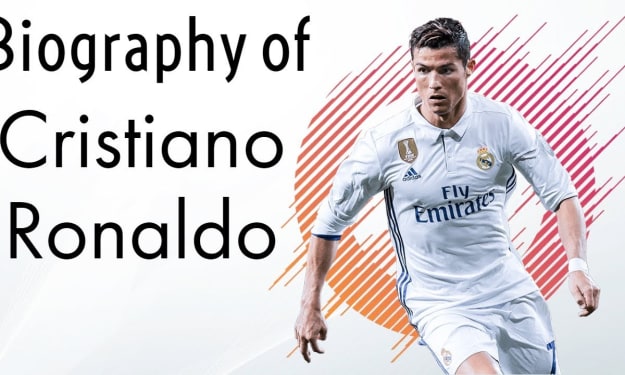
Cristiano Ronaldo Biography: From Madeira to Global Icon
Cristiano Ronaldo dos Santos Aveiro, extensively considered one of the finest footballers of all time, was born on February 5, 1985, in Funchal, Madeira, Portugal. His adventure from a small island to worldwide superstardom isn't simply the tale of athletic brilliance, however one of unwavering determination, relentless work ethic, and unequaled self-belief.
By Sports News about a year ago in History
Gerrymandering the Presidency: Why Trump could lose the popular vote in 2020 by 6 percent and still win a second term.
Donald Trump was the clear Electoral College winner in the 2016 election, despite losing the popular vote by a wide margin to Hillary Clinton. Anthony J. McGann, Charles Anthony Smith, Michael Latner and Alex Keena write that, unless the Supreme Court stops congressional gerrymandering, President Trump can guarantee re-election in 2020 – even if he loses by 6 percent. When the US Supreme Court takes up the issue of partisan gerrymandering this year, they will decide not only the fate of popular control in the House of Representatives and many state legislatures, but quite possibly the Presidency as well. If four Republican controlled state governments (Pennsylvania, Michigan, Wisconsin and Florida) change the way they allocate Electoral College votes, President Trump could be re-elected in 2020, even if he loses the popular vote by 6 percentage points. All the states need do is to allocate Electoral College votes by congressional district (like Nebraska and Maine), instead of giving all of the state’s electors to the statewide winner. Of course, this strategy only works to the benefit of the Republicans because the congressional districts in these states are heavily gerrymandered. As we argue in our book Gerrymandering in America, the congressional districts in many states are drawn to advantage the Republican Party. For example, in Pennsylvania in 2012 the Republicans took 13 out of 18 House districts even though the Democrats received more votes. If this partisan gerrymandering were outlawed, then allocating Electoral College votes by congressional district in the four states would actually disadvantage the Republican candidate for President. However, if the Supreme Court continues to allow partisan gerrymandering – as it has since its decision Vieth v. Jubelirer in 2004 – then the plan is highly effective and there is nothing that can stop the four states adopting it. Allocating Electors by congressional district is clearly legal – Nebraska and Maine already do it this way. Furthermore, the Republicans control the state legislature and the governor’s mansion in all four states. How allocating Electors by congressional districts could benefit the Republican candidate Surprisingly, the strategy that is most effective for the Republicans is to change how Presidential Electors are allocated in certain states that voted for Trump in 2016. Of course, the Republicans would get an advantage by allocating Electors more proportionally in states that Clinton won. The problem is that this would require the support of Democrats. For example, Republican legislators in Virginia and Minnesota have already proposed such measures, and Stephen Wolf describes this as an attempt to “gerrymander the electoral college”. The problem is that both these states have Democratic governors, who would surely veto such proposals. Similarly Harry Enten at fivethirtyeight.com shows that if all states allocated Electors by Congressional districts, the Republicans could win the Presidency despite a 5 percent popular vote deficit. Again the problem is that this would require Democratic controlled states to agree to such a system. However, in Pennsylvania, Wisconsin, Michigan and Florida, Republicans control both the state legislature and the
By Silas Blackwoodabout a year ago in History
Endless Struggle: The Israel-Palestine Conflict and the Human Cost of Power Politics
Introduction In the heart of the Middle East lies a conflict that has withstood the test of time, politics, and countless peace talks — the struggle between Israel and Palestine. What began as a territorial dispute in the early 20th century has spiraled into one of the most emotionally charged and politically complex crises in modern history. Today, it’s no longer just a battle over land, but a fight for identity, dignity, and survival. The Israel-Palestine conflict continues to claim lives, displace families, and divide nations, with its impact felt far beyond the borders of Gaza and Jerusalem.
By Umar Khattakabout a year ago in History
NASA Confirms Evidence of Alien Life? Latest Findings from Europa Mission
Introduction: The Europa Enigma For decades, Jupiter’s icy moon Europa has captivated scientists as one of the solar system’s most promising candidates for extraterrestrial life. In 2025, NASA’s Europa Clipper mission delivered its most compelling data yet—potential biosignatures beneath the moon’s frozen crust. While NASA has stopped short of declaring definitive proof of life, the evidence has ignited a scientific and philosophical firestorm. This article examines: The shocking findings from Europa’s subsurface ocean How NASA’s instruments detected potential alien biosignatures The scientific debate over what constitutes "proof" of life The ethical and societal implications of confirming extraterrestrial organisms What comes next in humanity’s search for life beyond Earth
By Silas Blackwoodabout a year ago in History
A Man Named Albert
The Civil War is probably one of the most important facets of American history taught in schools today, and for very good reason. It was by far the bloodiest and most brutal war Americans have ever been engaged in; brothers killing brothers, almost destroying the entire country from within. Perhaps that speaks to the stubbornness of Southern Americans in general, and their deeply ingrained inability to admit when they are wrong. The Civil War might just have been the darkest period in United States' history, which is why it's so important for our young people to study it. American schoolchildren are taught endlessly about the battles that were fought, the reasons their forefathers went to war, and the important figures who emerged on either side of it. More often than not, however, there are some people who are regularly forgotten. And of the forgotten few, one man just may be the most important of them all.
By Natalie Grayabout a year ago in History
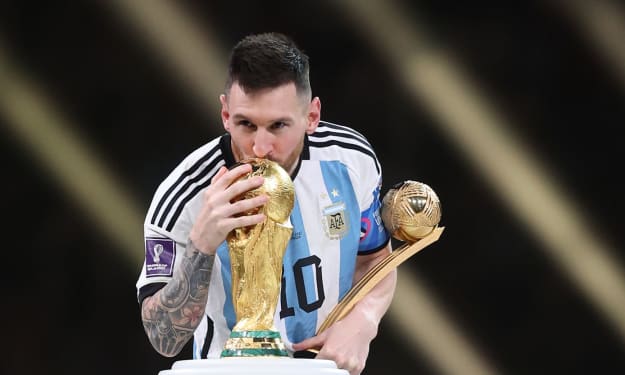
How Leonel Messi struggle?
Lionel Messi: A Life in Football Early Life and Childhood Lionel Andrés Messi was born on June 24, 1987, in Rosario, Santa Fe, Argentina. The third of four children, he was raised in a tight-knit, football-loving family. His father, Jorge Messi, worked in a steel factory, and his mother, Celia Cuccittini, was employed as a cleaner. From an early age, Messi showed an extraordinary affinity for football, often playing with his older brothers and cousins. Messi joined his first football club, Grandoli, a local team coached by his father, at the age of five. His talents soon became evident, and by the age of eight, he was playing for Newell’s Old Boys, a prominent club in Rosario. His youth career was marked by dazzling dribbles, precise passing, and an innate understanding of the game. However, at the age of 10, Messi was diagnosed with a growth hormone deficiency (GHD), a condition that stunted his physical development. His family could not afford the expensive treatment, and while Newell’s provided some support, it wasn’t enough to cover the full cost. The situation seemed dire until a miracle happened from across the Atlantic. Move to Barcelona and Youth Career In 2000, when Messi was 13, he traveled to Barcelona, Spain, for a trial with FC Barcelona, arranged through contacts and agents. Carles Rexach, the club’s sporting director, was so impressed with Messi's abilities that he famously offered a contract on a napkin—one of football’s most iconic moments. Barcelona agreed to cover his medical treatment and invited the Messi family to settle in Spain. Messi joined La Masia, Barcelona’s renowned youth academy. Though shy and reserved, Messi quickly rose through the ranks due to his exceptional skills. His close control, low center of gravity, and explosive speed made him stand out among peers. Professional Debut and Rise to Stardom Messi made his first-team debut for Barcelona on October 16, 2004, at the age of 17, against Espanyol. His first goal came on May 1, 2005, against Albacete, making him the youngest goal-scorer in the club's history at the time. Under Frank Rijkaard, and later Pep Guardiola, Messi’s career skyrocketed. Initially playing alongside Ronaldinho, Messi evolved into the focal point of Barcelona's attack. Guardiola’s tactical system, built around short passing and positional play, complemented Messi’s style perfectly. The Guardiola Era (2008–2012) The period from 2008 to 2012 is considered Messi’s golden era. Under Guardiola, Messi played in a “false nine” role, and Barcelona dominated both domestic and European football. Major Achievements: La Liga titles: 2009, 2010, 2011 UEFA Champions League: 2009, 2011 Ballon d’Or wins: 2009, 2010, 2011, 2012 Notable records: Most goals in a calendar year (91 goals in 2012) Messi formed a deadly trio with Xavi Hernández and Andrés Iniesta, revolutionizing modern football. Barcelona's 2009 treble-winning season (La Liga, Copa del Rey, Champions League) was historic. Continued Success and Individual Brilliance Post-Guardiola, Messi continued to thrive under different managers: Tito Vilanova, Luis Enrique, and Ernesto Valverde. He adapted his style, becoming more of a playmaker while retaining his goal-scoring edge. In 2015, under Luis Enrique, Messi led the famous attacking trio "MSN"—Messi, Suárez, Neymar—to another treble, winning the Champions League, La Liga, and Copa del Rey. Records and Stats: All-time top scorer for FC Barcelona (672 goals in 778 games) Most goals in La Liga history Most assists in La Liga history International Career with Argentina Youth Success: Messi made his senior debut for Argentina in 2005 and won the FIFA U-20 World Cup the same year. In 2008, he led Argentina to a gold medal at the Beijing Olympics. Challenges and Criticism: Despite his club success, Messi faced criticism for underperforming with the national team. Argentina lost three major finals during his prime: 2014 FIFA World Cup final vs. Germany Copa América finals in 2015 and 2016 (both to Chile) In 2016, after the third loss, Messi temporarily retired from international football, citing frustration and emotional burnout. The nation pleaded for his return, and he eventually came back. Triumph at Last: In 2021, Messi finally achieved what had eluded him—he won the Copa América, beating Brazil in the final at the Maracanã. The victory was deeply emotional and cemented his legacy. In 2022, Messi crowned his international career by leading Argentina to win the FIFA World Cup in Qatar. He scored 7 goals, was named Player of the Tournament, and lifted the trophy after a dramatic final against France, which ended in a penalty shootout. Departure from Barcelona and Move to PSG Due to Barcelona's financial crisis and La Liga salary cap regulations, Messi’s contract renewal became impossible. In August 2021, Messi tearfully announced his departure after 21 years at the club. He joined Paris Saint-Germain (PSG) on a two-year deal, reuniting with Neymar and playing alongside Kylian Mbappé. Though his first season was relatively quiet, he eventually adapted and helped PSG secure domestic titles. Move to Inter Miami and MLS Impact In 2023, Messi made a landmark move to Inter Miami CF in the Major League Soccer (MLS). His arrival boosted the profile of American soccer significantly. He led the team to win the Leagues Cup, their first trophy, and brought unprecedented media attention to MLS. Messi’s move was more than a career choice—it was a cultural shift, bringing global attention to a growing football market. Playing Style and Influence Messi is often described as a complete footballer. He combines vision, dribbling, finishing, passing, and tactical intelligence. Notably, he: Is famous for his left foot Has a low center of gravity that aids his balance Excels in both goal-scoring and playmaking Comparisons with Cristiano Ronaldo have defined an era. While Ronaldo is known for athleticism and power, Messi is seen as the natural genius with a poetic style of play. Personal Life Messi is known for his humility and introverted personality. He married his childhood sweetheart, Antonela Roccuzzo, in 2017. They have three sons: Thiago, Mateo, and Ciro. He has been involved in charity work through the Leo Messi Foundation, focusing on health and education for underprivileged children. Despite occasional controversies (like tax issues in Spain), Messi is widely regarded as a model professional with an impeccable public image. Awards and Honors Club: 10× La Liga titles 7× Copa del Rey titles 4× UEFA Champions League titles 3× FIFA Club World Cups International: 1× FIFA World Cup (2022) 1× Copa América (2021) 1× Olympic Gold Medal (2008) 1× FIFA U-20 World Cup (2005) Individual: 8× Ballon d'Or (record) 6× European Golden Shoes 2× FIFA World Cup Golden Ball Numerous records for goals, assists, and appearances Legacy Lionel Messi is widely regarded as one of the greatest footballers of all time, if not the greatest. He transcended the sport, not only because of his technical abilities but also due to his story—overcoming physical adversity, staying loyal to his club, and finally achieving international glory. He has influenced generations of players and fans with his elegance, sportsmanship, and humility. Beyond the records and trophies, Messi’s greatness lies in how he made football look like art.
By Saleh uddin Hiraabout a year ago in History
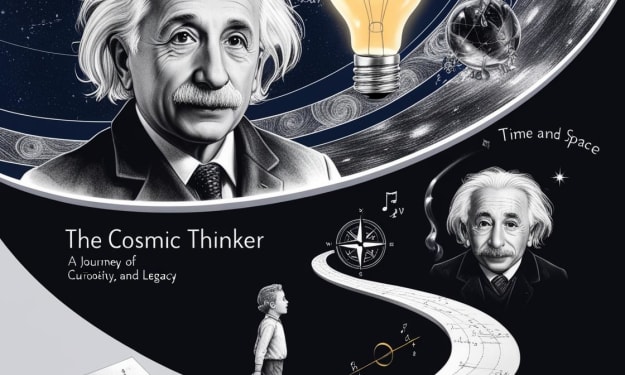
The Visionary Genius: The Story of Albert Einstein. AI-Generated.
A Journey of Discovery, Curiosity, and Legacy In the annals of human history, there are few names as universally recognized as Albert Einstein. With his unruly hair, thoughtful eyes, and iconic presence, Einstein became the very image of genius in the modern age. But beyond the photographs and popular quotes lies a deeper story—a journey of relentless curiosity, profound discovery, and a legacy that reshaped our understanding of the universe itself.
By Zain Ul Abidin Khanabout a year ago in History
The Lion of Allah: The Story of Hazrat Ali ibn Abi Talib (RA). AI-Generated.
Introduction Hazrat Ali ibn Abi Talib (RA) is one of the most revered and respected figures in Islamic history. He was the cousin, son-in-law, and close companion of the Prophet Muhammad (PBUH). Ali (RA) is known for his unwavering faith in Allah, his courage on the battlefield, and his profound wisdom and justice. He became the fourth caliph of Islam, and his life serves as a source of inspiration for Muslims around the world. This story explores the remarkable journey of Hazrat Ali, his deep commitment to Islam, and his enduring legacy.
By Zain Ul Abidin Khanabout a year ago in History