Biographies
"Cooking with Chaplin: The Silent Star’s Favorite Dishes"
It has long been recognized that “food” in one form or another was a very important part of Charlie Chaplin’s life and art. Scenes as widely recognized and remembered as the boiled shoe Thanksgiving dinner in The Gold Rush, to the pancake breakfast and “hearty” stew dinner of The Kid and the strawberries and “Henglish” mustard of The Great Dictator are just a few examples. How many people know, however, that Charlie was also in the habit of publishing his recipes?
By jahidul Islam Sifatabout a year ago in History
History Would’ve Burned: How Fire Shaped Civilizations
Fire is one of humanity’s oldest and most transformative discoveries. Its mastery marked the dawn of civilization, altering the course of history in ways both constructive and destructive. From providing warmth and protection to enabling technological advancements, fire has been a double-edged sword—capable of nurturing societies or reducing them to ashes. This article explores how fire has shaped human history, from prehistoric times to the modern era, and how civilizations have risen, fallen, and adapted in its flames. The Dawn of Fire: Humanity’s First Great Tool The controlled use of fire dates back at least 1 million years, with evidence suggesting that early hominids like Homo erectus harnessed it for warmth, cooking, and protection. Fire allowed early humans to: Cook food, making it more digestible and unlocking greater nutritional value, which may have contributed to brain development. Ward off predators, enabling safer settlements. Extend waking hours by providing light after sunset, fostering social interaction and tool-making. Without fire, human evolution and migration—especially into colder climates—would have been drastically different. Fire and the Birth of Civilization As humans transitioned from nomadic hunter-gatherers to settled agricultural societies, fire became indispensable. 1. Agriculture & Land Management Slash-and-burn farming cleared forests for crops, though it also led to soil depletion over time. Controlled burns were used by Indigenous peoples to manage ecosystems, promoting biodiversity. 2. Metallurgy & Technology The discovery of smelting (extracting metal from ore using fire) revolutionized tool-making, leading to the Bronze and Iron Ages. Fire enabled ceramics and glassmaking, essential for storage, construction, and art. 3. Warfare & Destruction Fire was weaponized early, from flaming arrows to Greek fire (a Byzantine incendiary weapon). Cities like Rome (64 AD) and London (1666) suffered catastrophic fires that reshaped urban planning. Fire as a Cultural and Religious Symbol Beyond its practical uses, fire held deep spiritual significance: Zoroastrianism revered fire as a symbol of divine wisdom. Greek mythology told of Prometheus, who stole fire from the gods to give to humanity. Hindu rituals involve sacred fires (yajna) for purification and offerings. The Industrial Revolution: Fire Powers the Modern World The 18th and 19th centuries saw fire’s role expand exponentially with the advent of: Steam engines (burning coal) powering factories and transportation. Internal combustion engines, leading to automobiles and airplanes. Electricity generation, initially through coal and later gas and oil. However, industrialization also brought pollution, deforestation, and climate change—unintended consequences of humanity’s reliance on fire. Fire in the Modern Age: Control and Catastrophe Today, fire remains both a vital tool and a devastating force: 1. Controlled Use Energy production (natural gas, nuclear reactions). Space exploration (rocket propulsion). Medicine and industry (sterilization, manufacturing). 2. Uncontrolled Disasters Wildfires (exacerbated by climate change) destroy millions of acres annually. Urban fires (e.g., Grenfell Tower, 2017) reveal vulnerabilities in modern infrastructure. Warfare (napalm, incendiary bombs) continues to use fire as a weapon. Conclusion: Will Fire Consume or Sustain Us? Fire has been a defining force in human history—both creator and destroyer. As we advance, the challenge is to harness its power responsibly, mitigating its dangers while leveraging its benefits. From ancient campfires to fusion energy, fire remains at the heart of civilization’s progress. If history is written in flames, then humanity’s future will be shaped by how well we master this primal force—before it masters us.
By Silas Blackwoodabout a year ago in History
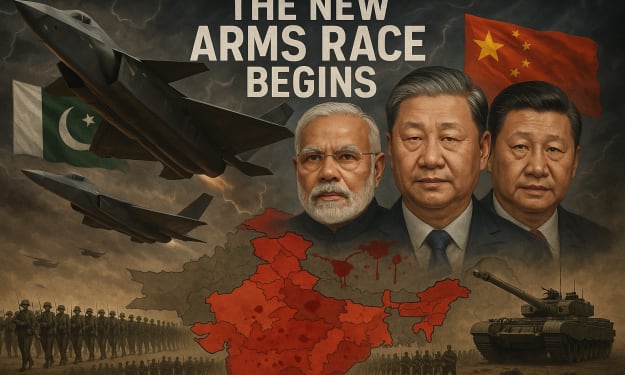
Pakistan's Acquisition of China's J-35 Stealth Fighters: Strategic Implications and Regional Dynamics
Introduction In a significant development in South Asian defense dynamics, Pakistan is set to acquire 40 J-35 stealth fighter jets from China over the next two years. This move marks a pivotal shift in Pakistan's military capabilities and has far-reaching implications for regional security, particularly concerning India.
By Umar Khattakabout a year ago in History
The Queen in History .....
The Queen in History Throughout history, queens have played significant roles in shaping nations, influencing politics, and inspiring people across the world. From powerful monarchs who ruled empires to symbolic consorts who supported their kings, queens have left lasting legacies. While the role of a queen has varied greatly depending on the time period and culture, their impact on history is undeniable.
By Akas Yamimabout a year ago in History
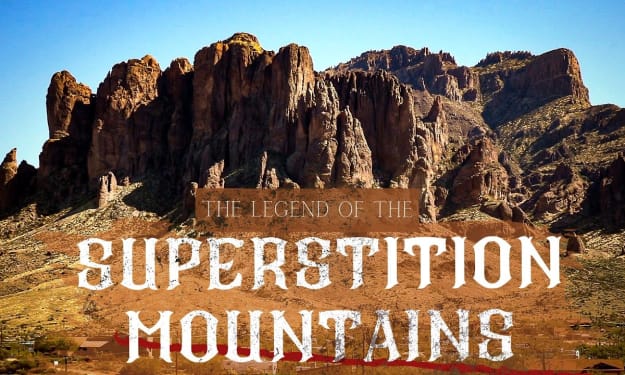
Julia Thomas: The Woman Who Died Chasing the Lost Dutchman’s Gold
🌵 She Sat by His Bedside. Then She Went Looking for Gold. In the vast, rugged history of the American West, few tales are as enduring — or as haunting — as that of the Lost Dutchman’s Gold Mine. Most versions of the story center on Jacob Waltz, the elusive German immigrant who allegedly hid a treasure trove of gold deep in Arizona’s Superstition Mountains.
By Rukka Novaabout a year ago in History
Elon Musk's interesting life story. Content Warning.
Early Life and Education Born on June 28, 1971, in Pretoria, South Africa, Elon Musk was the eldest of three children. His mother, Maye Musk, was a Canadian model and dietitian, and his father, Errol Musk, was a South African electromechanical engineer. From a young age, Musk exhibited a keen interest in computing and technology. At age 12, he developed and sold a video game called Blastar for $500.
By Himanish Royabout a year ago in History
99-million-year-old dinosaur tail found preserved inside amber fossil
**99-Million-Year-Old Dinosaur Tail Found Preserved Inside Amber Fossil** In one of the most extraordinary paleontological discoveries of the 21st century, scientists have uncovered a 99-million-year-old dinosaur tail preserved in amber. This rare and stunning find, unearthed in Myanmar, has provided researchers with a unique glimpse into the ancient world, revealing incredible details about feather evolution, dinosaur biology, and the ecosystems of the Cretaceous period.
By GLOBAL NEWSabout a year ago in History
Silent Rebellion
Silent Rebellion Bengalen, 1930 was 1930. The grip of the British Empire was still iron, but the fire was still on fire in the heart of villagers, students and poets. Among them was a young bar - 16 years old - Annealvan, from a quiet village near the banks of the Padma River.
By MD. zahid prantoabout a year ago in History
Joe Biden. AI-Generated.
Joe Biden was born on November 20, 1942, in Scranton, Pennsylvania, a small city in the United States. He grew up in a working-class family. His father, Joseph Biden Sr., worked very hard to take care of the family. At times, the family had little money. But they stayed strong and close together.
By Khalil Rehmanabout a year ago in History
The Golden Hoard of Bactria: Afghanistan’s Lost Treasure of the Nomads :. AI-Generated.
The Discovery of the Bactrian Gold In 1978, Soviet archaeologist Viktor Sarianidi spearheaded a team of scholars into the Sheberghan region of northern Afghanistan. Located merely 80 miles south of the Amu Darya River and adjacent to the borders of Turkmenistan and Uzbekistan, they unearthed a series of burial mounds locally referred to as Tillya Tepe, or “Hill of Gold. ” What they uncovered was nothing short of extraordinary: six intact gravesfive women and one mandating from the 1st century BCE. Each grave served as a time capsule containing intricate treasures made of gold, silver, ivory, and gemstones. Over 20,000 artifacts were excavated from the site, a collection now renowned as the Bactrian Gold. The burial customs and items revealed a narrative of a cultural melting pot. The craftsmanship showcased Greek, Persian, Indian, Chinese, and nomadic influences, reflecting Afghanistan's ancient role as a nexus of the Silk Road. Who Were the Bactrians? The treasure is thought to belong to the Yuezhi or Kushan nomads, possibly ruling elites from the Greco-Bactrian Kingdom or early Kushan Empire. These individuals flourished during a period of profound cultural amalgamation following Alexander the Great’s conquest of Central Asia. The tombs disclosed features of Hellenistic art: gold medallions adorned with Athena’s likeness, meticulously crafted laurel wreaths, and mythological designs. However, these were blended with Eastern motifssuch as solar disks and lotus blossomsdemonstrating how the elite assimilated symbols from diverse traditions to convey power and divinity. The Bactrian treasure was not merely ornamental jewelry and trinkets; it represented a declaration of status, diplomacy, and divine entitlement. Numerous pieces were ceremonial in nature: royal diadems, ornate belts, and even portable gold crownscrafted for nobility on the move. The Fate of the Treasure in Modern Times Afghanistan’s contemporary history is plagued by decades of conflict. Following its discovery, the treasure was relocated to the National Museum of Afghanistan in Kabul. However, during the Taliban's ascent in the late 1990s, the museum was subjected to looting, bombing, and vandalism. Many feared the Bactrian Gold was irrevocably lost. Remarkably, the treasure had been discreetly transferred to a secure underground vault beneath the presidential palace. Referred to as the “Presidential Palace Vault,” it was safeguarded by a small cadre of courageous Afghan officials who maintained its location, even under duress from the Taliban. It was not until 2003, following the collapse of the Taliban regime, that the world rediscovered the Bactrian Gold. An international group confirmed the security of the treasure, and it was exhibited to the public for the first time in decades. Since then, it has journeyed through France, the U. S. , Germany, Japan, and beyondrepresenting both Afghanistan’s glory and resilience. Highlights of the Treasure Some of the most renowned artifacts from the collection include: The Folding Gold Crown: A nomadic crown constructed of delicate gold leaves, capable of collapsing for transport. The Aphrodite Pendant: A Hellenistic medallion portraying the Greek goddess, adorned with semi-precious stones. Chased Belt Buckles: Illustrating mythological creatures, warriors, and ceremonial scenes. Ivory Carvings and Beads: Narrating tales of distant trade and cultural exchange. Coins and Ceramics: Providing insights into political alliances and economic activity. Each item signifies not merely beauty, but history, merging East and West in a manner that few collections can. The Estimated Worth Although no formal appraisal exists for the entire collectiondue to its distinctive historical and artistic importanceexperts estimate the Bactrian Gold exceeds a value of $100 million USD. Nevertheless, its cultural and symbolic significance is immeasurable. Unlike numerous treasures that have been plundered or sold on the black market, the Bactrian Gold remains complete and intact, a rarity for a region that has experienced considerable turmoil. Its preservation is a miracleand a testament to the dedication of those who safeguarded it during Afghanistan’s darkest times. Conclusion: A Legacy Buried and Rejuvenated The Bactrian Gold is more than an archaeological findit is a glimpse into a forgotten realm where nomads, kings, and conquerors exchanged ideas and luxuries along the Silk Road. It reflects Afghanistan’s golden era, far removed from the war-torn depiction of contemporary times. Today, Afghanistan continues to confront political instability. Yet, the Bactrian Gold conveys a compelling narrative: that greatness resides not solely in conquest, but in culture, and that beneath the sands of history lie stories of unity, beauty, and perseverance.
By Say the truth about a year ago in History