Biographies
The Queer Genius Who Changed Art Forever
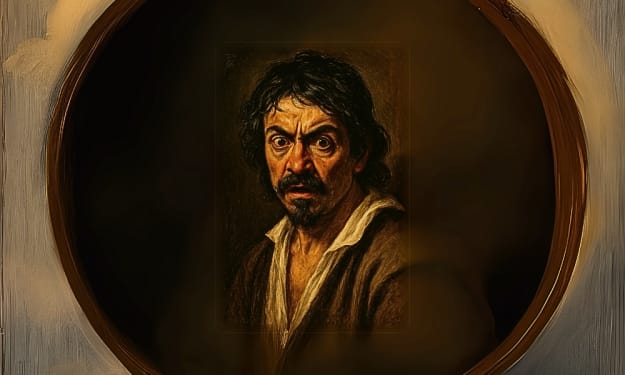
It was the summer of 1606. Across Italy, bounty hunters carried notices with a name etched in bold: Michelangelo Merisi da Caravaggio. Rome had sentenced him to death for murder. His patrons had vanished. His friends had scattered. But in churches across the city, his paintings still standout, terrifying, transcendent, too real to ignore. Even as he fled through the ports of Naples, the island of Malta, and the dark corners of Sicily, Caravaggio was painting furiously. Each canvas was a cry of defiance. Each image a page they would try to burn.
By Strategy Hubabout a year ago in History
The Voice of Grain. Content Warning.
I found it tucked between grain reports- a thin, checkered notebook, its cover the color of withered wheat. 'Recipes 1933' - the handwriting was careful, almost school-like. At first glance, nothing unusual. But by page three, next to a borscht recipe, I read:
By Viktoriia Tkachenkoabout a year ago in History
Why Francesco Borromini’s Churches Were Almost Erased from History
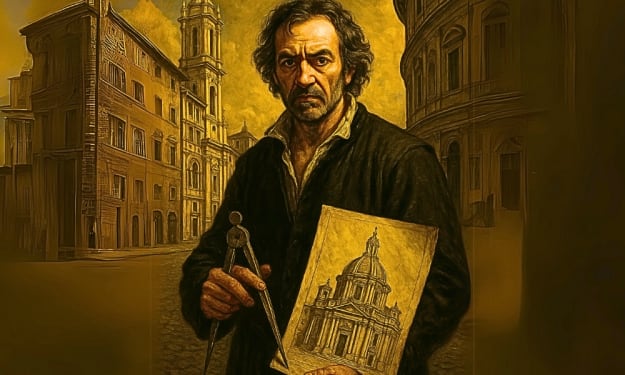
It was August of 1667, and the corridors of San Giovanni dei Fiorentini in Rome, echoed with silence. Francesco Borromini, once the most daring architect in the Italian city of Rome, lay dying from self-inflicted wounds. Though his buildings breathed with imagination and mathematical wonder, his name was already fading. Rome’s piazzas were filled with the applause of his rival Bernini. Borromini’s masterpieces, tucked in narrow alleyways and cloisters, went unnoticed. He had reshaped the soul of Baroque architecture, yet history was writing him out of its pages. Gian Lorenzo Bernini, Borromini's rival, was everything Rome loved: charming, politically astute, and an unrivaled master of spectacle. He was adored, mythologized, and immortalized. Rome became his stage, and he knew how to play it. In contrast, Borromini, with his ascetic temperament and uncompromising vision, refused to perform. And Rome, a city that adored performance, chose the actor over the architect.
By Strategy Hubabout a year ago in History
Stories that have gone up in the smoke of chaos.
History is written by the victors. Some leaders in History would prefer to burn and destroy stories of the journey that challenge their ideals. Hitler and others try to control information, but the results are not an expected. Elements of truth rise, as wisps of independent thought, and the phoenix rises from the ashes.
By Katherine D. Grahamabout a year ago in History
“A Horse, A Horse, My Kingdom for a Horse!”. Honorable Mention in History Would’ve Burned This Page Challenge.
Finding his kingly remains, buried under a car park, seemed an ironic way to find him. For centuries, a king scorn from society. A king known for his wacky appearance and horrific acts. Stories simply passed down from generation to generation. Known now as a joke rather than the King of England.
By Elizabeth Butlerabout a year ago in History
Rajat Khare Venture Capitalist and Deep-Tech Investor Driving India’s AI Revolution
India stands at a unique inflection point in technology. With its vast pool of engineers and data scientists, the country has the assets to lead the global artificial intelligence (AI) shift – yet it faces a chronic challenge: brain drain. Venture capitalist and IIT Delhi alumnus Rajat Khare stresses that India must focus on homegrown AI talent to realize its ambitions. In the words of Business Today, “Rajat Khare emphasizes the importance of fostering homegrown AI talent” as India develops its own AI models. Indeed, TechTimes describes Khare as “a well-known Deep-Tech Investor, a Venture Capitalist, and the founder of Boundary Holding”. An alumnus of the prestigious IIT Delhi, Khare co-founded Boundary Holding in Luxembourg to back cutting-edge startups worldwide. His career – spanning entrepreneurship, research and venture capital – positions him to comment on how India can harness its innovation potential.
By Financial Investment Groupabout a year ago in History
Donald J. Trump – From Real Estate Mogul to U.S. President. AI-Generated.
Early Life and Education Donald John Trump was born on June 14, 1946, in Queens, New York City. He was the fourth of five children to Fred Trump, a successful real estate developer, and Mary Anne MacLeod, a Scottish immigrant. Raised in wealth, Trump was known for being assertive and energetic from a young age. To discipline him, his parents sent him at age 13 to the New York Military Academy, where he became a student leader and athlete.
By Zain Ul Abidin Khanabout a year ago in History
The Life of Prophet Muhammad (Peace Be Upon Him). AI-Generated.
In the heart of the Arabian Peninsula, over 1400 years ago, a child was born in the city of Mecca whose life would change the course of history forever. This child was Muhammad ibn Abdullah, peace be upon him, the final prophet in Islam. His story is one of divine guidance, unwavering faith, and profound compassion that transformed a harsh and fragmented society into a thriving, just civilization.
By uzair hadiabout a year ago in History
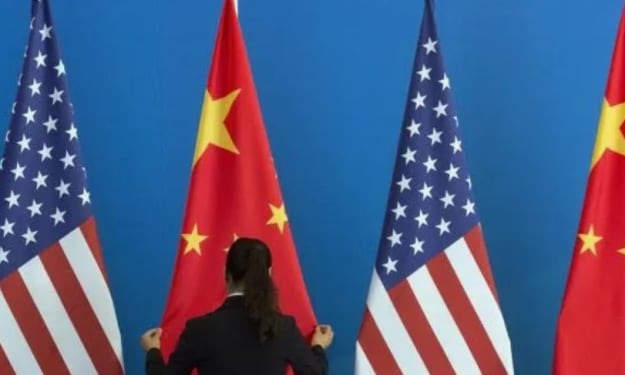
Donald Trump says US-China trade talks to be held in London on June 9
On June 9, the United States and China will hold a new round of high-level trade talks in London, according to Donald Trump. The former president made the surprising announcement in a post on social media in which he expressed optimism regarding the discussions. Trump asserts that the U.S. To resume negotiations aimed at resolving ongoing trade tensions, Treasury Secretary Scott Bessent, Commerce Secretary Howard Lutnick, and Trade Representative Jamieson Greer will meet with their Chinese counterparts, led by Vice Premier He Lifeng. After a period of renewed hostilities marked by new tariffs, export restrictions, and diplomatic strain, this meeting represents a significant step in efforts to stabilize economic relations between the world's two largest economies. Analysts view the decision to hold the meeting in London as symbolic, suggesting an effort to include Europe's perspective in the dialogue and providing a neutral setting for discussions. China and the United States of America are still locked in a complicated economic dispute over everything from semiconductor exports to education visas to cybersecurity. Some of the tariffs that both sides imposed were temporarily eased by the Geneva Agreement, which was reached earlier this year. However, tensions have persisted, with each side asserting that the other has broken the agreements made within that framework. The United States' export controls on cutting-edge semiconductor technologies are anticipated to be one of the most pressing topics under discussion in London. Chinese access to AI chips and related technologies developed in the United States has been restricted by both the Trump administration and the Biden administration. Beijing has been enraged by these actions, which Beijing claims are discriminatory and disrupt global supply chains. These actions are meant to safeguard national security and innovation in the United States. China responded by imposing stricter licensing requirements for the export of rare earth minerals, which are essential components of electronic devices and electric automobiles. U.S. officials see the regulations as an attempt to weaponize supply chain dependencies, despite Beijing's insistence that they are for the protection of national resources. Washington has demanded that China's application of these rules be more transparent and predictable. The recent U.S. visa restrictions that target Chinese graduate students in sensitive fields like robotics, aerospace, and quantum computing are another source of contention. Beijing has vehemently rebuked the move, claiming that it is politically motivated and detrimental to academic exchange. As part of any larger trade agreement, it is anticipated that the Chinese delegation will demand the removal of these restrictions. Domestic pressure is exerted on both governments to achieve measurable outcomes. Farmers and manufacturers in the United States are pleading with the government to reduce tariffs that have hampered exports and increased costs. As a result of having less access to Western investment and technologies, Chinese businesses are experiencing difficulties. The economic stakes are high, and if nothing is done, new retaliatory measures could be taken. The news of the talks in London has spooked the markets. While some investors appreciated the chance to talk, others are still skeptical of any long-term advances. Negotiations in the past have frequently ended without significant progress, and trust between the two countries remains low. The decision to hold the meeting in London also reflects larger geopolitical considerations. A chance to demonstrate diplomatic outreach is provided by holding talks in the United Kingdom, given that Washington and Beijing are competing for influence in Europe. Additionally, it demonstrates a willingness to cooperate with Western allies as stakeholders in the stability of global trade. In order to determine whether the two sides can make significant progress on the main issues, observers will closely monitor the situation. The key questions include whether the United States will loosen restrictions on exports, whether China will commit to fairer trade in rare earths, and whether both sides will be able to stop future crises involving students, intellectual property, and digital trade. The June 9 meeting may decide whether a more long-term agreement is possible or whether economic friction between the United States and China will grow. The deadline to extend the temporary tariff truce is fast approaching. Officials hope that direct engagement at the highest levels can pave the way for de-escalation while expectations are measured. London is the next stage in a global economic drama that is being watched by the entire world. Its outcome could have long-term effects on trade, innovation, and diplomacy.
By GLOBAL NEWSabout a year ago in History
Khalid ibn al-Walid (The Greatest Commander)
Throughout the pages of military history, few commanders have carved a path of victory as consistently and decisively as Khalid ibn al-Walid. Known as “The Sword of Allah,” Khalid’s name is synonymous with invincibility, and his leadership redefined the early Islamic conquests. His undefeated record in over a hundred battles remains a testament to his extraordinary skill, vision, and mastery of the art of war.
By Mehtab Ahmadabout a year ago in History
Dear Anna.
Why be stubborn, dear Anna? Aren’t you tired of that? The revolution will not come. It’s all an idea that will fail to be embodied. You are not as bright as you think you are. And, excuse me for saying so, but you are naive. Thinking that you are better than men is ridiculous. Trust me—you’d be better off forgetting about these political dreams of yours. Be pretty. Yes, that’s much better: be pretty…
By Carlos M. Suárez Tavernierabout a year ago in History