Biographies
🌙 The Woman Who Built the Light of Knowledge
In a time when the voices of women were often silenced, one woman chose to let her actions speak louder than any words. Her name was Fatima al-Fihri — and her vision lit the world. Over a thousand years ago, in the ancient city of Kairouan, Tunisia, Fatima was born into a well-educated, devout Muslim family. Her father, Mohammad al-Fihri, was a respected merchant who believed deeply in the power of both faith and knowledge. From a young age, Fatima was taught the importance of education, religious devotion, and service to society. Later, her family migrated to Fez, Morocco, a thriving city of culture, trade, and scholarship. Fatima grew up in this rich atmosphere of learning, alongside her sister Mariam. Life seemed full of promise — but fate would soon test her strength. In a short period, Fatima’s world turned upside down. She lost her father, her husband, and her brother. The grief was overwhelming, but she bore it with patience and faith. When the time came to divide her family’s inheritance, Fatima found herself in possession of great wealth. But she also found herself facing a greater question: What will I do with this wealth? Do I mourn in silence, or do I rise in purpose? Most would have chosen comfort, or even despair. But Fatima chose vision. She looked around the growing city of Fez and saw something missing — a place where people could not only pray but learn. A place that would serve both the soul and the mind. So she made a decision that no woman — and very few men — had ever made before. She would build a mosque that was also a university. A place where seekers of knowledge from all corners of the world could come to study, reflect, and grow. A place that combined worship, wisdom, and wonder. And so, in the year 859 CE, Fatima al-Fihri laid the foundation of Al-Qarawiyyin University. She personally oversaw every part of the construction. She fasted every day during the entire building process as a spiritual act of devotion. Her heart was deeply attached to the mission — not just to create a structure, but to build a sanctuary of light, where the flame of knowledge would never fade. Al-Qarawiyyin wasn’t just another mosque. It quickly became a magnet for scholars, philosophers, jurists, and scientists. Subjects taught included Islamic law, medicine, mathematics, astronomy, grammar, and even music. It had classrooms, a vast library, and a structured curriculum. And perhaps most importantly — it granted formal degrees, making it the oldest degree-granting university in the world. Long before the rise of Oxford or Cambridge, long before Europe’s Renaissance, a Muslim woman had already sparked a revolution in learning. Today, UNESCO and the Guinness World Records recognize Al-Qarawiyyin as the oldest continuously operating university on Earth. It has stood for over 1,100 years — a living monument to the mind of a woman who refused to let her sorrow go to waste. Fatima al-Fihri never published a book. She never led a government. She never sat on a throne. But she did something far more powerful: she built a house of knowledge that would outlive empires, kings, and centuries. She reminds us that women in Islam were never meant to be silent — they were meant to build, lead, and uplift. She reminds us that real legacy doesn’t lie in gold or power, but in how many minds you light, how many hearts you awaken, and how many generations you serve. --- 🌟 Moral of the Story: Fatima al-Fihri teaches us that true greatness comes not from titles, but from intention. That one woman, armed with purpose and patience, can shape the destiny of a thousand years. She didn’t build her name — she built something far greater: a future. > "You don’t need a crown to leave a legacy. You need courage, faith, and a reason greater than yourself."
By Meer kalsoomabout a year ago in History
Top Story
Top Story – A Story of Courage and Voice By Kelly Yang Narrative-style summary (800+ words) Mia Tang was no stranger to speaking up. After all, she’d helped run a motel, exposed unfair labor practices, and stood up to racism—all before turning 13. But now, she was about to face something even more intimidating: the world of professional journalism.
By Akhtar Ali about a year ago in History
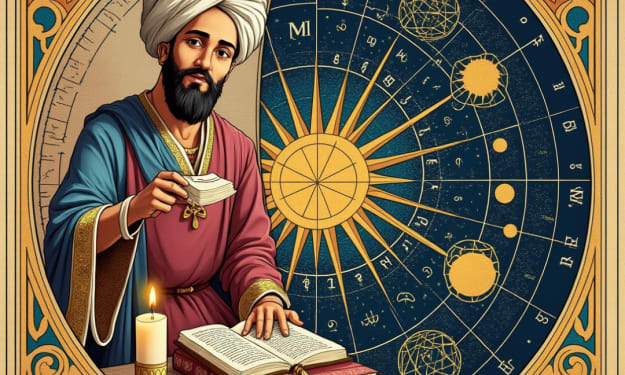
The Life and Works of Bu Ali Sina. AI-Generated.
Introduction Bu Ali Sina, known in the West as Avicenna, was one of the most influential thinkers and scientists of the Islamic Golden Age. His vast contributions to philosophy, medicine, mathematics, astronomy, and other fields earned him the title of the "Prince of Physicians" and the father of early modern medicine. He left behind a legacy that would shape both the Islamic and European intellectual traditions for centuries.
By Zain Ul Abidin Khanabout a year ago in History
The Fisherman. Runner-Up in History Would’ve Burned This Page Challenge.
Un, Deux, Trois, Quatre, Cinq… The Fisherman felt the cold water of the channel still clinging to his catch’s smooth scales. It was healthy, meaty—a good day's catch. His little woven carrying basket sat full when the Fisherman carved his path back to his humble home through the sandy beaches of the Norman shore like he did every day when the sea lay calm.
By Matthew J. Frommabout a year ago in History
The Role of Rajat Khare and Boundary Holding in Shaping India's Global AI Ambitions
India is in the middle of an important transition in the field of artificial intelligence (AI). Because it has many tech workers, advanced IT systems and a more welcoming environment for investors, the nation is set to lead in AI. However, the country faces a huge problem because its best-educated people are moving to leading technological cities globally. As an venture capitalist for deep technology, Rajat Khare says this issue of losing skilled individuals to other countries must stop if India wants to excel in AI.
By Eber Devineabout a year ago in History
Mary Shelley
Her mother was the famed feminist Mary Wollstonecraft who was the author of The Vindication of the Rights of Woman (1792). She often read at her mother’s grave which inspired her imagination to write stories. Today, in 2025, we are still reading her published masterpiece.
By Ruth Elizabeth Stiffabout a year ago in History
Chevalière D’Eon. Runner-Up in History Would’ve Burned This Page Challenge.
History can make myths, provide heroes, take control of our collective memories. History has a powerful hold on the stories we tell. And just as importantly, the stories we don’t or can’t tell. History is a memory, a shared past, made concrete in the words of books. And books can be burned. Burning a book is an attempt to cover the footpath that got us to here. It is a way of shutting down lives that appear out of context, peculiar, not like “us”. It leaves some lives, nameless.
By Rachel Robbinsabout a year ago in History
The Most Charming Mountain Towns in America
The Most Charming Mountain Towns in America: 800 Hidden Gems and Beloved Escapes America's mountain towns are some of the most breathtaking and idyllic getaways in the country. They are tucked away among towering peaks, surrounded by lush forests, and full of small-town charm. These charming locations offer the ideal combination of natural beauty and welcoming communities, whether you're looking for outdoor adventure, cozy cabins, or a tranquil getaway from city life. From the rugged Rockies to the serene Smokies, here are some of the most enchanting mountain towns across the United States that deserve a spot on your travel bucket list.
By parves mosharafabout a year ago in History
The Lawman They Tried to Forget: Bass Reeves and the Masked Myth of the American Wes
The truth is, some stories were never lost. They were buried. Not because they lacked heroes but because the heroes didn’t fit the version of America the storytellers wanted to sell.
By Robert Lacyabout a year ago in History