Biographies
How a Tiny Village Changed the Course of a War. Content Warning.
They called it Bellenhof— a dot on the map of Eastern Europe, barely big enough for a dozen homes and a crooked church. No one outside the region paid much mind to it — not until the autumn of 1943, when the winds of war swept too close. The Second World War had devoured much of the continent by then. Borders shifted like sand under boots; armies marched; cities crumbled. And somewhere on the edge of those shifting lines lay Bellenhof, its people caught between advancing Allied forces and retreating Axis divisions. The village sat atop an ancient Roman road — a narrow strip of cobblestone that connected two key mountain passes. Whoever controlled that road controlled access to the valley beyond, a vital route for troop movement and supply chains. In late September, a German convoy rolled through Bellenhof. Soldiers requisitioned homes, stabled their horses in the old barns. The villagers — farmers, bakers, craftsmen — said nothing. They knew better. But among them lived Anja Keller, a young woman whose husband had been conscripted years earlier. Her heart, like the war itself, burned quietly. She worked at the village bakery by day, but at night she listened — to passing soldiers, to whispered rumors from travelers. And what she heard chilled her: a large German column was massing to retreat through the mountain pass, hoping to cut off the advancing Allies. If they succeeded, thousands of Allied soldiers would be trapped in the lowlands. There was no time to send a message. No radios, no phones. Couriers would be shot on sight. But Anja had an idea — one born of old stories her grandmother used to tell about the Roman road. Beneath it, somewhere, ran the remains of an ancient aqueduct — partially collapsed, half-forgotten. If they could trigger a landslide, they could bury the road... delay the retreat... maybe long enough for the Allies to catch up. It was a mad plan. The villagers were farmers, not engineers or soldiers. But desperation sharpens the mind. Quietly, under cover of darkness, Anja gathered those she trusted: the blacksmith Otto, old Marta from the inn, and the young shepherd Emil, whose knowledge of the hills was unmatched. Over the next two nights, they dug — risking everything — beneath the hillside flanking the road. They packed the weakened soil with barrels of oil, gunpowder stolen from careless soldiers, anything they could find. At dawn on the third day, the German convoy prepared to move. Tanks, trucks, horses — hundreds of men lined the ancient road. Anja waited on the hilltop, heart pounding. At her signal — a single flaming arrow — Emil loosed the fuse. For a moment, nothing. Then — a roar like the gods themselves. The earth trembled. The hillside collapsed, tons of stone and soil pouring onto the road. Wagons toppled. Soldiers shouted in panic. The convoy ground to a halt. Word spread like wildfire. Nearby Allied scouts, hearing the blast, raced to investigate. Within hours, Allied forces launched a swift advance, overwhelming the stalled Germans. The trapped Axis units, unable to retreat, surrendered en masse. Historians would later write that the battle for the pass had turned the tide of that campaign — cutting off Axis reinforcements and hastening the liberation of the region. But few recorded the name of Bellenhof, or the villagers whose courage had sparked it. Anja never sought glory. When the war ended, she rebuilt the bakery, planted a garden where the road once lay buried. Life returned, as it always does. But sometimes, when travelers passed through and marveled at the beauty of the valley, they would hear an old tale — of how, in the darkest days of war, a tiny village changed the course of history. And on quiet nights, under the stars, Anja would remember — not the fear, nor the destruction, but the simple truth she had learned: that even the smallest voices, in the right moment, can echo through the ages. ---
By Huzaifa Writerabout a year ago in History
Sophie Germain
Born in Paris in 1776, Sophie Germain grew up in an era when women were excluded from academic and scientific circles. Despite being denied a formal mathematical education in her youth and facing exclusion from the male-dominated scientific hierarchy later in life, Sophie never abandoned her passion for learning and exploration. Captivated by numbers from a young age, she found in mathematics an outlet for her creativity and boundless curiosity. Incredibly, she taught herself Latin and Greek to read mathematical texts that weren’t available in French.
By Valentina Martire Velazcoabout a year ago in History
Napoleon Bonaparte: A Biography
Napoleon Bonaparte (1769–1821), a Corsican-born military genius and statesman, reshaped Europe through his audacious campaigns and revolutionary reforms. His life, marked by meteoric rise, unparalleled ambition, and eventual exile, remains one of history’s most compelling narratives. This biography explores his early years, rise to power, military triumphs, domestic achievements, and downfall, drawing on historical sources to provide a balanced perspective.
By jahidul Islam Sifatabout a year ago in History
The Pain No One Sees: My Life with Fibromyalgia. AI-Generated.
The Pain No One Sees: My Life with Fibromyalgia The first time I collapsed at work, my boss rolled his eyes. “You’re too young to be this tired,” he said. What he didn’t see was the fire in my joints, the weight of anvils on my chest, or the fog swallowing my thoughts. I was 26, and my body had already declared war on me. I woke up one morning feeling like I’d been hit by a truck. My muscles screamed, my head throbbed, and even the sunlight seeping through the blinds felt like a personal attack. Doctors dismissed it as stress. Friends joked, “You’re just getting old!” But the pain never left.
By Hazrat Umarabout a year ago in History
Julian Assange: The Man Behind WikiLeaks. AI-Generated.
Introduction Julian Assange is one of the most polarizing figures of the 21st century—a digital age revolutionary who created WikiLeaks, the controversial platform that exposed some of the deepest secrets of governments and powerful institutions. To some, he is a hero of transparency, a fearless defender of the public’s right to know. To others, he is a reckless criminal, a manipulative hacker who endangered lives. His life story is one of intellect, idealism, controversy, and global political drama.
By Zain Ul Abidin Khanabout a year ago in History
Did you know....?
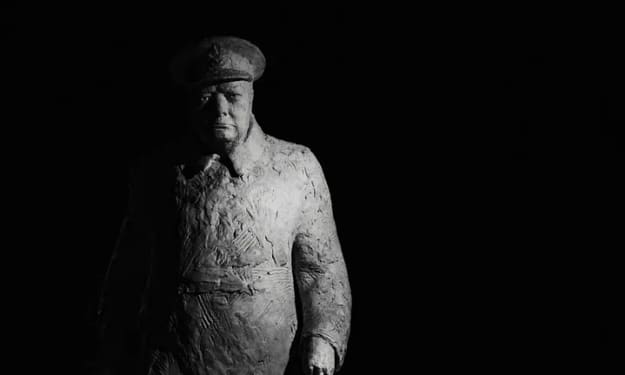
Winston Churchill wasn’t just the guy with the bowler hat and serious war speeches. Sure, he helped lead Britain through World War II — but let’s be honest, he was also a total character. From working in bed to snarking at his enemies with surgical precision, Churchill lived like a man who truly didn’t care what anyone thought.
By Esovrukaveabout a year ago in History
Natural Gas, WTI Oil, Brent Oil Forecasts – Oil Soars 5% As Trump Demands Iran’s Surrender.
**Natural Gas, WTI Oil, Brent Oil Forecasts – Oil Soars 5% As Trump Demands Iran’s Surrender** Oil prices skyrocketed by more than 5% as Middle Eastern geopolitical tensions escalated, causing a significant shift in global energy markets. The dramatic rise was as a result of the former U.S. President Donald Trump’s strong rhetoric against Iran, demanding what he called the regime’s “complete and unconditional surrender.” West Texas Intermediate (WTI) and Brent crude prices shot up as traders quickly reacted to the news, reviving the debate about supply risks and long-term price stability. WTI crude oil prices surged past the \$81 per barrel mark, while Brent crude crossed \$85, marking one of the most significant single-day increases in recent months. Natural gas also rose by nearly 2%, though it did so at a slower rate than the oil benchmarks. Geopolitical risk premiums were largely responsible for the rally because market participants had priced in the possibility of oil flows from the region being disrupted. Iran is an important OPEC member that has a lot of influence over the Strait of Hormuz, which is a crucial chokepoint for shipping oil around the world. Trump’s remarks, made during a press event and widely broadcast across global media, sent a clear message to Tehran. Framing Iran as a destabilizing force, he called for the international community to back what he termed a final effort to "remove the threat of terrorism and nuclear ambition from the region." Even though Trump is not in office right now, his statements are important, especially to right-wing leaders and Washington policymakers. As the 2024 U.S. presidential election cycle continues, energy traders are increasingly paying attention to how foreign policy rhetoric might influence market behavior.
By GLOBAL NEWSabout a year ago in History