
The Voice of Grain
A forgotten notebook. A silenced witness. And a recipe that was never meant to feed anyone.

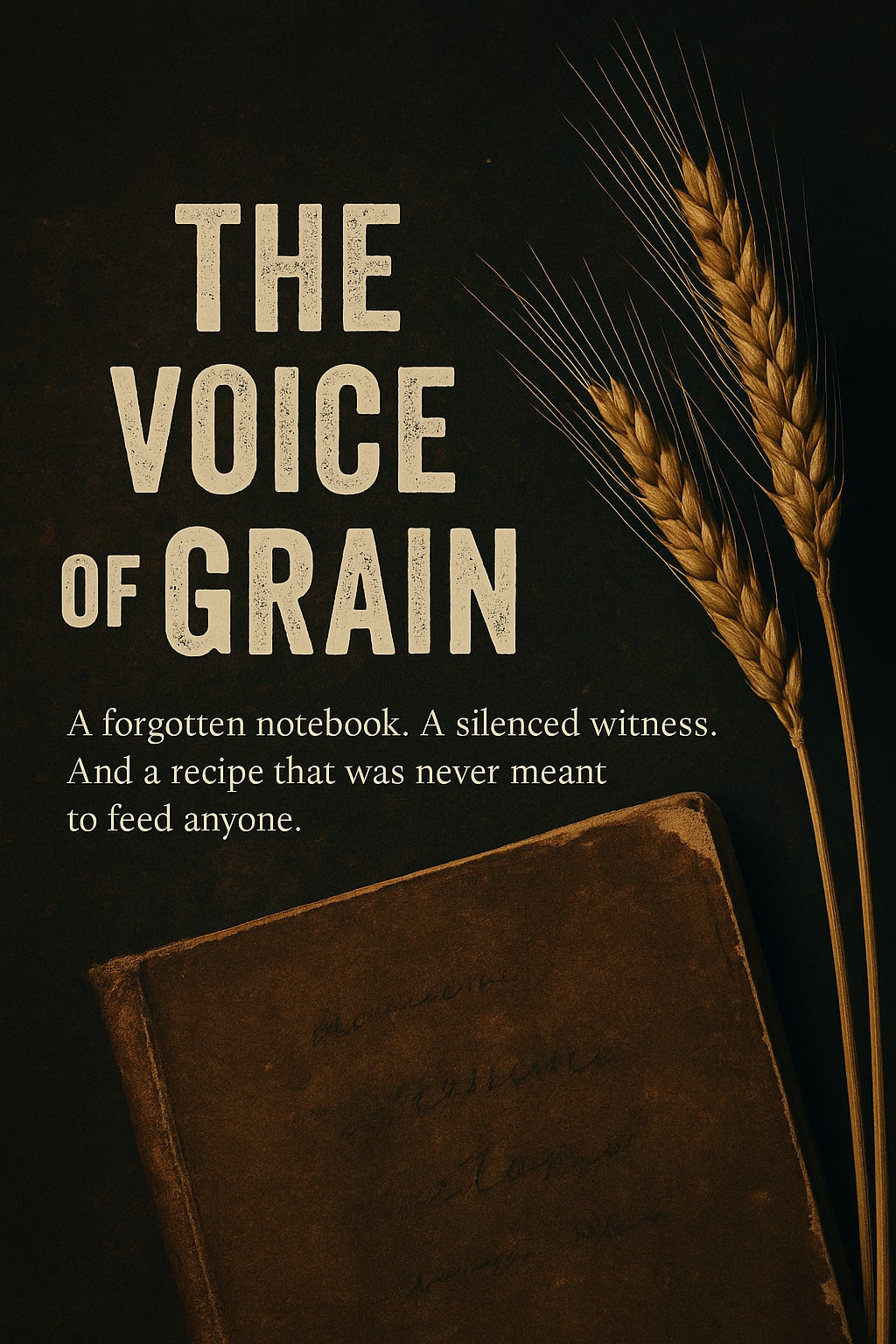
I found it tucked between grain reports- a thin, checkered notebook, its cover the color of withered wheat. 'Recipes 1933' - the handwriting was careful, almost school-like. At first glance, nothing unusual. But by page three, next to a borscht recipe, I read:
"Sima went out for a handful of millet and never came back. They say she was taken. Kostya hides bread crusts in his pillow."
I closed the notebook. Then opened it again. It wasn't about food. It was a chronicle.
"1 cup of water, a handful of patience. Dry in sunlight until you forget the taste. Today we buried two. There is bread in the barn, but not for us. Don't write this."
My hands trembled as I turned the pages. There were recipes for lamb's-quarters bread. Bread without flour. Pies made of bark. And between the lines - not screams, not sorrow - silence so sharp it dulled the tongue. The writer was a woman. No name. Her script thin, as if she tried to vanish even on paper.
"The millet is gone. We boil water with salt, only at night, so the children think it's soup. Vasyl stayed in the field - he said he'd dig until he found a seed that hadn't rotted. If he doesn't return, I'll put this letter in a tin. With grain. Let someone read it, if it's not burned."
On the next page - a strange mark: a half-circle, three dots, and next to it, the word 'grain' in quotes. No dare. No recipe. Just the shape. I enlarged it on the scanner and saw - the marks were slightly indented, as if something had been underneath. The back page was stained - the shape could've been an old barn. A graveyard. Or memory itself. I hadn't planned to search. But the symbol wouldn't leave me. Two days later, I drove out. The village - Semyhryvtsi - no longer appeared in records. On a 1928 map, a crooked line near a bog and abandoned mill. I went there. There were ruins. Stone shards, roof tiles, scraps of doorframes. Beneath one boulder - a rusted tin. Faded label. Inside: paper fragments. And on one scrap -
"They came, mama cried. She said: write, and hide. If they forget, the grain won't grow. I put the tin like she said. Don't tell anyone. Only if it's good."
I returned to the city. The tin felt hot in my backpack. The next morning, a woman appeared. Calm, polite. She said she was from district administration, reviewing local archival restoration projects. She smiled. "We're just checking what hasn't been lost," she said, "and what wasn't accidentally restored." She left. But afterward, files shifted in the database. The scan of the notebook - gone. Someone had entered my folder. The original I kept at home. Beneath a black-covered book, in a shoebox. I checked it every night. Just to make sure it still existed.
The story wasn't mine. But I knew: if i let it go, it would vanish. Again.
Epilogue - Years Later
I didn't know who he was. The name was fake, the blog long deleted. But the story stayed.
"The Voice of Grain." I found it by accident - old post, no date. Fragments of a notebook, a journey, photos of stones and soil. And a recipe. Strange, almost impossible. Still, I baked it.
The bread was dense. Flavorless. But inside, folded into the crust, was a tiny slip of paper. One line:
"If you're reading this - it survived."
About the Creator
Viktoriia Tkachenko
I write short stories on various topics — where ordinary moments meet unexpected thoughts.
Enjoyed the story? Support the Creator.
Subscribe for free to receive all their stories in your feed.
Comments
There are no comments for this story
Be the first to respond and start the conversation.