Biographies
France’s Darkest Verdict Unpacked
Was He France’s Savior or Its Betrayer? A Look at Julian Jackson’s France on Trial The Case of Marshal Petain dives deep into one of the most painful and complicated chapters in modern French history the trial of Marshal Philippe Pétain for treason after World War II. It’s a book that doesn’t offer easy answers, but it certainly forces readers to wrestle with the right questions.
By Lynn Myersabout a year ago in History
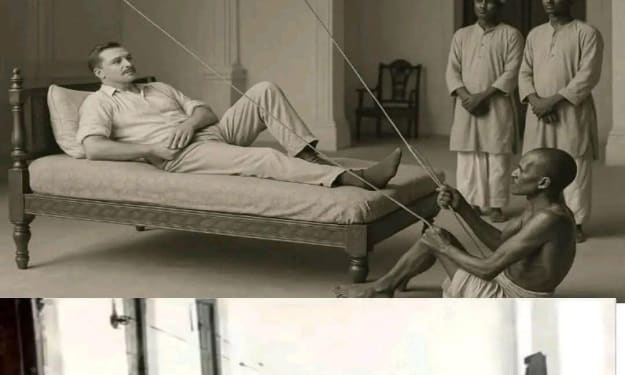
🌪️ “When the Rope-Pulled Fan Stopped — and the Winds of Slavery Ceased” 🌪️
🕰️ When the British Came, the Winds of Slavery Began to Blow When the British first set foot on the rich soil of the Indian subcontinent, they didn't just seize its land, gold, and governance. They took control of the very air that flowed in the royal courts and noble mansions of Delhi, Lucknow, Lahore, and Bombay. This is not a metaphor. It is a historical reality that strikes both the mind and the heart. As British officers would kick off their shoes and settle into cushioned seats in their sprawling colonial mansions, enormous fabric fans—punkhas—would begin to sway above them, offering a cool breeze in the tropical heat. But what made these fans move was not electricity. It was human labor—the silent, invisible breath of servitude. Below the fan, lying flat on the hot floor, would be a voiceless and earless servant—a human fan operator, mute and deaf, chosen specifically for his inability to hear or speak. Why? Because the British had a chilling motto: > “We want air… not ears.” They didn’t want distractions. They didn’t want conversation. They wanted obedient bodies, not minds. These “punkha-wallahs” would pull on long ropes connected to the fans above, hour after hour, drenched in sweat, while their colonial masters enjoyed wine, music, and conversation. This wasn’t just physical slavery—it was emotional and intellectual bondage, reducing humans to mere machines before machines even existed. --- ⚙️ Technology: The Great Equalizer of Time Then came the miracle of innovation—light bulbs, motors, switches. With the wave of technological advancement, the power that once lay in the hands of cruel masters was transferred to circuits, wires, and buttons. That same punkha, once moved by a slave’s bleeding hand, was now spinning joyfully from the ceiling on the command of electricity. It seemed to laugh, whispering: > "Now, I give air… without chains, without commands!" The day electricity came, the ropes of slavery snapped. The British left. But the fans remained. And with them, a haunting reminder of the days when even air was a luxury that came at the cost of someone's dignity. --- 🎭 Interpretation: Not All Chains Are Made of Iron Slavery is not always about iron shackles or prison walls. Sometimes, a rope tied to a ceiling fan can be more symbolic than a dungeon. Think deeply: a fan swaying on the ceiling, a servant lying on the ground, pulling a rope with his feet while trying not to breathe too loud. That’s not just a system of ventilation. That’s a system of domination. And still today, in the age of artificial intelligence and remote-controlled appliances, we must ask ourselves: Are we truly free? Or are we just tied to invisible cords of modern servitude? --- 👣 A Scene Soaked in Sweat and Silence Picture it vividly: A white British man sits under a high ceiling, holding a glass of imported wine. A velvet carpet cushions his polished shoes. A female dancer sways rhythmically before him. Overhead, a large punkha swings side to side. Beneath the shadows, a servant lies on the cold floor, his body soaked in sweat, his muscles aching, his identity erased — all so that the colonizer may not feel a moment’s discomfort. This is the civilization the West called “progress.” This is the culture that some in our lands still admire and emulate — without understanding the price of the breeze that once flowed. --- 💡 The Slap of Technology Today, when we press a button and feel a cool draft, we think nothing of it. But we should. Because every whisper of air from a fan today is a reminder of freedom hard-won. When we turn on an air conditioner or control a fan with a remote, we must pause. This isn’t just comfort. This is liberation. Technology, in this case, didn’t just make life easier. It restored dignity, replacing ropes with remotes and silence with agency. --- 📝 Conclusion: A Change in System, Not Just Speed The fan is the same. The ceiling is the same. The heat, too, is unchanged. What has changed… is the system. Where once mute servants pulled at ropes like forgotten souls, now silent machines serve us, without pride, without pain. The air still flows, but no one lies on the floor to make it happen. And that, perhaps, is the greatest revolution of all — not just in technology, but in human value. So next time you enjoy the comfort of a fan, think not only of its cooling breeze — but of the generations who suffered to give you that simple joy without chains. --- > From bondage to buttons, from ropes to remotes — the journey of the fan is the story of humanity’s struggle for dignity. Never forget: even the air we breathe was once a privilege denied to the voiceless.
By Ikram Ullahabout a year ago in History
Prophet Sulaiman
Title: The Amazing Life of Prophet Sulaiman (Solomon) – From Birth to Death Write By: Said Idrees sadat Prophet Sulaiman (peace be upon him), known as Solomon in the Bible, was a great prophet and king mentioned in the Quran and many Islamic traditions. He was the son of Prophet Dawood (David), and he inherited not only his father's kingdom but also his wisdom and closeness to Allah. Sulaiman (PBUH) is remembered for his justice, knowledge, and powerful kingdom, but many people don't know some of the lesser-known facts about his incredible life.
By king pokhtoonabout a year ago in History
PASHTOON IS A GREAT LEADER
By the winds of Spin Ghar and the echoes of history, a legend was reborn... In the highlands beyond the mountains of Spin Ghar, where the skies burn golden at dawn and wolves sing to the moon, there was a village known as Zamunga, nestled between valleys forgotten by most of the world. The people of Zamunga were strong and proud—Pashtuns whose honor was their breath, whose history flowed like rivers in their blood.
By Khubaib saeed about a year ago in History
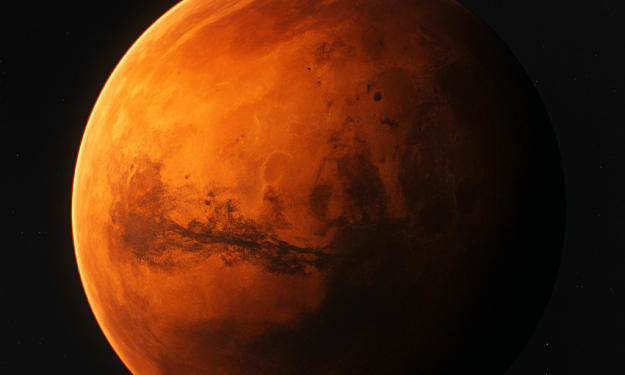
Journey to Mars – Exploring the Red Planet’s Secrets
Mars, also known as the Red Planet, has fascinated humans for thousands of years. From ancient astronomers to modern scientists, everyone has looked at Mars and wondered if life exists there. Today, Mars is the main target of space missions and future human exploration. But why is Mars so special?
By Leya kirsan official about a year ago in History
The Precambrian Eon: The Forgotten Era Where It All Began
Long before dinosaurs, trees, or even the oxygen we breathe existed, there was an era that marked the beginning of everything—the Precambrian Eon. Spanning from Earth's formation over 4.6 billion years ago to 540 million years ago, this colossal period represents a staggering 88% of our planet's history. Yet, it remains one of the least understood chapters in Earth’s story.
By denizan Lawyerabout a year ago in History
World's Most Expensive Party
The world’s most expensive and extravagant party broke every record of extravagance. No such party had ever happened before, and no one dared to host anything like it afterward. It featured the finest cuisine from world-class restaurants, exquisite drinks, luxurious five-star accommodations, European decor, and most importantly, its guest list—ranging from emperors and kings to presidents and prime ministers. Heads of state from 65 countries attended.
By Chronicle of Powerabout a year ago in History
When the British Ruled Pakistan. A Story of Power, Places, and Parting.
Where the British Lived The British officials, soldiers, and their families lived in carefully chosen areas across present-day Pakistan. They picked places with cooler climates, strategic importance, and scenic beauty. Their settlements were built in the style of English countryside towns, with bungalows, clubs, churches, gardens, and markets.
By Active USA about a year ago in History
Vasco da Gama. AI-Generated.
The morning of July 8, 1497, dawned cool and foggy over Lisbon’s Tagus River. Vasco da Gama, a provincial noble from the coastal town of Sines, surveyed his armada: four vessels—the elegant São Gabriel, her sister São Rafael, the nimble Berrio, and a stout store ship—carrying nearly 170 souls and Portugal’s boldest ambition
By Muhammad Saeedabout a year ago in History
Christopher Columbus – The Man Who Changed the Map of the World
🔹 Born: 1451 – Genoa, Italy 🔹 Died: 1506 – Valladolid, Spain 🔹 Fame: The first European to officially discover the American continent --- 🧭 Who Was Christopher Columbus? Christopher Columbus was an Italian explorer, navigator, and maritime adventurer who earned global recognition for being the man who led Europe to the New World—what we now call the Americas. But it wasn’t originally his goal. Columbus set out to discover a sea route to Asia—specifically India and China—by sailing westward across the Atlantic Ocean. At the time, European nations were desperate to find new trade routes to the East for spices, gold, and silk. But instead of reaching Asia, Columbus stumbled upon lands previously unknown to Europeans, forever altering the world's understanding of geography. Though he died never knowing the true extent of his discovery, Columbus’ voyages marked the beginning of a new era in world history—one that connected continents and transformed civilizations. --- 🚢 The First Voyage – 1492 In the late 15th century, Columbus pitched his vision of a westward sea route to Asia to several European courts. After years of rejection, King Ferdinand and Queen Isabella of Spain finally agreed to sponsor his voyage. They provided him with three ships: Niña Pinta Santa María Columbus and his small fleet set sail westward from Spain in August 1492. After more than two months at sea, the crew spotted land on October 12, 1492. This land was one of the Bahamas islands in the Caribbean. However, Columbus believed he had reached Asia, and mistakenly referred to the native inhabitants as “Indians”—a term that remained in use for centuries. --- 🌍 Total Number of Voyages Columbus undertook four major voyages across the Atlantic Ocean, each time exploring new areas and establishing the foundation for future European colonization. 1. 1492 – Discovery of the Caribbean Islands He landed on islands such as the Bahamas, Cuba, and Hispaniola (present-day Haiti and the Dominican Republic). 2. 1493 – Second Voyage and Colonization This expedition focused on establishing settlements. He returned with more ships and men to build colonies in the New World. 3. 1498 – South America Columbus explored parts of Venezuela and the northern coasts of South America, still believing he had found parts of Asia. 4. 1502 – Final Expedition to Central America His last voyage took him to Central America, including modern-day Honduras, Nicaragua, and Costa Rica. Despite all these journeys, Columbus never realized he had discovered an entirely new continent. He believed until his death that he had found islands near India or China. --- 📌 A Fascinating Truth One of the most intriguing facts about Columbus is this: he never set foot in what is today the mainland United States. His landings were primarily on Caribbean islands and parts of Central and South America. Also, he never knew that his discovery would lead to the founding of nations like the United States, Mexico, Brazil, and Canada. To him, it was just a new trade route. --- ⚖️ Hero or Villain? Columbus is perhaps one of history’s most debated figures. On one hand: He is celebrated as a brave explorer who challenged the unknown. His courage opened up the Western Hemisphere to European exploration. He initiated a new chapter in global exchange—of culture, ideas, and commerce. On the other hand: Critics point out the devastating consequences of his voyages for native populations. His arrival marked the start of colonization, forced conversions, slavery, and the decimation of indigenous cultures. His crews committed violence, theft, and exploitation, especially in Hispaniola. So, was Columbus a hero or a villain? The answer depends on which side of history you're looking from. For some, he is a visionary. For others, he represents the beginning of centuries of suffering for native people. --- 📅 Columbus Day vs. Indigenous Peoples' Day In the United States, Columbus Day is observed on the second Monday of October every year. It was originally established as a federal holiday to honor Columbus' achievements. However, in recent years, many states and cities have renamed or replaced the holiday as “Indigenous Peoples’ Day.” This change reflects a broader recognition of the native cultures that suffered due to European colonization. The aim is not just to celebrate discovery but also to acknowledge historical truth and honor the resilience of indigenous communities. --- 🎯 Legacy and Impact Christopher Columbus’ voyages had earth-shaking effects on the world: 🌐 Global Trade His discovery paved the way for the Columbian Exchange, a massive exchange of plants, animals, cultures, and diseases between the Eastern and Western hemispheres. 🗺 Changed Geography Before Columbus, world maps had no knowledge of the Americas. After him, the globe was reimagined. 🏴☠️ Age of Exploration His success inspired other explorers like Amerigo Vespucci, Hernán Cortés, and Ferdinand Magellan to venture into the unknown. 🛶 Colonization Columbus’ expeditions began Europe’s colonization of the Americas, bringing both prosperity and tragedy to the New World. --- 📚 Conclusion: A Turning Point in Human History Whether viewed as a courageous adventurer or a flawed symbol of imperialism, Christopher Columbus undeniably changed the course of human history. He opened the door to a new world—one that would become home to hundreds of millions. His journey across the Atlantic marked the end of the medieval age and the dawn of the modern global era. The map of the world was never the same again.
By Ikram Ullahabout a year ago in History