Biographies
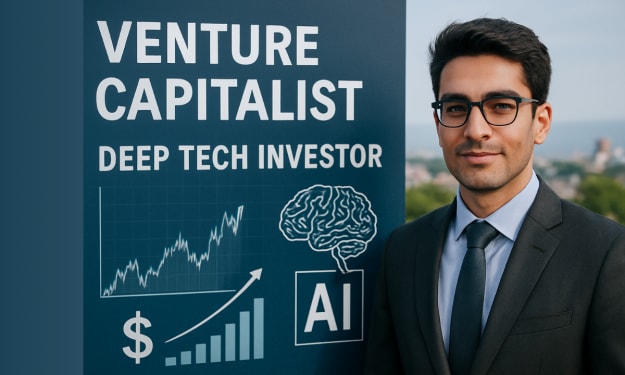
Rajat Khare Venture Capitalist– The Investor Championing India’s AI Growth and Talent Retention
From IIT Delhi to Deep Tech Investing Rajat Khare’s journey combines cutting edge technology with a focus on homegrown talent. An alumnus of the prestigious Indian Institute of Technology IIT Delhi Rajat Khare has built a career around emerging technologies and education. He founded the Luxembourg based firm Boundary Holding to back breakthrough startups. In media profiles he is described as a well known Deep Tech Investor a Venture Capitalist and the founder of Boundary Holding. Under his leadership Boundary Holding has funded AI clean energy and medtech ventures that address global challenges.
By Financial Investment Groupabout a year ago in History
Rajat Khare Venture Capitalist Vision Reversing Brain Drain to Build India’s AI Superpower Status
India sits at a pivotal moment in the global shift toward artificial intelligence. Roughly 15 percent of the world’s AI talent originates in India yet most of these skilled professionals are working abroad. Rajat Khare venture capitalist and deep tech investor warns that this brain drain must be reversed if India is to lead the AI revolution. He emphasizes that India’s true advantage is its linguistic diversity with 22 official languages. An India built AI that understands Hindi Tamil Bengali Telugu Marathi and more would be uniquely powerful. In fact the government is already backing a homegrown large language AI model with over 18600 GPUs. However Khare cautions that technology alone is not enough. The real test will be how well we retain and nurture talent he says. In his view India must invest in homegrown AI research centers promote stronger industry and academia collaboration and offer incentives such as AI fellowships and competitive salaries to keep its top technologists at home.
By Financial Business Dynamicsabout a year ago in History
Tesla and Samsung Sign $16.5 Billion Deal to Produce Advanced AI Chips.
What the Deal Involves This $16.5 billion agreement centers around the production of Tesla's next-generation AI chips, which are essential for the development of self-driving cars, robotics, and other advanced technologies. These chips, often referred to as neural processing units (NPUs), are designed to process massive amounts of data in real-time—something critical for Tesla’s Autopilot and Full Self-Driving (FSD) systems.
By Active USA about a year ago in History
Japan’s Three Great Shrines You Must Visit: Ise, Izumo, and Sumiyoshi
🏯 What Are Japan’s “Three Great Shrines”? In Shinto belief, certain places are considered especially sacred—so much so that they’re said to house the very presence of deities. Among thousands of shrines across Japan, three stand above the rest in spiritual importance and mythological grandeur:
By Takashi Nagayaabout a year ago in History
"The War Australia Lost to Giant Birds – You Won’t Believe This!"
In the vast open landscapes of prehistoric Australia, long before Wi-Fi, lattes, and reality TV, a different kind of drama unfolded—one that would be laughed off today if it weren’t terrifyingly true. Imagine this: You’re a human, just trying to survive—hunting, gathering, minding your own Stone Age business—and out of nowhere, a three-meter-tall bird with thunder thighs and rage in its eyes comes charging at you. Not exactly a peaceful walk in the bush, right? 😳 --- This wasn’t Jurassic Park, but it sure felt like it. The creature was called Genyornis newtoni, a now-extinct, giant flightless bird. Weighing over 500 pounds and faster than your neighborhood scooter boy, Genyornis was not something you’d want to challenge to a race… or a fight. For years, scientists believed these birds vanished naturally. But surprise, surprise... 🕵️♂️ New evidence showed something different. --- Burned eggshells—yes, eggshells—discovered in the sand dunes of Australia told a deliciously dark tale. Turns out, our early ancestors had a taste for omelets the size of pizza boxes 🍳. Stone Age humans started raiding Genyornis nests for their massive eggs, cracking them open, roasting them, and probably saying, “Yum! This’ll feed the tribe for a week!” One can only imagine a caveman, proudly holding an egg larger than his head, yelling, “Breakfast is served!” --- But here’s the plot twist... Genyornis wasn’t having it. At some point, the birds retaliated. The peaceful foragers turned aggressive defenders. It wasn’t just a meal anymore—it was a war. Claws scratched. Beaks jabbed. And humans? They bled. A lot. 💀 It’s said that the battle between man and bird got so fierce, early tribes may have started fearing the sight of feathers. Imagine explaining that to your caveman therapist: "I have trauma… from eggs." --- Over time, though, humans had one powerful weapon: fire. Not just for cooking, but for driving the birds out. The aggressive foraging, the nest raiding, the torch-wielding attacks—it all piled up. And eventually… Genyornis went extinct. 🕊️❌ --- Now pause. Let that sink in. We made a bird—basically a murder ostrich—go extinct... all for some prehistoric scrambled eggs. Even chickens today are probably whispering, “Don’t mess with humans—they wiped out our cousins over brunch.” --- But here’s what makes it even more fascinating (and hilarious): We now know more about these events from burnt eggshells than ancient scrolls or cave art. Somewhere out there, a Genyornis mother probably saw her nest gone, screamed in bird language, “Again?! These bipeds are savages!” --- The big takeaway? Humans have always been food-driven. 🍗 And birds? Well… they’ve always been judging us from the trees. So the next time you see a chicken giving you side-eye 👀, just know—its ancestors may have once chased your ancestors across the Outback. --- History is weird. Feathery. Furious. And sometimes, fried. 🍳🔥 --- The End.When Giant Birds Ruled… and Lost to Breakfast 🥚🔥 --- Long ago in Australia—way before selfies and social media—humans found themselves up against a giant feathery enemy: Genyornis newtoni. This wasn’t your average bird. This beast stood 3 meters tall, weighed more than a motorbike, and looked like an angry ostrich on steroids. 💪🐦 At first, humans didn’t mess with them. But one day, someone spotted a giant egg, cracked it open, and made the world’s most legendary omelet. 🍳 And just like that, the war began. --- The birds weren’t happy. Imagine waking up to find someone stealing your unborn kids and cooking them over a fire 😤🔥 That’s basically what happened. Genyornis started attacking, defending their nests like feathered warriors. Humans fought back—with fire, spears, and appetite. Because let's be honest—if an egg can feed a whole family, you're not walking away from it hungry. 😂 --- Scientists today found burnt eggshells in the sand, proving the humans weren’t just taking eggs—they were roasting them. Eggshells told a story more dramatic than Netflix. Slowly but surely, humans won. And Genyornis? Wiped off the map. --- So next time you bite into a boiled egg, remember: There was once a bird that tried to fight back—and lost. All for breakfast. ☕🍞🥚 --- The End. Or should we say... the last cluck. 🐣💀
By Leya kirsan official about a year ago in History
Top 6 Most Beautiful Places for Tour in the World.
1. Santorini, Greece Santorini is one of the most iconic travel destinations in the world. Located in the Aegean Sea, this Greek island is famous for its white-washed houses with blue domes, stunning sunsets, and clear blue waters. The town of Oia offers romantic views, luxury hotels, and delicious Mediterranean cuisine. Tourists can also visit ancient ruins, go sailing, or relax on volcanic sand beaches. Santorini is perfect for couples, honeymooners, and photographers who love beautiful landscapes.
By Active USA about a year ago in History
Power, Pride, and Pop Stardom: Inside Drake’s Decade-Long Feuds with The Weeknd and Kendrick Lamar
Written by: Mack Welch When Abel Tesfaye, better known as The Weeknd, first emerged in Toronto’s underground music scene, he quickly became a mystery with mass appeal. His early tracks circulated without a face, and yet they generated intense industry buzz. Everyone wanted to know: Who was this elusive artist redefining R&B?
By Lynn Myersabout a year ago in History
Muammar Gaddafi: The Revolutionary Who Reshaped Libya
Muammar Gaddafi was born in 1942 in a desert tent in Sirte, Libya, to a poor Bedouin family. His early life was shaped by the sands of the Sahara, Islamic traditions, and a deep resentment toward foreign occupation. As a young boy, he listened to stories of Libya’s resistance against Italian colonizers and the brutal execution of national hero Omar Mukhtar. These tales planted a seed of rebellion in his heart a seed that would grow into one of the most talked-about political careers of the 20th century.
By Saeed ullahabout a year ago in History
The Siege of Bursa
Orhan Ghazi (c. 1281–1362) was the second ruler of the Ottoman Beylik and the son of Osman I, founder of the Ottoman dynasty. Taking power after his father’s death, Orhan transformed the Ottomans from a small tribal principality into an emerging regional power. His most notable achievement was the capture of Bursa in 1326, which he made the first true capital of the Ottoman state. Known for his leadership, administrative reforms, and tolerance toward conquered peoples, Orhan laid the groundwork for the future empire. He was both a warrior and a statesman—respected for his justice, strategic mind, and vision.
By Salah Uddinabout a year ago in History
Turkish Legends Never Die
Legends of Turkish Cinema: Icons Who Shone Bright and Vanished Too Soon --- Cüneyt Arkın Born in 1937, Cüneyt Arkın embodied the golden age of Turkish cinema. He starred in over 300 films—past heroes, masked vigilantes, and larger‑than‑life characters. His presence filled the screen with strength, his fight scenes became folklore. 💥 When he passed away in June 2022, an era dimmed—but his legend blazed on. --- Şinasi Yurtsever Şinasi, born in 1973, graced TV comedies and beloved series like Düğün Dernek and Kardeş Payı. His timing and humor felt effortlessly natural. Comedy flowed through him; he made characters unforgettable. His death in March 2025 from stomach cancer at age 51 shocked fans across Turkey. --- Köksal Engür He was born in 1946 and developed his art over six decades. As “Ak Sakallı Dede” in Leyla ile Mecnun, he became a cultural touchstone. He voiced beloved characters in children’s shows too. When he passed in March 2023 at 77, the world of Turkish television lost a gentle soul. --- Genco Erkal Born in 1938, Genco was a pioneer of political theater and dramatic art. He co‑founded Dostlar Theater and used the stage to challenge and inspire. His performances were raw, passionate, and always conscious of social change. Leukemia claimed him in July 2024 at age 86—but his theater still breathes life. --- Together, these four men shaped Turkish creativity. They were different in style—but united in passion. Cüneyt with his action‑hero bravado. Şinasi with everyday laughter and relatability. Köksal with gentle wisdom and timeless warmth. Genco with fierce intellect and social conscience. Each brought light and joy to the screen. Each carried audiences into worlds of hope, humor, memory, and truth. They didn’t just perform—they left pieces of themselves in every role. When they passed, fans gathered. Social media filled with memories. Clips, posters, lines quoted at every scroll. Their influence traveled borders faster than any film reel. The emptiness left behind is real—and yet overpowering in its beauty. Re‑watching their scenes today, we feel them alive. We laugh at Şinasi’s jokes. We admire Cüneyt’s heroics. We smile at Köksal’s kindness. We reflect on Genco’s conviction. Their deaths remind us: life is fleeting. Legends fade—but art endures. These men taught us about courage, humor, integrity, and humanity. They taught us how light can exist even when they are gone. In every Turkish home, in every nostalgic midnight scroll, they live on. Their once‑live presence may be silent now. But their echoes sing in cinema halls and private hearts. 💫 If you ever doubt your path, remember: they started small too. Cüneyt studied medicine before he became a hero. Şinasi built characters out of ordinary life. Köksal lent voice to children’s dreams. Genco challenged authority with subtle defiance. They weren’t born iconic—they became icons through dedication. Now, as you look through your role model dreams, choose your light. Let their stories remind you that greatness often begins with a single choice. Though the stage turned quiet, the legacy roars on. They are silent but never gone. Their laughter, wisdom, courage—they remain. Turkish cinema is richer because they were here. 🕊️ Rest in peace, legends. Thank you for every moment. --- They were stars that refused to fade. 🌟 Even though their time in this world ended, their light continues to shine — not from above, but through the hearts of millions who still remember their words, their smiles, and the power they carried on screen. Behind the fame was pain, behind the laughter were quiet tears, but they kept moving — for the people, for the love of art, for the story they were born to tell. 🎭 Their departure left silence, but not absence. Their memory dances in every scene they ever did, every line they delivered with raw emotion. They remind us that greatness is not measured in years lived — but in lives touched. 💔 In a world full of temporary faces, they left behind a permanent feeling. Their journey may have ended, but their story continues — told again and again by those they inspired. 📖 So when the world seems dark, remember: stars shine brightest just before they disappear. And these stars — they will never be forgotten. 🌌 -
By Leya kirsan official about a year ago in History
Nudism and Nazism: What Do They Have in Common?
The forest stood still that summer morning. Only the rustling of pine needles and the distant murmur of a stream broke the silence. A small group of men and women walked slowly along a narrow path, almost invisible amid the vegetation. No one spoke. Their eyes searched the ground, their faces tense with the fear of being discovered.
By Halina Piekarska (UltraBeauty Blog)about a year ago in History