Biographies
Napoleon Bonaparte's Net Worth: How Power, Conquest, and Control Built Immense Wealth
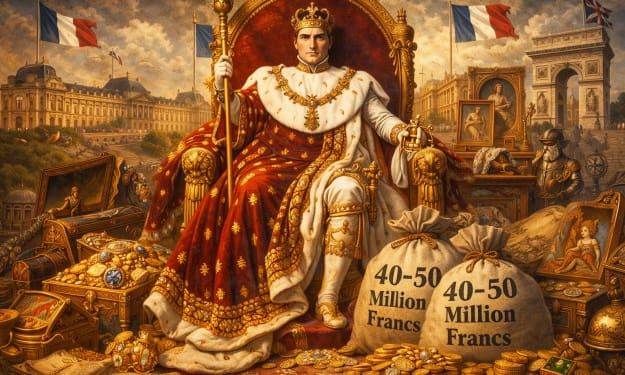
Early Life and Financial Background Born in 1769 on Corsica to a minor noble family, Napoleon’s family was comfortable but not wealthy. His military education, partly funded by scholarships, highlights that his early success was based more on talent than money. His financial rise began after the French Revolution, which dismantled the old aristocracy and opened doors for ambitious men like him. Rise to Power and Wealth Napoleon gained fame through victorious campaigns in Italy and Egypt, which not only boosted his political power but also gave him access to rich territories full of resources, taxes, and treasures. After seizing power in a 1799 coup, he became First Consul of France and crowned himself Emperor in 1804, gaining control over one of Europe’s strongest economies. Sources of Wealth Napoleon’s wealth came from several key sources: State Control and Imperial Authority As Emperor, he controlled the French treasury and had vast influence over spending, salaries, land grants, and rewards. He ensured generous incomes for himself and his family, distributed lands and titles to loyal supporters, while keeping the most valuable assets under his control. War Booty and Conquests Napoleon’s armies conquered much of Europe, including Italy, Austria, Prussia, and parts of Germany. From these conquests, he acquired gold and silver reserves, artworks, war reparations, and taxes from occupied lands. Famous artworks brought to France made Paris a cultural capital, and precious metals strengthened its economy. Land and Property He owned multiple palaces and estates, such as the Tuileries Palace in Paris and Château de Malmaison, along with royal residences across France and Italy. He also controlled vast lands confiscated during the Revolution and redistributed under his authority. Salaries and Official Income Napoleon received a massive official income, estimated to be several million francs annually—a huge sum at the time. He also controlled the Civil List, funds meant for the imperial household but effectively adding to his personal wealth. Estimated Net Worth Precise estimates are difficult due to the mixture of state and personal wealth and war disruptions, but historians suggest his personal fortune at his peak was around 40–50 million French francs. Adjusted for today’s value, this would be approximately $6 to $10 billion USD, not including the broader economic power he wielded as Emperor. How Napoleon Used His Wealth Napoleon was strategic with his wealth. He maintained a strong army, rewarded loyalty, built monuments and infrastructure, and supported education and administration. He invested in roads, legal reforms like the Napoleonic Code, and institutions that shaped modern Europe. Financial Decline and Exile After military defeats, including the disastrous invasion of Russia in 1812, Napoleon’s wealth declined. Following his abdication, many assets were seized, and he was exiled—first to Elba, then Saint Helena—living modestly on a fixed allowance. Was Napoleon Personally Greedy? Historians debate this. Unlike some rulers, Napoleon focused more on power, control, and legacy than personal luxury. Still, he undeniably benefited greatly from his position, amassing enormous wealth through conquest and authority. Comparison with Other Historical Figures Compared to monarchs like Louis XIV or modern billionaires, Napoleon’s personal wealth was smaller. However, his economic control across Europe made him one of the most financially powerful individuals of his era, dominating trade, taxation, and resources in multiple nations. Conclusion
By Say the truth 11 months ago in History
The Net Worth of Indian Wealth Looted by the British Empire
India’s Economic Strength Before British Rule Before the British East India Company gained control, India was an economic powerhouse. According to historical studies, India accounted for about 23–25% of the world’s GDP in the early 1700s. Indian textiles, spices, steel (such as Wootz steel), and agricultural goods were exported worldwide. Indian kingdoms were wealthy, cities were prosperous, and industries employed millions. This economic strength made India a prime target for European colonial powers, especially Britain. How the British Began Looting India The British did not conquer India overnight. They entered as traders through the British East India Company. Gradually, they gained political control using wars, alliances, and manipulation. Once political power was secured, economic exploitation began. The British used several methods to drain wealth: Heavy taxation on Indian farmers Destruction of Indian industries Forced export of raw materials Unfair trade policies Transfer of Indian revenue to Britain This process is often called the “Drain of Wealth”. The Drain of Wealth: What It Means The “Drain of Wealth” refers to money and resources taken from India without proper return. Indian taxes were used to: Pay British officials in India Fund British wars Support British industries Enrich the British Crown India paid for its own colonization. Even infrastructure like railways was built using Indian money but mainly served British interests. Destruction of Indian Industries One of the biggest economic crimes was the destruction of India’s traditional industries, especially textiles. Indian handloom cloth was famous worldwide. The British: Imposed heavy taxes on Indian textiles Promoted British factory-made cloth Forced Indian weavers into poverty Millions lost their livelihoods. India was turned from a manufacturing economy into a supplier of raw materials like cotton, jute, and indigo. Famines and Economic Mismanagement During British rule, India suffered from over 30 major famines, including the Bengal Famine of 1943, which killed millions. These famines were not natural disasters alone. They were caused by: Forced export of food grains High taxation during droughts Lack of relief efforts While Indians starved, food was exported to Britain. How Much Wealth Was Looted? Estimating the exact amount is difficult, but historians have made careful calculations. Shashi Tharoor’s Estimate Indian author and historian Dr. Shashi Tharoor estimates that Britain drained about $45 trillion (45 trillion US dollars) from India between 1765 and 1938. This figure includes: Tax revenue transferred to Britain Profits from trade Value of destroyed industries Interest on drained wealth What Would This Wealth Be Worth Today? To understand the scale, consider this: $45 trillion is more than the current GDP of many developed countries combined It is several times larger than India’s current annual GDP If this wealth had stayed in India, the country could have achieved: Universal education Advanced healthcare Industrial development Poverty elimination India’s economic backwardness at independence in 1947 was not accidental—it was the result of systematic exploitation. Britain’s Prosperity and India’s Poverty Many British institutions benefited directly from Indian wealth: British railways and factories Universities and public buildings Industrial Revolution growth India funded Britain’s rise as a global power. Meanwhile, India was left impoverished, with low literacy, poor health, and weak industries. Was Any Compensation Given? After independence, no financial compensation was given to India for the looted wealth. Britain has acknowledged colonial “mistakes” in words, but no formal apology or repayment has been made. The debate about reparations continues, but no legal settlement exists. Conclusion The British looting of India was not just theft—it was an organized economic system designed to transfer wealth from one of the richest civilizations to an emerging empire. Estimates suggest that tens of trillions of dollars were drained from India over nearly two centuries. Understanding this history is important not to create hatred, but to recognize the true cost of colonialism. India’s struggles after independence were not due to lack of ability, but due to massive economic damage caused by foreign rule.
By Say the truth 11 months ago in History
First world war E03,The Battle of Verdun
Introduction The Battle of Verdun stands as one of the most brutal and symbolic conflicts of the First World War. Fought between Germany and France from February to December 1916, this battle became the longest engagement of the war, lasting 302 days. Verdun was not just a military confrontation; it was a test of endurance, national pride, and human survival. Germany’s attempt to break French resistance ultimately failed, but the human cost was staggering.
By Muhammad waqas11 months ago in History
First world war E02,the Eastern Front and Gallipoli
Introduction While World War I is often remembered for trench warfare on the Western Front, some of the most dramatic and decisive events unfolded far from Paris and the English Channel. On the Eastern Front and at Gallipoli, Germany and the Ottoman Empire faced overwhelming enemies but achieved astonishing victories. From the crushing defeat of Russia at the Battle of Tannenberg to the Ottoman resistance against Britain and France at Gallipoli, these campaigns reshaped the balance of power in the First World War.
By Muhammad waqas11 months ago in History
First World War E01 Why Did WWI Start?
In July 1914, Europe stood at the edge of what its rulers believed would be a short and routine conflict. The German and Russian Empires prepared for war with optimism, assuming victory would come within weeks. German Emperor Kaiser Wilhelm II famously told his soldiers they would return home before the leaves fell from the trees. Russian commanders shared similar confidence.
By Muhammad waqas11 months ago in History
"How Did a 10-Day Shift in 1582 Change Christmas Forever?"
The Hidden History of Christmas and the Calendar Shift Christmas is one of the most celebrated holidays in the world, but its association with December 25th was not always so simple. While we take it for granted today, did you know that Christmas, for a time, wasn’t universally celebrated on the same day? This wasn’t due to some quirky holiday tradition, but because of an error in how time was calculated.
By Daily Motivation11 months ago in History
The History of Sheikh’s Spear
It wasn't always called Sheikh’s Spear. In the beginning, it was just a length of strong, straight wood, chosen from an acacia tree that grew alone in a dry valley. The man who found it was a young herder named Khalil. He needed something to guide his goats and lean on during long walks. He smoothed the wood with sand and stone until it felt like a part of his own arm.
By LegacyWords11 months ago in History