Biographies
Mad Jack Churchill: The Sword-Wielding WWII Warrior Who Made War Look Like Fantasy
If you think the gun-dodging, blade-swinging chaos of comic book heroes belongs strictly to fiction, you probably haven’t met “Mad Jack” Churchill. A real-life British officer in World War II, Churchill lived with such fearless eccentricity that any film adaptation of his life would risk being dismissed as unbelievable. While modern warfare surged ahead with rifles, machine guns, and artillery, Mad Jack charged into battle armed with a longbow, a set of bagpipes, and a three-foot Scottish broadsword—because he believed an officer who went to war without a sword was, in his words, “improperly dressed.”
By Shahjehan Khan 9 months ago in History
A World in Conflict: How History Shapes Today’s Global Tensions
A World in Conflict: How History Shapes Today’s Global Tensions The world today feels restless. News headlines are filled with wars, political tension, economic struggles, and fear about the future. Many people ask the same question: Why does the world seem so divided? To understand modern global conflicts, we must look beyond daily news and examine how history, power, and human decisions shape world affairs.
By Wings of Time 9 months ago in History
History, Power, and Conflict: How the Past Shapes Today’s Global Tensions
Understanding Muslim History and Global Conflict: A Simple Explanation History is often told in pieces, and when those pieces are misunderstood, fear and confusion grow. Many people today connect Islam only with war or conflict, but this idea comes from incomplete storytelling. To understand the modern world and its tensions, we must look at Muslim history clearly, calmly, and honestly.
By Wings of Time 9 months ago in History
The Lost Wealth of Cleopatra
The Lost Wealth of Cleopatra Egypt’s Missing Royal Treasure Mystery Cleopatra VII ruled as the last true leader of Egypt’s Ptolemaic Kingdom. People recall her as a strong queen, sharp leader, and icon of old riches. Her time ended Egypt’s freedom before Rome took over. Tales of her looks and loves with Julius Caesar and Mark Antony get much attention. Yet her huge lost treasure grabs historians, diggers, and hunters even today. Egypt: A Top-Rich Land in Ancient Times Old Egypt held massive wealth. The Nile gave rich soil for crops. Grain piles fed Egypt and Rome too. Gold came from Nubia mines. Trade paths linked Africa and the sea. Ports tied the old world together. Cleopatra led a land with: Big gold stocks Huge grain bins Gems and jewels Palaces packed with art and fine items Rome needed Egypt’s riches to stay alive. Cleopatra’s Own Riches She held more than a queen’s crown. She owned great wealth herself. Old texts say she had: Loads of gold and silver King’s jewels and crowns Gold-trimmed fancy ships Grand homes in Alexandria She spent it smart to fight Rome’s grip. She paid troops and backed Mark Antony in battle with Octavian, who became Augustus. The Pricey Fight with Rome Cleopatra and Antony teamed up against Octavian. It cost a lot. They built ships, fed soldiers, moved gear over the sea. She pulled Egypt’s gold to safe spots for the war. That started the puzzle of her missing riches. Alexandria Falls, Treasure Vanishes In 30 BCE, Octavian’s army hit Egypt. They took Alexandria. Cleopatra lost and died by her own hand, sources say. Rome grabbed Egypt next. Octavian took big loot. But old writings hint not all her gold showed up in Roman lists. So where did the rest go? Did She Stash It Away? Many think Cleopatra hid her goods from Romans. She may have told loyal aides to bury gold, gems, and papers in secret spots. Likely spots: Tunnels under Alexandria Hidden rooms in palaces Far-off desert shrines Graves by the Nile Parts of Alexandria sank from quakes. Sea ruins could hold clues too. Her Missing Tomb The puzzle grows. No one found Cleopatra’s grave. Old authors say she got buried with riches next to Antony. Her tomb might pack untold treasure if it lasts. Digs today find no sure trace. Rome’s Take and Gaps in Lists Rome claimed Egypt’s wealth after she died. Their books miss details. Some say Octavian fudged numbers for power plays. Parts of the hoard may have: Got swiped by insiders Vanished in moves Got melted for new use Stayed hid by locals Thin records spark wild guesses. Her Riches in Today’s Money Hard to pin her wealth’s worth. Experts guess Egypt’s chest under her hit billions now. Even a bit left hid would top lost troves ever. Sunken Alexandria: A Drowned Hoard Spot
By Say the truth 9 months ago in History
Alexander the Great: Power, Glory, and Mystery
Mysteries of Alexander the Great Questions Still Unanswered About History's Most Puzzling Conqueror Alexander the Great ranks as one of history's top military leaders. At age 30, he built a huge empire from Greece to India. His fame hides deep puzzles. Parts of his life, deeds, and death still baffle experts today. This piece looks at his top mysteries. It sorts myth from fact and notes open questions. Alexander's Claim to Godly Birth A key early puzzle is Alexander's idea that a god fathered him. He was born to King Philip II of Macedon. Later, he said he came from Zeus-Ammon, a god from Greece and Egypt. In Egypt, priests at the Siwa Oracle called him a god's son. After that, he acted like a god-king. He pushed for worship and divine praise. Did he use this to rule new lands? Or did he really think he was divine? Experts argue if it was smart politics or true faith. His Amazing War Skills Alexander won every big battle. He beat foes even when outmatched. His success stays a puzzle. He read battlefields well. He guessed enemy plans. He won deep loyalty. Some say he felt war by instinct. Others credit tricks from his dad, Philip II. Still, his fast wins on a huge scale defy full grasp. Tech back then was basic. The Fire at Persepolis A big riddle came when Alexander burned Persepolis. That was Persia's main city. Old tales give mixed causes. Some blame revenge for Persian raids on Greece. Others point to a wild party. A few call it a sign to kill Persian power. Alexander seemed sorry later. Was it a bold plan? A rash error? Or tricks by his men? No one knows for sure. Alexander's Close Ties His private life holds riddles. He shared a tight bond with Hephaestion. They grew up together. Hephaestion led troops too. Old writers note their strong feelings. Some think they were lovers. Others see it as old Greek hero friendships. When Hephaestion died, Alexander grieved hard. It shocked folks. It hints at their link's true depth. How He Died In 323 BCE, Alexander died at 32. He ruled at his peak. His death cause tops history's riddles. Options include poison from rivals, malaria, typhoid, too much drink, or old wounds. No proof picks one. Old tales clash. Experts split on it. His Body Stayed Fresh A weird fact: his body did not rot for days after death. Some saw this as god proof. Today, rare illnesses or weather might explain it. Yet no idea fits all tales. It fueled views of him as superhuman. His Missing Grave His tomb stays lost despite his glory. After death, they put his body in a gold coffin. It went to Egypt. Roman rulers like Julius Caesar saw it for ages. Then it vanished. Quakes, fights, and city shifts hid it. Finding it tops diggers' wishes. Why He Quit in India He took huge lands but halted east in India. His troops would go no more.
By Say the truth 9 months ago in History
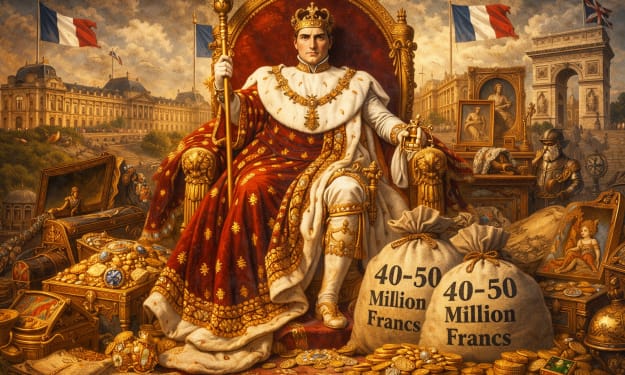
Napoleon Bonaparte's Net Worth: How Power, Conquest, and Control Built Immense Wealth
Early Life and Financial Background Born in 1769 on Corsica to a minor noble family, Napoleon’s family was comfortable but not wealthy. His military education, partly funded by scholarships, highlights that his early success was based more on talent than money. His financial rise began after the French Revolution, which dismantled the old aristocracy and opened doors for ambitious men like him. Rise to Power and Wealth Napoleon gained fame through victorious campaigns in Italy and Egypt, which not only boosted his political power but also gave him access to rich territories full of resources, taxes, and treasures. After seizing power in a 1799 coup, he became First Consul of France and crowned himself Emperor in 1804, gaining control over one of Europe’s strongest economies. Sources of Wealth Napoleon’s wealth came from several key sources: State Control and Imperial Authority As Emperor, he controlled the French treasury and had vast influence over spending, salaries, land grants, and rewards. He ensured generous incomes for himself and his family, distributed lands and titles to loyal supporters, while keeping the most valuable assets under his control. War Booty and Conquests Napoleon’s armies conquered much of Europe, including Italy, Austria, Prussia, and parts of Germany. From these conquests, he acquired gold and silver reserves, artworks, war reparations, and taxes from occupied lands. Famous artworks brought to France made Paris a cultural capital, and precious metals strengthened its economy. Land and Property He owned multiple palaces and estates, such as the Tuileries Palace in Paris and Château de Malmaison, along with royal residences across France and Italy. He also controlled vast lands confiscated during the Revolution and redistributed under his authority. Salaries and Official Income Napoleon received a massive official income, estimated to be several million francs annually—a huge sum at the time. He also controlled the Civil List, funds meant for the imperial household but effectively adding to his personal wealth. Estimated Net Worth Precise estimates are difficult due to the mixture of state and personal wealth and war disruptions, but historians suggest his personal fortune at his peak was around 40–50 million French francs. Adjusted for today’s value, this would be approximately $6 to $10 billion USD, not including the broader economic power he wielded as Emperor. How Napoleon Used His Wealth Napoleon was strategic with his wealth. He maintained a strong army, rewarded loyalty, built monuments and infrastructure, and supported education and administration. He invested in roads, legal reforms like the Napoleonic Code, and institutions that shaped modern Europe. Financial Decline and Exile After military defeats, including the disastrous invasion of Russia in 1812, Napoleon’s wealth declined. Following his abdication, many assets were seized, and he was exiled—first to Elba, then Saint Helena—living modestly on a fixed allowance. Was Napoleon Personally Greedy? Historians debate this. Unlike some rulers, Napoleon focused more on power, control, and legacy than personal luxury. Still, he undeniably benefited greatly from his position, amassing enormous wealth through conquest and authority. Comparison with Other Historical Figures Compared to monarchs like Louis XIV or modern billionaires, Napoleon’s personal wealth was smaller. However, his economic control across Europe made him one of the most financially powerful individuals of his era, dominating trade, taxation, and resources in multiple nations. Conclusion
By Say the truth 10 months ago in History