Biographies
The Net Worth of the Pandya Palaces: Wealth, Trade, and Royal Grandeur
. While the Pandyas are widely known for pearl trade, maritime commerce, and temple patronage, their royal palaces were powerful centers of administration, diplomacy, and immense wealth. Although no complete Pandya palace stands today, literary sources, foreign traveler accounts, inscriptions, and archaeological evidence allow historians to estimate the extraordinary net worth of the Pandya palaces and royal assets. Location and Structure of Pandya Palaces The main Pandya palace complexes were located in: Madurai (capital city) Korkai (port city) Tirunelveli region Pandya palaces were strategically built near: Major temples (especially Meenakshi Amman Temple) Trade routes River systems and fertile agricultural lands The palaces were constructed using: Stone foundations Brick and lime mortar walls Wooden pillars and beams Decorative plaster, murals, and sculptures They consisted of multiple courtyards, royal halls (mandapas), treasuries, armories, living quarters, gardens, and water tanks. Sources of Wealth Behind Pandya Palaces 1. Pearl Trade – The Greatest Source of Pandya Wealth The Pandyas controlled the pearl fisheries of the Gulf of Mannar, considered the richest pearl-producing region in the ancient world. Foreign accounts from: Greeks Romans Arabs Chinese travelers describe Pandya pearls as the finest and most valuable globally. Pearls were exported to: Roman Empire Egypt Arabia Southeast Asia China The royal treasury directly controlled pearl harvesting, making it a state monopoly. 2. Maritime and Foreign Trade Pandya ports like Korkai and Tuticorin connected India to global markets. Exports included: Pearls Spices Cotton textiles Precious stones Ivory Imports included: Roman gold coins Horses Luxury vessels Foreign silver and artifacts This trade poured enormous quantities of gold into Pandya palaces. 3. Agricultural Revenue The fertile plains of southern Tamil Nadu supported: Rice cultivation Millet and sugarcane farming Land taxes and produce levies ensured steady income to the royal treasury, which funded palace construction and luxury. 4. Tribute and Diplomacy Neighboring rulers and overseas traders paid tribute to the Pandya kings in the form of: Gold Silver Elephants Rare gems Exotic goods Many such tributes were stored in palace treasuries. Palace Treasuries and Stored Wealth Pandya palace treasuries contained: Gold bars and Roman gold coins Pearl chests Gemstones (rubies, diamonds, emeralds) Gold crowns and jewelry Ceremonial swords and shields Ivory and sandalwood artifacts Sangam literature frequently mentions kings donating vast quantities of gold and pearls to temples and poets, implying even larger reserves remained in palace vaults. Luxury, Artifacts, and Royal Lifestyle Pandya palaces were known for their luxury: Silk and cotton garments embroidered with gold Ornate thrones Jewel-encrusted weapons Decorated royal halls Music, dance, and literary patronage Poets were rewarded with gold and pearls, showing the scale of disposable wealth available to the kings. Estimating the Net Worth of Pandya Palaces Because ancient records did not use modern accounting, historians estimate net worth based on: Volume of pearl exports Roman gold coin discoveries Agricultural surplus Recorded donations Foreign trade scale Conservative Modern Estimates Annual royal income (peak Pandya period): ₹80,000–₹150,000 crore (modern equivalent) Stored palace wealth (gold, pearls, artifacts): ₹30–50 trillion INR (approx. $360–600 billion USD) Total imperial assets including palaces, ports, temples: ₹50–70 trillion INR (approx. $600–850 billion USD) Some scholars argue that Pandya wealth rivaled even the early Mughals when adjusted for global economic share. Comparison with Other Historic Dynasties Dynasty Estimated Modern Net Worth Pandyas $600–850 billion Cholas $300–360 billion Mughals $1–3 trillion Roman Empire $2–4 trillion The Pandyas stand out due to pearl monopoly and foreign trade dominance. Why Pandya Palaces Were Exceptionally Valuable Control of world’s richest pearl fisheries Strong overseas trade links Stable taxation system Strategic port cities Cultural investment in art and literature Unlike empires dependent on conquest alone, Pandya wealth was sustained through commerce. Decline and Loss of Palace Wealth Pandya palace wealth declined due to: Invasions (Delhi Sultanate) Loss of trade dominance Political fragmentation Shifts in maritime routes Many palace treasures were looted, donated to temples, or absorbed into regional economies. Conclusion The Pandya palaces were not merely royal residences—they were economic powerhouses of the ancient world. Based on historical evidence, the net worth of Pandya palaces and royal assets would range between $600 and $850 billion in today’s value, placing them among the richest royal establishments in world history. The legacy of the Pandyas remains visible in Tamil culture, literature, temple traditions, and global trade history. Their palaces symbolized a civilization built on commerce, culture, and maritime mastery—long before globalization became a modern concept.
By Say the truth 9 months ago in History
The Net Worth of the Chola Palaces: Wealth, Power, and Imperial Grandeur
While the Cholas are world-famous for monumental temples like the Brihadeeswarar Temple, their royal palaces were equally significant symbols of wealth, authority, and global influence. Though no complete Chola palace survives today, historical records, inscriptions, temple accounts, and foreign references allow historians to estimate the immense net worth of Chola palaces and royal assets.
By Say the truth 9 months ago in History
The Pandyas and Their Foreign Trade Net Worth: A Forgotten Maritime Superpower
At their peak, the Pandyas controlled powerful maritime networks that connected India with Rome, Southeast Asia, China, Arabia, and Africa. Their economic influence, built largely on overseas trade, made them one of the richest dynasties of the ancient world. This article explores the foreign trading system of the Pandya dynasty, the sources of their wealth, global connections, and an estimated modern net worth of their trade-based economy. Origins of Pandya Maritime Trade The Pandya dynasty flourished primarily between 600 BCE and 1300 CE, with its capital at Madurai. Unlike many inland kingdoms, the Pandyas had direct access to the sea, especially through ports along the Gulf of Mannar and the Coromandel Coast. Key ports under Pandya control included: Korkai (famous pearl port) Thoothukudi (Tuticorin) Puhar Kayal Muziris (shared influence) These ports became bustling centers of international commerce, attracting traders from across the ancient world. Major Foreign Trade Partners 1. Roman Empire The Pandya kingdom had direct trade links with Rome, especially between the 1st century BCE and 3rd century CE. Evidence includes: Roman gold coins found in Tamil Nadu Mentions in Roman texts like Periplus of the Erythraean Sea Roman embassies sent to Pandya courts Rome imported: Pearls Spices Fine cotton textiles Precious stones In return, the Pandyas received vast quantities of Roman gold, silver, wine, and luxury goods. 2. Southeast Asia Pandya traders maintained strong links with: Sri Lanka Indonesia Malaysia Thailand Tamil merchant guilds like Ayyavole and Manigramam operated overseas, facilitating trade in spices, textiles, ivory, and gemstones. 3. China Chinese records mention Tamil kingdoms, including the Pandyas, as exporters of: Pearls Spices Aromatic woods High-quality textiles Chinese porcelain and silk reached Pandya ports in exchange. 4. Arab World and Africa Arab traders were frequent visitors to Pandya ports. Trade with Arabia and East Africa included: Frankincense Horses Dates Gold Tamil merchants later played a key role in Indian Ocean trade even before Islamic expansion. Pearl Trade: The Foundation of Pandya Wealth The pearl fisheries of the Gulf of Mannar were the single greatest source of Pandya wealth. These pearls were considered the finest in the world. Pearl diving was state-controlled Pearls were taxed and auctioned Roman emperors and queens prized Pandya pearls Pliny the Elder wrote that Rome was draining gold into India, largely because of pearls and luxury goods from Tamil kingdoms. Trade Administration and Revenue The Pandyas had a sophisticated trade system: Customs duties at ports Royal monopolies on pearls and precious goods Protection for merchant ships Diplomatic treaties with foreign traders Tamil inscriptions mention trade taxes, merchant guilds, warehouses, and ports, indicating a highly organized economy. Estimating the Pandya Foreign Trade Net Worth While exact figures are impossible, historians use: Roman gold outflow records Archaeological coin finds Volume of pearl trade Scale of ports and merchant guilds Conservative Modern Estimates: Annual trade value: $20–30 billion (modern equivalent) Over centuries of dominance: $1–3 trillion USD Some scholars argue that at peak periods, the Pandya economy rivaled major Mediterranean states. Comparison with Other Ancient Trading Powers Empire Primary Trade Wealth Roman Empire Agriculture, taxation Han China Silk, state monopolies Pandya Dynasty Pearls, spices, maritime trade Srivijaya Sea-route control The Pandyas were unique because their wealth was export-driven, not land-tax based. Cultural Impact of Trade Wealth Foreign trade wealth funded: Massive temples (Meenakshi Amman Temple) Patronage of Tamil literature (Sangam age) Urban growth in Madurai and port cities Diplomatic missions abroad Coins, sculptures, and inscriptions all reflect a cosmopolitan and wealthy society. Decline of Pandya Trade Power The Pandya trade network declined due to: Chola naval dominance Shifts in global trade routes Islamic control of Indian Ocean trade Political instability Yet their influence on Indian Ocean commerce lasted for over 1,000 years. Conclusion The Pandya dynasty was not merely a regional Tamil power but a global trading empire whose foreign trade generated extraordinary wealth. Their control of pearl fisheries, strategic ports, and international merchant networks made them one of the richest dynasties of the ancient world. With an estimated foreign trade net worth of up to $3 trillion in modern terms, the Pandyas stand among history’s great economic powers—often overlooked, but undeniably influential. Their legacy reminds us that long before modern globalization, Tamil merchants and Pandya kings were already shaping the world economy.
By Say the truth 9 months ago in History
The Golden Peacock in History: Symbol of Power, Beauty, and Immortality. AI-Generated.
The Peacock as a Sacred Symbol The peacock has long been regarded as a sacred animal. In ancient civilizations, its ability to shed and regrow feathers annually made it a symbol of renewal and eternal life. Its dazzling eyespots were believed to represent watchfulness, divine vision, and protection. In India, the peacock is deeply embedded in religious and cultural traditions. It is the national bird and is associated with gods such as Lord Kartikeya (Murugan), whose mount is a peacock, and Lord Krishna, who adorns a peacock feather on his crown. In these contexts, the peacock symbolizes victory over evil, beauty balanced with wisdom, and spiritual awakening. Gold, meanwhile, has always represented the sun, purity, and divine wealth. When peacocks were crafted or described in gold, they symbolized not just beauty but god-like authority and cosmic power. The Golden Peacock in Ancient India In ancient Indian art and temple architecture, golden peacock motifs frequently appeared in sculptures, coins, jewelry, and royal insignia. Mauryan and Gupta-era artisans used peacock imagery to reflect imperial strength and prosperity. Some ancient texts describe golden peacocks decorating royal courts, fountains, and palaces. These were not always literal animals but golden sculptures, mechanical automata, or symbolic representations meant to impress visitors and foreign ambassadors. Indian alchemy and mythology sometimes linked peacocks with transformation, believing the bird could consume poison and transform it into beauty—an idea that paralleled the alchemical pursuit of turning base metals into gold. The Peacock Throne: A Golden Legacy The most famous historical connection between gold and peacocks is the Peacock Throne of the Mughal Empire, built during the reign of Emperor Shah Jahan in the 17th century. This throne was an unmatched masterpiece: Constructed from solid gold Inlaid with diamonds, rubies, emeralds, and pearls Topped with two life-sized golden peacocks facing each other, their tails spread and encrusted with jewels The Peacock Throne symbolized the Mughal emperor’s claim as the Shadow of God on Earth. The golden peacocks represented royal vigilance, immortality, and divine legitimacy. At its peak, the throne was estimated to be worth billions in modern currency, making it one of the most expensive artifacts ever created. Though the throne was later looted and destroyed by Nader Shah of Persia, its legend cemented the golden peacock as an eternal image of unmatched royal wealth. The Golden Peacock in Persian and Islamic Art Persian art also embraced peacock symbolism, particularly in palace decorations, manuscripts, and textiles. In Islamic mysticism, the peacock often symbolized the soul’s journey toward divine truth. Golden peacock designs were woven into carpets, palace walls, and metalwork, especially during the Safavid period. These representations were less about literal birds and more about spiritual beauty, paradise, and divine symmetry. European Fascination with the Golden Peacock When European travelers and ambassadors encountered Asian empires, stories of golden peacocks fascinated them. Medieval European manuscripts sometimes depicted exotic golden peacocks as creatures of paradise or guardians of hidden treasure. In Renaissance art, the peacock became a symbol of immortality and resurrection, especially in Christian symbolism. While gold peacocks were rarer in Europe, they appeared in royal jewelry, crowns, and ceremonial objects, often inspired by Eastern craftsmanship. The Golden Peacock in Myth and Legend Beyond historical artifacts, the golden peacock exists in mythological imagination. Folktales from South Asia describe: Golden peacocks guarding sacred temples Birds whose feathers granted wisdom or eternal life Celestial peacocks living in heavenly realms These myths reinforced the idea that the golden peacock was not merely decorative but a bridge between the mortal and divine worlds. Symbolism and Meaning The Golden Peacock represents a powerful fusion of meanings: Beauty without vanity Wealth without corruption Power balanced with vigilance Immortality through transformation It stands as a reminder that true grandeur lies not just in riches but in harmony, wisdom, and balance. Legacy of the Golden Peacock Although no original golden peacock artifacts survive intact today, their legacy lives on in: Museum reconstructions Literature and art National symbols Modern luxury and royal iconography From ancient temples to imperial thrones, the golden peacock remains one of history’s most enduring and mesmerizing symbols—a timeless emblem of splendor shaped by imagination, faith, and power.
By Say the truth 9 months ago in History
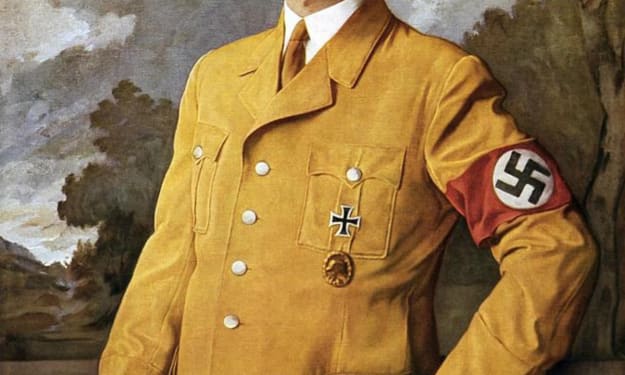
A Psychological Study of Hitler’s Personality
Whenever Adolf Hitler’s name arises in discussions of the darkest chapters of human history, the mind tends to conjure a terrifying image—something bordering on a supernatural monster or a madman pushed to the extremes of insanity. Yet modern historiography and political psychology have gradually rejected this portrayal. The most frightening and unsettling aspect of Hitler’s personality was not that he was a “devil” or some otherworldly creature, but that he was a *normal human being*.
By Taimur Kazmi9 months ago in History
The Forbidden City, China – The Richest Palace in History
No other palace—ancient or modern—matches its scale, longevity, and accumulated wealth. Origins and Construction The Forbidden City was constructed between 1406 and 1420 during the reign of the Ming Dynasty’s Yongle Emperor. Over one million workers, including artisans, craftsmen, and laborers, were involved in its construction. Materials were sourced from across China—rare woods from the south, marble from nearby quarries, and precious metals from imperial mines. Covering approximately 180 acres, the palace complex contains over 980 surviving buildings and nearly 9,000 rooms, making it the largest palace complex ever built. The name “Forbidden City” comes from the fact that no one could enter or leave without the emperor’s permission. It was believed the emperor was the “Son of Heaven,” and the palace was the earthly center of the universe. A Palace of Absolute Wealth The wealth of the Forbidden City did not come merely from its buildings. It represented the combined riches of the Chinese Empire, which for long periods was the world’s largest economy. Sources of Its Immense Wealth Imperial Treasury The palace stored enormous quantities of: Gold and silver ingots Jade artifacts Precious gemstones Imperial seals Silk, porcelain, and lacquerware Tribute System Surrounding kingdoms sent tribute—gold, animals, rare goods, and jewels—to the emperor, all stored within the Forbidden City. Taxation of a Vast Population For centuries, China had hundreds of millions of people paying taxes in grain, silver, and labor. Much of this wealth flowed directly to the imperial court. State Ownership Unlike modern monarchies, the emperor personally controlled land, resources, mines, and industries. There was no separation between state wealth and royal wealth. Architectural Riches The palace itself is an architectural treasure beyond valuation. Roofs covered in yellow glazed tiles, a color reserved exclusively for the emperor Columns and beams painted with gold-infused lacquer Floors made of rare stone designed to drain rainwater symbolically representing dragons Massive halls like the Hall of Supreme Harmony, used for coronations and imperial ceremonies Every structure followed strict cosmological and philosophical rules based on Confucianism, Daoism, and Feng Shui, reinforcing the emperor’s divine authority. Priceless Art and Cultural Wealth The Forbidden City housed one of the largest art collections in the world, including: Over 1.8 million cultural artifacts Ancient paintings and calligraphy Ceremonial weapons Rare books and manuscripts Ritual objects used in imperial ceremonies Many of these items are priceless and irreplaceable. Today, they form the core collection of the Palace Museum, one of the most valuable museums on Earth. Estimated Net Worth While it is impossible to calculate an exact value, historians and economists have made estimates based on: Land value Architectural scale Stored treasures Art collections Historical economic dominance Estimated Value: 💰 Over $70 trillion USD This makes the Forbidden City richer than any palace, billionaire, or modern royal estate in history. To put this into perspective, its estimated value exceeds the combined wealth of many modern nations. Why No Palace Can Compare Several factors make the Forbidden City unique: It served 24 emperors across Ming and Qing dynasties It remained continuously occupied as the seat of power for nearly 500 years China’s economy dominated global trade for centuries Wealth accumulated without modern spending limitations Cultural and symbolic value adds immeasurable worth Modern palaces are residences. The Forbidden City was the center of an empire. Survival Through Time Despite wars, invasions, dynastic collapse, and revolution, the Forbidden City survived largely intact. During the fall of the Qing Dynasty in 1911, many treasures were moved for protection, preserving them from destruction. Today, the palace is a UNESCO World Heritage Site and one of the most visited historical sites in the world, attracting millions of visitors annually. Conclusion The Forbidden City is not just the richest palace in history—it is a symbol of humanity’s ability to concentrate power, culture, art, and wealth into a single monumental space. Its estimated net worth of over $70 trillion reflects centuries of imperial dominance, economic control, and artistic achievement. No modern palace, corporation, or individual fortune comes close. The Forbidden City remains unmatched—a timeless reminder of an era when emperors ruled empires, and palaces held the wealth of the world.
By Say the truth 9 months ago in History
The Fountain of Youth: Myth, History, and the Eternal Human Dream
Origins of the Legend The concept of a life-restoring spring is far older than modern history. Ancient civilizations believed that water held divine and healing powers. In ancient Mesopotamian mythology, the Epic of Gilgamesh describes a plant that could restore youth, showing that the fear of aging existed thousands of years ago. Ancient Greek myths spoke of rivers and sacred springs that granted immortality to gods. In Indian traditions, the concept of Amrita, the nectar of immortality, appears in Hindu mythology. Chinese legends mention elixirs of life sought by emperors to escape death. These early stories laid the foundation for what later became known in the West as the Fountain of Youth. Medieval and Islamic Influences During the medieval period, legends of miraculous waters spread widely through Europe, the Middle East, and Africa. Islamic scholars and travelers wrote about distant lands containing healing springs. Some medieval texts described a spring discovered by Al-Khidr, a mystical figure associated with eternal life in Islamic tradition. European alchemists during the Middle Ages also pursued the idea symbolically. For them, the Fountain of Youth represented the Philosopher’s Stone, an object believed to grant eternal life and turn base metals into gold. Though these pursuits were unsuccessful, they contributed to the development of early chemistry and medicine. The Age of Exploration and Ponce de León The Fountain of Youth gained worldwide fame during the Age of Exploration in the 15th and 16th centuries. The most famous story is associated with Juan Ponce de León, a Spanish explorer. According to legend, Ponce de León searched for the Fountain of Youth while exploring the Caribbean and Florida around 1513. It was believed that somewhere in the New World, there existed a spring that could restore youth to anyone who drank from it. While historical evidence suggests that Ponce de León was more interested in land and wealth than mythical waters, later writers popularized the idea that he was searching for the Fountain of Youth. This connection permanently linked the legend to Florida, where today a tourist site called the Fountain of Youth Archaeological Park exists. Symbolism and Cultural Meaning The Fountain of Youth is more than just a physical place—it is a symbol. It represents humanity’s desire to: Escape aging Avoid illness Delay death Preserve beauty and strength Aging reminds humans of their mortality, and the Fountain of Youth reflects the universal fear of losing vitality. Artists, poets, and writers have used this symbol to explore themes of time, vanity, and the consequences of eternal life. In some stories, immortality is shown as a curse rather than a blessing, suggesting that endless youth may come at a heavy cost. Scientific Interpretations and Modern Parallels In modern times, science has replaced myth as humanity’s tool to fight aging. Researchers study: Stem cells Telomeres and DNA aging Anti-aging medicine Regenerative therapies Gene editing While no scientific discovery can truly reverse aging completely, modern medicine has extended human lifespan significantly. Clean water, vaccines, nutrition, and medical technology have achieved what ancient people imagined through magic. Some scientists refer to modern anti-aging research as a “scientific Fountain of Youth”, though they emphasize healthspan (quality of life) rather than immortality. The Fountain of Youth in Literature and Popular Culture The legend has appeared in countless works of art and entertainment: Novels and poems during the Renaissance Fantasy stories involving magical springs Movies and TV shows depicting eternal youth Modern video games and comics One famous depiction appears in Oscar Wilde’s The Picture of Dorian Gray, where youth is preserved at the cost of morality. Such stories often warn that the pursuit of eternal youth can lead to loss of humanity. Psychological Perspective From a psychological point of view, belief in the Fountain of Youth reflects: Fear of death Desire for control over life Hope for renewal and second chances People associate youth with opportunity, beauty, and freedom. The legend comforts people by suggesting that aging is not final and that renewal is possible. Does the Fountain of Youth Exist? Scientifically and historically, there is no evidence that the Fountain of Youth exists as a real place. However, its idea exists everywhere—in medicine, wellness culture, cosmetics, fitness industries, and health trends. In this sense, the Fountain of Youth is not a physical spring but a human aspiration that evolves with time. Conclusion The Fountain of Youth is one of humanity’s most powerful myths. From ancient legends to modern science, it represents the timeless struggle against aging and death. Though no magical waters have ever been found, the story continues to inspire exploration, creativity, and scientific progress. Ultimately, the Fountain of Youth teaches us not only about the desire to remain young, but also about the importance of living meaningfully at every stage of life. While eternal youth may remain a myth, the quest for health, vitality, and wisdom is very real—and it continues to shape human history.
By Say the truth 9 months ago in History
Genghis Khan: The Complete History of the Greatest Conqueror in Human History
Early Life and Struggles Temujin was born into the Borjigin clan in present-day Mongolia. His father, Yesugei, was a minor tribal leader who was poisoned by rival Tatars when Temujin was still young. After his father’s death, Temujin’s family was abandoned by their tribe, leaving them to survive alone in harsh conditions. During his youth, Temujin experienced extreme poverty, hunger, and violence. He even killed his half-brother Bekhter during a dispute over food—an event that shaped his ruthless survival instincts. Temujin was later captured by a rival tribe and enslaved but managed to escape. These early hardships forged his resilience, strategic thinking, and determination to never be powerless again. Rise to Power and Unification of the Mongols In the late 12th century, the Mongolian steppe was divided among many warring tribes. Temujin began forming alliances, attracting followers not by noble birth but by loyalty and merit—a revolutionary idea at the time. He formed alliances with key leaders such as Toghrul (Ong Khan) and his childhood friend Jamukha. However, these alliances eventually collapsed, leading to brutal conflicts. Temujin defeated Jamukha and other rival tribal leaders through superior military organization and strategy. In 1206, a grand assembly called a Kurultai was held, where Temujin was officially proclaimed “Genghis Khan”, meaning Universal Ruler. This marked the birth of the Mongol nation. Military Genius and Conquests Genghis Khan transformed the Mongol army into the most efficient fighting force of its time. His military innovations included: Highly disciplined cavalry Advanced intelligence and spy networks Psychological warfare Merit-based promotions Strict military discipline Conquest of Northern China Genghis Khan first turned his attention to the Western Xia and Jin Dynasty in northern China. Mongol forces captured major cities, forcing Chinese states to submit and pay tribute. Campaign Against Central Asia One of the most significant events was Genghis Khan’s campaign against the Khwarazmian Empire (modern-day Iran, Uzbekistan, and Turkmenistan). After Mongol envoys were killed, Genghis Khan launched a massive retaliation. Cities like Bukhara, Samarkand, and Urgench were destroyed, demonstrating Mongol brutality and military dominance. This campaign opened Central Asia to Mongol control and sent shockwaves throughout the Islamic world. Administration and Law – The Yassa Despite his reputation for violence, Genghis Khan was a skilled administrator. He introduced a legal code known as the Yassa, which emphasized: Discipline and loyalty Religious tolerance Protection of envoys and traders Equality under law He promoted religious freedom, allowing Buddhism, Islam, Christianity, and traditional Mongol beliefs to coexist. Trade was encouraged through protection of merchants along the Silk Road, helping revive transcontinental commerce. Leadership Style and Vision Unlike many rulers of his time, Genghis Khan: Promoted people based on ability, not birth United tribes under a single identity Rewarded loyalty generously Punished betrayal severely He adopted foreign technologies, administrators, and scholars from conquered lands, integrating them into his empire. This openness allowed the Mongol Empire to function efficiently despite its vast size. Death of Genghis Khan Genghis Khan died in 1227 CE during a campaign against the Western Xia. The exact cause of his death remains unknown, with theories ranging from illness to injuries sustained in battle. In accordance with Mongol tradition, his burial site was kept secret. To this day, his tomb has never been found, adding mystery to his legend. Expansion After His Death After Genghis Khan’s death, his empire was divided among his sons, but continued to expand under his successors: Ögedei Khan Kublai Khan Möngke Khan Under Kublai Khan, the Mongols conquered all of China and established the Yuan Dynasty. At its height, the Mongol Empire stretched from Eastern Europe to the Sea of Japan, covering nearly 22% of the Earth’s land surface. Impact on World History Genghis Khan’s influence reshaped the world: Connected East and West through trade and communication Accelerated cultural and technological exchange Changed warfare and military organization Laid foundations for modern states in Asia and Europe However, his conquests also caused massive destruction and loss of life. Historians estimate millions died during Mongol campaigns, making his legacy both transformative and controversial. Legacy and Historical Debate Today, Genghis Khan is viewed differently across cultures: In Mongolia, he is a national hero and symbol of unity In China and Central Asia, he is seen as both conqueror and reformer In the West, he is often portrayed as a brutal warlord Modern genetic studies even suggest that a significant portion of the world’s population may be descended from Genghis Khan, highlighting his lasting biological legacy. Conclusion Genghis Khan’s life is one of the most extraordinary stories in human history. Rising from abandonment and poverty, he unified the Mongol tribes and created an empire that reshaped Eurasia. While remembered for both ruthless conquest and visionary leadership, his influence on politics, warfare, trade, and culture is undeniable. More than a conqueror, Genghis Khan was a world-changing figure whose legacy continues to shape history even today.
By Say the truth 9 months ago in History
The Shadow of a Giant
I never met him. But I knew his voice. It came through our black-and-white TV in 1983, calm and steady, speaking of “morning in America” while my father fixed dinner and my mother worried about bills. To me, he was just a man in a suit—distant, polished, untouchable.
By KAMRAN AHMAD9 months ago in History