Biographies
"The Greatest Invasion in History: Empires at War"
The Most Significant Invasions in History: When Empires Transformed the World Throughout the annals of history, formidable empires have endeavored to expand their domains through extensive invasions. These conquests shaped civilizations, redefined boundaries, and transformed cultures permanently. Below are some of the most consequential invasions in history that shaped the trajectory of humanity. 1. The Mongol Invasions (13th-14th Century) One of the most extensive and lethal military campaigns in history was orchestrated by Genghis Khan and his Mongol legions. Beginning in 1206, the Mongols invaded China, the Middle East, and Europe, establishing the largest continuous empire the world had ever witnessed. Cities such as Baghdad, Kyiv, and Samarkand were destroyed, resulting in the loss of millions of lives. The Mongols' exceptional equestrian skills, composite bows, and psychological warfare strategies rendered them nearly invincible. 2. The Roman Invasions (1st Century BC - 5th Century AD) The Roman Empire expanded through numerous invasions, but perhaps its most renowned campaigns were Julius Caesar’s conquest of Gaul (58-50 BC) and the invasion of Britain in 43 AD. Rome’s legions overwhelmed local tribes with superior discipline, engineering, and organization. Over the centuries, Rome incorporated extensive territories from Spain to the Middle East, disseminating its language, culture, and laws. 3. The Islamic Conquests (7th-8th Century) Following the emergence of Islam in the Arabian Peninsula, Muslim armies swiftly expanded into the Persian and Byzantine Empires. Under the Rashidun and Umayyad Caliphs, Islamic forces subdued Persia, North Africa, and Spain in less than a century. The proliferation of Islam, Arabic culture, and the establishment of the Caliphate transformed the political landscape of the medieval world. 4. The Norman Invasion of England (1066) One of the most renowned invasions in Western history, the Norman conquest of England by William the Conqueror in 1066, irrevocably altered England. The Battle of Hastings resulted in the defeat of Anglo-Saxon King Harold II, ushering in a new ruling class, the introduction of feudalism, and significant cultural shifts that continue to impact England today. 5. The Spanish Conquest of the Americas (15th-16th Century) The Spanish Empire, led by explorers like Hernán Cortés and Francisco Pizarro, seized extensive territories in the Americas. The Aztec and Inca Empires succumbed to Spanish forces due to superior weaponry, alliances with local tribes, and the catastrophic effects of European diseases. The conquest resulted in immense wealth for Spain but at the expense of indigenous civilizations and cultures. 6. Napoleon’s Invasion of Russia (1812) Napoleon Bonaparte’s ambitious endeavor to conquer Russia became one of the most significant military catastrophes in history. In 1812, he commanded over 600,000 troops into Russia, anticipating a swift triumph. However, severe winters, the scorched-earth tactics employed by the Russian army, and logistical shortcomings decimated his forces, culminating in a humiliating retreat and weakening the French Empire. 7. Hitler’s Invasion of the Soviet Union (1941) Operation Barbarossa, Nazi Germany's incursion into the Soviet Union in 1941, constituted the most extensive military undertaking in history. Hitler's objective was to seize Moscow and eradicate communism, yet the expansive Soviet terrain, severe winters, and resolute resistance reversed the momentum against Germany. The unsuccessful outcome of this invasion signaled the onset of the decline for Nazi Germany in World War II. Conclusion From the Mongols to the Nazis, history is replete with empires striving to expand through monumental invasions. While some of these conquests resulted in innovation and cultural interchange, others caused profound suffering and devastation. Each invasion imparted a significant influence, molding the world as we recognize it today.
By Say the truth 2 years ago in History
Cesar Chavez Bio
Introduction Who Was Cesar Chavez? Cesar Chavez was a Mexican-American labor leader, civil rights activist, and co-founder of the United Farm Workers (UFW). Through nonviolent protests, strikes, and boycotts, he fought for better wages and working conditions for farmworkers, becoming one of the most influential figures in American labor history.
By bipul biswas2 years ago in History
Erykah Badu Biography. AI-Generated.
Introduction Erykah Badu isn’t just a singer—she’s a movement. Known as the "Queen of Neo-Soul," her smoky voice, poetic lyrics, and unapologetic authenticity have made her one of the most influential artists of the past three decades. From her groundbreaking debut Baduizm to her fearless activism and unique fashion sense, Badu has left an indelible mark on music and culture.
By bipul biswas2 years ago in History
The Enigmatic Life of Porfirio Rubirosa
Picture a man who oozes charisma, navigates the world’s elite circles with ease, and leaves a trail of enamored women and whispered legends in his wake. A thrill-seeker with a penchant for fast cars, high-stakes polo matches, and glamorous soirées, he seems ripped from the pages of a spy novel. You might think I’m describing James Bond, but this isn’t fiction. Meet Porfirio Rubirosa, a Dominican playboy whose life was so extraordinary it could eclipse even 007’s wildest adventures.
By KWAO LEARNER WINFRED2 years ago in History
Richard Chamberlain Bio. AI-Generated.
Introduction Richard Chamberlain is a name that resonates with classic Hollywood charm, talent, and an unforgettable presence in the entertainment industry. Best known for his roles in television dramas and blockbuster movies, he became a heartthrob in the 1960s and continued to captivate audiences for decades. From his breakthrough role in Dr. Kildare to his mesmerizing performances in The Thorn Birds and Shōgun, Chamberlain carved out a lasting legacy in film and television. His journey, however, was not just about fame and success; it was also a deeply personal exploration of identity, resilience, and artistic passion.
By bipul biswas2 years ago in History
Echoing Gospel Account Traces of Ancient Garden Found Under Church of Holy Sepulchre.
Echoing Gospel Account Traces of Ancient Garden Found Under Church of Holy Sepulchre Recent archaeological discoveries beneath the Church of the Holy Sepulchre in Jerusalem have unveiled traces of an ancient garden shedding new light on the biblical accounts of Jesus’ crucifixion and burial. This revelation aligns with the Gospel narratives that describe the burial of Jesus in a tomb situated within a garden owned by Joseph of Arimathea.
By Adnan Rasheed2 years ago in History
Horace Greeley: The Man Who Shaped American Journalism and Politics
Few figures in 19th-century America were as influential-or as contradictory-as Horace Greeley. A printer’s apprentice who rose to become the most famous newspaper editor of his time, Greeley was a relentless advocate for reform, a fierce political player, and a man whose ideals often clashed with the realities of his era. His life was a whirlwind of ink, politics, and unyielding opinion, leaving a legacy that still echoes in journalism and public discourse today.
By KWAO LEARNER WINFRED2 years ago in History
Hetty Green: The Unyielding Titan of Wall Street
In the gilded corridors of 19th-century American finance, where men in tailored suits dictated the flow of money, one woman defied every convention. Hetty Green, often labeled "The Witch of Wall Street," was no witch-she was a financial savant, a relentless negotiator, and an investor whose instincts rivaled the sharpest minds of her time. Her life was a paradox: a millionaire who pinched pennies, a devoted mother who crushed business rivals, and a woman who thrived in a world built to exclude her.
By KWAO LEARNER WINFRED2 years ago in History
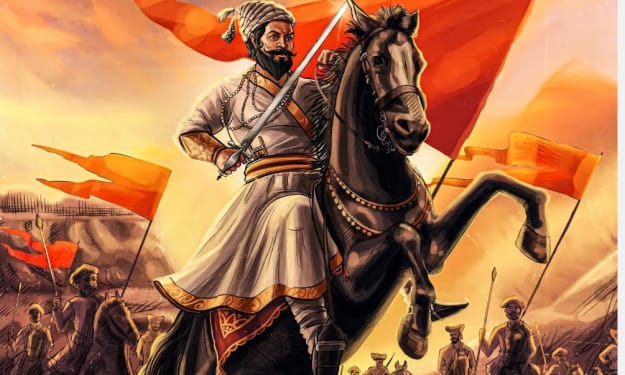
The Inspiring Saga of Chhatrapati Shivaji Maharaj
Introduction Chhatrapati Shivaji Maharaj stands as a monumental figure in the annals of Indian history, embodying the spirit of valor, leadership, and resilience. Born in 1630 in the hill fortress of Shivneri, he was destined to become the founder of the Maratha Empire. Shivaji's life story is a captivating narrative of ambition, strategy, and a strong sense of justice, which resonates even today.
By aruna rana2 years ago in History
The Legendary Wealth of Alexander the Great: Looted Treasures That Shaped History. AI-Generated.
The Legendary Loot of Alexander the Great: Unraveling the Wealth of His Conquests Throughout history, few figures have left a legacy as far-reaching and influential as Alexander the Great. Born in 356 BCE in Macedonia, Alexander was destined for greatness, and by the time of his death at the age of 32, he had created one of the largest empires the world had ever seen. However, Alexander’s conquests were not just about expanding territory. His campaigns led to the accumulation of vast amounts of wealth, as he looted palaces, temples, and treasuries across Asia, the Middle East, and parts of North Africa. This wealth, comprising gold, silver, jewels, and priceless artifacts, played a crucial role in shaping the economic, cultural, and political landscape of the ancient world.
By Say the truth 2 years ago in History
"Vanished Riches: History’s Most Mysterious Lost Treasures"
Vanished Through Time: History’s Most Enigmatic Lost Treasures Throughout the ages, treasures have been fashioned, uncovered, desired, and, at times, inexplicably lost. The fascination with gold, gemstones, invaluable artifacts, and ancient heirlooms has propelled empires into conflict, inspired numerous legends, and motivated treasure seekers to undertake treacherous expeditions. Nonetheless, certain treasures, once noted in historical records, appear to have vanished entirely, leaving behind lingering inquiries and theories enveloped in enigma. This article explores some of history’s most cryptic treasures that have disappeared and remain unaccounted for to this day. 1. The Ark of the Covenant The Ark of the Covenant is arguably one of the most renowned lost relics in human history. According to scriptural narratives, it was a wooden chest adorned with gold that housed the stone tablets inscribed with the Ten Commandments. Revered as a representation of divine presence and authority, the Ark was contained within the First Temple in Jerusalem until it mysteriously vanished after the Babylonians invaded the city in 587 BCE. Some conjecture that the Ark was concealed to safeguard it from marauders, while others theorize it was transported to Ethiopia or interred deep beneath Jerusalem’s Temple Mount. Despite centuries of efforts to locate it, the Ark remains elusive, leaving a legacy of religious and historical fascination. 2. The Lost Fabergé Eggs Crafted by the illustrious Russian jeweler Peter Carl Fabergé, the Fabergé eggs were lavish, gem-encrusted Easter gifts made for the Russian Imperial family in the late 19th and early 20th centuries. Of the 50 imperial eggs created, only 43 have been documented. The whereabouts of the remaining seven eggs remain a mystery, making them among the globe’s most coveted treasures. The eggs disappeared during the upheaval of the Russian Revolution when the Romanov dynasty was toppled and their belongings were pillaged or sold. Occasionally, a missing Fabergé egg resurfacessuch as the egg found at a flea market in the U. S. in 2014but the majority remain unrecovered, captivating collectors and historians alike. 3. The Treasure of the Knights Templar The Knights Templar, a medieval Christian military order, were reputed to possess immense riches, including gold, silver, and religious artifacts such as the Holy Grail and the True Cross. However, after the order was dissolved in the early 14th century by Pope Clement V and King Philip IV of France, a significant portion of their wealth vanished. Some surmise that the Templars concealed their riches in undisclosed sites prior to their capture, potentially in Scotland, Oak Island in Canada, or even beneath the streets of Paris. Speculations regarding the treasure’s fate have inspired numerous books, films, and treasure hunts, but the reality remains elusive. 4. The Amber Room Regarded as the “Eighth Wonder of the World,” the Amber Room was an astonishing chamber constructed entirely of amber panels, gold leaf, and mirrors. Originally built in Prussia and gifted to Peter the Great of Russia in 1716, it was situated in the Catherine Palace near St. Petersburg. During World War II, the Nazis plundered the Amber Room and transferred it to Königsberg Castle in East Prussia. As the conflict concluded, the Amber Room disappeared. Some assert that it was obliterated during the bombing of Königsberg, while others propose that it was concealed within a clandestine underground facility. Despite countless expeditions, the original Amber Room has yet to be located, although a detailed replica was finalized in Russia in 2003. 5. The Flor de la Mar’s Treasure The Flor de la Mar, a Portuguese vessel transporting one of the most substantial treasure collections in history, sank off the coast of Sumatra in 1511. The ship was heavily laden with gold, diamonds, and other precious items plundered from the Sultanate of Malacca. Valuations of the treasure range from hundreds of millions to billions of dollars. Notwithstanding numerous recovery attempts, the ship and its treasure remain submerged beneath the ocean. The perilous waters of the Strait of Malacca and shifting sediments have rendered retrieval efforts challenging, transforming the Flor de la Mar into one of the ocean’s most storied lost treasures. 6. The Lost Library of Alexandria While not a treasure in the traditional sense, the Library of Alexandria was among the most significant repositories of knowledge in the ancient era. Situated in the Egyptian city of Alexandria, it is purported to have contained hundreds of thousands of scrolls, encompassing the collective knowledge of ancient civilizations. The library was sadly annihilated, although historians debate whether it was set ablaze during Julius Caesar’s siege of Alexandria in 48 BCE, assaulted by subsequent Roman emperors, or gradually fell into decay over time. The destruction of the Library of Alexandria is regarded as one of the most profound intellectual catastrophes in history, with countless literary, scientific, and philosophical works irretrievably lost. 7. The Lost Inca Gold When Spanish conquistadors apprehended the Inca emperor Atahualpa in 1532, he proposed a ransom of a chamber filled with gold and silver in return for his liberty. While part of the ransom was delivered, Atahualpa was executed, and the remainder of the treasure was concealed by the Incas to prevent it from falling into Spanish possession. Legends narrate of extensive caches of Inca gold hidden in secret caves or buried deep within the Andes Mountains. Treasure seekers have pursued the Lost Inca Gold for centuries, but it remains one of the most persistent and elusive treasures in history. Conclusion: The Enduring Allure of Lost Treasures Lost treasures symbolize more than mere forgotten wealththey embody the mysteries of history, of civilizations that have flourished and disappeared, and of humanity's intrinsic desire to seek, discover, and unveil the unknown. Whether concealed beneath the ocean, hidden within ancient relics, or lost to the passage of time, these treasures continue to fascinate the imagination of treasure hunters, historians, and adventurers, keeping the spirit of discovery vibrant throughout the ages.
By Say the truth 2 years ago in History