Biographies
Did Dire Wolves Really Return from Extinction? Shocking DNA Discovery Revealed.
Did Dire Wolves Really Return from Extinction? Shocking DNA Discovery Revealed. The dire wolf, a name that sends chills down the spine of any fan of prehistoric predators or “Game of Thrones” enthusiasts is one of the most iconic extinct creatures of the last Ice Age. These massive powerful canines once roamed North and South America hunting large prey and dominating the landscape. But after disappearing around 10,000 years ago they were considered lost to history until recently. Rumors and viral social media posts have stirred up a controversial question Did dire wolves just come back from extinction.
By Adnan Rasheed2 years ago in History
A day at Uranus just got 28 seconds longer
**A Day at Uranus Just Got 28 Seconds Longer: What Does This Mean for the Gas Giant? ** Uranus, the icy blue gas giant located in the outer reaches of our solar system, has long fascinated scientists due to its unique tilt, mysterious weather systems, and elusive nature. However, astronomers recently made an unexpected discovery: the length of a day on Uranus has increased by 28 seconds. While this may seem like a trivial change, it opens up intriguing questions about the planet's behavior and the dynamics of its atmosphere.
By Writer John2 years ago in History
Why Did Pharaoh Khufu Bury Two Giant Solar Boats Next to the Great Pyramid? The Mystery Explained.
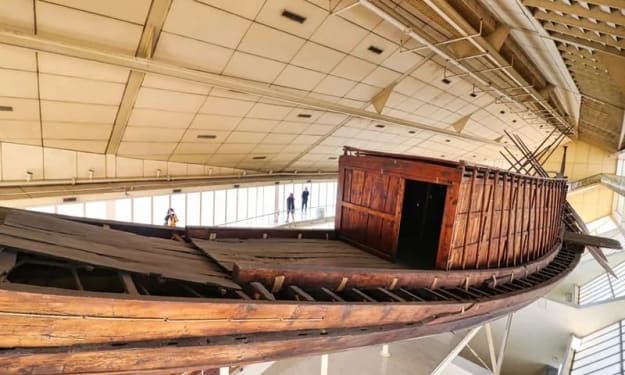
Why Did Pharaoh Khufu Bury Two Giant Solar Boats Next to the Great Pyramid? The Mystery Explained. The Egyptian pyramids have long fascinated the world standing as colossal reminders of a civilization that blended incredible architectural achievements with deep spiritual beliefs. Among the most iconic of these monuments is the Great Pyramid of Giza, built during the reign of Pharaoh Khufu (also known as Cheops) around 2600 BCE. While the pyramid itself continues to attract global attention one of the most intriguing archaeological finds associated with Khufu is not the structure but what was buried beside it: two massive solar boats. These wooden vessels found disassembled in pits near the pyramid have puzzled historians and archaeologists for decades. Why were they built? What was their purpose And why did Khufu the mighty pyramid builder want them buried with him?
By Adnan Rasheed2 years ago in History
Leave a trace.
The window is open. The chilly, rain-drenched breeze hasn’t stopped all night. The messy bed. The exhausted laptop. The unlocked wardrobe. Discarded shirts, vests, backaches, crumpled sheets, books—all blending to create a sense of familiarity. Once, sleep wouldn’t come easily in this room. But with time, a person grows accustomed to so many things.
By sobuj hossain2 years ago in History
Trump’s Pro-Palestinian Activism Crackdown Mirrors Project 2025’s Authoritarian Blueprint. AI-Generated.
Former President Donald Trump has pledged to severely crack down on dissent if he is re-elected, a position that is closely aligned with the far-right Project 2025 strategy as pro-Palestinian protests sweep college campuses and cities across the United States. The initiative, spearheaded by the Heritage Foundation and other conservative groups, outlines a sweeping authoritarian agenda for a potential second Trump term, including aggressive measures to suppress protests, expand executive power, and target political opponents.
By Md. Abdullah2 years ago in History
LOUIS LEAKEY'S CONTROVERSIAL LEGACY
Despite having a meticulous 1400-page work about the Kikuyu people written, Jomo Kenyatta beat Louis Leakey by having the first Kikuyu ethnographic book Facing Mount Kenya, printed in 1938. As a PhD holder, Leakey could not help but hold resentment for Kenyatta who was now a published author (without even having a degree) while his own magnum opus gathered dust in a safe. Leakey was considered by many others but mostly himself as the expert on Kikuyu knowledge. Its as though he owned that knowledge and it was only his to disseminate. In fact, Leakey believed Kenyatta had plagiarized some of his material on circumcision rites without acknowledgement.
By HINGES OF TIME2 years ago in History
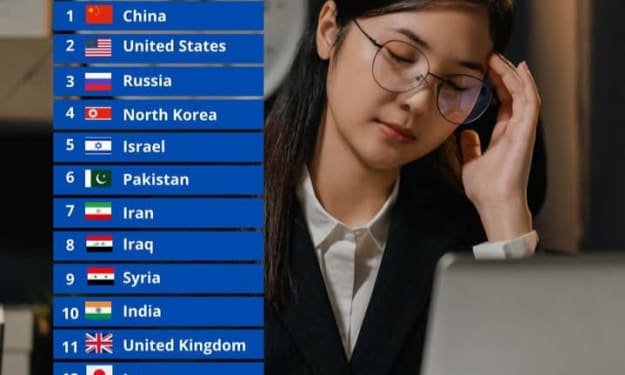
The World’s Most Disliked Countries in 2024 – Understanding the Global Perception
Introduction In a time when the world is more interconnected than ever, global perception carries significant weight. Nations are judged not just by their policies or leaders but by their international behavior, media portrayal, and historical context. A recent global survey conducted by the International Statistics Organization in 2024 has revealed a list of the 15 most disliked countries in the world. While such lists spark heated debate, they also invite deeper reflection. Why are some countries so disliked? Is it due to politics, war, culture, or something more complex? Let’s explore the reasons behind this ranking and the broader implications of such global opinions. The 2024 List: Top 15 Most Disliked Countries 1. China 2. United States 3. Russia 4. North Korea 5. Israel 6. Pakistan 7. Iran 8. Iraq 9. Syria 10. India 11. United Kingdom 12. Japan 13. Saudi Arabia 14. Germany 15. Nigeria This list might raise eyebrows, but it reflects a global sentiment shaped by many interconnected factors. --- Geopolitical Power and Controversy The countries at the top—China, the United States, and Russia—are not just global superpowers but also frequent players in international conflict and political manipulation. Their foreign policies often create division. China's aggressive stance in the South China Sea, surveillance concerns, and treatment of minority populations (like the Uyghurs) has drawn global criticism. The U.S. is frequently disliked for its military interventions, perceived cultural dominance, and polarizing foreign policy. Meanwhile, Russia’s war in Ukraine and its authoritarian internal politics have severely damaged its global image. These countries’ roles in world affairs naturally place them in the spotlight—making their actions highly scrutinized and often controversial. --- Human Rights and Authoritarianism Many nations on this list have been repeatedly criticized for their human rights records. North Korea, known for its closed society, lack of freedoms, and dictatorship, faces near-universal condemnation. Iran and Saudi Arabia, despite their unique cultural and religious heritage, are often accused of oppressing women, silencing dissent, and restricting freedoms. Even democratic nations like India and Israel face accusations—India for increasing religious intolerance and suppression of minority voices, and Israel for its ongoing conflict with Palestinians. Global audiences tend to react strongly to perceived injustices, especially when these issues dominate international headlines. --- Wars, Terrorism, and Instability Countries like Iraq, Syria, and Pakistan have been at the center of regional and global conflicts for decades. Although many of their people are victims of violence and foreign intervention, these nations are often associated with terrorism, war, and instability. Western media, in particular, has played a significant role in reinforcing these perceptions. Nigeria, too, suffers from internal conflicts and extremist groups like Boko Haram, which adds to its unfavorable image internationally. It’s important to note that public opinion doesn’t always distinguish between governments, radical factions, and ordinary citizens—an unfortunate generalization that fuels misunderstanding. --- Colonial Legacy and Cultural Clashes The presence of the UK, Germany, and Japan on this list may seem surprising at first glance. However, the colonial history of the United Kingdom and Germany's 20th-century wars still cast a long shadow. Japan, while technologically advanced and peaceful today, faces criticism from its Asian neighbors for failing to fully reckon with its World War II past. In addition, cultural friction plays a role in how certain populations view others. When traditions, values, or ideologies clash, mutual respect often gives way to mistrust or even resentment. --- The Role of Global Media Perception is powerfully shaped by media narratives. News outlets, social media, and film industries play a massive role in influencing how one country sees another. For example, Hollywood often portrays certain regions (especially the Middle East or Asia) through a lens of conflict, extremism, or backwardness. Likewise, state-run media in various countries may intentionally paint other nations as enemies or threats, reinforcing public fear and animosity. This cycle of media-driven judgment has created deep stereotypes—some of which are far removed from the actual experiences of those living in these nations. --- Perception vs. Reality It’s crucial to understand that public perception doesn’t always reflect the truth. Most people in these countries live normal lives, seek peace, and want progress. The dislike toward a country often stems from the actions of a government, specific policies, or dominant media portrayals—not the culture or people as a whole. Such rankings, while useful for discussion, can also reinforce harmful stereotypes if not handled with care. They remind us how easy it is to judge from afar—and how important it is to approach international opinions with nuance. --- Conclusion The 2024 list of the most disliked countries is not just a popularity chart—it is a mirror reflecting how deeply intertwined our world has become. Political decisions, historical grievances, media influence, and cultural differences all contribute to global opinion. While some criticism is justified, other elements are rooted in misunderstanding or bias. To build a more compassionate and informed world, we must look beyond headlines and recognize the complexity within each country. After all, a nation is more than its politics—it’s its people, its history, and its hope for the future.
By Insect Legends2 years ago in History