Ancient
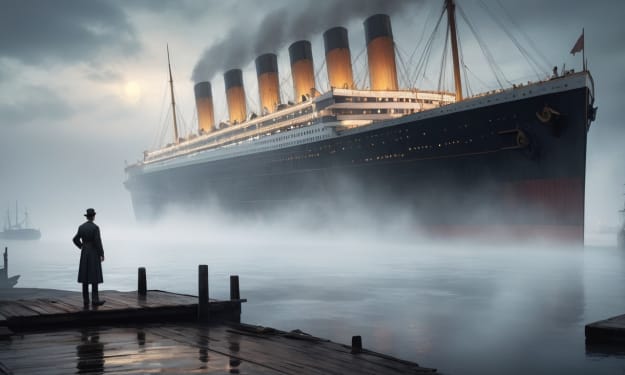
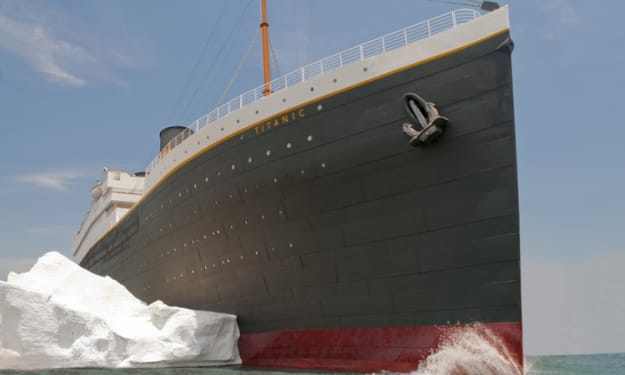
Why Did the Titanic Sink?
The sinking of the RMS Titanic in April 1912 remains one of the most haunting maritime disasters in history. Hailed as the most advanced ship of its time, the Titanic was marketed as "unsinkable"—a claim that was tragically disproven on its maiden voyage from Southampton to New York. But what exactly caused the Titanic to sink?
By JAWAD HUSSAINabout a year ago in History
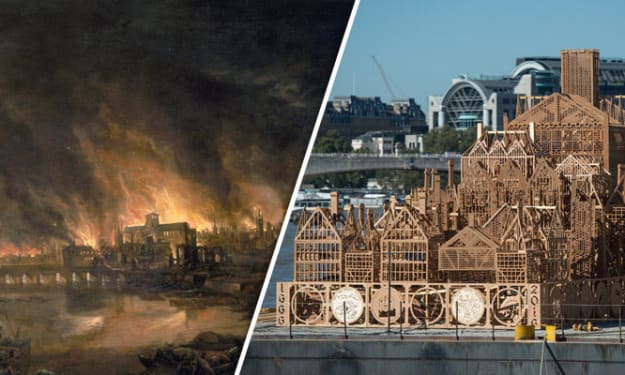
The Great Fire of London: A Bakery Accident That Changed a City
In the early hours of Sunday, September 2, 1666, a small fire broke out in a bakery on Pudding Lane in the heart of London. What seemed like a minor accident quickly escalated into one of the most devastating disasters in the city’s history. Over the course of four days, the Great Fire of London swept through the medieval city, destroying thousands of homes, numerous churches, and iconic landmarks. Yet, from the ashes of destruction rose a new vision of urban resilience, modernization, and fire safety.
By JAWAD HUSSAINabout a year ago in History
2000 Years Old City Found Hidden in the Desert!
In the year 1812, a Swiss adventurer named Johann Ludwig Burckhardt was wandering through the desolate Arabian Desert. Disguised in local attire, he accidentally stumbled upon a narrow path nestled between high rock cliffs. He walked between these rocky walls for about 1.5 kilometers until the path widened—and what he saw next left him stunned.
By Chronicle of Powerabout a year ago in History
The Great Wall of China: A Monument of Strength and Endurance
The Great Wall of China stands as one of the most iconic structures in the world, a testament to the ingenuity, perseverance, and vision of ancient Chinese civilizations. Stretching over 13,000 miles across northern China, it is the longest wall ever built and has become a symbol of Chinese strength and resilience. Its history spans more than two millennia and reflects the dynamic political and military history of ancient China.
By JAWAD HUSSAINabout a year ago in History
Kathmandu:
Introduction Kathmandu is the capital of Nepal. The city is situated at an altitude of 1,400 meters. The city is surrounded by green hills and tall mountains. Shivapuri Peak (2,732m), for example, lies to the north of the valley. Phulchowki Hill (2,782m) rises to the southeast in a similar way.
By Haven Holidaysabout a year ago in History
The Bermuda Triangle
In a world dominated by GPS satellites, advanced navigation systems, and scientific explanation, some places still defy logic. One of the most mystifying regions on Earth is the Bermuda Triangle—a loosely defined area of the Atlantic Ocean where ships vanish, planes disappear, and no solid answers have ever been found. It's a triangle not just of geography, but of mystery, fear, and speculation.
By Hazrat Usman Usmanabout a year ago in History
The Rise and Fall of Ancient Egypt
Ancient Egypt remains one of the most fascinating civilizations in human history. Known for its grand pyramids, mysterious hieroglyphs, powerful pharaohs, and lasting cultural legacy, Egypt thrived for thousands of years along the Nile River. But like all great empires, it eventually declined and fell. This article explores the rise, achievements, and eventual fall of Ancient Egypt in a clear and engaging way.
By JAWAD HUSSAINabout a year ago in History
The Complex Web of Modern Political Issues: A Global Perspective
Politics, once a tool for progress and collective decision-making, has now become a battleground of power, ideology, and influence across the world. In many countries, political systems are strained by deepening divisions, corruption, authoritarian tendencies, misinformation, and global rivalries. The 21st century has brought tremendous advancements in technology, education, and communication, yet political challenges have grown more complex and dangerous. The foundational principles of governance—such as democracy, justice, and accountability—are often compromised by personal greed, party politics, and foreign interference.
By @HiddenHistoryabout a year ago in History