Ancient
The Fall of the Titanic: A Tragic Night That Shook the World
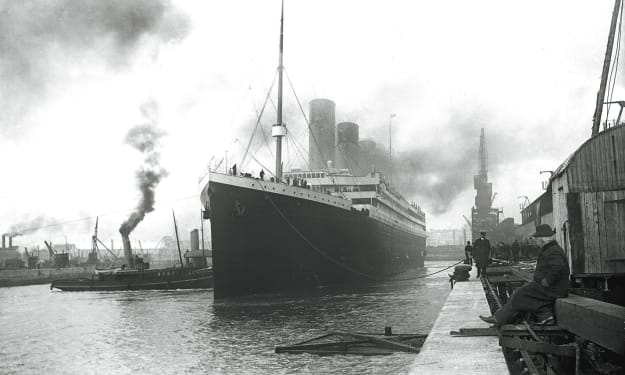
The RMS(Royal Mail Ship)Titanic was a marvel of early 20th-century engineering — the largest and most luxurious ocean liner ever built, proudly called “unsinkable.” When she departed Southampton on April 10, 1912, bound for New York City, she carried more than 2,200 passengers and crew, each with hopes and dreams for the journey ahead. Yet, just four days later, that promise turned into one of the greatest maritime tragedies in history. For much of the voyage, the Titanic lived up to its reputation. Lavish dinners in glittering dining rooms, elegant dances in the grand ballroom, and the gentle sway of the Atlantic Ocean created an atmosphere of celebration and hope. Passengers like Margaret, a young woman from a wealthy English family traveling with her fiancé, and Thomas, an immigrant seeking a fresh start in America, looked forward to new lives filled with promise. However, the calm was shattered late on the night of April 14th. The ship’s lookouts spotted a massive iceberg directly in the path, just moments too late to avoid disaster. The collision tore open the hull, allowing icy water to flood the lower compartments. The Titanic — thought to be invincible — was sinking. Panic gripped the passengers as the reality sank in. Lifeboats were lowered, but there were only enough to save half those aboard. The chaos was worsened by social divisions; first-class passengers boarded lifeboats more quickly, while many in steerage struggled to even reach the upper decks. Margaret and her fiancé fought through the crowd to find safety, clutching each other tightly amid the cries of children and the commands of crew members. Nearby, Thomas led a group of fellow immigrants through the dark corridors, determined to survive. As the freezing night dragged on, the mighty ship’s stern rose skyward before disappearing beneath the waves. Over 1,500 lives were lost that night — families torn apart, dreams forever broken. Yet, in the midst of tragedy, moments of courage and compassion shone brightly. Margaret survived, her heart forever marked by loss but filled with the determination to honor those who perished. Thomas, pulled from the water hours later, carried the memories of that night as he built a new life in America. The fall of the Titanic remains a powerful reminder of human vulnerability and resilience. It revealed the limits of technology and arrogance, but also the strength of the human spirit when faced with unimaginable despair. This tragic night continues to echo through history, inspiring stories of love, sacrifice, and hope amid darkness.
By Hazrat Usman Usmanabout a year ago in History
Why Ancient Rome Banned Pants — And What It Revealed About Their Deepest Fear
By YASIR HAMID What if I told you that wearing pants could get you banished from your own city? Not fined. Not shamed. Not politely asked to change your outfit. Exiled. It sounds ridiculous today. But in Ancient Rome, this wasn’t a joke — it was law. Wearing pants wasn’t just frowned upon. It was considered so rebellious, so culturally offensive, that it could get you thrown out of the heart of the empire. To the Romans, pants weren’t merely clothing. They were a symbol of something far more dangerous: change, defiance, and the slow unraveling of everything Rome believed in. The Year Rome Declared War on Pants In the year 397 AD, under the rule of Emperor Honorius, a decree spread across the streets of Rome that left many stunned. It wasn’t about war, taxes, or even religion. It was about trousers. Wearing pants within the city of Rome became a criminal offense. And not just any offense — the kind that could result in exile. It wasn’t a minor dress code violation. It was considered a full-blown cultural betrayal. Why would an empire that once ruled most of the known world be afraid of a pair of trousers? To understand that, we have to look at what pants represented in the Roman world. Tunics, Togas, and the Uniform of Civilization Stroll through a mental image of ancient Rome. Picture sun-drenched marble streets, towering columns, and statues celebrating the ideal male form. The citizens wear light tunics or flowing togas, fabric that drapes and sways, showing off their bodies with elegance and openness. To the Romans, their clothing wasn't just about comfort. It was a badge of identity. A declaration that they were civilized. Their togas and tunics symbolized grace, power, and classical beauty. In contrast, pants were tight, awkward, and utilitarian. They clung to the legs — hiding the body — and to Roman eyes, that looked like shame. Or worse... barbarism. But it wasn’t just an aesthetic issue. It was also political. Because pants were what their enemies wore. The Enemy’s Uniform Travel beyond Rome’s warm Mediterranean climate — into the wild forests of Germania, the rocky highlands of Britannia, or the freezing steppes of the East — and you’d find something very different. The warriors in these regions didn’t wear tunics or togas. They wore pants. Thick wool trousers. Leather riding gear. Garments made for mobility, protection, and cold. These were not fashion statements. They were functional armor for tribal survival and battle. To Romans, those pants came to symbolize rebellion and threat. The men who wore them were the same ones storming Roman borders, raiding outposts, and refusing to submit to the empire’s rule. When Romans saw pants, they didn’t just see clothing. They saw opposition. So when citizens within Rome started adopting these “foreign” garments, it was more than a fashion faux pas. It was a quiet revolt. The Cold Truth That Changed Everything As Rome expanded its borders and stationed its armies in colder, more rugged terrain, something practical started to happen. Soldiers who had once marched proudly in tunics found themselves freezing to death in snow-covered forests. Togas, beautiful as they were, did little to stop frostbite. So slowly — and unofficially — Roman soldiers began wearing pants. First on patrol. Then during full campaigns. Then… every day. And when these soldiers returned to Rome, they brought those pants with them. Rome’s elite may have banned them. But the army — the backbone of Roman power — had embraced them out of necessity. Suddenly, the empire’s identity began to crack. Rome Divided — By Fabric While the senators and elites clung to their robes, determined to preserve Rome’s image of dignity and classical superiority, the soldiers and working class embraced practicality. They adapted. They changed. This created a cultural divide. The ban on pants wasn’t just a fashion rule. It was a last-ditch attempt to hold the old world together. Emperor Honorius wasn’t worried about clothing — he was terrified of what the shift symbolized. That Rome was no longer Rome. That the empire was slowly becoming… something else. The Fall of the Toga Despite the laws, the pants persisted. Even senators — secretly, on cold winter mornings — began wearing them outside the city. The thing once considered barbaric became common. Comfortable. Normal. And as Germanic tribes flooded into Rome’s collapsing borders, they didn’t just topple the buildings and loot the treasury. They brought their own customs, clothes, and culture with them. Pants weren’t just worn. They won. From Rebellion to Routine It’s fascinating to think how a piece of clothing could become a battleground for identity, fear, and control. What started as a foreign threat eventually became a daily habit. And even though the Roman Empire eventually fell, pants remained. So the next time you pull on your jeans, leggings, or sweatpants, take a moment to remember: There was a time — not so long ago — when that simple act could’ve gotten you exiled from the greatest city on Earth. Not for what you said. Not for what you did. But for what you wore. So, what do you think? Was Ancient Rome too obsessed with appearances? Or did they have a point — that clothes reflect culture, values, and even power? Let me know in the comments. And if you enjoyed this story, give it a share — because sometimes, the smallest things in history reveal the biggest truths. 💬 Want more stories like this? Follow for deep dives into forgotten history, bizarre laws, ancient myths, and the quirky moments that shaped our world — one unbelievable detail at a time.
By Yasir Hamid about a year ago in History
The Lady of the Airwaves
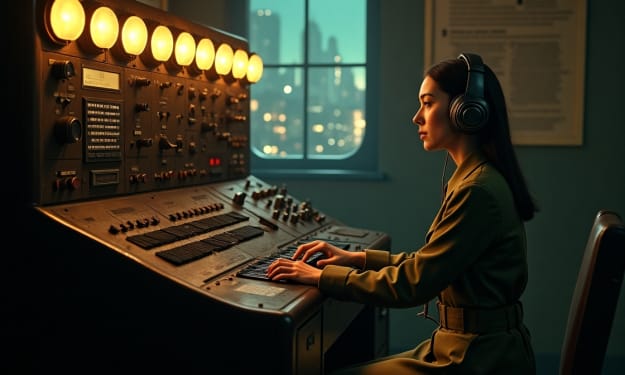
London, 1942 The air in the bunker always smelled like warm dust and electricity. Eleanor Hughes sat hunched over the console, headphones clamped tight over her curls, twisting the dial one meticulous notch at a time. The low hum of static was a comfort now, more familiar than any lullaby from her childhood. At twenty-four, Eleanor had already become a ghost. No records, no name on the payroll, no family allowed to ask where she was. Officially, she was “on war assignment.” Unofficially, she was a wireless operator buried beneath Whitehall, intercepting enemy transmissions and forwarding them up the invisible chain of command. The men called her “The Lady of the Airwaves,” half in jest, half in awe. Unlike most of them, Eleanor didn’t just hear Morse. She listened. That night, the signal came at 2:14 a.m. At first, it sounded like any other scrambled German chatter, but as she filtered through the garble, something caught her ear—English. Not clipped like the BBC, nor American. It was clear, conversational, but... strange. “...repeating for clarity. London, this is Station Echo-One-Seven. If you can hear this—do not dismiss. The year is 2025. I repeat, twenty-twenty-five.” Eleanor froze. The headphones crackled, and her breath caught in her throat. “Anomalies in frequency drift have allowed us temporary contact across time. To whomever receives this: there is a threat. Operation GOLIATH must never proceed. Millions will die. We believe your time is the origin point.” Silence. Then static. She tore off the headphones and stared at the machine as if it had betrayed her. Her pulse thundered. Had she fallen asleep? Hallucinated? Some cruel trick by German intelligence? She logged the incident—every word—and locked the page in her drawer. The next night, the voice returned. “We know how this sounds. But we’ve tracked signal leakage through electromagnetic warping. You’re near the rift’s origin—somewhere under Whitehall. We can’t hold the frequency long.” Eleanor replied. Voice trembling, she pressed the microphone key. “Who are you?” No response. But the messages kept coming. Not nightly, but often enough that she stopped doubting. Names. Places. Dates. Some made no sense—“Bio-cloud over New Delhi,” “Glacial breach, Greenland 2032,” “Synthetic cognition vote 2048.” Yet a few felt terrifyingly close. Operation GOLIATH appeared again and again. A covert weapons initiative involving chemical payloads and a device called the “M-Seed,” something so unstable it was never supposed to be tested. The broadcasts claimed its early prototypes were conceived in 1942, buried in a project Eleanor had never heard of: Midnight Forge. Eleanor took her findings to Lieutenant Greaves, her supervisor, a stiff man with a stiff jaw. He skimmed the report. “You’ve been working long hours. Take a day.” “But sir—” “It’s fantasy, Hughes. Intercepted fiction. Likely Nazi code meant to mislead.” The drawer was locked tighter after that. But something changed. The next broadcast wasn’t a warning. It was a message—personal. “Eleanor Hughes. Born 1918. You played piano at the Rose Street recitals. You lost your brother at Dunkirk. We’re not guessing. We know.” Eleanor’s blood ran cold. “You are the earliest point of contact. We believe it’s because of you. Something about your position, or your biology, or your choices—they anchor the drift.” The voice paused. “You must find the documents hidden in Cabinet 4G, bottom tier, left of the copper valve. They detail the project’s early drafts. GOLIATH begins there.” That night, long after the others had gone, Eleanor took a flashlight and knelt by the storage units near the copper valve. Cabinet 4G. Her hands trembled as she pulled out a file marked “FORGE - Preliminary, 12 Jan 1942.” Inside were diagrams—strange devices, molecular chains, a prototype warhead shaped like a teardrop. She couldn’t make sense of the science, but she knew horror when she saw it. The next day, the cabinet was empty. Every trace of FORGE was gone. She never heard from Station Echo-One-Seven again. Weeks later, Eleanor received orders for reassignment to a different station in Bletchley Park. Before she left, she buried a copy of the files in a tin box beneath a rose bush just outside the bunker. She never spoke of the broadcasts again. London, 2025 A research team restoring old war archives digs near Whitehall during routine renovations. Beneath a rose bush, they find a tin box, wrapped in oilskin, sealed with wax. Inside: faded documents marked FORGE, and a handwritten note. “If the voice ever returns, tell them I listened.” Signed, Eleanor Hughes The Lady of the Airwaves
By Ubaid Khanabout a year ago in History
Giants of time: The most powerful and influential persons of each century
🌟 1st Century (1–100 CE): Jesus Christ – The Divine Revolutionary 🕊 Introduction The 1st century was a time of empires and oppression. Rome ruled most of the known world with iron fists and golden crowns. But power doesn’t always come from palaces — sometimes, it comes from a humble carpenter in a small, dusty village. That man was Jesus of Nazareth, known today as Jesus Christ. 👣 The Early Life of Jesus Jesus was born in Bethlehem (around 4–6 BCE), in Roman-occupied Judea. According to Christian belief, his birth was miraculous — to Mary, a virgin, by the will of God. Raised in Nazareth, he lived a quiet life as a carpenter until he began preaching at about age 30. He never wrote a book. He commanded no army. He never held political office. Yet, in three short years, he would change the spiritual and moral direction of the entire world. 📜 Teachings and Miracles Jesus taught love, forgiveness, compassion, and faith in one God. He urged people to care for the poor, to forgive enemies, and to live humbly. He told powerful parables — short stories with deep meanings — like: The Good Samaritan (about kindness beyond race) The Prodigal Son (about forgiveness) The Mustard Seed (about small faith growing big) He performed miracles: healing the blind, feeding thousands, calming storms, even raising the dead (according to the Bible). These acts attracted both massive crowds and dangerous enemies. ⚔️ Opposition and Crucifixion Jesus's popularity threatened the Jewish religious leaders and alarmed the Roman authorities. He was arrested, falsely accused of blasphemy and sedition, and sentenced to crucifixion — the most painful Roman execution. He died on a cross around 30–33 CE. But his followers believed he rose from the dead three days later. This event, the Resurrection, became the cornerstone of Christianity. ✝️ Birth of a Global Faith After Jesus’s death, his disciples — especially Peter and Paul — spread his teachings across the Roman Empire. They faced persecution, imprisonment, even martyrdom. Yet, their message of hope, salvation, and eternal life resonated with slaves, soldiers, and scholars alike. Christian communities emerged in Rome, Syria, Egypt, Greece, and beyond. A man who had walked barefoot on Galilean hills was now the foundation of a worldwide religion. By the end of the 1st century, Christianity had grown from a small Jewish sect to a faith that would eventually reshape Europe, the Middle East, and Africa — and later the world. 🌍 Legacy and Influence Over 2.3 billion people today follow Christianity. His teachings inspired civil rights leaders like Martin Luther King Jr. His words influenced Western morality, law, education, and charity. Countless books, artworks, music, films, and philosophies have been based on his life. 🧠 Why He Was the Most Influential of the 1st Century Jesus challenged power not with violence, but with truth. He spoke of justice without politics, love without condition, and sacrifice without recognition. In a century of Roman emperors like Nero and Tiberius, the true immortal figure was a man who wore no crown — but bore one of thorns.
By Muhammad Abbas about a year ago in History
The Vanishing Library of Baghdad—What Was Lost When the House of Wisdom Burned?
A Beacon Extinguished By the 9th century, the House of Wisdom—or Bayt al‑Hikma—had become Baghdad’s crowning jewel. Imagine a colossal domed edifice where Syriac, Persian, Sanskrit, and
By DRE Explainsabout a year ago in History
Imran Khan: The Leader Who Challenged Power Through Promise and Persistence.
Imran Khan’s life reads like an epic tale — one that traverses stadiums, hospitals, political rallies, courtrooms, and eventually, the corridors of power. Born in 1952 in Lahore, Khan rose to prominence not through politics but cricket, a sport that brought him global fame and national hero status. As captain, he led Pakistan to its first-ever Cricket World Cup victory in 1992. But that victory was just the beginning of a far greater mission.
By Mansoor ahmadabout a year ago in History
Photos of Macron’s U.K. State Visit, From a Carriage Ride to a Polite Kiss
French President Emmanuel Macron and his wife, Brigitte, commenced a three-day state visit to the United Kingdom, marked by ceremonial elegance, political symbolism, and moments of personal charm. The grand diplomatic event that was to follow began with their arrival at RAF Northolt. Greeted by the Prince and Princess of Wales, Macron's gallant gesture of gently air-kissing Princess Kate's hand drew both admiration and curiosity, as such gestures are rarely seen in royal protocol but not expressly prohibited.
By GLOBAL NEWSabout a year ago in History
Historical Places to Visit in Iraq
If you crave adventure, authenticity, and a deep connection to the roots of human civilization, few destinations compare to Iraq. For travelers considering a visit to Iraq from the USA, the country offers a tapestry of ancient cities, sacred shrines, and bustling markets—each telling a story that shaped the world. With the support of MidAsia Routes, your journey to Iraq becomes not just possible, but truly unforgettable.
By Sumit Pruthiabout a year ago in History