Ancient
Christopher Columbus – The Man Who Changed the Map of the World
🔹 Born: 1451 – Genoa, Italy 🔹 Died: 1506 – Valladolid, Spain 🔹 Fame: The first European to officially discover the American continent --- 🧭 Who Was Christopher Columbus? Christopher Columbus was an Italian explorer, navigator, and maritime adventurer who earned global recognition for being the man who led Europe to the New World—what we now call the Americas. But it wasn’t originally his goal. Columbus set out to discover a sea route to Asia—specifically India and China—by sailing westward across the Atlantic Ocean. At the time, European nations were desperate to find new trade routes to the East for spices, gold, and silk. But instead of reaching Asia, Columbus stumbled upon lands previously unknown to Europeans, forever altering the world's understanding of geography. Though he died never knowing the true extent of his discovery, Columbus’ voyages marked the beginning of a new era in world history—one that connected continents and transformed civilizations. --- 🚢 The First Voyage – 1492 In the late 15th century, Columbus pitched his vision of a westward sea route to Asia to several European courts. After years of rejection, King Ferdinand and Queen Isabella of Spain finally agreed to sponsor his voyage. They provided him with three ships: Niña Pinta Santa María Columbus and his small fleet set sail westward from Spain in August 1492. After more than two months at sea, the crew spotted land on October 12, 1492. This land was one of the Bahamas islands in the Caribbean. However, Columbus believed he had reached Asia, and mistakenly referred to the native inhabitants as “Indians”—a term that remained in use for centuries. --- 🌍 Total Number of Voyages Columbus undertook four major voyages across the Atlantic Ocean, each time exploring new areas and establishing the foundation for future European colonization. 1. 1492 – Discovery of the Caribbean Islands He landed on islands such as the Bahamas, Cuba, and Hispaniola (present-day Haiti and the Dominican Republic). 2. 1493 – Second Voyage and Colonization This expedition focused on establishing settlements. He returned with more ships and men to build colonies in the New World. 3. 1498 – South America Columbus explored parts of Venezuela and the northern coasts of South America, still believing he had found parts of Asia. 4. 1502 – Final Expedition to Central America His last voyage took him to Central America, including modern-day Honduras, Nicaragua, and Costa Rica. Despite all these journeys, Columbus never realized he had discovered an entirely new continent. He believed until his death that he had found islands near India or China. --- 📌 A Fascinating Truth One of the most intriguing facts about Columbus is this: he never set foot in what is today the mainland United States. His landings were primarily on Caribbean islands and parts of Central and South America. Also, he never knew that his discovery would lead to the founding of nations like the United States, Mexico, Brazil, and Canada. To him, it was just a new trade route. --- ⚖️ Hero or Villain? Columbus is perhaps one of history’s most debated figures. On one hand: He is celebrated as a brave explorer who challenged the unknown. His courage opened up the Western Hemisphere to European exploration. He initiated a new chapter in global exchange—of culture, ideas, and commerce. On the other hand: Critics point out the devastating consequences of his voyages for native populations. His arrival marked the start of colonization, forced conversions, slavery, and the decimation of indigenous cultures. His crews committed violence, theft, and exploitation, especially in Hispaniola. So, was Columbus a hero or a villain? The answer depends on which side of history you're looking from. For some, he is a visionary. For others, he represents the beginning of centuries of suffering for native people. --- 📅 Columbus Day vs. Indigenous Peoples' Day In the United States, Columbus Day is observed on the second Monday of October every year. It was originally established as a federal holiday to honor Columbus' achievements. However, in recent years, many states and cities have renamed or replaced the holiday as “Indigenous Peoples’ Day.” This change reflects a broader recognition of the native cultures that suffered due to European colonization. The aim is not just to celebrate discovery but also to acknowledge historical truth and honor the resilience of indigenous communities. --- 🎯 Legacy and Impact Christopher Columbus’ voyages had earth-shaking effects on the world: 🌐 Global Trade His discovery paved the way for the Columbian Exchange, a massive exchange of plants, animals, cultures, and diseases between the Eastern and Western hemispheres. 🗺 Changed Geography Before Columbus, world maps had no knowledge of the Americas. After him, the globe was reimagined. 🏴☠️ Age of Exploration His success inspired other explorers like Amerigo Vespucci, Hernán Cortés, and Ferdinand Magellan to venture into the unknown. 🛶 Colonization Columbus’ expeditions began Europe’s colonization of the Americas, bringing both prosperity and tragedy to the New World. --- 📚 Conclusion: A Turning Point in Human History Whether viewed as a courageous adventurer or a flawed symbol of imperialism, Christopher Columbus undeniably changed the course of human history. He opened the door to a new world—one that would become home to hundreds of millions. His journey across the Atlantic marked the end of the medieval age and the dawn of the modern global era. The map of the world was never the same again.
By Ikram Ullahabout a year ago in History
Sekhmet: The Lioness of Flame and Fury
In the burning deserts of ancient Egypt, where the sun scorches the sands and life clings to the Nile, there roared a goddess of fire and blood: Sekhmet, the lion-headed warrior deity whose power could both destroy and heal. She was not a gentle goddess of grain or love—Sekhmet was born of wrath, her breath the desert wind, her eyes burning with the heat of Ra himself. She was feared and revered, invoked in both war and plague, and her name—meaning “The Powerful One”—echoed through the temples like a growl from the divine.
By Kristen Orkoshneliabout a year ago in History
Hekate: Guardian of the Threshold, Goddess of Shadows and Sorcery
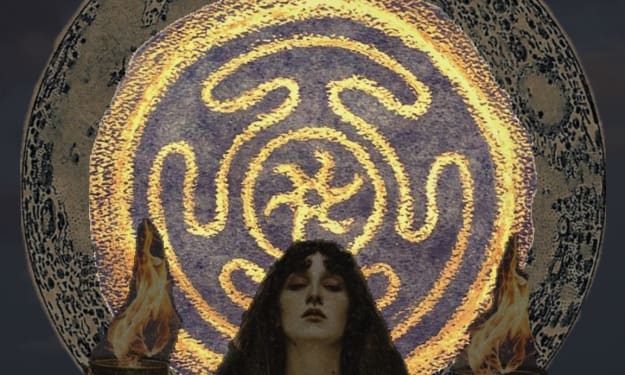
In the flickering light of ancient torches, standing at the crossroads where choices are made and fates are sealed, Hekate waits. Neither wholly light nor dark, she is the Greek goddess of magic, the moon, necromancy, and transitions. Revered and feared in equal measure, Hekate is a guardian of liminal spaces—the in-between realms of dusk and dawn, life and death, body and spirit.
By Kristen Orkoshneliabout a year ago in History
Inanna (Ishtar): Queen of Heaven and the Dark Divine
Long before the rise of Olympus or the thrones of Valhalla, there reigned a goddess of immense power and contradiction in the ancient cities of Sumer: Inanna, later known as Ishtar by the Akkadians and Babylonians. She was the Queen of Heaven, the goddess of love and war, creation and destruction, fertility and death—a figure so complex and vast that no single definition could contain her.
By Kristen Orkoshneliabout a year ago in History
Athena - Goddess of Strategy, Wisdom and War
Among the glittering pantheon of Greek gods and goddesses, none stands taller in intellect, strategy, and justice than Athena, daughter of Zeus. A deity of paradox and balance, she embodies both wisdom and warfare, thought and action, discipline and creativity. Revered not just as a goddess of battle but as a protector of civilization itself, Athena’s influence reached far beyond myth, shaping art, politics, and philosophy in both ancient and modern minds.
By Kristen Orkoshneliabout a year ago in History
Murder, Marriage, and the Throne: Hürrem Sultan’s Ruthless Ascent
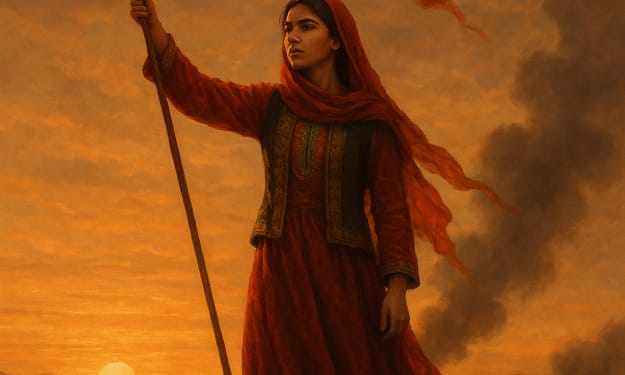
She arrived in chains—nameless, powerless, just another terrified girl ripped from her homeland and thrust into the opulent prison of the Ottoman harem. But behind her wide eyes and fiery red hair burned something no chains could hold: ambition.
By Kristen Orkoshneliabout a year ago in History
World War 2 & Why World War 2 happened?
Introduction World War II, spanning from 1939 to 1945, was the most catastrophic and transformative conflict in human history. Involving more than 30 nations and resulting in an estimated 70 to 85 million deaths, it reshaped the political, economic, and social fabric of the modern world. But how did such a devastating war begin just two decades after the "war to end all wars"? The causes of World War II are complex and deeply rooted in the aftermath of World War I, economic instability, the rise of totalitarian regimes, and the failure of international diplomacy. This article explores the multifaceted origins of World War II, offering a clear and comprehensive account of why the world descended into another global conflict.
By Engr. Mansoor Ahmadabout a year ago in History
Ertugrul Ghazi: The Man Who Paved the Way for the Ottoman Empire
1. Early Life and Background Ertugrul Ghazi was born around 1191–1195 CE, during a time of great turmoil and transition in the Islamic and Turkic world. He belonged to the Kayı tribe, one of the 24 Oghuz Turkic tribes, renowned for its valor and lineage. His father, Suleyman Shah, was the leader of the Kayı tribe and led them during their migration from Central Asia toward the west.
By Nimatullahabout a year ago in History
The Middle East
The Middle East, a region located at the crossroads of Asia, Africa, and Europe, has always held global significance due to its strategic location, ancient civilizations, religious heritage, and vast energy resources. Despite its immense cultural wealth, the Middle East has long been associated with instability, political strife, and conflict. However, to truly understand this region, one must look beyond the headlines and delve into its history, diversity, and evolving modern identity. A Cradle of Civilization The Middle East is often called the "Cradle of Civilization." Ancient Mesopotamia, located between the Tigris and Euphrates rivers in modern-day Iraq, gave the world writing, law, and agriculture. Egypt, with its mighty pharaohs and pyramids, developed along the Nile. The region also includes the birthplace of three of the world's major monotheistic religions: Judaism, Christianity, and Islam. These religions emerged in the Middle East and continue to shape its identity and politics. Jerusalem, Mecca, and Medina are cities of deep spiritual importance. Millions travel annually for religious pilgrimages like the Hajj in Saudi Arabia. Yet, these spiritual centers have also been focal points for religious and political tensions over the centuries. Colonial Legacies and Borders The modern Middle East was heavily shaped by European colonial powers. Following the fall of the Ottoman Empire after World War I, Britain and France carved up the region under the Sykes-Picot Agreement, creating artificial borders with little regard for ethnic, tribal, or religious affiliations. This redrawing of the map sowed seeds of future conflict, particularly in countries like Iraq, Syria, and Lebanon. Palestine became another hotspot when Jewish immigration increased during and after World War II, culminating in the creation of the state of Israel in 1948. This led to multiple wars and the ongoing Israeli-Palestinian conflict, which remains one of the most pressing issues in international politics. Oil, Wealth, and Power The discovery of oil in the early 20th century transformed many Middle Eastern nations. Countries like Saudi Arabia, the UAE, and Kuwait grew into some of the richest nations on Earth, with vast infrastructure, global influence, and powerful monarchies. The Organization of the Petroleum Exporting Countries (OPEC), led largely by Middle Eastern producers, holds major sway over global oil prices and energy policy. However, oil wealth has also brought challenges. Many countries remain economically dependent on petroleum, and rising global demand for clean energy is forcing them to rethink their futures. Meanwhile, oil riches have often deepened the divide between the ruling elites and the general population. Conflict and Upheaval The Middle East has experienced repeated conflicts over the past century, often with foreign involvement. The U.S. invasion of Iraq in 2003, after accusations of weapons of mass destruction, led to years of violence, instability, and the rise of extremist groups like ISIS. Syria’s civil war, starting in 2011, has devastated the country, displaced millions, and drawn in regional and global powers. Elsewhere, the rivalry between Sunni-majority Saudi Arabia and Shia-majority Iran has fueled proxy wars in Yemen, Lebanon, and beyond. Sectarian tensions continue to shape regional politics, affecting diplomacy, governance, and peace efforts. Winds of Change Despite the turbulence, the Middle East is also a region of resilience and transformation. The Arab Spring, which began in Tunisia in 2010, spread rapidly across the region, with citizens demanding democracy, justice, and economic reform. Although the outcomes varied—from democratic progress in Tunisia to chaos in Libya and Syria—the movement showed that ordinary people yearn for freedom and dignity. In recent years, countries like Saudi Arabia have launched ambitious modernization plans. Under Crown Prince Mohammed bin Salman, the kingdom is investing in mega-projects, tourism, and liberalizing some social rules. Women now drive, cinemas are open, and music concerts are being held—unthinkable just a decade ago. Meanwhile, efforts toward regional cooperation have emerged. The Abraham Accords normalized relations between Israel and several Arab nations, including the UAE and Bahrain. This shift indicates a possible new era in regional diplomacy, though it remains controversial and fragile. Looking Ahead The Middle East’s future remains uncertain but hopeful. The region faces immense challenges: rebuilding war-torn nations, bridging religious and ethnic divides, creating jobs for its young population, and managing dwindling natural resources. But it also holds immense potential. With its young and educated population, rich history, and strategic importance, the Middle East can become a model of renewal and progress. Understanding the Middle East requires more than following the news—it demands empathy, historical awareness, and a recognition of its complexity. From ancient empires to modern revolutions, the Middle East is not just a region of conflict; it is a region of culture, change, and unyielding human spirit.
By Movies Channelabout a year ago in History
Why World War 1 Happened: The Spark That Ignited the World
The First World War was not just a sudden eruption of violence—it was a storm that had been brewing for decades. Often remembered for its massive scale and horrific trench warfare, World War 1 (1914–1918) was caused by a complex web of political tensions, alliances, nationalism, and a single, fatal spark. But what exactly triggered this global conflict? Why did the world plunge into war? Let’s break it down.
By Engr. Mansoor Ahmadabout a year ago in History