Ancient
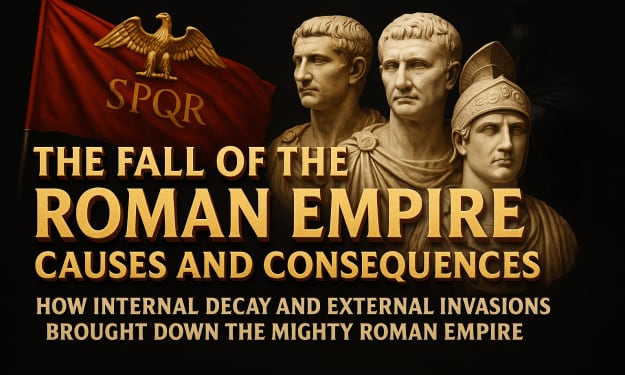
The Fall of the Roman Empire: Causes and Consequences
The Roman Empire, once the most powerful civilization in the ancient world, ultimately fell after centuries of domination across Europe, North Africa, and the Middle East. Its collapse is one of history's most significant turning points, signaling the end of classical antiquity and the beginning of the Middle Ages in Europe. Understanding the fall of the Roman Empire involves a complex combination of internal weaknesses and external pressures that eroded Rome’s ability to sustain itself. This article explores the key causes behind the downfall of the Roman Empire and the enduring consequences of its demise.
By Engr. Mansoor Ahmadabout a year ago in History
France’s Darkest Verdict Unpacked
Was He France’s Savior or Its Betrayer? A Look at Julian Jackson’s France on Trial The Case of Marshal Petain dives deep into one of the most painful and complicated chapters in modern French history the trial of Marshal Philippe Pétain for treason after World War II. It’s a book that doesn’t offer easy answers, but it certainly forces readers to wrestle with the right questions.
By Lynn Myersabout a year ago in History
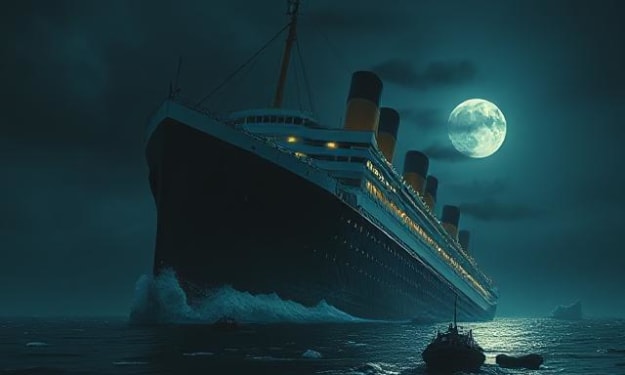
The Night the Ocean Broke the Titanic. AI-Generated.
They called her the "Ship of Dreams." She was more than a marvel of steel and steam—Titanic was a floating city, a palace on the sea, a symbol of man’s triumph over nature. But on a cold April night in 1912, the Atlantic reminded the world that no creation of man is greater than the will of nature.
By Muhammad Riazabout a year ago in History
🌪️ “When the Rope-Pulled Fan Stopped — and the Winds of Slavery Ceased” 🌪️
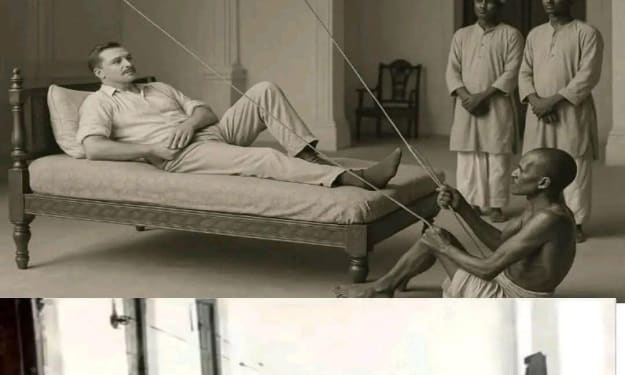
🕰️ When the British Came, the Winds of Slavery Began to Blow When the British first set foot on the rich soil of the Indian subcontinent, they didn't just seize its land, gold, and governance. They took control of the very air that flowed in the royal courts and noble mansions of Delhi, Lucknow, Lahore, and Bombay. This is not a metaphor. It is a historical reality that strikes both the mind and the heart. As British officers would kick off their shoes and settle into cushioned seats in their sprawling colonial mansions, enormous fabric fans—punkhas—would begin to sway above them, offering a cool breeze in the tropical heat. But what made these fans move was not electricity. It was human labor—the silent, invisible breath of servitude. Below the fan, lying flat on the hot floor, would be a voiceless and earless servant—a human fan operator, mute and deaf, chosen specifically for his inability to hear or speak. Why? Because the British had a chilling motto: > “We want air… not ears.” They didn’t want distractions. They didn’t want conversation. They wanted obedient bodies, not minds. These “punkha-wallahs” would pull on long ropes connected to the fans above, hour after hour, drenched in sweat, while their colonial masters enjoyed wine, music, and conversation. This wasn’t just physical slavery—it was emotional and intellectual bondage, reducing humans to mere machines before machines even existed. --- ⚙️ Technology: The Great Equalizer of Time Then came the miracle of innovation—light bulbs, motors, switches. With the wave of technological advancement, the power that once lay in the hands of cruel masters was transferred to circuits, wires, and buttons. That same punkha, once moved by a slave’s bleeding hand, was now spinning joyfully from the ceiling on the command of electricity. It seemed to laugh, whispering: > "Now, I give air… without chains, without commands!" The day electricity came, the ropes of slavery snapped. The British left. But the fans remained. And with them, a haunting reminder of the days when even air was a luxury that came at the cost of someone's dignity. --- 🎭 Interpretation: Not All Chains Are Made of Iron Slavery is not always about iron shackles or prison walls. Sometimes, a rope tied to a ceiling fan can be more symbolic than a dungeon. Think deeply: a fan swaying on the ceiling, a servant lying on the ground, pulling a rope with his feet while trying not to breathe too loud. That’s not just a system of ventilation. That’s a system of domination. And still today, in the age of artificial intelligence and remote-controlled appliances, we must ask ourselves: Are we truly free? Or are we just tied to invisible cords of modern servitude? --- 👣 A Scene Soaked in Sweat and Silence Picture it vividly: A white British man sits under a high ceiling, holding a glass of imported wine. A velvet carpet cushions his polished shoes. A female dancer sways rhythmically before him. Overhead, a large punkha swings side to side. Beneath the shadows, a servant lies on the cold floor, his body soaked in sweat, his muscles aching, his identity erased — all so that the colonizer may not feel a moment’s discomfort. This is the civilization the West called “progress.” This is the culture that some in our lands still admire and emulate — without understanding the price of the breeze that once flowed. --- 💡 The Slap of Technology Today, when we press a button and feel a cool draft, we think nothing of it. But we should. Because every whisper of air from a fan today is a reminder of freedom hard-won. When we turn on an air conditioner or control a fan with a remote, we must pause. This isn’t just comfort. This is liberation. Technology, in this case, didn’t just make life easier. It restored dignity, replacing ropes with remotes and silence with agency. --- 📝 Conclusion: A Change in System, Not Just Speed The fan is the same. The ceiling is the same. The heat, too, is unchanged. What has changed… is the system. Where once mute servants pulled at ropes like forgotten souls, now silent machines serve us, without pride, without pain. The air still flows, but no one lies on the floor to make it happen. And that, perhaps, is the greatest revolution of all — not just in technology, but in human value. So next time you enjoy the comfort of a fan, think not only of its cooling breeze — but of the generations who suffered to give you that simple joy without chains. --- > From bondage to buttons, from ropes to remotes — the journey of the fan is the story of humanity’s struggle for dignity. Never forget: even the air we breathe was once a privilege denied to the voiceless.
By Ikram Ullahabout a year ago in History
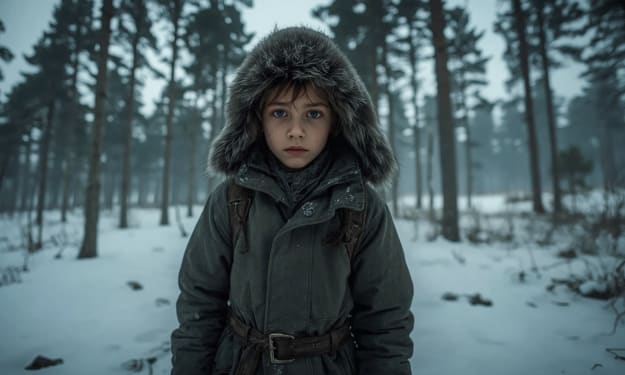
The Boy Who Survived 22 Days in Siberia Alone
“I knew if I fell asleep, I would never wake up again.” In the bitter cold of Siberia, survival is a game of minutes. But for 10-year-old Tserin Dopchut, it was a battle that lasted 22 excruciating days—alone, wounded, and with nothing but instinct and courage keeping him alive. This is not fiction. This is a true story of a child who defied nature, hunger, and hopelessness to survive in one of the most unforgiving environments on Earth. The Day He Disappeared It was a quiet afternoon in Tuva, a remote region in southern Siberia near the Mongolian border. Tserin was playing near the forest while his family tended to chores. Like most rural children, he was no stranger to the woods. But that day, he wandered too far—and vanished without a trace. When night fell and Tserin didn’t return, his family raised the alarm. But searching the endless forest with its wild bears, wolves, and sub-zero temperatures would be no easy task. The First 72 Hours: Panic Sets In Russian emergency services launched a full-scale search. Helicopters, thermal drones, and ground patrols scoured the forest. But no sign of the boy emerged. Days turned into a week. The temperature dipped below -30°C (-22°F). Searchers began to fear the worst. Locals whispered that even a seasoned hunter wouldn’t survive out there for more than a few days—especially not a child. Alone But Not Broken What they didn’t know was that Tserin was still alive. After getting lost, he realized he had strayed too far to find his way back. He remembered the survival skills his grandfather had taught him—how to stay still if you're lost, how to follow water sources, and most importantly: never give up. He found shelter under a larch tree and drank water from a nearby creek. At night, he buried himself under leaves to trap heat. He ate whatever he could find: berries, pine needles, even tree bark. One day, he heard wolves howling nearby. Another day, he saw a bear's footprints just meters from where he had slept. But every morning, he woke up. Alive. The Moment of Rescue On the 22nd day, a local search team spotted small footprints near the river. They followed them for hours until they saw something moving beneath the brush. It was Tserin. He was covered in dirt, weakened by hunger, and had frostbite on his feet, but he was alive. Doctors said he had lost nearly a third of his body weight, and his survival was nothing short of miraculous. His first words? "I just wanted to go home." How He Survived the Impossible Tserin’s story stunned Russia—and the world. Survival experts couldn’t believe how a child so young had managed to last almost a month in such brutal conditions. But locals had a theory: he had the spirit of the taiga—a deep connection with the land, passed through generations. His grandfather was a herder who had taught him survival basics. Those lessons, mixed with Tserin’s calm thinking and natural instincts, may have saved his life. A Story That Echoes Across the World What makes Tserin’s story so haunting isn’t just the physical danger he faced—it’s how close the line is between life and death. One wrong move, one moment of panic, and this tale could have ended in tragedy. But it didn’t. Tserin Dopchut became a symbol of human resilience, a quiet warrior of the wilderness, and a reminder that sometimes, even the smallest among us can be the strongest.
By Echoes by Imadabout a year ago in History
Moses and Pharaoh: The Confrontation of Truth and Tyranny
📖 Story: Moses (AS) and Pharaoh's Dialogue In the ancient land of Egypt, there ruled a man who called himself a god. His name was Pharaoh, and his throne was one of unmatched power, pride, and oppression. The people feared him, obeyed him blindly, and dared not question his commands. Among the people he ruled were the Children of Israel—enslaved, broken, and oppressed for generations. But the Lord of the heavens and the earth had a plan. From among the oppressed people, Allah chose one man—Moses (peace be upon him)—to carry His divine message. Moses had once lived in Pharaoh’s palace, raised as one of his own. But now, he would return, not as a prince, but as a Prophet. --- 🔥 The Divine Mission One day, on the sacred Mount Sinai, Moses received a powerful command: > “Go to Pharaoh, for he has indeed transgressed all bounds.” (Qur’an, Surah An-Nazi'at, 17) Moses felt fear in his heart—not of Pharaoh, but of the great responsibility he had been given. So he asked for help, and Allah appointed his brother, Aaron (Harun), as his companion and supporter. Together, they traveled to the palace of Pharaoh, armed not with swords or armies, but with truth, faith, and the power of God. --- 👑 Before the Throne of Arrogance As they entered the mighty palace, guards tried to stop them. But word reached Pharaoh that the man once raised in his household—Moses—had returned, claiming to be a messenger from a higher power. Pharaoh allowed them into the grand court. He sat on his throne of gold, surrounded by ministers and idols, draped in luxury and arrogance. Moses stood firm and spoke: > “We are the messengers of the Lord of the Worlds. Let the Children of Israel go with us.” Pharaoh laughed—a cold, arrogant laugh. > “Did we not raise you as a child among us? And now you return, claiming to be a prophet? And who is this 'Lord of the Worlds' you speak of?” --- 🌌 The Power of Truth Moses replied calmly: > “He is the Lord of the heavens and the earth and everything between them—if only you would be convinced.” Pharaoh scoffed again: > “Do you hear what he says?” he mocked, turning to his courtiers. “This man speaks nonsense!” But Moses stood his ground. > “Your Lord and the Lord of your forefathers!” Pharaoh’s face hardened. His arrogance was being challenged. His kingdom was built on fear, and Moses spoke without it. > “If you take another god besides me, I will imprison you!” Pharaoh threatened. > Moses replied, “Even if I bring you clear evidence?” Pharaoh asked, “Then bring it, if you are truthful.” --- 🪄 The Miracles Moses threw down his staff—it turned into a living serpent, slithering across the marble floor. Gasps echoed through the court. He then placed his hand in his cloak and pulled it out—shining bright like light. Even Pharaoh’s magicians were stunned. But Pharaoh, ever defiant, declared it a trick: > “He is a skilled magician, seeking to drive you out of your land with his magic.” So he called upon his own magicians from across Egypt, summoning a showdown between magic and miracle. --- ⚖️ The Day of Truth On the day of the confrontation, the people gathered in thousands. Pharaoh’s magicians came, confident and proud. They threw their ropes and staffs—and they appeared to move like snakes. Then Moses cast his staff—it swallowed all the illusions in an instant. Silence fell. The magicians dropped to the ground in prostration. > “We believe in the Lord of Moses and Aaron!” Pharaoh was enraged: > “You believed in Him before I gave you permission? I will crucify you all!” But the magicians, now believers, replied: > “Do what you will. We have seen the truth.” --- 🏹 Pharaoh’s Wrath and God’s Warning Pharaoh’s heart grew darker. He increased the oppression on the Children of Israel and mocked Moses. But Moses continued to deliver God’s message: > “If you do not let the Children of Israel go, punishment will descend upon your land.” And it did. One by one, signs from God began to strike Egypt: Floods. Locusts. Lice. Frogs. Blood in their rivers. Each time Pharaoh begged Moses to ask his Lord to lift the punishment—and each time, when the sign was lifted, he broke his promise. --- 🌊 The Final Confrontation At last, God commanded Moses to lead the Children of Israel out of Egypt, under the cover of night. Pharaoh, upon hearing this, gathered his army and pursued them to the sea. As the Israelites stood trapped—sea in front, Pharaoh behind—panic rose. But Moses declared: > “My Lord is with me; He will guide me.” By God’s command, Moses struck the sea with his staff—and it parted into two towering walls of water, creating a dry path through the sea. Moses and his people crossed safely. Pharaoh followed. But when the last of the Israelites had crossed, the sea returned to its place—drowning Pharaoh and his army. --- ⚰️ The End of Arrogance As Pharaoh drowned, he cried out: > “I believe there is no god but the One in whom the Children of Israel believe!” But it was too late. > “Now? When you rebelled before and were among the corrupt?” (Qur’an, Surah Yunus, 91) His body was preserved as a sign for future generations—a reminder of what happens when arrogance meets the truth of God. --- 🌿 The Message Lives On The story of Moses and Pharaoh is not just a tale of ancient times. It is a timeless lesson: That truth does not fear power. That arrogance will always fall before divine justice. And that faith, even in the face of tyranny, leads to freedom. Moses (AS) stood alone in a palace of gold, but he had the strength of God beside him—and that was more powerful than all of Egypt. --- 📸 Generated Image for the Title: "Moses and Pharaoh" Here is an AI-generated image capturing Moses standing before Pharaoh in the grand palace, holding his staff, with Pharaoh seated arrogantly on his golden throne and courtiers watching in awe:
By Nimatullahabout a year ago in History
The Hidden Story of Lahore’s Forgotten Fort
In the heart of Lahore, where rickshaws rush past colonial buildings and the scent of chai hangs in the air, stands a monument that is both majestic and mysterious — the Lahore Fort, or Shahi Qila. It’s easy to admire its grand arches, intricate frescoes, and towering gates. Tourists pose with its stone lions. Students scribble notes on its Mughal architecture. And yet, very few know that much of the fort’s history is still hidden beneath the surface — quite literally.
By IHTISHAM UL HAQabout a year ago in History
Challenging the Facts About the Lost City of Pompeii
When Mount Vesuvius erupted on 24 August 79 AD, it created one of the most unique and remarkable historical and archaeological sites in the world. The desolation of Pompeii was one of the most devastating natural disasters in ancient history, with a huge death toll. However, few people know that out of the inhabitants, twelve thousand escaped. This still left nearly two thousand people dead.
By Sam H Arnoldabout a year ago in History