Ancient
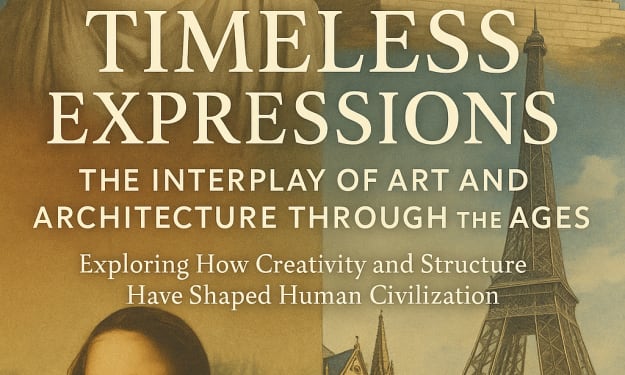
The Interplay of Art and Architecture Through the Ages
Introduction Art and architecture have always been interconnected threads in the fabric of human civilization. From the towering pyramids of Egypt to the minimalist elegance of modern skyscrapers, these disciplines have not only shaped the way we live but also reflected our cultural, spiritual, and philosophical values. Architecture provides the form and function of space, while art infuses it with meaning, emotion, and symbolism. Together, they create environments that are not only functional but also profoundly expressive.
By Nizam Archaeologistabout a year ago in History
Lost Cities of the Indus Valley
It is easy to forget that some of the world's ancient civilizations have lost over time - not only in fiction or myths, but also buried under the layers of earth and mystery. While we often hear about the greatness of ancient Egypt, Mesopotamia and the Greeks, there is another ancient society that fought against their sophistication, but mostly ignore: the civilization of the Indus Valley.
By Echoes of Lifeabout a year ago in History
The Mysterious Titanic Journey
The Titanic's story is often told as a tale of tragedy, luxury, and human error, but beneath its icy demise lies a web of mysteries that continue to baffle historians and intrigue conspiracy theorists. “The Mysterious Titanic Journey” explores the deeper, lesser-known layers of one of history’s most iconic maritime disasters, uncovering eerie coincidences, unanswered questions, and stories lost beneath the waves.
By Lana Roseeabout a year ago in History
The Anunnaki and the Dawn of Humanity: A Cosmic Origin Story
You know those moments when you stumble across something so wild it makes your head spin? Last night, I was flipping through The Epic of Humanity-yeah, that book you and Matt Lroy poured your souls into-and I couldn’t put it down. It’s like a cosmic puzzle that keeps you up past midnight, piecing together clues from ancient tablets and star systems. The way you broke down the Anunnaki’s story? Mind-blowing. It’s not just history; it’s a saga that feels like it’s whispering secrets from the edge of the universe. So, let’s dive into this, because the idea that gods, demigods, and humans all got tangled up in a 450,000-year-old drama? That’s the kind of thing that makes you wonder what else we’ve forgotten about our own story.
By KWAO LEARNER WINFREDabout a year ago in History
The Long History of the Middle Finger: From Ancient Insult to Global Gesture
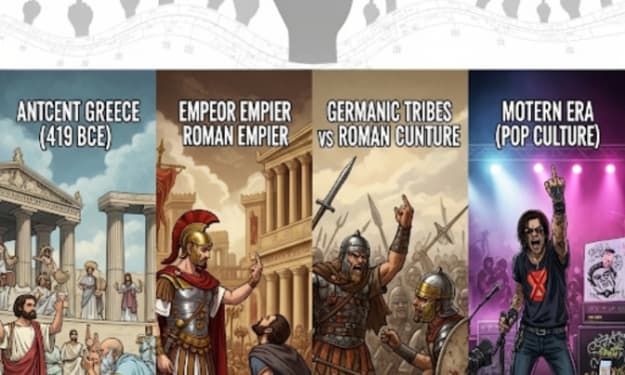
The gesture of raising the middle finger—often considered vulgar or offensive in many cultures—has a surprisingly rich and ancient history that spans thousands of years. It is more than just a modern-day sign of frustration; it has deep roots in classical antiquity, plays, empires, and even battlefield provocations. From the Roman Empire to present-day protests, the middle finger has consistently served as a powerful, rebellious tool of communication. Origins in Ancient Greece The earliest recorded use of the middle finger as an offensive gesture dates back to ancient Greece, around 419 BCE. In Aristophanes’ famous comedic play The Clouds, a student mocks Socrates by raising his middle finger. This early use was not just comedic but carried a strong insult, symbolizing something highly inappropriate. In Greek culture, the gesture was symbolic and often interpreted as a visual representation of male genitalia. The extended middle finger was meant to resemble the penis, while the curled fingers on either side represented the testicles. This crude symbolism clearly implied that the person on the receiving end of the gesture was being emasculated or humiliated. The Romans and “Digitus Impudicus” When the Romans inherited and expanded upon Greek culture, they also adopted this vulgar hand gesture. In Latin, the middle finger was referred to as the "digitus impudicus", meaning “the impudent finger” or “the shameless finger.” It was seen as a crude and disrespectful way to insult someone—particularly in public settings. One of the most infamous figures connected to the gesture was the Roman Emperor Caligula. Known for his tyranny and eccentricities, Caligula reportedly forced members of his court and even the general public to kiss his middle finger as a deliberate act of humiliation. For Caligula, it was a way of asserting dominance and mocking those who opposed or questioned him. Meanwhile, Emperor Augustus, a much more conservative ruler, once exiled an actor from Rome for making the obscene gesture toward an audience during a performance. This suggests that even in a culture where gladiator battles and public executions were common, the middle finger was considered inappropriate and offensive enough to warrant exile. Germanic Tribes and Battlefield Insults The legacy of the digitus impudicus didn’t end with the fall of the Roman Empire. During various military campaigns, Germanic tribes—known for their fierce resistance to Roman occupation—used the gesture as a form of mockery and provocation. Roman soldiers would often encounter these taunts in the heat of battle. To the Germanic warriors, raising the middle finger was more than just an insult; it was a challenge to the masculine honor of the Roman soldiers. It mocked their authority, their pride, and their manhood, hitting them where it hurt the most—on a symbolic level. Medieval Silence and Modern Revival Surprisingly, during the Middle Ages, historical records on the middle finger gesture grow scarce. While vulgar language and hand signs undoubtedly existed, public decency laws and the influence of Christianity likely suppressed such expressions. It wasn’t until the modern era, particularly the 20th century, that the gesture began to resurface prominently in art, media, and pop culture. In the early 20th century, the gesture appeared in photographs of rebellious youth, political protests, and even wartime messages. By the 1960s and 70s, the middle finger had become a symbol of counterculture—used by musicians, actors, and civil rights protestors as a form of resistance.
By Ikram Ullahabout a year ago in History
The Untold Story of Enoch and the Cosmic Cover-Up
Ooh man, this story is insane! Buckle up, because we’re diving into the wild, mind-bending world of the Book of Enoch-a text so explosive it got kicked out of the Bible. Why? Well, let’s just say it’s got some truths that might make your Sunday school teacher squirm. Picture this: a dusty, ancient scroll, tucked away in the shadows, whispering secrets about spaceships, forbidden knowledge, and beings from the stars. Yeah, it’s that kind of story.
By KWAO LEARNER WINFREDabout a year ago in History
Mesopotamia: The Cradle of Civilization
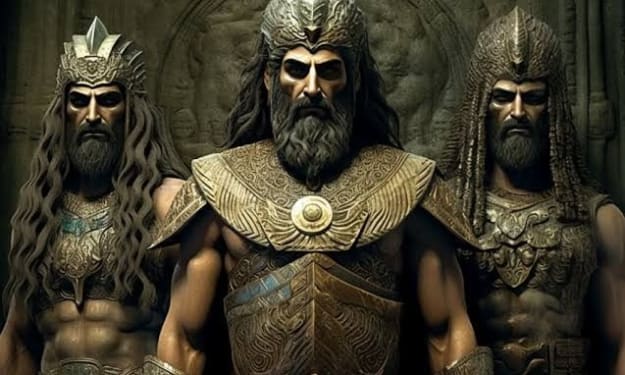
Long before modern cities and high-speed internet, before the rise of Rome or the pyramids of Egypt, there was Mesopotamia. Located between the Tigris and Euphrates rivers in what is now Iraq and Syria, Kuwait, and parts of Turkey, Mesopotamia is often called the “cradle of civilization.”
By Echoes of Lifeabout a year ago in History
Washington Black: A Courageous Struggle for Freedom on Hulu
A Tale of Chains, Sky, and Soul On July 23, Hulu premiered its boldest period drama yet — Washington Black — an adaptation of Esi Edugyan’s award-winning novel. Set in the brutal era of 19th-century slavery, the show reimagines a coming-of-age tale in a world where survival is uncertain, but freedom is a dream to be pursued.
By Echoes of Lifeabout a year ago in History
The Story of Us: Understanding the Journey of Human History
Title: The Story of Us: Understanding the Journey of Human History Subtitle: A deep dive into the key eras, events, and ideas that shaped civilizations and continue to influence our world today.
By Rahmat Ullah Khanabout a year ago in History
Whispers in the Trenches: A Soldier’s Last Letter from World War I
Whispers in the Trenches: A Soldier’s Last Letter from World War I The mud had a way of swallowing everything. Boots, bullets, names, and even time. In the grey silence of the trenches of the Somme, 1916, Private Elias Fareed crouched low, pen trembling in his frostbitten fingers, writing what he believed might be his final letter home.
By Wings of Time about a year ago in History