Ancient
The Holy Templars: Guardians of a Forbidden Faith? And The Betrayal by the Church
The Holy Templars In the years following the First Crusade, when the blood of holy war still stained the sands of Jerusalem, a mysterious brotherhood emerged from the chaos, a group of pious knights who swore vows of poverty, chastity, and obedience, dedicating themselves to a divine mission. Their leader, Hugues de Payens, presented their request to King Baldwin II, not seeking riches or titles, but something far more unusual. They asked to be stationed on the Temple Mount itself, among the remnants of what had once been the great Temple of Solomon, and the king agreed.
By The Secret History Of The Worldabout a year ago in History
Thailand vs Cambodia War
When Ancient Stones Became Grounds for Modern Guns In the heart of Southeast Asia, two countries—Thailand and Cambodia—share not only borders but centuries of cultural, religious, and political history. While their people often interact peacefully through trade, tourism, and regional cooperation, a cloud of conflict once loomed over a sacred site high atop a cliff: Preah Vihear Temple. The conflict, commonly referred to as the Thailand vs Cambodia war, wasn’t a full-scale war in traditional terms, but it was a bitter, dangerous, and deadly border dispute that held global attention during the late 2000s and early 2010s.
By Mehtab Ahmadabout a year ago in History
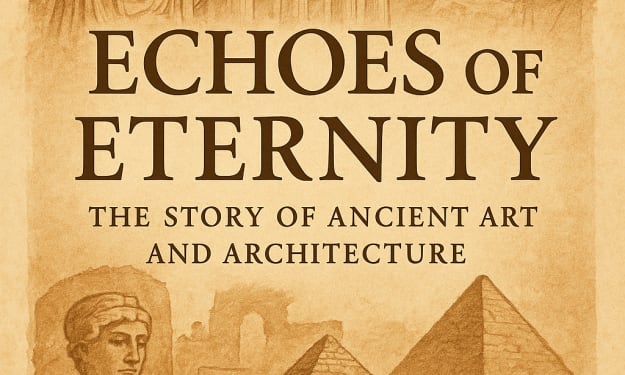
Story of Ancient Art and Architecture
Story of Ancient Art and Architecture Introduction The art and architecture of ancient civilizations are more than just remnants of the past—they are vivid reflections of human creativity, belief systems, and societal structure. These masterpieces, carved in stone or painted on walls, tell stories that transcend time. From the intricate carvings of Mesopotamia to the awe-inspiring pyramids of Egypt, ancient art and architecture form the foundation of human history, offering insight into how people lived, worshipped, and saw the world around them.
By Nizam Archaeologistabout a year ago in History
Japan’s Three Great Shrines You Must Visit: Ise, Izumo, and Sumiyoshi
🏯 What Are Japan’s “Three Great Shrines”? In Shinto belief, certain places are considered especially sacred—so much so that they’re said to house the very presence of deities. Among thousands of shrines across Japan, three stand above the rest in spiritual importance and mythological grandeur:
By Takashi Nagayaabout a year ago in History
"The War Australia Lost to Giant Birds – You Won’t Believe This!"
In the vast open landscapes of prehistoric Australia, long before Wi-Fi, lattes, and reality TV, a different kind of drama unfolded—one that would be laughed off today if it weren’t terrifyingly true. Imagine this: You’re a human, just trying to survive—hunting, gathering, minding your own Stone Age business—and out of nowhere, a three-meter-tall bird with thunder thighs and rage in its eyes comes charging at you. Not exactly a peaceful walk in the bush, right? 😳 --- This wasn’t Jurassic Park, but it sure felt like it. The creature was called Genyornis newtoni, a now-extinct, giant flightless bird. Weighing over 500 pounds and faster than your neighborhood scooter boy, Genyornis was not something you’d want to challenge to a race… or a fight. For years, scientists believed these birds vanished naturally. But surprise, surprise... 🕵️♂️ New evidence showed something different. --- Burned eggshells—yes, eggshells—discovered in the sand dunes of Australia told a deliciously dark tale. Turns out, our early ancestors had a taste for omelets the size of pizza boxes 🍳. Stone Age humans started raiding Genyornis nests for their massive eggs, cracking them open, roasting them, and probably saying, “Yum! This’ll feed the tribe for a week!” One can only imagine a caveman, proudly holding an egg larger than his head, yelling, “Breakfast is served!” --- But here’s the plot twist... Genyornis wasn’t having it. At some point, the birds retaliated. The peaceful foragers turned aggressive defenders. It wasn’t just a meal anymore—it was a war. Claws scratched. Beaks jabbed. And humans? They bled. A lot. 💀 It’s said that the battle between man and bird got so fierce, early tribes may have started fearing the sight of feathers. Imagine explaining that to your caveman therapist: "I have trauma… from eggs." --- Over time, though, humans had one powerful weapon: fire. Not just for cooking, but for driving the birds out. The aggressive foraging, the nest raiding, the torch-wielding attacks—it all piled up. And eventually… Genyornis went extinct. 🕊️❌ --- Now pause. Let that sink in. We made a bird—basically a murder ostrich—go extinct... all for some prehistoric scrambled eggs. Even chickens today are probably whispering, “Don’t mess with humans—they wiped out our cousins over brunch.” --- But here’s what makes it even more fascinating (and hilarious): We now know more about these events from burnt eggshells than ancient scrolls or cave art. Somewhere out there, a Genyornis mother probably saw her nest gone, screamed in bird language, “Again?! These bipeds are savages!” --- The big takeaway? Humans have always been food-driven. 🍗 And birds? Well… they’ve always been judging us from the trees. So the next time you see a chicken giving you side-eye 👀, just know—its ancestors may have once chased your ancestors across the Outback. --- History is weird. Feathery. Furious. And sometimes, fried. 🍳🔥 --- The End.When Giant Birds Ruled… and Lost to Breakfast 🥚🔥 --- Long ago in Australia—way before selfies and social media—humans found themselves up against a giant feathery enemy: Genyornis newtoni. This wasn’t your average bird. This beast stood 3 meters tall, weighed more than a motorbike, and looked like an angry ostrich on steroids. 💪🐦 At first, humans didn’t mess with them. But one day, someone spotted a giant egg, cracked it open, and made the world’s most legendary omelet. 🍳 And just like that, the war began. --- The birds weren’t happy. Imagine waking up to find someone stealing your unborn kids and cooking them over a fire 😤🔥 That’s basically what happened. Genyornis started attacking, defending their nests like feathered warriors. Humans fought back—with fire, spears, and appetite. Because let's be honest—if an egg can feed a whole family, you're not walking away from it hungry. 😂 --- Scientists today found burnt eggshells in the sand, proving the humans weren’t just taking eggs—they were roasting them. Eggshells told a story more dramatic than Netflix. Slowly but surely, humans won. And Genyornis? Wiped off the map. --- So next time you bite into a boiled egg, remember: There was once a bird that tried to fight back—and lost. All for breakfast. ☕🍞🥚 --- The End. Or should we say... the last cluck. 🐣💀
By Leya kirsan official about a year ago in History
Muammar Gaddafi: The Revolutionary Who Reshaped Libya
Muammar Gaddafi was born in 1942 in a desert tent in Sirte, Libya, to a poor Bedouin family. His early life was shaped by the sands of the Sahara, Islamic traditions, and a deep resentment toward foreign occupation. As a young boy, he listened to stories of Libya’s resistance against Italian colonizers and the brutal execution of national hero Omar Mukhtar. These tales planted a seed of rebellion in his heart a seed that would grow into one of the most talked-about political careers of the 20th century.
By Saeed ullahabout a year ago in History
The Siege of Bursa
Orhan Ghazi (c. 1281–1362) was the second ruler of the Ottoman Beylik and the son of Osman I, founder of the Ottoman dynasty. Taking power after his father’s death, Orhan transformed the Ottomans from a small tribal principality into an emerging regional power. His most notable achievement was the capture of Bursa in 1326, which he made the first true capital of the Ottoman state. Known for his leadership, administrative reforms, and tolerance toward conquered peoples, Orhan laid the groundwork for the future empire. He was both a warrior and a statesman—respected for his justice, strategic mind, and vision.
By Salah Uddinabout a year ago in History