Ancient
Echoes in the Snow: The Soldier of Silence
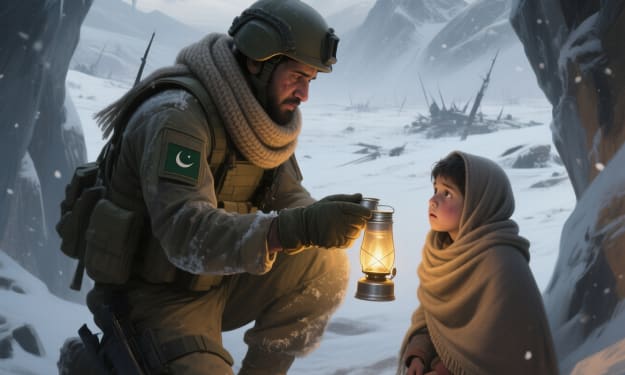
The winter of 1999 was cruel. Not just in temperature—but in how it devoured hope. In the snow-laden heights of the Kargil mountains between India and Pakistan, a young Pakistani soldier named Lance Naik Imran Shah was about to become a story that would never be told on the evening news, but would live forever in the hearts of those who still believe in humanity.
By Wings of Time about a year ago in History
The Cradle of Civilization. AI-Generated.
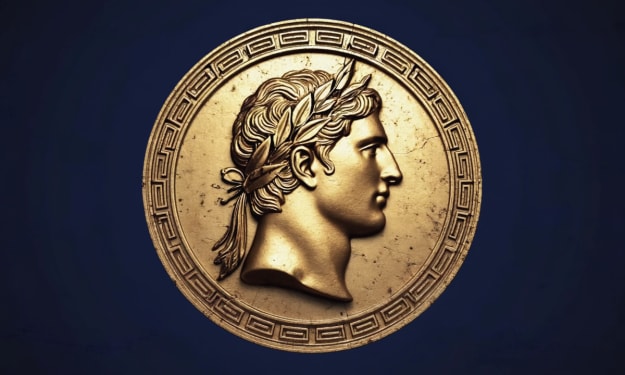
The Cradle of Civilization: Unearthing the Enduring Legacy of the Ancient Near East Forget dusty textbooks and dry lectures. Step back in time – way back – to a world where the first cities rose from the mudflats, writing scratched its way onto clay, and laws were carved in stone for all to see. Welcome to the Ancient Near East, the vibrant, complex, and utterly foundational crucible where the very blueprint of Western civilization was forged. This isn't just history; it's the origin story of us.
By Yand Bullosyabout a year ago in History
The Invisible Highways. AI-Generated.
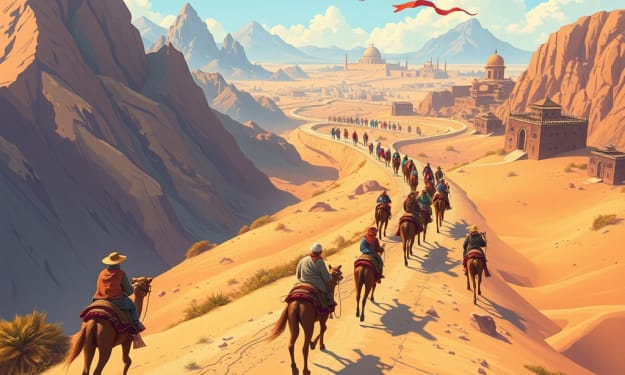
When the World Was Smaller Than You Think Picture this: You're standing in the bustling streets of ancient Ur, around 2000 BCE. The air is thick with the smell of spices, baking bread, and the distinctive aroma of the Euphrates River. Merchants from distant lands haggle over prices in a cacophony of languages. A trader from the Indus Valley shows off exquisite carnelian beads, while an Egyptian merchant offers fine linen and papyrus. This isn't a scene from a fantasy novel – this was the reality of the ancient Near East, where sophisticated trade networks connected civilizations in ways that would make modern globalization look like child's play.
By Yand Bullosyabout a year ago in History
Honour and Hospitality: How Pashtunwali Shaped the Taliban’s Dealings with the World. AI-Generated.
The Ancient Code That Guides the Pashtuns aka Pashtunwali In the rugged valleys of eastern Afghanistan, where time seems to stand still, there exists a powerful code of life called Pashtunwali. It is not written in law books or constitutions, yet it governs millions. For the Pashtun people—Afghanistan’s largest ethnic group—this ancient code defines how to act with honor, courage, and respect.
By Inzamam Ul Haqabout a year ago in History
Ashes in Her Eyes: A Child’s Memory of War
Ashes in Her Eyes: A Child’s Memory of War She doesn’t remember when the sky changed color. One day it was blue—bright and full of clouds shaped like rabbits. The next, it was gray, thick with smoke, and roaring louder than any storm she'd ever heard. Mila was only six when the war came to her street, and by the time it left, nothing was the same—not her house, not her teddy bear, and not her heart.
By Wings of Time about a year ago in History
The Silent Earth: Archaeology and the Human Journey
Archaeology and the Human Journey Beneath the ground we walk on lies a silent witness to millennia of human existence — the earth itself. Through the meticulous work of archaeologists, layers of soil become chapters in a story that has shaped humanity. From the stone tools of early hominins to the grand ruins of forgotten empires, archaeology serves as a bridge between our modern lives and the deep past. “The Silent Earth: Archaeology and the Human Journey” explores how this field of study reveals the origins, growth, and decline of civilizations — and helps us better understand ourselves.
By Nizam Archaeologistabout a year ago in History
The Lost Treasure of the Copper Scroll, History’s Real-Life Treasure Map
What if I told you there’s an ancient scroll made of metal, hidden in a cave, that describes the location of real gold and silver worth billions and nobody has ever found it? Sounds like a movie, right? But it’s real.
By Muhammad Ayaan about a year ago in History
Frozen in Fear: The 12-Year-Old Boy Who Survived a Blizzard Alone for 3 Days ❄️🧒🏻🏔️
On December 8, 2017, 12-year-old Artem Kuznetsov set out before dawn to cross a narrow mountain pass and deliver fresh bread 🍞 to his grandmother’s cabin. The frost sparkled ❄️ on every surface, and the snow was piled high from a storm earlier that week. He pulled his woolen cap over his ears, zipped up his jacket tight, and stepped out into what looked like a peaceful winter morning. He had done this journey many times before. The trail was narrow but clear, winding through pine forests 🌲 and across frozen streams. It usually took him less than an hour. He had no reason to believe this time would be any different. But halfway along the trail, things changed. The wind picked up sharply, blowing so hard it pushed him sideways. What had been gentle snowfall turned into a wall of ice 🌬️. The trees began to blur together. Within minutes, Artem realized he couldn’t see more than a few meters ahead. The footprints behind him were already vanishing. He considered turning back. But something stubborn inside him pushed forward. He thought of his grandmother, sick and alone, waiting for the bread he carried. He’d promised her 🤞. He had to keep going. Then he missed a turn. One wrong step in that blizzard, and the trail was gone. He turned in circles, calling out, hoping to hear someone respond—but all he heard was the wind screaming through the trees. He reached into his coat pocket to grab his phone 📱. The screen flickered and died in his gloved hand. The battery had frozen solid. Panic hit him in the chest like a punch 💔. He was alone. Truly alone. By late afternoon, it had grown dark. The storm hadn’t let up. Snow slapped his face. His fingers began to burn, then go numb 🥶. He knew if he stopped moving, he would freeze to death. But he couldn’t walk forever either. Eventually, he found a shallow dip beneath a fallen pine. He used branches and snow to form a rough shelter — barely enough to block the wind. He curled into a ball, hugging his knees, trying to conserve warmth. He had no food. No fire. Nothing but the coat on his back. That first night was endless. He didn’t sleep. Every noise made him jump. Wolves lived in those woods 🐾. He kept whispering to himself, just to hear something human. Back in his village, rescue teams had already begun searching. But with heavy snow and howling winds, they covered only a small area. Most feared the worst. The second day, Artem forced himself to move again. He drank melted snow cupped in his hands 💧. His face was swollen and raw. He wandered for hours with no sense of direction. Everything looked the same: white, gray, trees, and silence. His legs felt like they no longer belonged to him. That night, he didn’t build a shelter. He simply collapsed against a tree and let snow fall over him like a blanket. By the third morning, he felt hollow — like a ghost. But he kept going. Something inside him refused to quit. He thought of his grandmother again. Of her voice. Of warm soup 🍲. Of the way she smiled when he knocked at her door. He kept moving. That afternoon, a shepherd passing through the lower woods spotted small footprints in the snow. He followed them with suspicion and curiosity — until he saw something ahead: a thin boy, pale and shaking, barely upright. The man ran to him, removed his own coat, and wrapped it around Artem’s frozen frame. Artem’s lips were blue 💙. His eyes blinked slowly. But he was alive. Doctors later called it a miracle ✨. Artem suffered frostbite and exhaustion, but no lasting damage. He had survived three days in –22 °C weather with no food, no gear, and no way to call for help. When asked how he made it, Artem simply said, “I just wanted to see my grandma again.❤️
By Echoes by Imadabout a year ago in History
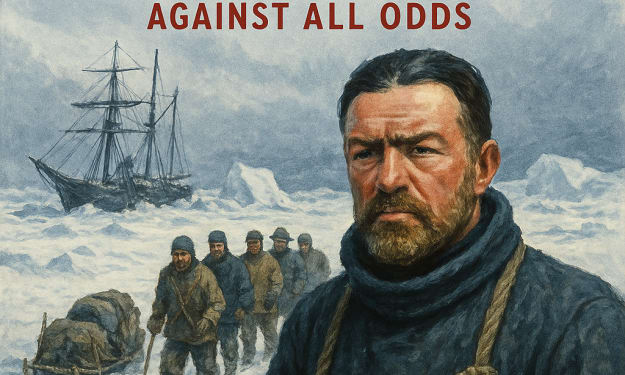
The Unbelievable True Story of Shackleton’s Antarctic Survival
On 4 November 1914, a British ship called Endurance set sail for the frozen edge of the world. Aboard were 28 brave men led by the determined explorer Sir Ernest Shackleton. His dream? To be the first to cross the entire continent of Antarctica on foot. With no GPS, no modern gear, and nothing but hope, Shackleton and his crew faced some of the harshest conditions on the planet. What followed has become the ultimate survival story—one where courage, teamwork, and quick thinking were the only things that stood between life and death. Here’s the gripping, nearly impossible tale of the Endurance expedition.
By Ellen Sammyabout a year ago in History