Ancient
Mada'in Saleh: A Nabatean Jewel Emerging from the Sands of Saudi Arabia
In the vast desert of Saudi Arabia, near the border with Jordan, stands one of the world’s most ancient and captivating archaeological sites: Mada'in Saleh. Also known as Al-Hijr or Hegra, this ancient city, dating back nearly four thousand years, is an enigmatic relic of the Nabatean civilization. Though often overshadowed by its more famous sibling Petra, located in present-day Jordan, Mada'in Saleh is equally significant in understanding the Nabatean culture and its lasting influence on the region. Among its many remarkable features is Qasr al-Farid, an iconic and monumental tomb known as the "Lonely Castle."
By Deji Akomolafe2 years ago in History
A Frozen Moment in Time: The Beachfront of Herculaneum
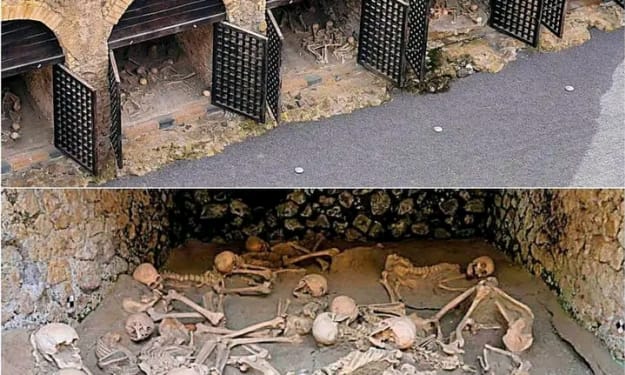
On a tragic day in 79 AD, Mount Vesuvius erupted with cataclysmic force, forever altering the landscape of the Roman Empire. While the nearby city of Pompeii often takes center stage in discussions of this disaster, the neighboring city of Herculaneum holds an equally haunting and compelling story. Unlike Pompeii, which was buried under a layer of ash, Herculaneum was engulfed by a river of superheated volcanic mud and pyroclastic surges. This thick covering preserved the city in remarkable detail, offering us a rare and intimate glimpse into the lives of the ancient Romans. Recently, a newly reopened beachfront area of Herculaneum has revealed a chilling discovery—the skeletal remains of its last inhabitants, frozen in their final moments as they tried to escape the devastation. This re-exposed area serves as a poignant reminder of nature’s destructive power and the fragility of human life. The Beachfront Tragedy As Mount Vesuvius erupted, many of the inhabitants of Herculaneum sought refuge along the beachfront, hoping to escape the oncoming doom. The volcanic debris buried the city so quickly that it created an almost eerie snapshot of life in its final moments. The remains of these ancient people, frozen in postures of fear and desperation, lay testament to the catastrophic power of the eruption. Some victims crouched together, their bodies preserved in a ghastly embrace. Their belongings—coins, jewelry, and other personal items—were discovered beside them, reminders of their hurried flight in the face of nature’s fury. It is believed that many of these victims sought shelter in boathouses along the shore, hoping for rescue by sea. Sadly, their escape was impossible. The intense heat from the pyroclastic surges would have killed them instantly, freezing their bodies in time. Today, their skeletal remains stand as a silent witness to their failed attempt to flee. A Unique Preservation What makes Herculaneum so unique compared to other ancient sites is the level of preservation caused by the thick layers of volcanic material that covered the city. While Pompeii was buried under lighter ash that allowed for gradual decay over time, Herculaneum’s ruins were encased in dense volcanic mud. This mud, combined with intense heat, carbonized wooden structures and preserved organic materials such as furniture, food, and even ancient papyrus scrolls. Unlike in Pompeii, wooden beams, doors, and staircases survived in Herculaneum, allowing archaeologists to see exactly how the city's homes, businesses, and public spaces were constructed. Artifacts found in Herculaneum have provided invaluable insights into the daily life of the ancient Romans. Archaeologists have uncovered frescoes, mosaics, and pottery, all in pristine condition, offering clues to the artistic and cultural sensibilities of the people who lived there. Personal items such as cooking utensils, jewelry, and even cosmetics have been discovered, painting a detailed picture of life before the disaster. A Glimpse Into Roman Life One of the most fascinating aspects of Herculaneum is how its preservation allows us to see the structure of Roman society. Wealthy Romans lived in grand villas adorned with intricate mosaics and frescos, complete with private baths and gardens. These homes would have overlooked the sparkling Mediterranean, offering a serene view of the sea. Today, the preserved remains of these villas provide a rare glimpse into the luxury and sophistication that characterized the lives of the upper class in Roman society. But Herculaneum was not just a city for the wealthy. Archaeologists have also uncovered modest homes and public buildings, such as baths, bakeries, and taverns, that catered to everyday citizens. These findings have allowed historians to reconstruct not only the architecture but also the social dynamics of the time, from the bustling marketplace to the intimate gatherings in private homes. Lessons From the Past The tragic fate of Herculaneum’s inhabitants serves as a stark reminder of the power of nature and the fragility of human life. The rediscovered beachfront area, with its skeletal remains and tragic stories, brings home the immediacy of the disaster in a way that mere words or artifacts cannot. As you stand on the site where these ancient people perished, it is impossible not to reflect on the suddenness with which life can change. Yet, out of this tragedy has come one of the most extraordinary archaeological discoveries of all time. Herculaneum offers us a unique opportunity to understand the world of ancient Rome in intimate detail, from the artistry of its frescoes to the everyday objects that tell stories of ordinary lives lived thousands of years ago. Conclusion The beachfront of Herculaneum is not just a tragic site of loss; it is also a place of profound discovery. Through the preservation of the city and its inhabitants, we have gained invaluable insights into Roman society, art, and daily life. As visitors walk through the ancient streets of Herculaneum, they are transported back in time to a moment frozen by nature’s fury. In doing so, they are reminded of the resilience of human culture, even in the face of overwhelming disaster.
By Deji Akomolafe2 years ago in History
The Star That’s Older Than the Universe: The Mystery of the Methuselah Star
Tucked away in the constellation Libra, 190 light-years from Earth, lies a stellar oddity that has puzzled astronomers for decades. This unassuming star, officially designated as HD 140283, doesn't look particularly special. It’s neither exceptionally bright nor particularly large, and by all outward appearances, it behaves like a typical star. However, a closer examination of this ancient celestial body reveals something that’s baffled scientists for over two decades – this star appears to be older than the universe itself.
By Marveline Merab2 years ago in History
Why Can't Anyone Find This Mysterious Country? The Great Gregor McGregor's Poyais
If you happened to be living in London in May 1821, you would have witnessed something strange: a flurry of unseasonably late snow on the 27th. Considering it was almost summer, such miserable weather could easily dampen spirits. But what I’m about to tell you isn’t a weather forecast from two centuries ago. No, I’m actually using a technique known as pathetic fallacy. By attributing human emotions (in this case, misery) to non-human elements like the weather, we can reflect the gloomy feelings of the people of London.
By Marveline Merab2 years ago in History
Devil's Tower National Monument: The Mysterious Monolith That Defies Explanation
Perched in the northeastern corner of Wyoming, Devil's Tower National Monument rises dramatically from the surrounding prairies and the nearby Black Hills. Its sheer vertical columns and towering presence make it one of the most recognizable landmarks in the United States. Officially designated as the nation's first national monument in 1906 by President Theodore Roosevelt, the imposing structure draws thousands of visitors each year. But beyond its visual spectacle, what truly captivates and mystifies people about Devil's Tower is the deep sense of mystery surrounding its formation and the stories that surround it. Despite being studied for over a century, geologists and scholars still debate the exact origins of this unique formation. Indigenous tribes, on the other hand, have their own ancient legends that explain how this majestic monolith came to be. In this blog post, we'll delve into both the scientific theories and the rich folklore surrounding Devil's Tower, exploring why this giant rock formation continues to captivate imaginations worldwide. A Geological Wonder: Theories Behind Its Formation From a scientific standpoint, Devil's Tower is a geological enigma. The monument is a strikingly odd feature, shooting up more than 1,200 feet above the surrounding landscape. The formation consists primarily of igneous rock, but the exact process that led to its creation remains the subject of ongoing research and debate. One popular theory suggests that Devil's Tower is the result of volcanic activity. Millions of years ago, molten magma is believed to have intruded into sedimentary rock layers but never reached the surface. Instead of erupting, the magma cooled and solidified underground, forming a massive igneous structure. Over time, the surrounding softer sedimentary rocks eroded away, leaving behind the towering, hardened rock formation we see today. Another theory posits that Devil's Tower is a product of laccolithic intrusion, where magma pushes upwards and bulges the overlaying layers of rock but doesn’t break through the surface. This process, combined with extensive erosion, could explain the tower’s column-like appearance. In either case, erosion played a critical role in exposing the formation over millions of years, slowly revealing the vertical columns that have become Devil's Tower's hallmark feature. The Tower’s columnar joints—those long, vertical cracks that give the rock its iconic appearance—are characteristic of how igneous rocks contract as they cool. Similar features can be found in other formations around the world, such as the Giant’s Causeway in Northern Ireland. However, the scale and prominence of Devil’s Tower make it one of the largest and most dramatic examples of this natural phenomenon. Indigenous Legends: A Tower of Tales While geologists continue to study and theorize about the formation of Devil's Tower, the Native American tribes of the region have long had their own explanations for its existence. The structure is considered sacred to several tribes, including the Lakota Sioux, the Cheyenne, and the Kiowa, each of whom has its own legends about the tower's origin. One of the most widely known stories comes from the Lakota Sioux, who speak of a time when seven young girls were playing in the forest when they were suddenly chased by a giant bear. To escape the bear, the girls prayed to the Great Spirit, who caused the ground beneath them to rise into the sky, forming the tower. The bear, in an attempt to reach the girls, clawed at the sides of the rock, leaving the deep grooves and vertical columns that are still visible today. The girls were lifted so high into the sky that they eventually became the Pleiades constellation, a group of stars that can still be seen shining above the tower. The Kiowa tribe tells a similar tale, where a group of children were pursued by giant bears. As the children climbed onto a low rock, the Great Spirit made the rock grow upward into the heavens, with the bears clawing at its sides in frustration. The marks of their claws are said to be the ridges on the tower’s surface. These legends, passed down through generations, add a mystical element to the already mysterious formation. For the tribes of the region, Devil's Tower is not just a geological wonder but a sacred place that holds spiritual significance. The site continues to be a place of prayer and ceremony for many Native American tribes, and its cultural importance is recognized by the U.S. government. A Place of Adventure and Intrigue Beyond its rich history and mysterious origins, Devil's Tower has become a hotspot for climbers and adventure enthusiasts. The vertical columns provide some of the most challenging and rewarding climbing routes in North America. In fact, Devil’s Tower is considered a mecca for rock climbers, with its unique shape and crack systems offering an unparalleled climbing experience. However, out of respect for Native American traditions, there is a voluntary climbing closure each June during significant tribal ceremonies. The monument’s striking appearance has also made it a pop culture icon. Perhaps most famously, Devil's Tower played a central role in Steven Spielberg’s 1977 science fiction classic Close Encounters of the Third Kind, where it was depicted as a landing site for extraterrestrial spacecraft. This further cemented the monument’s status as a place of intrigue and fascination, both on Earth and beyond. Conclusion: Nature, Mystery, and Legend Whether you're drawn to Devil's Tower for its natural beauty, its rich cultural heritage, or its mysterious origins, there's no denying the awe-inspiring effect this monolith has on all who encounter it. From the scientific theories of volcanic origins to the indigenous stories of bears and sacred connections, Devil's Tower remains a place where history, geology, and mythology intertwine. Even today, its true origins remain uncertain, adding to the allure of this iconic formation. For visitors, it’s a chance to witness not just a geological marvel but a place where the stories of the past live on in every ridge and column. As we continue to study and preserve this national monument, Devil’s Tower stands as a reminder of the natural world’s ability to inspire wonder, mystery, and reverence across generations. Whether you're exploring the prairies below or climbing its towering heights, the Devil’s Tower will continue to captivate minds for centuries to come.
By Deji Akomolafe2 years ago in History
The Oseberg Ship: A Masterpiece of Viking Craftsmanship and Burial Rituals
In the heart of Norway's rich Viking history lies a legendary vessel that continues to captivate historians, archaeologists, and visitors alike—the Oseberg ship. This iconic Viking ship, discovered in 1904, stands as one of the finest and most remarkable examples of Viking craftsmanship, culture, and burial traditions. Built around 820 AD, the Oseberg ship has survived the test of time, not only as an artifact of historical significance but also as a symbol of the seafaring prowess and spiritual beliefs of the Vikings. Over a century after its rediscovery, the ship remains a centerpiece of Norwegian cultural heritage, housed at the Viking Ship Museum on Bygdøy in Oslo. Discovery and Excavation of the Oseberg Ship The Oseberg ship was unearthed from a burial mound on the Oseberg farm in Vestfold, Norway, in 1904 by archaeologist Gabriel Gustafson and Professor Haakon Shetelig. The burial mound was believed to be the final resting place of two women, one of whom may have been of noble or royal status. Inside the burial chamber, along with the ship, archaeologists discovered a wealth of grave goods, including textiles, wooden carvings, wagons, and animal remains, which provided insight into the life and beliefs of the Viking elite. Buried around 834 AD, 14 years after it was built, the Oseberg ship had been well-preserved in the clay soil, allowing for a detailed reconstruction after excavation. The meticulous efforts of the excavation team ensured that most of the ship’s original wood and artifacts were salvaged, and to this day, an astonishing 95% of the ship’s original material remains intact. A Marvel of Viking Shipbuilding The Oseberg ship is a masterpiece of Viking shipbuilding. At 21.5 meters long and 5 meters wide, the vessel is a large, elegant longship designed for coastal travel. Its sleek, shallow hull would have allowed it to glide easily through Norway’s fjords and rivers, while its majestic curved prow, adorned with intricate carvings of serpents and other motifs, speaks to the Viking affinity for both artistry and craftsmanship. The ship is constructed primarily of oak wood, showcasing the Viking mastery of woodwork and seafaring technology. The planks of the ship are fastened together with iron rivets, creating a watertight, durable structure. The Oseberg ship, with its wide beam and graceful lines, demonstrates the balance of form and function that characterized Viking ship design—built not only for speed and agility on the water but also as a ceremonial symbol of status and power. The Burial and the Women of Oseberg One of the most fascinating aspects of the Oseberg ship is its role in Viking burial rituals. It served as a burial ship for two women, whose identities remain a subject of debate among historians. Some scholars believe one of the women may have been a queen or high-status figure, given the richness of the grave goods and the elaborate nature of the burial. The second woman may have been a servant or companion, accompanying the noblewoman to the afterlife. The burial of elite individuals in ships was a significant ritual in Viking culture, symbolizing their journey to the afterlife. Ships were not only central to Viking life as tools of exploration, trade, and warfare but also as vehicles for the soul’s passage to the realm of the gods. The sheer scale of the Oseberg burial, along with the presence of animal sacrifices and precious artifacts, underscores the importance of this ritual for Viking society. The Oseberg Ship’s Legacy and Preservation After its excavation, the Oseberg ship was painstakingly reconstructed, a process that preserved 95% of the original material, an extraordinary feat considering the ship’s age. In 1926, it was moved to its permanent home at the Viking Ship Museum on Bygdøy, Oslo, where it has since been displayed to the public. For over a century, the ship has been a key attraction, admired for its beauty and historical importance. The Oseberg ship offers an invaluable glimpse into the Viking era, shedding light on their craftsmanship, culture, and beliefs. Its survival over 1,200 years, coupled with the exceptional efforts to preserve it, makes the Oseberg ship one of the most faithfully reconstructed Viking ships in existence. As visitors stand before this legendary vessel in the museum, they are not only looking at a relic of the past but also a testament to the enduring legacy of the Vikings and their mastery of the seas. Today, the Oseberg ship remains a symbol of Norway's rich Viking heritage and a stunning example of ancient maritime engineering. Its continued preservation ensures that future generations will be able to appreciate the artistry and craftsmanship of the Viking Age.
By Deji Akomolafe2 years ago in History
The Early Life and Reign of Oba Sir Titus Martins Adesoji Tadeniawo Aderemi
In the annals of Nigerian history, few figures are as revered and remembered as Oba Sir Titus Martins Adesoji Tadeniawo Aderemi, also known as Atobatele I, the 49th Ooni of Ile Ife. His reign as the spiritual and traditional leader of the Yoruba people was not only remarkable because of the time in which he ruled, but also due to the personal qualities and vision he brought to his leadership. Born on November 15, 1889, in the midst of the Yoruba civil war, Adesoji Aderemi's life was deeply intertwined with the cultural, social, and political evolution of the Yoruba nation and Nigeria as a whole. From his early years, Adesoji Aderemi was destined for greatness. His name, which means "The crown has awakened" and "The crown comforts me," was a reflection of the hope and pride his family and community placed in him from the moment he was born. This blog post delves into the life of this legendary monarch, highlighting his early years, ascension to the throne, and the lasting legacy he left behind. Early Life: A Legacy Born in the Midst of War Adesoji Aderemi was born into a royal lineage, the son of Prince Osundeyi Gbadebo and Madam Adekunbi Itiola. His father, a warrior, was away fighting in the Yoruba civil war when he was born. During this tumultuous period, the Yoruba people were engaged in internecine conflicts that disrupted the peace and stability of the region. As a result, Adesoji’s birth carried significant meaning. His name, Adesoji Aderemi, which translates to "The crown has awakened" and "The crown comforts me," symbolized hope amidst the chaos and unrest of the time. With his father absent due to the war, Adesoji was raised primarily by his mother, Madam Adekunbi, and other relatives, who instilled in him a deep sense of responsibility, leadership, and a commitment to the welfare of his people. He was brought up in the rich cultural traditions of the Yoruba people, with a keen awareness of his royal heritage and the expectations that came with it. As a child, he exhibited intelligence, curiosity, and leadership qualities, which would later serve him well as he ascended to the throne of Ife. Ascension to the Throne: Becoming the Ooni of Ife Adesoji Aderemi’s rise to the throne was swift and impressive. In 1930, at the age of 30, he was crowned the Ooni of Ile Ife, the spiritual leader of the Yoruba people and the custodian of their ancient traditions. His relatively young age at the time of his coronation was unusual, as most monarchs ascended to the throne later in life. However, Adesoji’s maturity, wisdom, and forward-thinking attitude quickly made him a beloved ruler. Ile Ife, often regarded as the cradle of Yoruba civilization, is one of the most significant spiritual centers in Yoruba history. The Ooni, as the traditional ruler of Ife, holds a position of immense cultural and spiritual significance. The Ooni is not only responsible for maintaining the cultural heritage and customs of the Yoruba people but also serves as an intermediary between the Yoruba people and the deities they worship. Adesoji Aderemi took on this role with great reverence and a deep understanding of its importance. As the Ooni, Adesoji Aderemi was a progressive ruler who sought to modernize his kingdom while preserving its rich cultural heritage. He was known for his intellect, charisma, and ability to navigate the complexities of both traditional and colonial governance. His reign coincided with a period of significant political and social change in Nigeria, and he became a key figure in the movement for Nigerian independence. A Monarch and Statesman: A Leader Beyond His Kingdom One of the most remarkable aspects of Oba Adesoji Aderemi’s life was his ability to bridge the worlds of traditional leadership and modern politics. In addition to his role as the Ooni of Ife, he was deeply involved in the political affairs of Nigeria during the colonial period. In 1948, he became a member of the Western House of Chiefs, one of the legislative bodies established by the British colonial government to manage the transition to self-rule. His involvement in Nigerian politics reached its pinnacle when he was appointed Governor of the Western Region in 1960, following Nigeria's independence. He was the first indigenous person to hold this position, which highlighted his status as a respected leader not only among the Yoruba but across Nigeria. In this capacity, Adesoji Aderemi worked to promote the development and stability of the Western Region, championing education, infrastructure development, and the preservation of traditional culture. His dual role as both a traditional ruler and a modern statesman was groundbreaking. He demonstrated that it was possible to honor and uphold the traditions of one’s people while also embracing the changes brought about by modern governance and the push for self-determination. A Legacy of Peace, Progress, and Cultural Preservation Throughout his reign, Oba Adesoji Aderemi was committed to the well-being of his people. He was a proponent of education, recognizing that it was key to empowering the next generation of Yoruba leaders. He was instrumental in the establishment of schools and other institutions that would provide educational opportunities for the youth of his kingdom. His vision for Ife was one of progress, modernization, and unity, and he worked tirelessly to ensure that the kingdom remained a strong cultural and political force in Nigeria. His reign was marked by peace, as he worked to unify various factions within the Yoruba nation and maintain stability during a period of significant change. His efforts to modernize Ile Ife while preserving its rich cultural heritage ensured that the city remained a center of Yoruba spirituality and tradition. The Final Years and Lasting Legacy Oba Adesoji Aderemi ruled for nearly 50 years, from 1930 until his death in 1980. His reign, which spanned some of the most transformative decades in Nigerian history, left an indelible mark on both his people and his nation. He was a beloved ruler, admired for his wisdom, humility, and progressive vision. Under his leadership, Ile Ife maintained its status as a spiritual and cultural center, and his efforts to promote education and political participation left a lasting impact on the Western Region and Nigeria as a whole. Today, Oba Sir Adesoji Aderemi is remembered not only as a great Ooni of Ife but also as a pioneering figure in Nigerian politics. His ability to blend traditional leadership with modern governance serves as a model for leaders across Africa, and his legacy continues to inspire future generations. In summary, Oba Adesoji Aderemi’s life and reign were marked by a deep commitment to his people, his culture, and his nation. His early life, marked by the challenges of a war-torn era, and his ascension to the throne at a young age shaped him into the progressive and forward-thinking leader he would become. As both a monarch and a statesman, he left a legacy of peace, progress, and cultural preservation that continues to resonate in Nigeria today.
By Deji Akomolafe2 years ago in History
The Hand Brand: A Brutal Mark of Military Punishment in the British Army
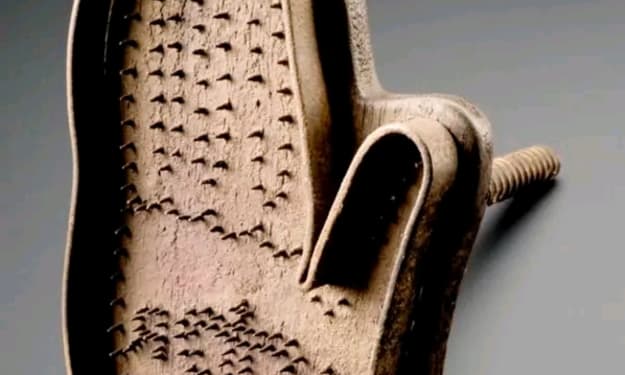
In the mid-17th century, during the tumultuous years of the English Civil War (1641-1651), the British Army employed various methods to maintain discipline and punish those who broke military laws. Among these, one of the most severe and enduring punishments was branding, a physical and often permanent mark that identified deserters and criminals within the ranks. The hand brand, a tool used during this period, became an infamous symbol of this brutal form of punishment. Featuring the initials "CR" surrounded by a crown, it likely stood for Carolus Rex, a Latin reference to King Charles I, who reigned during the Civil War until his execution for treason in 1649. Branding served both as a form of punishment and a visible reminder of one’s crime, marking the individual as someone who had betrayed their comrades and their king. As archaic as it seems today, the use of branding within the military persisted for over two centuries. It was eventually abolished in 1829 for most crimes, but it continued to be used for army deserters until 1879. Over time, branding was replaced by tattooing, signaling a shift in how the military handled punishment and identification, reflecting broader societal changes in attitudes toward human rights and the treatment of soldiers. The English Civil War and Its Impact on Military Discipline The English Civil War was a conflict that pitted the forces of King Charles I (the Royalists) against those of Parliament (the Parliamentarians) over issues of governance, religion, and authority. In such a chaotic environment, maintaining discipline within the military was critical for both sides. Soldiers who deserted their posts, committed crimes, or otherwise disobeyed orders threatened not only the success of military campaigns but also the stability of the nascent English state. The hand brand, with its "CR" marking, represented the monarchy's authority and was used to brand deserters and criminals within the Royalist army. The use of branding was not unique to the British Army; it was a common practice in early modern Europe and was intended to deter desertion and other crimes by making the punishment both visible and permanent. The branding tool itself, featuring blunt metal spikes, was likely designed to create a painful and lasting mark. Some historians suggest that the spikes may have been intentionally dulled to increase the suffering of the person being branded, highlighting the brutal nature of this form of punishment. The Branding Process and Its Symbolism Branding in the British Army was a deliberate and painful process. The branding iron would be heated until it was red-hot, and then pressed into the skin of the accused, usually on a visible part of the body, such as the hand, arm, or face. The initials "CR", surrounded by a crown, would then be seared into the flesh, creating a permanent scar. This mark was not just a symbol of the individual’s crime but also a declaration of their betrayal of the king and country. The "CR" initials clearly referenced Carolus Rex, the Latinized name of King Charles I, underscoring the monarchy’s authority over the army. Even after King Charles I was executed in 1649, during the latter stages of the English Civil War, the branding tool likely remained in use, a relic of the previous royalist regime. The crown symbol atop the initials further emphasized the connection between the crime committed and the royal authority that had been betrayed. The Persistence of Branding in the British Army Despite its archaic and painful nature, branding as a punishment within the British Army persisted long after the English Civil War. While branding for most crimes was abolished in 1829 as societal attitudes toward corporal punishment began to shift, it continued to be used specifically for army deserters until as late as 1879. Desertion was considered one of the most serious offenses a soldier could commit, especially in times of war when the loss of manpower could have dire consequences. The persistence of branding reflected the military’s need for visible and public punishment. Desertion not only jeopardized military operations but also undermined the cohesion and morale of the army. By marking deserters, the military sought to publicly shame them and serve as a deterrent to others who might consider abandoning their duties. The Transition to Tattooing: A Shift in Military Discipline By the late 19th century, attitudes toward punishment within the military began to change, influenced by broader social and political movements advocating for human rights and more humane treatment of individuals. The use of branding as a form of punishment was gradually phased out, and in 1879, the British Army transitioned to using tattooing instead of branding to mark deserters. While tattooing still served the purpose of identifying deserters, it was viewed as a less barbaric method than branding, which inflicted significant pain and left a highly visible scar. Tattooing also aligned with changing military practices, where greater attention was paid to the well-being of soldiers, even those who had committed crimes. This shift from branding to tattooing reflects a broader change in how the military handled discipline, moving away from public humiliation and physical harm toward more regulated and less violent forms of punishment. Legacy and Reflection The history of the hand brand used by the British Army during the English Civil War and beyond offers a glimpse into the harsh realities of military discipline in earlier centuries. It stands as a testament to the brutal measures used to enforce loyalty and obedience in a time when desertion and betrayal were considered existential threats to military campaigns and the monarchy itself. The transition from branding to tattooing marked a significant shift in military attitudes, reflecting broader societal changes. While branding is now seen as a cruel and outdated practice, it played a key role in shaping how armies maintained order and dealt with desertion during times of war. As we reflect on this history, it serves as a reminder of how far we have come in terms of human rights and the treatment of individuals within institutions like the military.
By Deji Akomolafe2 years ago in History
The Battle of Hafrsfjord and the Monument of Sverd i Fjell
In the late 9th century, a battle took place in Norway that would forever shape the history and identity of the nation. The Battle of Hafrsfjord, fought around 872-880 AD, marked the culmination of King Harald Fairhair’s efforts to unify the Norwegian clans and establish a single kingdom. This monumental victory did not just bring about political unity—it laid the foundation for the development of Norway as a unified nation-state. Today, a powerful and iconic monument stands to commemorate this historic event. Known as Sverd i Fjell or Swords in Rock, the monument symbolizes peace, unity, and freedom. It serves as a reminder of the battle that united Norway and the legacy of King Harald Fairhair, the first king of a unified Norway. The Legend of King Harald Fairhair The story of King Harald Fairhair (Harald Hårfagre in Norwegian) is one of both legend and historical significance. Harald, born in 850 AD, was a powerful and ambitious ruler. According to sagas, Harald made a vow to unite all of Norway under his rule, spurred by a romantic challenge. The saga tells of a young woman named Gyda, who refused to marry Harald until he was the ruler of all Norway. Determined, Harald swore an oath not to cut his hair until he had accomplished this feat. Harald spent the next decade waging war against rival Viking chieftains, who each ruled their own territories within what is now modern Norway. The region was fragmented into numerous small kingdoms, each governed by a local king or lord. These rulers frequently engaged in power struggles, raids, and feuds, preventing any sense of national unity. Harald’s mission was to consolidate power and bring these various territories under his singular rule. The Battle of Hafrsfjord The pivotal event in Harald’s campaign was the Battle of Hafrsfjord, a fierce naval battle that took place near Stavanger, on Norway's southwestern coast, around 872-880 AD. While the exact details of the battle are not entirely clear—since much of what we know comes from sagas written long after the event—it is believed that this conflict involved multiple Viking chieftains joining forces to resist Harald's expansion. Harald's forces were likely well-organized and equipped with superior ships and warriors. In contrast, the rival kings fought to maintain their autonomy and resist being subsumed under a central authority. The battle was intense, with fierce hand-to-hand combat and Viking longships clashing on the waters of Hafrsfjord. By the end of the battle, Harald had emerged victorious, having defeated his rivals and effectively secured his claim as the sole king of Norway. This victory marked the unification of the previously independent and often warring Viking clans under a single ruler, ending an era of division and conflict. Sverd i Fjell: The Monument to Peace, Unity, and Freedom To commemorate this momentous occasion, the monument known as Sverd i Fjell (Swords in Rock) was erected in 1983, 1,100 years after the Battle of Hafrsfjord. Located near the site of the battle, on the shores of Hafrsfjord, the monument stands as a powerful symbol of Norway's unification and its historical roots. The monument features three towering bronze swords, each standing 10 meters (33 feet) tall, embedded in solid rock. Designed by Norwegian sculptor Fritz Røed, the swords are not just artistic representations—they carry deep symbolic meaning. The hilts of the swords are replicas of Viking swords from the era, reflecting the historical authenticity of the design. The three swords represent key principles that arose from King Harald’s unification of Norway: 1. Peace: The largest sword in the center symbolizes King Harald himself and his dominance as the unifier of Norway. Its placement in the rock signifies that the sword has been put down, representing peace after a period of warfare and conflict. It is a reminder that the unification of Norway brought an end to the frequent battles between the Viking kings and established a more stable, centralized rule. 2. Unity: The two smaller swords represent the defeated chieftains and their clans, now united under Harald’s rule. Their inclusion in the monument signifies the bringing together of once-warring factions under a single banner. This unity was essential in transforming a fragmented land of competing territories into a coherent kingdom. 3. Freedom: The swords also symbolize freedom, not just in the sense of personal liberty but in the sense of national independence. The monument commemorates Norway's birth as a unified nation, free from internal strife and division. Over time, this sense of unity laid the foundation for the development of Norway as a sovereign and independent country. The Legacy of the Battle and the Monument The Battle of Hafrsfjord and King Harald Fairhair’s efforts to unite Norway hold an enduring significance in Norwegian culture. By the time of his death, Harald had transformed Norway from a land of scattered chieftains into a unified kingdom. His descendants would go on to play crucial roles in Scandinavian history, including the establishment of the Viking settlements in Iceland and Greenland, as well as the expansion of the Norwegian kingdom. The Sverd i Fjell monument stands as a testament to this legacy. It not only commemorates the battle that unified Norway but also symbolizes the enduring values of peace, unity, and freedom. Located near Stavanger, it is a popular tourist destination and a powerful reminder of the country’s Viking past. For Norwegians today, the monument serves as a symbol of national pride and historical continuity. It links the modern nation to its Viking roots, celebrating the achievements of a legendary king who, through vision and determination, forged a united Norway. Conclusion The story of the Battle of Hafrsfjord and the creation of the Sverd i Fjell monument represents a defining chapter in Norwegian history. Through the battle and the unification that followed, King Harald Fairhair laid the foundations for a united and independent Norway, a legacy that endures to this day. The monument's towering swords stand as timeless symbols of peace, unity, and freedom, reminding all who visit of the nation’s proud heritage and the events that shaped its destiny.
By Deji Akomolafe2 years ago in History