Ancient
Achilles: The Greatest Warrior of Greek Mythology
Achilles, a demigod born to a sea nymph and a king, is celebrated as one of the greatest warriors in Greek mythology. His early life was marked by extraordinary training under the centaur Chiron, who taught him the arts of hunting, music, and medicine. Achilles’ closest companion since childhood was Patroclus, a mortal without divine lineage or prophetic destiny. Despite their differences, the bond between Achilles and Patroclus was unbreakable, rooted in unconditional love. https://luglawhaulsano.net/4/8149800
By DANIEL AKAM OKO2 years ago in History
Israel vs. Palestine:. AI-Generated.
The conflict between Israel and Palestine is one of the most enduring and complex geopolitical issues in the world, stretching back over a century. Rooted in religious, nationalistic, and territorial claims, the history of this conflict is marked by significant events that have shaped the Middle East and drawn global attention.
By george sochi2 years ago in History
Existentialism and Stoicism.
An existentialist person is the one who avoids absurdity by creating meaning in life or existence. A stoic person is one who accepts what is out of control with calmness and doesn't get disturbed by the ups and downs in life. These philosophies can make one's life beautiful after their implementation and they can make it even more beautiful and worth living after they are implemented in life together. There are some examples of famous personalities who are existentialist and stoic at the same time.
By Zainab Noor.2 years ago in History
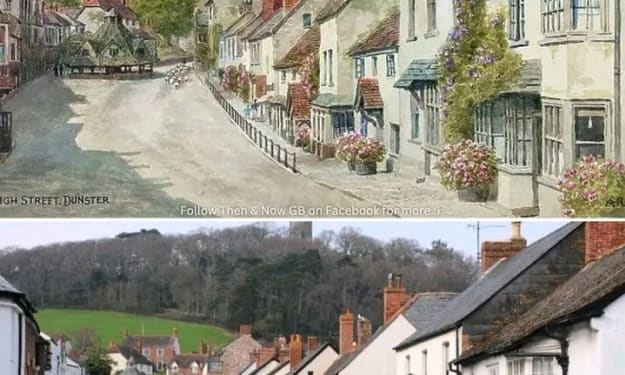
Dunster: A Journey Through Time in Somerset's Medieval Village
Nestled in the heart of Somerset, England, lies the quaint and remarkably well-preserved medieval village of Dunster. Known for its rich history, picturesque setting, and enchanting charm, Dunster offers visitors a rare opportunity to step back in time and experience life in a village that has remained largely unchanged for centuries. Boasting over 200 listed buildings, Dunster is not only an architectural treasure trove but also a living monument to England’s medieval past. At the center of the village stands the High Street, the bustling main road that has been the lifeblood of Dunster for centuries. Painted in 1900 by local artists, the High Street of that time looks almost identical to what visitors can see today, a testament to the village’s dedication to preserving its heritage. Walking down the cobbled street, flanked by historic stone buildings, feels like traversing the pages of a history book, with every step revealing a new layer of Dunster’s storied past. A Village Frozen in Time Dunster's medieval heritage is immediately apparent from the moment you enter the village. The buildings, many of which date back to the 15th and 16th centuries, are stunning examples of medieval and early-modern architecture. From half-timbered houses to stone cottages, Dunster’s streets are lined with a variety of historical structures that have been lovingly maintained over the years. At the heart of the village stands the imposing Dunster Castle, which has dominated the landscape since Norman times. Originally built as a motte-and-bailey fortress after the Norman Conquest, Dunster Castle has undergone several transformations over the centuries, evolving from a military stronghold into a lavish country home. Today, it is a popular tourist attraction, offering panoramic views of the surrounding countryside, as well as a glimpse into the lives of the aristocracy that once called the castle home. Just below the castle, on the edge of the High Street, lies the Yarn Market, a charming octagonal building that dates back to the late 16th century. Built by the Luttrell family, who owned Dunster Castle, the Yarn Market was originally used for trading wool and other goods, reflecting Dunster’s importance as a hub of the medieval wool trade. The building, with its distinctive timber-framed roof, is a rare and well-preserved example of a market hall from the period, and it remains one of Dunster’s most iconic landmarks. High Street: Then and Now While much of Dunster has changed over the centuries, its High Street has remained remarkably consistent in its appearance. A painting of the High Street from 1900 captures a snapshot of the village that is strikingly similar to what you would find today. The same stone buildings, with their sloping roofs and wooden window frames, still line the street, and the sense of history and continuity is palpable. Walking down the High Street, visitors can see a mixture of historic homes, shops, and inns, many of which have been converted for modern use while retaining their original charm. The Dunster Steep, the main thoroughfare leading into the village, is lined with Victorian-style street lamps and lush greenery, adding to the timeless feel of the village. With the Yarn Market at one end of the street and the majestic St. George’s Church at the other, the High Street serves as the heart of the community, just as it has for hundreds of years. One of the most notable features of the High Street is the Luttrell Arms Hotel, a historic inn that dates back to the 15th century. Once a medieval house, it was converted into a coaching inn and has since welcomed countless travelers over the centuries. The inn’s grand, stone façade and oak-beamed interior offer a glimpse into the luxurious accommodations once enjoyed by merchants and nobility. Today, the Luttrell Arms remains a popular destination for visitors looking to immerse themselves in Dunster’s rich history while enjoying modern comforts. Preserving Dunster’s Heritage The preservation of Dunster’s historic buildings is no accident. Over the years, there has been a concerted effort to protect the village’s unique character and heritage. Many of Dunster’s 200 listed buildings have been carefully restored, ensuring that the village retains its medieval charm while accommodating modern needs. These preservation efforts have helped Dunster become a popular destination for tourists, history enthusiasts, and artists alike. The village has also benefited from its location within Exmoor National Park, which has helped to shield it from overdevelopment and maintain its rural atmosphere. Surrounded by rolling hills and ancient woodlands, Dunster’s setting is as picturesque as the village itself. The proximity to natural beauty only enhances the appeal of the village, making it an ideal spot for walkers, cyclists, and those seeking a peaceful retreat. A Living History Dunster’s historical significance extends beyond its architecture. The village is a living history museum, with its traditions and customs carried forward by the local community. Throughout the year, the village hosts a number of events that celebrate its medieval roots, including the Dunster by Candlelight festival, where the village is illuminated by candles and lanterns, creating an enchanting atmosphere that transports visitors back to a time before electricity. Another event that draws visitors to Dunster is the Medieval Fair, where the village comes alive with costumed performers, traditional crafts, and medieval music. These events not only celebrate the village’s rich history but also help to keep it alive for future generations, ensuring that Dunster’s story continues to be told. Conclusion: A Timeless Treasure With its medieval architecture, well-preserved buildings, and rich cultural heritage, Dunster is a timeless treasure that offers a window into England’s past. The village’s High Street, much as it appeared in 1900, serves as the heart of this historical gem, a place where history is not just preserved but lived. Whether you’re exploring the ancient Dunster Castle, admiring the historic Yarn Market, or simply strolling along the cobbled streets, Dunster offers an unforgettable journey through time. In a world that is constantly changing, this medieval village stands as a reminder of the enduring beauty of history and the importance of preserving our cultural heritage for future generations.
By Deji Akomolafe2 years ago in History
Europe’s Oldest Road: A Minoan Engineering Marvel on the Island of Crete
Nestled on the picturesque island of Crete, amidst the ancient ruins of palaces and temples, lies a truly remarkable piece of history: Europe's oldest known road. Over 3,500 years old, this Minoan road stands as a testament to the engineering prowess of the Minoan civilization, one of the most advanced and influential cultures of the Bronze Age. Spanning approximately 50 kilometers, the road connected the great palace of Knossos—the political and ceremonial center of Minoan Crete—with the ancient cities of Gortyn and Lebena. While the Minoan civilization is best known for its art, architecture, and mythology, this ancient roadway offers a glimpse into the advanced infrastructure that underpinned Minoan society. Built around 1,500 BCE, the road was designed to facilitate trade, travel, and communication across the island. Yet, it wasn’t just the purpose of the road that was impressive; it was the construction itself—a marvel of ancient engineering that has withstood the test of time. The Ancient Minoans: Masters of Engineering The Minoans, who flourished from approximately 3,000 to 1,400 BCE, are widely regarded as the first advanced civilization in Europe. Based on the island of Crete, their influence extended throughout the Aegean Sea, with their art, architecture, and written language (known as Linear A) leaving a lasting legacy on the ancient world. The palaces of Knossos, Phaistos, and other Minoan cities were sophisticated centers of culture and commerce, reflecting the wealth and power of this seafaring civilization. However, one of the lesser-known aspects of Minoan society was their mastery of engineering, particularly in the construction of roads and infrastructure. The Minoan road that connected Knossos to Gortyn and Lebena is a prime example of this expertise. Long before the Roman Empire would become famous for its network of roads spanning Europe, the Minoans had already developed advanced techniques for building durable, long-lasting roads that could withstand the elements and heavy use. A Road Ahead of Its Time What sets the Minoan road apart from other ancient roads is its advanced construction. At first glance, it may seem like a simple pathway made of stone, but a closer examination reveals the intricate planning and innovative techniques that went into its creation. The road was designed not only for functionality but also for durability, with several key features that ensured its longevity. One of the most remarkable aspects of the road is the inclusion of side drains to manage water runoff. These drains were strategically placed along the edges of the road to prevent water from pooling on the surface, which could lead to erosion and damage over time. By directing water away from the roadbed, the Minoans were able to preserve the integrity of the road for thousands of years, ensuring that it remained passable even during heavy rains. The roadbed itself was composed of a 20-centimeter-thick layer of sandstone blocks, tightly fitted together and bound with a clay-gypsum mortar. This foundation provided a stable and strong base for the road, preventing it from shifting or sinking over time. On top of this foundation, the Minoans laid a layer of basaltic flagstones, which created a smooth, hard-wearing surface for travelers and traders to use. These flagstones, made from a volcanic rock that is both durable and resistant to wear, were carefully cut and fitted to ensure a smooth, even surface. The attention to detail in the road’s construction extended beyond just the surface. The road also featured separate shoulders—a rare inclusion for roads of this era. The shoulders provided extra space for carts, pedestrians, and livestock to move safely, ensuring that travel along the road was efficient and orderly. This shows a deep understanding of road design and traffic management, something that was highly advanced for the time. A Vital Link in Minoan Crete This Minoan road wasn’t just a technological marvel; it was also a vital link in the economic and social network of ancient Crete. Connecting the palace of Knossos with the cities of Gortyn and Lebena, the road played a crucial role in facilitating trade and communication between these key centers of Minoan civilization. Knossos, the largest and most important palace on Crete, was a hub of political and ceremonial activity. As the seat of the Minoan rulers, it attracted merchants, artisans, and diplomats from across the Mediterranean. The road leading from Knossos to Gortyn, another major city on the island, allowed for the exchange of goods, ideas, and people, helping to strengthen the economic and cultural ties between the two cities. From Gortyn, the road extended to Lebena, a port city that connected Crete to the wider Mediterranean world, facilitating trade with other Aegean islands and mainland Greece. The road also served a military purpose, enabling the rapid movement of troops and supplies between key locations on the island. In a time of constant regional competition and the need for defense, having a reliable road network was essential for maintaining control over Crete. A Legacy That Endures Today, more than 3,500 years after its construction, parts of the Minoan road can still be seen on the island of Crete. Although it no longer serves the bustling trade and communication needs of a Bronze Age civilization, it remains a powerful symbol of the Minoan people's ingenuity and skill. The road’s advanced construction, from its side drains to its tightly fitted sandstone blocks, is a reminder of the sophisticated engineering techniques that allowed it to endure through the millennia. As the oldest known road in Europe, the Minoan road on Crete represents more than just a physical path through the island’s rugged landscape—it stands as a testament to human innovation, resilience, and the timeless quest to connect communities and cultures. The Minoans may be long gone, but their road endures, a silent witness to the passage of time and the lasting impact of their civilization on the world. In many ways, the Minoan road was ahead of its time, laying the groundwork for the roads that would come later in the ancient world, including those built by the Romans. Its legacy lives on, not just in the stones that remain, but in the lessons it teaches us about the enduring nature of human ingenuity.
By Deji Akomolafe2 years ago in History
The Terracotta Army: A Monumental Legacy of China’s First Emperor
In 1974, in the city of Xi'an, China, a simple farming task led to one of the greatest archaeological discoveries of the 20th century. As a farmer worked the dry earth of his field, he unearthed fragments of clay that would later reveal themselves to be part of a massive underground army—a stunning collection of more than 8,000 life-sized terracotta soldiers, crafted over 2,200 years ago to accompany and protect China’s first emperor, Qin Shi Huang, in the afterlife. This awe-inspiring army, known as the Terracotta Army, stands as both a testament to the emperor’s quest for immortality and as a demonstration of the incredible artistic and technological achievements of ancient China. Buried deep within the tomb complex of Qin Shi Huang, these clay warriors were part of a grand funerary project meant to ensure that the emperor would continue to rule in the afterlife, just as he had in life. The Discovery: An Accidental Unveiling The discovery of the Terracotta Army was nothing short of accidental. In the spring of 1974, as local farmers dug a well in a field outside Xi'an, they struck upon clay fragments that seemed out of place. Upon closer inspection by archaeologists, the fragments were identified as parts of life-sized sculptures—what would soon be revealed as one of the most elaborate burial sites in history. Over the years that followed, excavation teams uncovered an underground complex stretching over 20 square miles, containing thousands of intricately detailed terracotta soldiers, along with chariots, cavalry horses, and other figures that formed a replica of the emperor’s imperial guard. These figures had been carefully arranged in battle formations, as though standing ready to defend their ruler even in death. Qin Shi Huang: The Visionary Emperor To understand the significance of the Terracotta Army, it’s important to first understand the man for whom they were created—Qin Shi Huang, the first emperor of a unified China. Born in 259 BCE, he ascended to the throne of the Qin state at the age of 13 and, by the time he was 38, had successfully conquered and unified the warring states of China, founding the Qin Dynasty in 221 BCE. Qin Shi Huang was a visionary ruler, known for his sweeping reforms, which included standardizing weights and measures, developing a unified system of writing, and beginning construction on what would eventually become the Great Wall of China. Yet, despite his achievements, he was deeply obsessed with immortality. His reign was marked by a relentless search for elixirs and other means to extend his life—a quest that would ultimately end in failure when he died in 210 BCE. The Terracotta Army is a direct reflection of Qin Shi Huang’s beliefs about the afterlife. In ancient Chinese culture, it was believed that the afterlife mirrored the world of the living, and emperors would require the same luxuries and protection in death as they had in life. The Terracotta Army was crafted as an eternal force to protect the emperor in the next world, symbolizing his desire to maintain control over his realm even in death. The Army: An Unparalleled Work of Art What sets the Terracotta Army apart from other funerary sculptures is its sheer scale and the meticulous craftsmanship that went into each figure. The army includes more than 8,000 soldiers, along with 520 horses, 130 chariots, and 150 cavalry horses, all made from terracotta, a type of earthenware clay. Each soldier is unique, with distinct facial features, hairstyles, and expressions. Some are bearded, while others are clean-shaven. Some wear armor, while others are dressed in robes, representing different ranks and roles within the imperial army. The figures stand between 6 and 6.4 feet tall, with the tallest and most imposing figures representing generals. The level of detail is staggering—even down to the lines on their palms and the folds in their clothing. The creation of such a vast and diverse collection of figures required sophisticated techniques. While many of the soldiers share a similar basic form, their individual features were hand-carved by artisans, ensuring that no two figures are exactly alike. This personalization reflects the emphasis the emperor placed on realism and his desire to replicate his formidable army with precision. Another remarkable aspect of the Terracotta Army is that many of the figures still retain remnants of their original paint. When first created, the soldiers were not the dull gray we see today but were instead painted in vibrant colors, including reds, greens, blues, and purples. Unfortunately, exposure to air over the centuries caused much of the paint to deteriorate, but traces of this once-brilliant color scheme provide a glimpse into how spectacular the army would have looked in its prime. The Tomb Complex: A World Unto Itself The Terracotta Army is just one part of a much larger tomb complex built for Qin Shi Huang. The emperor’s mausoleum, located about a mile from the pits where the soldiers were found, has yet to be fully excavated. According to historical texts, the mausoleum itself is a miniature replica of the emperor’s empire, complete with rivers of mercury meant to represent waterways, and a ceiling inlaid with pearls to simulate the night sky. Despite the temptation to uncover the full extent of the tomb, archaeologists have been hesitant to excavate the main burial chamber due to concerns about preserving its contents. The presence of high levels of mercury in the soil around the tomb suggests that ancient records about the emperor’s grand burial plans may be accurate. Preserving a Legacy Since their discovery, the Terracotta Army has been hailed as one of the most significant archaeological finds in the world, offering unparalleled insight into the culture, beliefs, and technological advancements of ancient China. The site has been carefully preserved, and a museum complex has been built to allow visitors to witness the grandeur of the Terracotta Warriors firsthand. For Qin Shi Huang, the creation of this army was part of his desire to secure his legacy and protect his power in the afterlife. Today, the Terracotta Army stands as a monument not only to the emperor’s ambition but also to the incredible skill of the artisans who brought his vision to life. These silent warriors continue to guard their emperor, ensuring that his story endures for millennia to come.
By Deji Akomolafe2 years ago in History
The Rippled Wonder: Unearthing One of the Largest Roman Mosaic Floors in Antakya, Turkey. AI-Generated.
During the construction of a luxury hotel in Antakya, Turkey, an unexpected treasure was unearthed that left archaeologists, historians, and art enthusiasts in awe. Beneath the modern soil lay one of the largest Roman mosaic floors ever discovered—a beautifully intricate masterpiece that offers a rare window into the lives and artistic achievements of ancient Roman civilization. What makes this discovery even more extraordinary is not just its size and intricacy but the unusual rippled effect that has transformed its surface, a testament to the geological forces that have shaped the region for centuries. The massive mosaic, dating back to the Roman period, serves as a reminder of how history, nature, and art intertwine. Covering a significant expanse, this mosaic is adorned with colorful patterns and complex geometric designs that reflect the artistry and sophistication of Roman culture in the Eastern Mediterranean. Yet, despite its beauty and scale, the most striking feature of this mosaic is the wave-like appearance that now defines its surface—a rippled effect caused by centuries of seismic activity in the region. This undulating effect lends the floor an almost surreal quality, making it look as though the mosaic itself were a giant, rippling blanket frozen in time. The Roman Mosaic: A Glimpse into the Past Antakya, known in antiquity as Antioch, was one of the major cities of the Roman Empire, particularly in the eastern provinces. Antioch was renowned for its prosperity, cultural significance, and strategic location, serving as a crossroads of trade and commerce between the East and West. As a result, it became a vibrant center for artistic expression, with mosaics playing a crucial role in the decoration of homes, public spaces, and religious buildings. Mosaics in Roman times were much more than decorative floor coverings. They were symbols of wealth and status, often commissioned by affluent individuals to showcase their power, sophistication, and appreciation for art. These elaborate designs were painstakingly created using small pieces of stone, glass, and ceramics called tesserae, which were arranged to form intricate images and patterns. Themes ranged from mythological scenes and depictions of gods to representations of nature, animals, and geometric shapes. The mosaic uncovered in Antakya reflects this tradition of opulence and artistry, with its intricate details hinting at the grandeur of the space it once adorned. The Rippled Effect: A Testimony to Geological Forces While the sheer size and beauty of the mosaic are remarkable in their own right, what sets this discovery apart from other Roman mosaics is the rippled effect that now characterizes the floor. Over the centuries, Antakya has been subject to significant geological activity, including frequent earthquakes and earth shifts. These seismic forces have caused the once-flat mosaic to buckle and warp, creating a striking, wave-like surface that seems to undulate as if in motion. This rippling effect is not just a visual curiosity but also a powerful reminder of the dynamic forces that shape our planet. It highlights the intersection of human history and natural history, showing how the artistry of an ancient civilization has been altered by the slow but relentless processes of geological change. Despite the distortions caused by these forces, the mosaic has remained remarkably intact, offering a testament to the skill of the Roman artisans who crafted it. The durability of the mosaic, even in the face of seismic activity, speaks to the high quality of materials used and the advanced techniques employed by Roman builders and artists. A Cultural and Historical Treasure The discovery of this mosaic in Antakya is significant not only for its artistic value but also for what it reveals about the region's cultural history. Antioch was a melting pot of cultures, influenced by Greek, Roman, and Eastern traditions, and this mosaic is a reflection of that rich cultural heritage. The intricate designs and motifs seen in the mosaic may have been inspired by a blend of these influences, showcasing the cosmopolitan nature of the city during the Roman period. Moreover, the discovery of such a well-preserved mosaic provides valuable insight into daily life in Antioch. Mosaics were often used to decorate the homes of the elite, and the patterns and images depicted in these artworks can offer clues about the interests, values, and lifestyles of their owners. In this case, the grand scale and sophisticated design of the mosaic suggest that it likely belonged to a wealthy individual or family, perhaps part of the city's political or mercantile elite. Preserving the Past for Future Generations As with any archaeological discovery, the unearthing of the Antakya mosaic raises important questions about preservation and conservation. While the rippled effect adds a unique dimension to the mosaic’s appearance, it also poses challenges for its long-term preservation. Conservators will need to carefully assess the structural integrity of the mosaic to ensure that it remains intact for future generations to study and appreciate. Additionally, there is the question of how best to present this discovery to the public. Should the mosaic be left in situ, allowing visitors to view it in its original context, or should it be moved to a museum for safekeeping? Whatever the decision, it is clear that this mosaic is a treasure of immense historical and artistic value, and its preservation will be crucial for future research and education. Conclusion: A Ripple in Time The discovery of the massive Roman mosaic in Antakya is a reminder of the incredible artistry and engineering prowess of the ancient Romans, as well as the powerful forces of nature that have shaped our world. The rippled, wave-like surface of the mosaic is a beautiful and poignant symbol of the passage of time, illustrating how human creations, no matter how enduring, are still subject to the shifting of the earth beneath them. As archaeologists continue to study this mosaic and the site where it was found, we are sure to learn even more about the people who lived in ancient Antioch and the world they inhabited. In the meantime, this rippled wonder remains a captivating blend of art, history, and nature—a true marvel that connects us to the distant past.
By Deji Akomolafe2 years ago in History
The Road to Success
Success is rarely a straight path. It is often fraught with challenges, setbacks, and moments of doubt. Yet, it is through these trials that the seeds of greatness are sown. The stories of those who have achieved remarkable success are not just tales of triumph, but also of unwavering perseverance and resilience. This article delves into true stories of individuals who exemplified these qualities, ultimately achieving their dreams and inspiring others along the way.
By Sazeeb Chowdury2 years ago in History
Oldest Fingerprint: A 2,400-Year-Old Bog Body and a Glimpse into Iron Age Rituals
In 1950, deep within a peat bog in Bjældskovdal, Denmark, a discovery was made that would fascinate archaeologists and historians for decades to come. The nearly perfectly preserved body of a man, later named the “Tollund Man,” was unearthed by two farmers cutting peat. What made this find extraordinary was the fact that the man’s features were so intact that he appeared to have only recently died. This remarkable preservation, caused by the unique conditions of the peat bog, revealed a man who lived during the Iron Age, some 2,400 years ago. His story, a mixture of ritual, sacrifice, and daily life in ancient Scandinavia, has captivated researchers ever since. Discovery of the Tollund Man On May 8, 1950, Viggo and Emil Højgaard were working in a peat bog near Bjældskovdal when they came across what they initially thought was the victim of a recent murder. The body they found was so well-preserved that it looked like someone who had died only days or weeks earlier. The man was wearing a leather cap and a noose was tightly wrapped around his neck, suggesting foul play. Shocked by their find, the farmers alerted the local authorities, and soon after, archaeologists arrived to examine the body. When experts began studying the remains, they quickly realized that the Tollund Man was not a recent victim, but rather a relic from the distant past. Radiocarbon dating of his remains confirmed that he had lived during the Iron Age, around 375-210 BC. This meant that the Tollund Man had lain undisturbed in the bog for more than two millennia, his body miraculously preserved by the acidic, oxygen-deprived environment of the peat, which slowed decomposition. An Iron Age Life Revealed The Tollund Man provides a rare and invaluable glimpse into the life of Iron Age people in northern Europe. His body is one of several “bog bodies” found across the peatlands of northern Europe, preserved in a similar way. The unique environment of the bogs—cold, wet, and low in oxygen—slowed the bacterial activity that normally breaks down organic material, allowing the Tollund Man’s skin, hair, and even internal organs to remain in an astonishing state of preservation. One of the most remarkable aspects of the Tollund Man is the detail preserved in his face. His serene expression, closed eyes, and slightly parted lips give him an almost lifelike appearance. Even the stubble on his chin is still visible, a testament to the incredible conditions in which he was buried. His hair, cropped short and covered by a pointed leather cap, adds to the vividness of the image of this man from 2,400 years ago. The Tollund Man was found lying in a fetal position, with a leather belt around his waist and a noose made of braided animal hide around his neck. The noose, along with the fact that his body was placed in the bog rather than cremated (a common Iron Age burial practice), suggests that he was the victim of a ritual sacrifice. Many researchers believe that the Tollund Man was offered to the gods in a religious ceremony, possibly to ensure a good harvest or to appease the gods during a time of crisis. A Ritual Sacrifice? The theory that the Tollund Man was a victim of human sacrifice is supported by the noose around his neck, which indicates he was hanged. Hanging was one of the known methods of sacrifice in Iron Age Europe, and the careful placement of his body in the bog suggests a ritualistic element. Unlike typical burials of the time, which often involved cremation or burial mounds, bog bodies like the Tollund Man were submerged in waterlogged peatlands, which may have been seen as sacred places connected to the gods or the afterlife. The Tollund Man’s calm, peaceful expression has led some researchers to speculate that he may have been willing to participate in the ritual, or that he was drugged or otherwise prepared for his death. Other bog bodies have been found with signs of violence—stab wounds, blunt force trauma, or strangulation—indicating that Iron Age people may have practiced different forms of ritual killing depending on the situation. Insights into Iron Age Diet and Health One of the most fascinating aspects of the Tollund Man’s discovery is the amount of information scientists were able to gather about his diet and health. Thanks to the preservation of his internal organs, researchers were able to analyze the contents of his stomach and determine his final meal. It was a simple porridge made from barley, flax, and seeds from wild plants. This humble meal suggests that the Tollund Man came from a farming community where grains and wild plants were staple foods. Beyond his diet, other studies have shown that the Tollund Man was around 40 years old when he died, stood about 5 feet 3 inches tall, and was in relatively good health for his time. His teeth, though worn from the rough Iron Age diet, were free of cavities, and there were no signs of long-term illness or malnutrition. In addition, forensic examination revealed that his fingerprints were still intact, an astonishing detail considering his age. This level of preservation allowed researchers to study a man who lived over two millennia ago as if he were a modern subject. The Legacy of the Tollund Man The Tollund Man continues to be one of the most famous and well-preserved examples of a bog body, providing a unique window into the past. His remarkably lifelike appearance, combined with the wealth of information gleaned from his remains, has made him an invaluable resource for understanding Iron Age culture, religion, and daily life. While much about his life and death remains a mystery, the Tollund Man serves as a poignant reminder of the complex belief systems and rituals of ancient peoples. Today, the Tollund Man is housed at the Silkeborg Museum in Denmark, where visitors can marvel at the well-preserved features of a man who lived 2,400 years ago. His story, frozen in time by the bog’s conditions, continues to captivate scientists and the public alike, offering a glimpse into the ancient world and the enigmatic practices of the Iron Age.
By Deji Akomolafe2 years ago in History
Why This Grave Has a Cage On It: Body Snatching in 19th Century Britain
Imagine this: mourners gather around a coffin in a churchyard, paying their last respects. After the somber ceremony, they drift off to the local pub for a wake, leaving the grave covered with earth, believing the deceased is safely laid to rest. But beneath the stillness of the night, while the last few mourners reminisce over one last pint, a shadowy figure emerges from the darkness. Several men, driven by a grim necessity, dig up the grave, pull out the body, and quickly rebury the empty coffin, covering it back with earth. Over the coming weeks, relatives return to lay flowers and pay their respects, completely unaware that their loved one is no longer there.
By Marveline Merab2 years ago in History
The Vedas- Pillars of India's Spiritual and Intellectual Legacy
The Vedas, often regarded as the bedrock of the Indian civilization, are not merely ancient texts; they are the very essence of a culture that has flourished for thousands of years. As we delve into these sacred scriptures, we uncover a treasure trove of knowledge that transcends time and space, illuminating the human experience with profound insights into existence, duty, and the cosmos. The Vedas invite us to embark on a journey—a journey that connects us to our ancestors, our identity, and the very fabric of reality itself. They are a testament to humanity's quest for understanding and meaning in a world that often feels chaotic and fragmented.
By Abhinandan Kaul2 years ago in History
Top 10 Historical Sites in Egypt You Can’t Miss
Egypt is a land of ancient wonders, filled with historical sites that capture the imagination. From monumental pyramids to exquisite temples, these sites tell stories of a rich and fascinating past. Here’s a closer look at the top 10 historical sites in Egypt you can’t miss.
By Visit Egypt2 years ago in History